CSTM 201_QUIZ 4 STEEL STUDY GUIDE
 Call Kai
 Learn
 Practice Test
 Spaced Repetition
 Match
 Flashcards
 Knowt Play
1/73

There's no tags or description
Looks like no tags are added yet.
74 Terms
Iron-carbon alloy/steel is priced by the ___ and detailed by the ___
ton, piece
What is steel?
Any of various iron-based alloys with less carbon than cast iron and more than wrought iron. Its strength, hardness, and elasticity vary with composition and heat treatment. It combines high strength and stiffness with elasticity, and is likely the strongest low-cost structural material available, by weight.
Benefits of steel:
Benefits:
Reduced construction time and building in all seasons
Large spans and bay sizes, so more flexibility for owners
Easier to modify and reinforce later
Relatively lightweight which can reduce foundation costs, durable, long-lasting, and recyclable
Steel is fabricated___
off-site
On-site erection is ___, which gives scheduling___
rapid, advantages
What are 2 disadvantages of steel?
Corrosion and loss of strength when heated in a fire
MasterFormat: Steel is in which division?
Division 05
STEEL CONTENT: CARBON CONTENT AND ALLOYS.
Mild and soft steel contain ___% carbon content
0.15-0.25
STEEL CONTENT: CARBON CONTENT AND ALLOYS.
Medium steel contains ___% carbon content and is ____; ASTM A36 (0.25–0.29%), yield 36,000 psi
0.25-0.45, most structural steel
STEEL CONTENT: CARBON CONTENT AND ALLOYS
Hard steel contains ___% carbon content
0.45-0.85
STEEL CONTENT: CARBON CONTENT AND ALLOYS
Spring steel contains ___% carbon content
0.85-1.8
STEEL CONTENT: CARBON CONTENT AND ALLOYS
What is carbon steel?
it is an unalloyed steel; other (residual) elements are kept below set limits rather than added on purpose
STEEL CONTENT: CARBON CONTENT AND ALLOYS
What is alloy steel?
Carbon steel with elements such as chromium, nickel, or molybdenum added deliberately for specific properties
STEEL CONTENT: CARBON CONTENT AND ALLOYS
What is HSLA steel?
One example is ASTM A572 which yields ____psi
High-strength low-alloy steel: engineered for higher strength, ductility, and corrosion resistance
50,000
STEEL CONTENT: CARBON CONTENT AND ALLOYS
More carbon means ___, but ____
more strength and hardness, less ductility and weldability

STEEL SHAPES:
What shape is this?
What is it used for?
W or WF (wide flange)
The most structurally efficient beam and column shape
STEEL SHAPES:
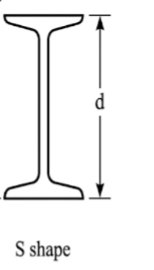
What shape is this?
What is it used for?
S (american standard beam)
Beams

STEEL SHAPES:
What shape is this?
What is it used for?
HP (high piles)
Transferring load from structure to foundation deep in the ground

STEEL SHAPES:
What shape is this?
What is it used for?
C (american standard channel)
Truss members, bracing, short-span beams, lintels
STEEL SHAPES:
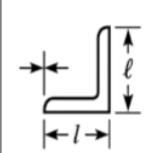
What shape is this?
What is it used for?
L (angle)
Short beams, small loads, edge supports, floor openings, lintels, bracing, connectors
STEEL SHAPES:
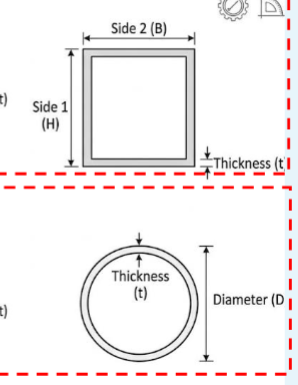
What shape is this?
What is it used for?
HSS (hollow structural section)
Columns, bracing, exposed structure

STEEL SHAPES:
What shape is this?
What is it used for?
WT - Structural tee cut from a W shape
Chords, connections, miscellaneous steel

READING STEEL LABELS:
First number =
Second number =
Common fy =
Nominal depth in inches
Weight in lbs/ft
50 ksi

READING STEEL LABELS:
First number =
Second number =
Common fy =
Nominal depth in inches
Weight in lbs/ft
36 ksi

READING STEEL LABELS:
First number =
Second number =
Third number =
Common fy =
Leg 1 in inches
Leg 2 in inches
Thickness in inches
36 ksi

READING STEEL LABELS:
First number =
Second number =
Third number =
Common fy =
Side 1 in inches
Side 2 in inches
Wall thickness in inches
46 ksi

READING STEEL LABELS
First number =
Second number =
Common fy =
Outside diameter in inches
Wall thickness in inches
42 ksi
Nominal means:
approximate. Each nominal measurement is not the exact measurement of a cut.

OPEN WEB JOISTS:
What are these arrows pointing at?
What does it do?
The open web joist which allows mechanical services to pass through
OPEN WEB JOISTS:
The ceiling can be attached to the ___ chords, suspended below them for more service space, or left off to ___ the joists and deck
bottom, expose
OPEN WEB JOISTS:
Fire-resistance rating depends on the rating of the ___ and ___ assembly.
floor, ceiling
OPEN WEB JOISTS
Joists bear on ___ or ___ concrete ___, or on steel beams or joist girders (heavier versions of open-web joists).
masonry or reinforced, bearing walls

DECK TYPES: Form decking
What it does
Typical depths and spans
Permanent formwork for a reinforced concrete slab until the slab can carry itself and its live load
9/16 in. for 1′-6″ to 3′;
1 in. for 3′ to 5′;
2 in. for 5′ to 12

DECK TYPES: Composite decking
What it does
Typical depths and spans
Acts as tensile reinforcement for the slab, bonded by embossed ribs; shear studs welded through the deck to the beam give composite action
1-1/2 in. for 4′ to 8′;
2 in. for 8′ to 12′;
3 in. for 8′ to 15′

DECK TYPES: Cellular decking
What it does
Typical depths and spans
Corrugated sheet welded to a flat sheet, forming raceways for electrical and communications wiring; can serve as an acoustic ceiling
1-1/2 and 2 in. for 6′ to 12′;
3 in. for 10′ to 16′
DECK TYPES: Masterformat group:
05 30 00
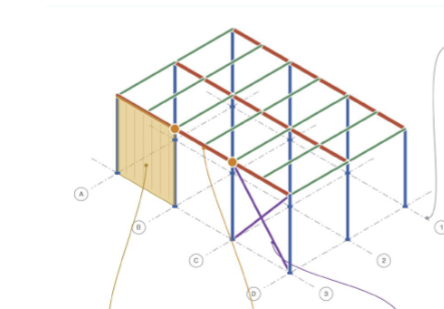
RED =
PURPLE =
GREEN =
BLUE =
YELLOW =
ORANGE =
Girder
Diagonal bracing
Beam
Column
Shear wall
Moment-resisting frame
PARTS AND THEIR ROLES: Column
Carries load down to the foundation; sits on a regular structural grid
PARTS AND THEIR ROLES: Girder
Spans column to column
PARTS AND THEIR ROLES: Beam
Frames into girders
PARTS AND THEIR ROLES: Connections
Use transitional elements (angles, tees, plates); often bolted or welded

PARTS AND THEIR ROLES: Bearing plate
Spread a column or beam load where steel bears on concrete or masonry
PARTS AND THEIR ROLES: Plate girder
Built up from plates or shapes. Cover plates on the flanges increase section modulus; stiffeners
resist web buckling
LATERAL SYSTEMS: Shear wall
How it resists wind and earthquake load
A solid wall panel resists lateral load (wind, earthquake, soil pressure) in its own plane
LATERAL SYSTEMS: Moment-resisting frame
How it resists wind and earthquake load
Rigid beam-to-column connections resist sway through bending
LATERAL SYSTEMS: Diagonal bracing
Braces triangulate the bay and carry load in tension or compression
STEEL ERECTION
• The AISC Code of Standard Practice holds the ____
responsible for the means, methods, and safety of erection
• A qualified ____ inspects and rigs every load
• Connectors install at least ___ bolts per connection while
hoisting; the rest go in after the frame is plumbed
• Multiple-lift rigging reduces the number of ___ lifts
erector
rigger
two
crane
CHRISTMAS TREEING
• Maximum of ___ pieces
• Pieces must be of similar ___
• Decking ____ are prohibited
• Workers must be ____ in the procedure
• The assembly must be professionally ____
• The crane ____ must allow it
5
type
bundles
trained
engineered
manufacturer
TEMPORARY BRACING
goes in before the frame is plumbed and keeps it stable until the permanent lateral system
is in place. In a braced frame it comes out after final bolt-up. OSHA limits unfinished bolting or welding to ___
floors or ___ft above the last permanently secured floor.
four, 48

CONNECTIONS: BOLTING AND WELDING: Type 1: rigid frame (moment)
What is its behavior?
Lateral stability?
Holds its original angle under load; transfers moment and shear
The frame itself provides it
CONNECTIONS: BOLTING AND WELDING: Type 2: simple frame (shear)
What is its behavior?
Lateral stability?
Resists only shear; free to rotate under gravity load
Needs shear walls or diagonal bracing
BOLTS:
A325 and A490
high-strength bolts, 1/2 to 1-1/2 in. diameter; most common sizes 3/4, 7/8, and 1 in.
BOLTS:
Bearing joint
load transfers by bearing on the bolts.
BOLTS:
Slip-critical joint
load transfers by friction in the joint
BOLTS:
Shear plane
where the connected pieces try to slide past each other. A bolt carries more with its threads excluded from the shear plane, but the most common bolt (A325, 3/4 in.) is usually installed with threads included.
BOLTS:
Snug-tight
a few impact-wrench hits or an ironworker’s full effort on a spud wrench
BOLTS:
Pretensioned
a calibrated wrench tightens to a specified tension
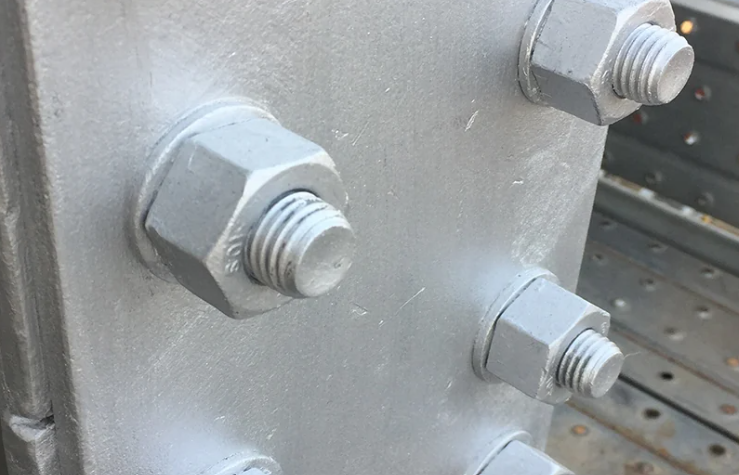
BOLTS:
Stick-out
positive or zero is acceptable; negative is not
WELDS:
Weld symbols
On fabrication and erection drawings give the weld type, size, length, and spacing.
Basic types: fillet, groove (butt), plug, and slot.
WELDS:
Bolting vs welding
Bolting is generally faster and has no weather restrictions
Welding can make a joint stronger than the base metal but is weather-sensitive, especially in the field.
WELDS:
Weld size
Must match the drawings. Fillet welds up to and including 5/16 in. are usually single-pass; larger fillets and bevel groove welds need multiple passes
FIRE, CORROSION, AND SPECIALTY STEELS: FIRE
Steel is incombustible, but it softens and loses strength above about ___°F
• Building fires are not hot enough to melt steel, but they can weaken it enough to ___
• Fire-resistive construction requires steel to be ____, _____or ____
• Taller buildings (the lecture uses “over three stories”) need the ____
protected long enough for everyone to get out
1,000
Fail
Coated, covered, enclosed
Frame
FIRE, CORROSION, AND SPECIALTY STEELS: CORROSION
• Unprotected steel ___ (oxidizes)
• It must be ___,___, or ____
Corrodes
Painted, galvanized, chemically treated

Which fire protective coating is this?
How does it work?
Concrete encasement
Fully surrounds a column or beam

Which fire protective coating is this?
How does it work?
Enclosure board
Build a fire-resistive box around the member

Which fire protective coating is this?
How does it work?
Metal lath + plaster
Build a fire-resistive box around the member

Which fire protective coating is this?
How does it work?
Spray on
Coats exposed members

Which fire protective coating is this?
How does it work?
Sheet metal enclosed + loose fill insulation
Slows heat transfer to steel

Which fire protective coating is this?
How does it work?
Water
Slows heat transfer to steel
SPECIALTY STEEL: Stainless steel
Key property?
Typical use?
12% or more chromium; highly corrosion-resistant
Exposed, corrosion-prone applications
SPECIALTY STEEL: Weathering steel
Key property?
Typical use?
Forms a protective, adherent oxide coating in weather, so painting is not needed against most atmospheric corrosion
Exposed structures where painting is undesirable
SPECIALTY STEEL: Tungsten steel
Key property?
Typical use?
10–20% tungsten; hardness and heat retention
High-temperature tooling and components
LIGHT GAUGE METAL STUD FRAMING
• Common in ___ l work because metal is ___,
which reduces the amount of combustible material in the
building
• Studs stay straight: they do not ___ or ____
• Used for ___,___,___ and other ____
• Wood studs cost ___ as material; which is cheaper overall is
debated
• Parts include top and bottom plates, common, jamb, and jack
studs, lintels, trimmers, and nogging
commercial, noncombustible
warp, rot
walls, ceilings, soffits, interior framing
less

1:
2:
3:
4:
5:
6:
7:
8:
9:
10:
11:
12:
Top plate, diagonal brace, jack stud, lintel, head trimmer, bottom plate, common stud, jamb stud, secondary jam stud, still trimmer, jack stud, nogging