NEUR30080 L16 DC exocytosis pt2
 Call Kai
 Learn
 Practice Test
 Spaced Repetition
 Match
 Flashcards
 Knowt Play
1/37

Earn XP
Description and Tags
go to YT video on BS
38 Terms
proteins involved in transmitter release
vesicle priming:
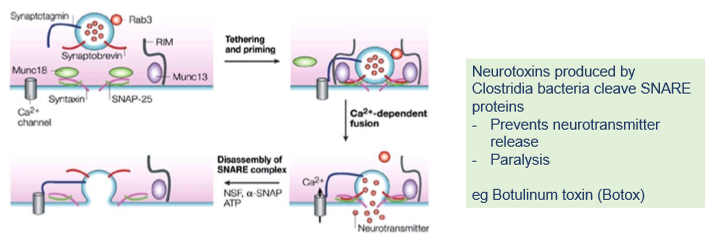
SNARE proteins:
synaptobrevin is bound to the vesicle membrane (vSNARE)
syntaxin and SNAP25 bound to the plasma memb (tSNARE)
synaptotagmin: Ca2+ dependence of NT release due to synaptotagmin binding Ca2+
!!!!!!!! finish this
vesicle priming
!!
fusion
!!
disassembling the SNARE complex
following fusion: SNARE complexes are disassembled
makes individual SNAREs available for subsequent fusion reactions
ATPase NSF and its adaptor protein soluble NSF attachment prot (SNAP) are responsible
disassembling SNARE image
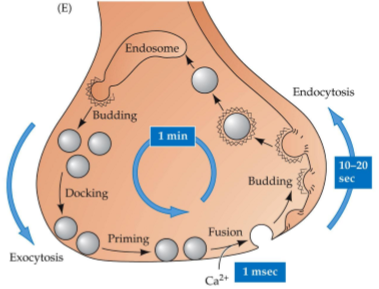
life cycle of the synaptic vesicle
however, it is likely refilling of vesicles happen much faster by utilising the kiss-and-run rather than full collapse method
life cycle of the synaptic vesicle image
disruption of synaptic transmission
many poisionous agents and disease mechanisms exert their pathological effects through disruption of the synaptic transmission process
nerve agents: disrupt transmission at the NMJ
e.g. Novichok
pathological disorders of the NMJ:
myasthenia gravis
lambert eaton syndrome
tetanus toxin
botulinum toxin
Novichok
series of nerve agents devel. in Soviet union and russia 1971-1993
organophosphate AChE inhibitors
prevent the breakdown of ACh - enhanced ACh at NMJ
involuntary contraction of skeletal muscles
respiratory failure and cardiac arrest - death results from heart failure or suffocation as fluid secretions fill lungs
myasthenia gravis
autoimmune disease, ‘autoimmune synaptopathy’
identified 1930s
myasthenia gravis: symptoms
LT skeletal muscle weakness
symptoms increase during active periods, rest helps
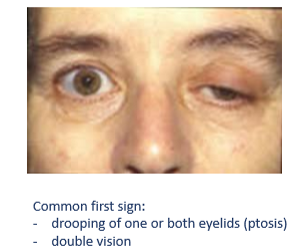
common:
eye, eyelid, facial expression, chewing, talking, swallowing issues
progressive form:
impact muscles regulating respiration, neck and limb movement
ocular MG affects eye muscles only
rare genetic defect: congenital myasthenia
myasthenia gravis: common first signs image
myasthenia gravis: important discoveries
synaptic transmission at NMJ is mediated by ACh
1966: isolation of toxins from snake venom
alpha-bungarotoxin found to cause paralysis by irreversibly binding AChRs
alpha-bungarotoxin then used to isolate and purify AChRs from the electric organ of electric eel
MG symptoms could be reversed by inhibitors of AChE
AChRs injected into rabbits to generate Abs
unexpectedly, the Ab prod occurred with MG-like symptoms
most frequently presented in patients with other autoimmune disorders
myasthenia gravis: disease mechanism
prod of Abs - directed against the AChRs of NMJ
decreases availability of Rs for binding to ACh
inhibs muscle contraction
R loss - progresses MG
myasthenia gravis: structural changes
enlargement of syn cleft
junctional folding reduced
myasthenia gravis: structural change image

myasthenia gravis: MoA
!!!!!!!!!!!!
myasthenia gravis: causes
autoimmune disease
bacterial infection: bacterial Ags may share epitopes with AChRs
viral infection: viral prot may include a peptide sequence similar to one in the AChR molecule (molecular mimicry)
thymomas: tumours derived from epithelial cells in thymus (usually benign) - 50% patients devel MG - express epitopes cross-reactive with AChRs and other skeletal muscle prots
myasthenia gravis: treatments
no known cure
AChE inhibitors treat symptoms
lifestyle changes: increase rest
immunosuppressant treamtnet: minimise immune response (Ab prod)
plasma exchange: removal of Abs from plasma to reduce excess
surgical intervention: e.g. thymectomy if thymoma is primary cause
lambert-eaton syndrome
lambert-eaton myasthenic syndrome (LEMS)
very rare autoimmune disorder
pre-synaptic focus
lambert-eaton syndrome: symptoms
muscle weakness in limbs
proximal arms and legs
greater impact to legs than arms
tingling in hands and feet
challenges climbing stairs and stand-to-sit movements
difficulty walking, reduced reflexes
weakness in respiratory muscles (advanced disease)
temporary relief following exercise
lambert-eaton syndrome: pathology
pre-syn, targets NMJ
Abs to pre-syn Ca2+ channel - inhibits NT release
lambert-eaton syndrome: incidence
very rare: 2.8 cases per Million worldwide
approx. 60% assoc. with small cell lung carcinoma (SCLC)
sometimes symptoms detected prior to cancer diagnosis
cases unrelated to cancer, onset 40 yrs old
lambert-eaton syndrome: MoA
!!!!!
lambert-eaton syndrome: treatments
!!
tetanus
caused by neurotoxin Clostridium tetani
!!!!!!!!!!!!!!!!!
tetanus: symptoms
tetanus: MoA
tetanus: pathology
tetanus: MoA detail
tetanus: treatments
botulism
!!!!!!!!!!!!!!!!!
botulism: symptoms
botulism: MoA
botulism: image
botulism: treatment
botulinum toxin: therapeutic uses
botulinum toxin: other uses