Lecture 7 - Basis of natural selection
 Call Kai
 Learn
 Practice Test
 Spaced Repetition
 Match
 Flashcards
 Knowt Play
1/21

There's no tags or description
Looks like no tags are added yet.
22 Terms
evolution definition
evolution = a change in gene frequencies over time
species have changed in a Darwinian sense of "decent with modification" with all species sharing a common ancestor
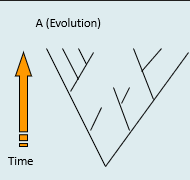
evolution types
mutation - the source of genetic variation
homozygous - two strands of DNA, on the DNA there is a copy of a gene and homozygous means the genetic mutation is on both strands of DNA
it is recessive so both mutations need to be present for an effect to occur
natural selection - the sifting of variation to produce adaptations
genetic drift - random sampling of individuals over time
founder effects - small group of individuals "bud off" or survive by chance
phylogenetic trees
shows common ancestry links

evolution evidence
the fossil record
observations of similarities and differences between living species
evolution in action - observing changes in real time
the fossil record
burgess shale - fossil collection from 500 million years ago
shale (sedimentary rock) is so fine it preserves soft body parts
intermediate forms are present continuously in the fossil record
order of fossils also suggests evolutionary relationships
problem with fossil record
however, some species today appear "unchanged" from when their evolutionary history began
observations of similarities and differences between living species
analogous
homologous
vestigial structures
analogous
analogous = structure looks similar but have very different evolutionary history
different variants of solutions to the same problems
for example, the problem of flight - birds, moths, bats, all look the same (wings) but don't share an evolutionary background, they have evolved to fix the same problem
homologous
homologous = same variants of solutions for the same problem
similar evolutionary background but share a common ancestor
for example, the five-fingered limb has evolved over bats, moles, dolphins, monkeys, horse, pigs etc
vestigial structures
vestigial structures - where limbs are no longer adaptive, they have been lost but remains can still be seen in the skeleton
shows evolutionary descent
example is the appendix - in earlier times we needed it due to a high cellulose diet, however since we have evolved, we no longer need this and it can be removed safely

phylogenetic approaches
definition = understanding evolution by comparing features of extant species
build phylogeny based on molecular data - similarity in DNA of species
2 changes are more likely to have occurred than 4 changes - more parsimonious
parsimony - reconstruct phylogenetic history through determining independent changes in the least amount of steps
morphology definition
morphology = studying the form and structure of animals and making inferences of evolution
problems with evolutionary classifications based on external features
discriminating features
convergent evolution - independent evolution of similar features in species (like dolphin and great white shark)
genetic code
the genetic code, also known as the universal homology - the transcription between base triples in the DNA and amino acids in proteins is universal to all life
evolution in action - observing changes in real time
evolution can be produced experimentally - selective breading ie a pea plant, leads to rapid shifts
means there are many types of one species, like dog breeds
generators of variation
random mutations
recombination’s (via sex)
gene flow
random mutations
born with 300 mutations which at least 1 or 2 are potentially harmful if they are homozygous
over 10,000 human genes have been described that in their mutated form causes diseases or defects
variation is the building block for evolution
recombination’s via sex
all genetic variation owes its origin ultimately to mutation
however, in the short term, recombination accounts for a great deal of the genetic variation in wild populations
through the process of gamete production, there is a reconstructor of chromosomes
most populations are a finite size and random fluctuations in allele frequencies can result in the replacement of alleles (non-adaptive evolution) = genetic drift
gene flow
transfer of genetic material from one population to another
effective population size
number of adult individuals in the population that actually reproduce
founder effects
genetic drift = the bottleneck effect
populations that go through a restricted size are said to have gone through a bottleneck
this can happen when new populations are founded

process of natural selection
huge numbers of individuals are produced
insufficient resources for all, so many die before reproducing
individuals vary in attributes
individuals with attributes better suited to the environment are less likely to die
these individuals will be over-represented in the next generation