ENWC205 Insect Order Flashcards
 Call Kai
 Learn
Learn Practice Test
 Spaced Repetition
 Match
Match Flashcards
 Knowt Play
1/29

There's no tags or description
Looks like no tags are added yet.
Name | Mastery | Learn | Test | Matching | Spaced | Call with Kai | Chat |
|---|
No analytics yet
Send a link to your students to track their progress
30 Terms
Order Collembola
Springtails
Ametabolous
Terrestrial soil dwellers
Diet: plants, pollen, algae, tardigrades, rotifers, eggs of other collembola species
Rarely a pest to humans, “spring” as a way to escape from predators
Description (general):
Simple eyes
Segmented antennae
Chewing mouthparts, entognaths (mouthparts recessed into pouch in head)
Apterygotes- primitively wingless
6 Legs with tactile hairs
Collophore- on 1st abdominal segment
Only 6 abdominal segments
Furcula (4th abdominal segment)- spring mechanism
Tenaculum (3rd abdominal segment)- catch mechanism

Order Protura
Coneheads
Anamorphosis- with each molt, can add abdominal segments
Live in soil, leaf litter, rotten wood, and moss
Eat mycorrhizal fungi, mites, decaying matter
Can be very abundant— up to tens of thousands per square meter (bugguide.net)
Description (general):
No eyes
No antennae
Entognaths- mouthparts recessed into head
Apterygotes- primitively wingless
6 pairs of legs, first pair used as antennae

Order Diplura
2-Pronged Bristletails
Ametabolous
Found under leaves, rocks, and soil
Eat decaying organic matter, predacious
Present egg guarding behavior
Description (general):
No eyes
Antennae present
Apterygotes- primitively wingless
Entognaths- mouthparts recessed into head
6 legs
Segmented cerci— pronged tails

Order Archeognatha
Jumping Bristletails
Ametabolous
Found in leaf litter, dead wood, and stones
Eat algae, lichen, and mosses
Present a jumping behavior
Description (general):
Large compound eyes
Antennae present
Chewing mouthparts
Apterygotes- primitively wingless
6 legs and leg-like maxillary palps
Forked cerci and median caudal filament

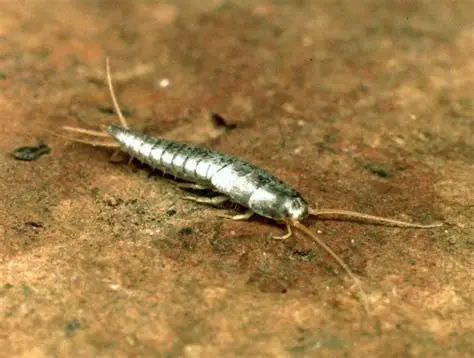
Order Zygentoma
Silverfish
Ametabolous
Live in buildings, caves, old burrows, ant/termite nests
Eat starchy substances
Nuisance pests, may damage books
Males and females don’t copulate! Rather, indirect sperm transfer
Description (general):
Reduced eyes and ocelli
Slender antennae present
Chewing mouthparts
Apterygotes- primitively wingless
6 legs
Overlapping silvery scales
Order Ephemeroptera
Mayflies (ephemera=short lived)
Hemimetabolous- naiads molt 20-30X
Aquatic as naiads, emerge for one day as adults
Naiads eat algae and detritus, adults do not feed
Has a subimago (sub-adult) phase where they emerge from the water, and then molt into adult
Females deposit fertilized eggs by dropping them into the water
Description (general):
Large compound eyes as adults
Antennae short and bristle-like as naiads
Chewing as naiads, vestigial as adults
Non-folding wings, held vertical at rest
Legs present

Order Odonata
Dragonflies and Damselflies (Odontos=tooth)
Hemimetabolous
Aquatic as naiads, terrestrial and flying as adults
Both naiads and adults predators
When adults copulate, they use an indirect sperm transfer method called a copulation wheel (sperm stored in intromittent organ and female obtains it from here)
Description (general):
Large eyes
Thin antennae
Chewing mouthparts, naiad has modified labium (“mask”)
Non-folding wings
Adults have basket-like arrangement of legs to catch prey

Order Zoraptera
Angel Insects
Paurometabolous
Live under bark, and in leaf litter and soil
Eat fungi and small detritus
Males deposit small spermatophores that contain one giant sperm
Gregarious
Description (general):
Compound yes
Beaded antennae!!
Chewing mouthparts
Most wingless
6 legs

Order Dermaptera
Earwigs
Paurometabolous
Live beneath rocks and logs, sometimes commensalistic as adults and live on bats and rodents
Feed on a variety of food, some eat dead skin of bats and rodents
Some exhibit pseudo placental viviparity
Description (general):
Eyes present
2 Antennae
Chewing mouthparts
Short and leathery forewings and hind wings folded fan-like underneath
6 legs
Forceps-like cerci

Order Plecoptera
Stoneflies
Hemimetabolous
Aquatic naiads, terrestrial adults
Most herbivores as naiads, some predacious
Filamentous gills on head and thorax as naiads
Description (general):
Eyes present
Antennae
Chewing mouthparts, reduced in adults
4 membranous wings, folded flat over body as adults
6 legs as adults and naiads

Order Orthoptera
Grasshoppers, Crickets, and Katydids
Paurometabolous
Terrestrial
Suborder Caelifera plant-eating, Suborder Ensifera arboreal
Produce sound (Stridulation)
Description (general):
Large compound eyes
Antennae present
Chewing mouthparts
Tegmina fore wings that protect hind wings
Modified hind legs for jumping

Order Notoptera
Rock-crawlers, ice bugs, mantid and phasmid imitators
Paurometabolous
Suborder Grylloblattodea found in cold, northern climates, Suborder Mantophasmatodea found in caves
Suborder Mantophasmatodea is carnivorous
Some (ice bugs) found above the timber line
Description (general):
Eyes present
Antennae present
Chewing mouthparts
Wingless
6 Legs

Order Embioptera
Webspinners
Paurometabolous
Live underground or under rocks
Form large silken galleries
Description (general):
Compound eyes
Long antennae
Chewing mouthparts
Females wingless, winged and wingless males
Forelegs of females have large silk glands

Order Phasmatodea
Stick and Leaf Insects
Paurometabolous
Within vegetation
Herbivores
Professional rearing groups exist for this order!
Description (general):
Compound eyes, some with ocel
Antennae present, usually shorter
Chewing mouthparts
Tropical species have tegmina, others wingless
6 legs

Order Mantodea
Mantids
Paurometabolous
Habitat type for immature and adult
Predators
Produce ootheca (egg sack structure)
Description (general):
Large compound eyes with psuedo-pupil in the middle
Antennae present
Chewing mouthparts
Fore wings are tegmina, hind for flight
Raptorial forelegs

Order Blattodea
Roaches and Termites
Type of metamorphosis
Live in wood (termites) or in warm/dark spaces (roaches)
Termites feed on wood, roaches are omnivores
Termites have caste systems
Description (general):
Eyes present in both
Long, filiform antennae in roaches
Chewing mouthparts
Tegmina(roaches) or 4 membranous wings/wingless(termites)
6 Legs

Order Psocodea
Bark, book, and true lice
Paurometabolous
Habitat- host(true lice), tree-dwelling(bark), or dark environments(book)
True lice parasitic, Bark and Book lice feed on algae, fungi, and lichens
True lice can transmit human diseases
Description (general):
Reduced eyes in true lice
Antennae present
Chewing or piercing/sucking
Reduced wings or wingless
Legs on true lice have grasping tars

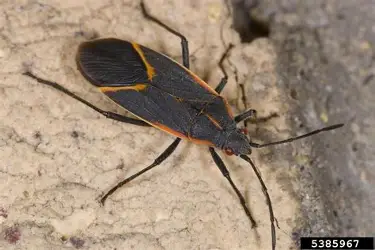
Order Hemiptera
“true bugs”, hoppers and cicadas, aphids and whiteflies and scales
Paurometabolous
Live in vegetation or moss
Most “suck on” plants, some are predacious
Many are major plant pests!
Description (general):
Eyes present in all, but Coleorrhyncha has separated compound eyes
Antennae present
Piercing-sucking mouthparts
Hemelytra(Heteroptera), tent-like wings (Auchenorrhyncha), winged or wingless(Sternorrhyncha), reduced wings(Coleorrhyncha)
6 Legs
Order Thysanoptera
Thrips
Paurometabolous/Holometabolous
Habitat- flowers
Food- fungal hyphae, small arthropods, pollen, plant cells
Vector plant viruses
Description (general):
Compound eyes
Antennae present
Asymmetrical mouthparts- reduced R mandible
“Feathery” wings
6 Legs

Order Hymenoptera
Ants, Bees, Wasps, and Sawflies
Holometabolous
Commonly reside in elaborate nests
Eat foliage, wood, plant compounds, and other insects! Can be parasites or parasitoids as well
Some are pollinators!
“Wasp waist” common
Description (general):
Compound eyes with 3 ocelli
Antennae present
Chewing mouthparts
2 pairs of membranous wings
6 Legs

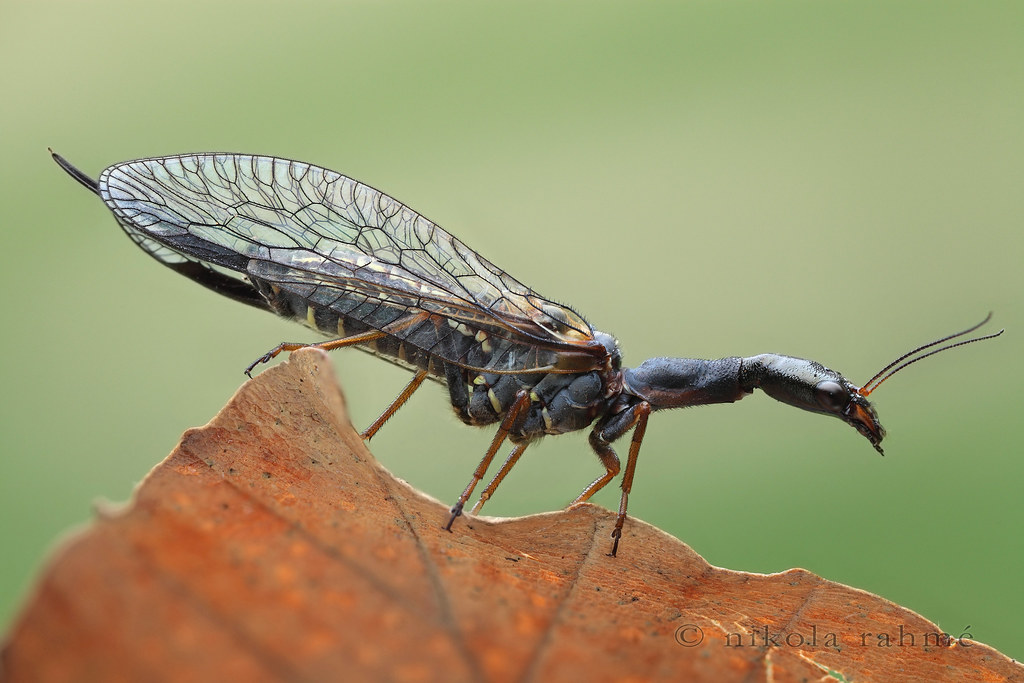
Order Radiphidioptera
Snakeflies
Holometabolous
Live in forests
Predators, but also pollen-eaters
Only occur in northern hemisphere
Description (general):
Large compound eyes
Antennae present
Chewing mouthparts
2 pairs of membranous wings
6 Legs
Order Megaloptera
Dobsonflies and Alderflies
Holometabolous
Larvae aquatic, adults terrestrial
Both larvae and adult predatory
Mouthparts are sexually dimorphic
Description (general):
Compound eyes
Antennae present
Chewing mouthparts
4 large, membranous wings
6 Legs

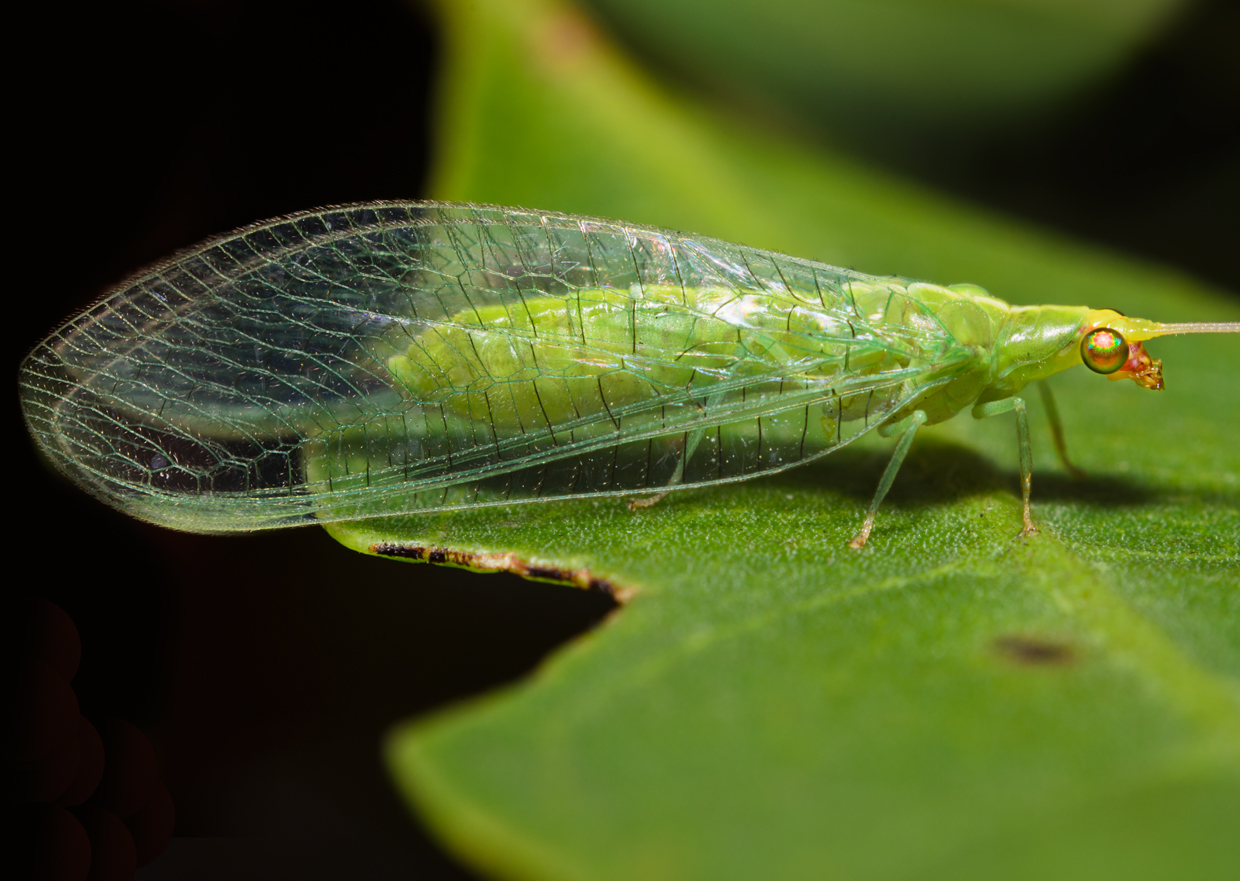
Order Neuroptera
Lacewings
Holometabolous
Most terrestrial and live in vegetation or soil, some are aquatic
Many are carnivorous
Eggs are laid on silken strands
Description (general):
Compound eyes
Antennae present
Chewing or grasping-sucking mouthparts
Wings held roof-like, many have veined wings
6 legs, each ending with claws (as larvae)
Order Strepsiptera
Twisted-wing Parasites
Holometabolous
Habitat type for immature and adult
Parasites of hymenoptera!
Females burrow in between sclerites of hymenoptera
Description (general):
Raspberry-shaped eyes
Multi-branched antennae
Females have reduced mouthparts
Females wingless, males have wings
6 Legs

Order Coleptera
Beetles
Holometabolous
Inhabit almost all continents, except polar regions
Mix of herbivores, predators, scavengers, and fungus feeders
Some are serious pests
Description (general):
Compound eyes, some with ocelli
Antennae present
Chewing mouthparts
Elytra
6 legs

Order Trichoptera
Caddisflies
Holometabolous
Larvae aquatic, adults terrestrial
Some predators, some fungus eaters
Make little houses from substrate!
Description (general):
Compound eyes and ocelli
Large, filiform antennae
Chewing mouthparts
4 membranous wings, held roof-like, “hairy”
6 Legs

Order Lepidoptera
Butterflies, moths, and skippers
Holometabolous
Inhabit a vast range of habitats, except polar regions
Feed on plants as larvae, feed on nectar as adults
Symbol of beauty!
Description (general):
Compound eyes
Clubbed, hooks, or plumose antennae
Chewing mouthparts as larvae, siphoning as adults
Large wings, covered in brightly-colored scales
6 legs throughout all life stages, have additional prolegs as larvae

Order Siphonaptera
Fleas
Holometabolous
Habitat- host endotherms
Feed on blood of endotherms
Ectoparasitic!
Description (general):
Only have ocelli, or eyeless
Short antennae
Chewing (immature) and piercing-sucking (adult) mouthparts
Wingless, but not primitively
Jumping legs

Order Mecoptera
Scorpion flies
Holometabolous
Found in moist habitats worldwide
Scavengers on dead insects
Male genitalia look like scorpion tail!
Description (general):
Compound eyes
Elongated, filiform antennae
Chewing mouthparts
4 membranous wings
6 Legs

Order Diptera
“True” Flies
Holometabolous
Live in a diverse array of habitats
Some are decomposers, some eat a blood meal, some eat nectar
Some transmit diseases
Description (general):
Large compound eyes
Antennae present
Sponging or piercing-sucking mouthparts
1 pair of wings, or wingless!
6 Legs
