Entomology Exam II
 Call Kai
 Learn
 Practice Test
 Spaced Repetition
 Match
 Flashcards
 Knowt Play
1/154

There's no tags or description
Looks like no tags are added yet.
155 Terms
“Apterygota”
Subclass: No wing
“Paleoptera”
Subclass: Ancient winged
Neoptera
Subclass: New winged
“Paleoptera”
Wings held extended over thorax and abdomen
Neoptera
Wings folded over thorax and abdomen
Ametabola
No metamorphosis (looks the same throughout growth)
Hemimetabola
Incomplete metamorphosis (Has nymphs and then adult)
Holometabola
Complete metamorphosis (egg to larvae to pupa to adult)
Anamorphic
Each molt adds an additional segment
Epimorphic
Each molt does NOT add an additional segment
Collembola
Hexapoda subphylum; Mouthparts entoghathic (enclosed in folds of the head); epimorphic; ametabolous; apteryogote (lack wing); collophore (ventral tube) on first adbo segment; forked furcula for jumping
Collembola
Springtails

Zygentoma
“Apterygota”; No metamorphosis, dorso/ventally flattened; lack ocelli; covered with silvery scales; 2 lateral cerci and medial caudal filament
Zygentoma
Silverfish

Odonata
“Palaeoptera”; Wings with arculus vein; large compound eyes; immatures called naiads; form a tandem wheel (suborders: Epiprocta, Zygoptera);
Odonata
Dragonflies and damselflies

Dragonflies
Anal gills and propulsion; wings held horizontally; extensible labium
Damselflies
Abdominal terminal gills; wings held vertically
Bottom
Tandem wheel: Female is on _____
Ephemeroptera
“Palaeoptera”; Adults with 2-3 long multisegmented cerci with medial caudal filament; Large triangular fore-wing; immatures are naiads; short-lived adult; mating in swarms
Ephemeroptera
Mayfly

Plecoptera
Neoptera; Bony thorax; folded wings partly wrap the abdomen and extend beyond apex; Naiads (gills on thorax, neck, and first 2 abdo seg)
Plecoptera
Stoneflies

Dermaptera
Neoptera; Dorsally/ventrally flat; forewings thickened into short tegmina; Enlarged, unsegmented, forceps-like cerci
Dermaptera
Earwigs

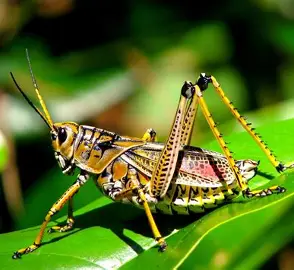
Orthoptera
Neoptera; enlarged, saltatorial hind legs; forewings thickened into tegmina; stridulate (make noise) by rubbing forewings across pegs on hind legs or across hind wings; some migratory
Orthoptera
Grasshoppers; katydids; crickets
File; scraper
Stridulation: when wings move back and forth the ____(upper wing) strikes the ____ (lower wing) which generates the call that we hear from the cricket
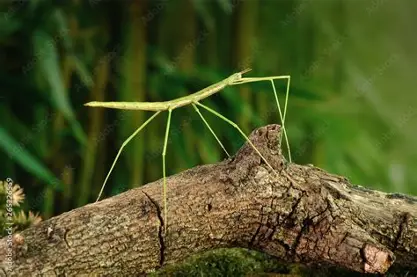
Phasmatodea
Prognathic (forward) chewing mouthparts; long, slender body; small prothoax (short); wings absent in non tropical species; tropical males with forewings as tegmina
Phasmatodea
Walking sticks
Mantodea
Forewings are tegmina that cover hindwings; head rotates 300 degrees; elongated pronotum with raptorial forelegs; eggs deposited in papery-textured ootheca
Mantodea
Mantids

Blattodea
Forewings form thickened tegmina that cover over the membranous hindwings; large anal lobe; dorsally, ventrally flattened; head covered with enlarged shield like pronotum; cursorial legs
Blattodea
Cockroaches; termites

Psocodea
Dorsally-ventrally flattened; non-parasitic and parasitic
Non-parasitic lice
Psocodea: Small insects with large, mobile head; membranous wings held roof-like over abdomen

Parasitic lice
Psocodea: no wings; head wider than long; body dorsoventrally flattened; ectoparasites of birds and mammals

Thysanoptera
Wings absent or long, narrow with fringe of hairs; small, long, narrow body; sucking mouthpart; feed on flowers
Thysanoptera
Thrips

Hemiptera
Large compound eyes; mandibles and maxillae into needle like stylets (rostrum or proboscis); pierceing-sucking mouthparts; both wings reduced (3 suborders: sternorrhyncha; auchenorrhynca; heteroptera)
Rostrum
Mandibles and maxillae into needle like stylets in a grooved labium and together= _____
Sternorrhyncha
Hemiptera (suborder): aphids and scale insects

Auchenorrhyncha
Hemiptera (suborder): Cicadas, leafhoppers, tree hoppers, plant hoppers; spittlebugs

Heteroptera
Hemiptera (suborder): Forewings form a hemelytron Enlarged triangular scutellum; stink glands; piercing-sucking; food is liquid (sap, blood; herbivorous, carnivorous, parasitic); stink bugs; wheel bug

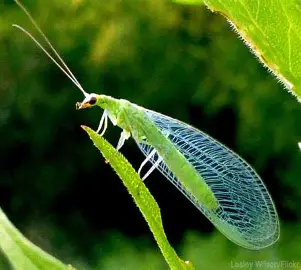
Neuroptera
Wings many veined and of similar size, extending beyond abdomen; Mandibles and maxillae fuse to form hollow tube; suck body fluid
Neuroptera
Lacewings; ant lions
Coleoptera
Forewings form elytra; elytra meet at midline when folded; plastron for aquatic; largest insects known
Coleoptera
Beetles

Diptera
One functional pair of wings; second pair of wings into haltares; piercing-sucking and cutting-sponging mouthparts; mesothorax large; larvae vermiform (worm like)
Vermiform
Worm-like larva
Diptera
Flies

Siphonaptera
Small; wingless; lack compound eyes; piercing-sucking mouthparts; body laterally flat; strong spine called ctenidia; hindlegs developed for jumping; adults parasitic
Ctenidia
Strong spines
Siphonaptera
Fleas

Trichoptera
Adults have wings with hairs; larvae are naiads; abdomen gills; abdomen with terminal hooks; build portable cases of pebbles
Trichoptera
Caddisflies

Lepidoptera
Wings covered with scales; siphoning mouthparts; colors due to pigments; mimics; larvae are caterpillars with prolegs, hooks called crochets
Lepidoptera
Butterflies and moths

Noctuid traits
Antennae filiform; front wings mottled brown; hind wings differ from front wings in color and patterns; Three medio-cubital veins reach distal margin of hind wing
Hymenoptera
Chewing-lapping mouthparts; enlarged mesothorax; Hindwings coupled with forewing by hamuli (hooks); slender petiole; mesosoma; ovipositor modified into stinger, saw, or drill
Hamuli
Wings connected by hooks
Hymenoptera
Ants, bees, wasps, sawflies

Arthropoda
Phylem
Hexapoda
Subphylum
Entognatha
Collembola class
Insecta
The class of all the other orders
Ametabola
Metamorphism: Collembola; zygentoma
Hemimetabola
Metamorphism: Odonata; Ephemeroptera; Plecoptera; Dermaptera; Orthoptera; Phasmatodea; Mantodea; Blattodea; Psocodea; Thysanoptera; Hemiptera
Holometabola
Metamorphism: Neuroptera; Coleoptera; Diptera; Siphonaptera; Trichoptera; Hymenoptera
Rhyniella praecursor
Oldest known insect
Devonian
Period: Rhyniella praecursor
Silurian
Insects originated in _____ period
Springtail
Rhyniella is a genus a fossil of a _____
Carboniferous
Period: Palaeodictyopterida (extinct); Ephemeroptera; Odonata; Orthoptera; Hemiptera; Blattodea
Prothoracic winglets
Palaeodictyopterida has ____ ____

Gigantic
Ephemeroptera and Odonata were _____
Permian
Period: Plecoptera; Phasmatodea; Coleoptera (early Holometabola)
Triassic
Period: all modern groups well represented except Hymenoptera (except horntail wasps) and lepidoptera
Jurassic
Period: aculeate Hymenoptera; early branching Diptera
Cretaceous
Period: amber preserved insects; Coleoptera; lepidoptera; bees; wasps begin massive radiations
Sea
Arthropods evolved in the ___
Terrestrial
Insects evolved from ____ hexapod ancestors
Northern
Fossil studies of ____ insects indicate that for the past 1 million years little to no change in morphology of insects
Little
Pleistocene climate fluctuations had ____ impact on genesis of new species
Disjunct distribution
___ ___ of related species suggest that they were derived from ancestor that existed prior to continental drift
Asia; North America
Aphid-sumac disjunct- ___ and ___ ___
South America; Africa
Fig-fig wasp disjunct- ___ ___ and ___
Tergal
Protowings: Hypothesis 1) wings originated as lobes derived from thoracic ____ origin called paranota
Pleural
Protowings: Hypothesis 2) Wings originated from epicoxa (____ origins); Exites and endites form to fuse the protowings
Paranotal lobes
Tergal origin: Gliding; catching sun (thermoregulation)
Gills
Pleural origin: fusion of appendages/ modified ___
Surface sailing
Raised winglets to skim; favored (stoneflies)
Avoiding competition
Evolution of metamorphosis: Allows ecological separation of immature and adult; ___ ___
Pronymph
A ____ is the evolutionary precursor to the holometabolous larva
Pupa
For holometabola, the ____ is now the sole nymph stage
Juvenile hormone
Prolonged pronymphal stage governed by elevated levels of ____ ____
Pupa
Incomplete metamorphosis nymph stage is equivalent to the ____ stage in complete metamorphosis
Larva
Incomplete metamorphosis pronymph stage is equivalent to complete metamorphosis ____ stage
Freshwater; marine
Aquatic insects are primarily ____; few adapted to _____ waters
Exclusively
Ephemeroptera, Odonata, Plecoptera, Trichoptera are almost ____ aquatic