Spanish Art Exam 2
 Call Kai
 Learn
 Practice Test
 Spaced Repetition
 Match
 Flashcards
 Knowt Play
1/26

There's no tags or description
Looks like no tags are added yet.
27 Terms

Artist
Title
Date
Significance
Guiliano Dati
Lettera dell’isola che ha trovato nuovamente il re di Spagna.
1493
This image produced by the spanish empire showed the scene (through the view of the spanish) where the spanish ships were first embarking in the new world. It was seen as edenic, untouched, pure, and exciting. the king of spain sitting watching over this process shows how even though the empire was divided by geographic borders, it was still united through strong leadership.

Artist
Title
Date
Significance
Christopher Columbus
De insulis inventis
1495
This image exagerrates how tall the natives were and how they wore little clothing, showing superiority of the spaniards. also, the lack of sophisticated architecture shows room for the spaniards to exert their influence.

Artist
Title
Date
Significance
Fernandez de Oviedo
Natural History of the West Indies: hammock
1535
The image of the hammock was very mind blowing for the spaniards because it showed the technological innovation of the americas despite their previous conception that they were undeveloped.

Artist
Title
Date
Significance
Fernandez de Oviedo
Natural history of the west indies: pineapple
1535
oviedo found the pineapple very intruiging because it was nothing like they had in europe, his encyclopedic accounts of the new world helped europeans back home understand the expansion going on without having to actually be there. also stuff to make profit on.

Artist
Title
Date
Significance
Unknown
Pearl ship pin
16th century
The pearls were especially important because the oysters were so plentiful there, europeans turned them into art because it was kind of like an opposite version of acheropita where nature provided the canvas and people felt the responsibility to make it into something cooler.

Artist
Title
Date
Significance
bartolome de las casas
title page of de las casas’ Brevissima relacion (a short account of the destruction of the indies)
1552
The short account of the destruction of the indies helps show how las casas was born into an enconmienda, but once going to the conquest of cuba, he saw the abuses that natives in the enconmienda were going through, so once renouncing his enconmiendo, he wrote this to king phillip II to show how bad things really were, with no response

Artist
Title
Date
Significance
John White
The town of Secoton
1585-1593
John white’s version of the town of secoton portrayed more order, paths, roads, well kept houses, farmland, showing england that secoton looked much like predeveloped england so that lots of money could be made once civilized

Artist
Title
Date
Significance
Theodore de Bry
The town of Secoton
1590
De Bry copied Whites image to also show that britain could come take over secoton to make money off of mercantilism

Artist
Title
Date
Significance
Unknown artist
Spanish fury at antwerp
1576
This shows the protestant vs catholic conflicts going on in europe under the rule of Phillip II, shown by de bry to exemplify how the spanish empire was very focused on christianization, turning to brutality post protestant revolution
Artist
Title
Date
Significance
Anonymous
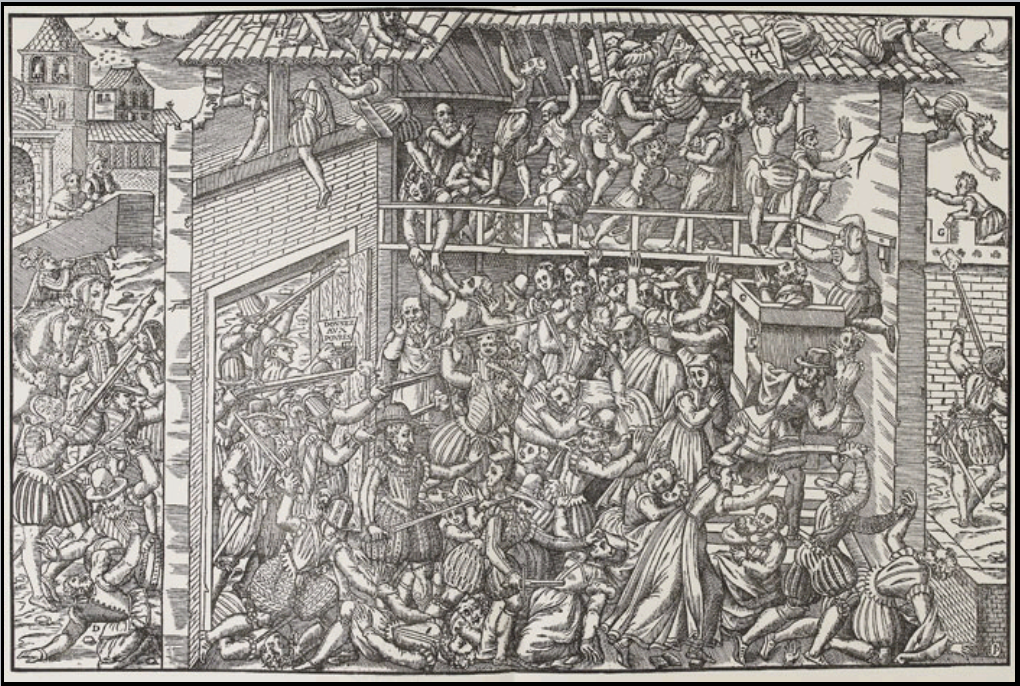
The massacre of Vessy
1562
more catholic violence against protestants (translated and distributed propaganda)

Artist
Title
Date
Significance
Theodore de Bry
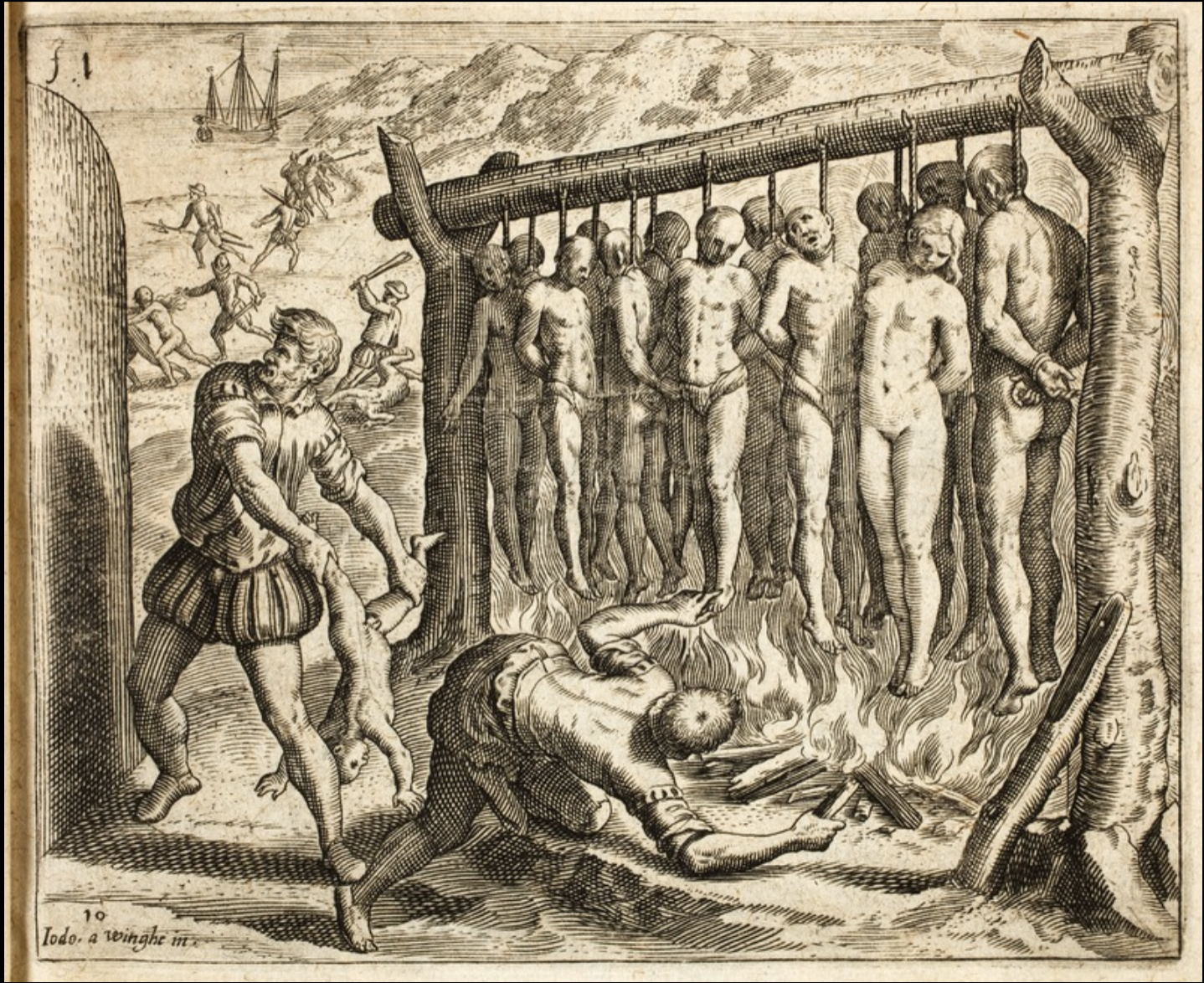
The Burning of the Indians
1594
De bry is taking Las Casas’ accounts to make examples of Catholic/spanish violence against the indigenous to make the empire wholly christianized, turning to brutality when not necessary, wanted to disqualify the empire’s ways of ruling
Artist
Title
Date
Significance
Theodore de Bry from Bartolome de las Casas
Hanging, burning, and clubbing of Indians
1598
Spanish turned to extremely brutal methods to get the indigenous to comply with their new rule, hanging and burning them even though they sometimes portrayed the indigenous as brutal themselves.

Artist
Title
Date
Significance
Theodore de Bry
Burning at the stake with a catholic priest
1598
once again, brutal

Artist
Title
Date
Significance
Aztec artists
The Mass of St Gregory feather mosaic
1539
This was very important because it shows the combination of existing andean religious beliefs (feathers and their connection to huizopochotli) to the christian storylines of the miraculous mass of st gregory, showing that the inka people could grasp the christian ideas. brings in ixiptatl/transubstantiation relationship. given to pope III as a gift from the current governor of tenochtitlan/mexico city
Artist
Title
Date
Significance
Mexica Amanteca
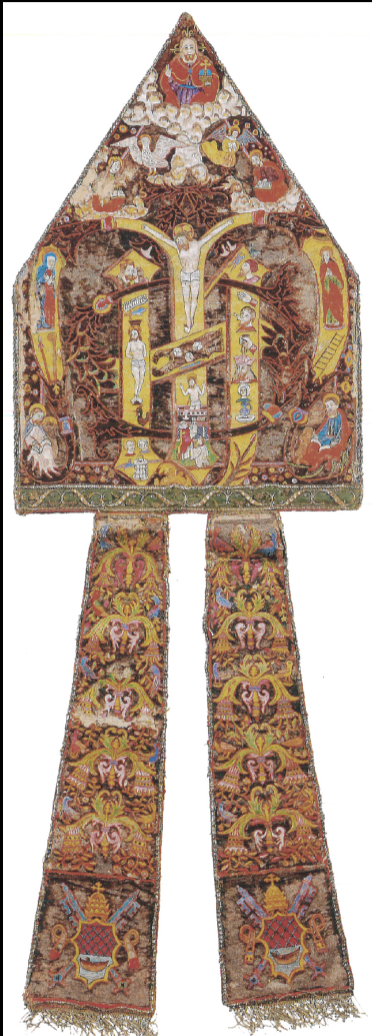
Bishop’s Miter with scenes of Christ’s Passion
16th century
This is evidence of suppression turned syncretism, the details on the miter were done in featherwork, impressing the europeans and starting a trend in featherwork art in europe, it was a mimetic image because the representation became jesus and christianity itself


Artist
Title
Date
Significance
Juan de la Corta
Festival in Plaza mayor
1623
The plaza mayor in madrid was a place for theatrics, and was represented as a stage in comparison to the rest of the city (elevated), since it was separated from the cathedral and royal palace, it represented the separation of the average people from royalty and religion. the plaza was conceived of by Phillip II but built by Phillip III.
Artist
Title
Date
Significance
Fransisco Rizi
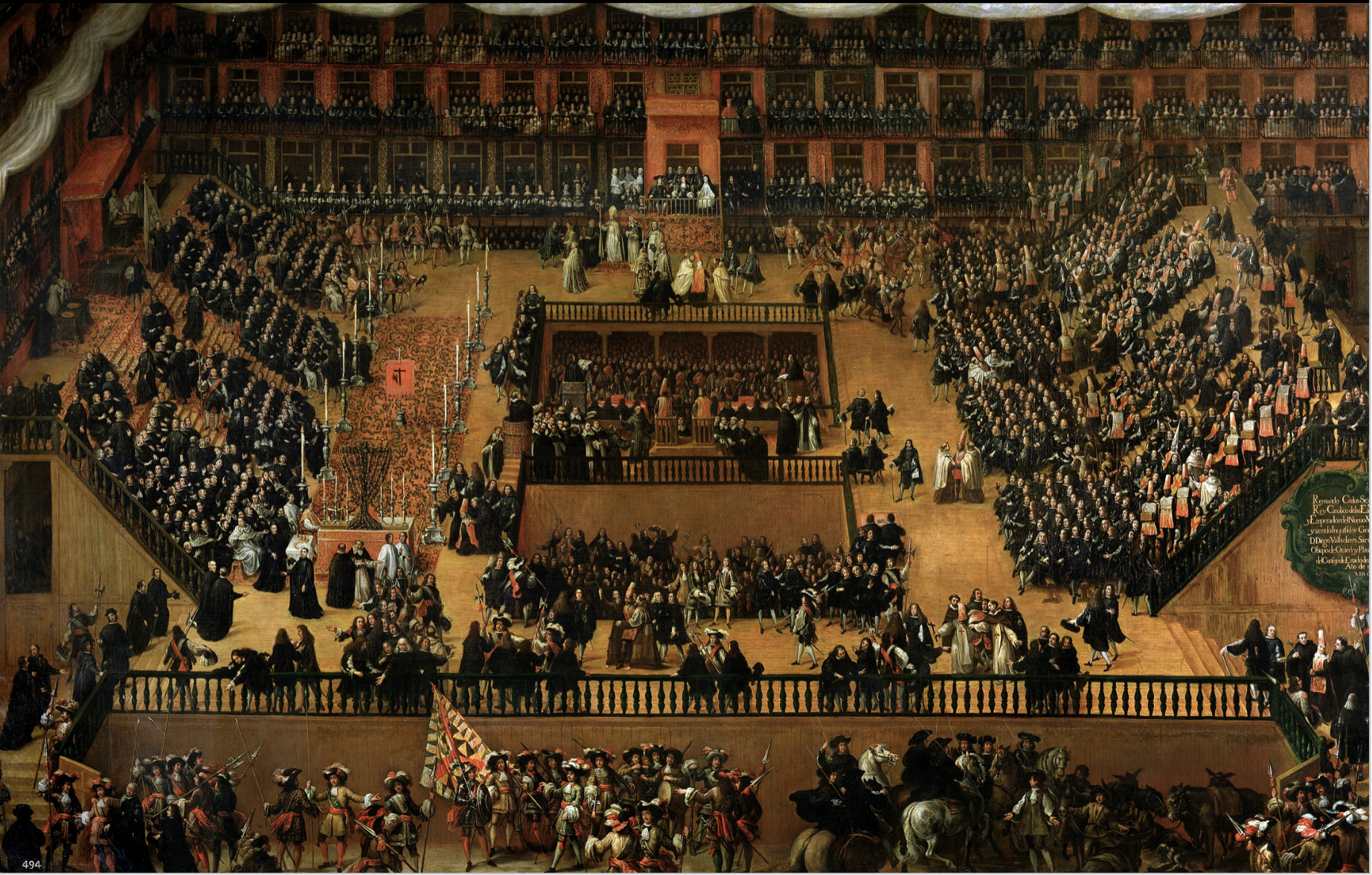
Auto de fe en Plaza Mayor, Madrid
1683
Since Plaza Mayor Madrid was seen as a theatrical place, auto de fes were common to occur here to represent the power of the royalty without necessarily having to be in the plaza.

Artist
Title
Date
Significance
Cristobal de Villalpando
View of the Plaza mayor Mexico City
1695
This view of Mexico City’s plaza mayor shows it more open, with more activity, and the fact that the cathedral and the viceroy’s palace was right there shows the presence of the Spanish leadership despite being an ocean away. The partial destruction of the royal palace (from a riot over the raising of the price of corn) helps date the image to between the time of the riots and 1700.

Artist
Title
Date
Significance
Unknown
Biombo with the conquest of tenochtitlan and mexico city
late 17th century
This biombo is really important because it superimposes the actual locations of events from the conquest of Tenochtitlan onto locations on the new mexico city, which is seen as orderly, with an eerie lack of people. The conquest of tenochtitlan side shows the stpry of the killing of Mocteczuema, which was a debated story because the spanish swore it was done by the indigenous (shown in this image, a warring tribe shoots him with an arrow) but the indigenous swore it was by the spanish. The mexico city side has organized city planning and includes the traza where only the spanish and creoles lived, everywhere else had different laws.

Artist
Title
Date
Significance
Matteo di Pacino
Miracle of the Black Leg
1370-1375
The miracle of the black leg was kind of the first instance of epidermal race being used in art as something less desirable (the black leg turns white after being transplanted onto the white person, this is the miracle)

Artist
Title
Date
Significance
Jose Montes de Oca
Saint Benedict of Palermo
1734
St benedict of palermo was a way to integrate the new african slave population into the spanish empire. Many confraternaties were created for him across the entire spanish empire, even though he wasn’t a missionary saint. This created a conflict over encarnacion because european artists did not really know how to depict black skin, so they just looked pure black whereas white saints had more detailed flesh.

Artist
Title
Date
Significance
Anonymous
Portrait of St. benedict the moor aka the black saint
1700
Lots of detail had to be done with the prints because they had to figrue out how to etch the lines to distinguish the background from the skin from the clothes. This is the one with candido por la grazia, meaning pure/white with grace, showing that his skin color could basically be white because his soul is so pure. This was different from the miracle of the black leg because his skin did not actually turn white from his holiness, but it helped to show the idea that skin color didn’t actually matter in sanctity.

Artist
Title
Date
Significance
Juan pascual de mena
Saint benedict of palermo
1770-1780
St benedict of palermo was a way to integrate the new african slave population into the spanish empire. Many confraternaties were created for him across the entire spanish empire, even though he wasn’t a missionary saint. This created a conflict over encarnacion because european artists did not really know how to depict black skin, so they just looked pure black whereas white saints had more detailed flesh.

Artist
Title
Date
Significance
Inka artists
Christ Child of Huanca
1600
The christ child of huanca is different from european depictions of the christ child because his haircut represented native andean haircuts, and his clothing represented clothes that the sapa inka would have worn, showing the idea that the indigenous people believed that jesus actually came from inka royalty.

Artist
Title
Date
Significance
Cuzco artist
the virgin of potosi
1700
Mountain as the dress, shows Mary as Pachamama with reverence for potosi mountain (which was taken over by europeans and exploited for silver, enslavement of natives). this was close to idols behind the altars because it so closely resembled pachamama rather than virgin mary. This also has the pope, a bishop, the emperor, and the globe to show how the world was ready for exploitation and conquest.
Artist
Title
Date
Significance
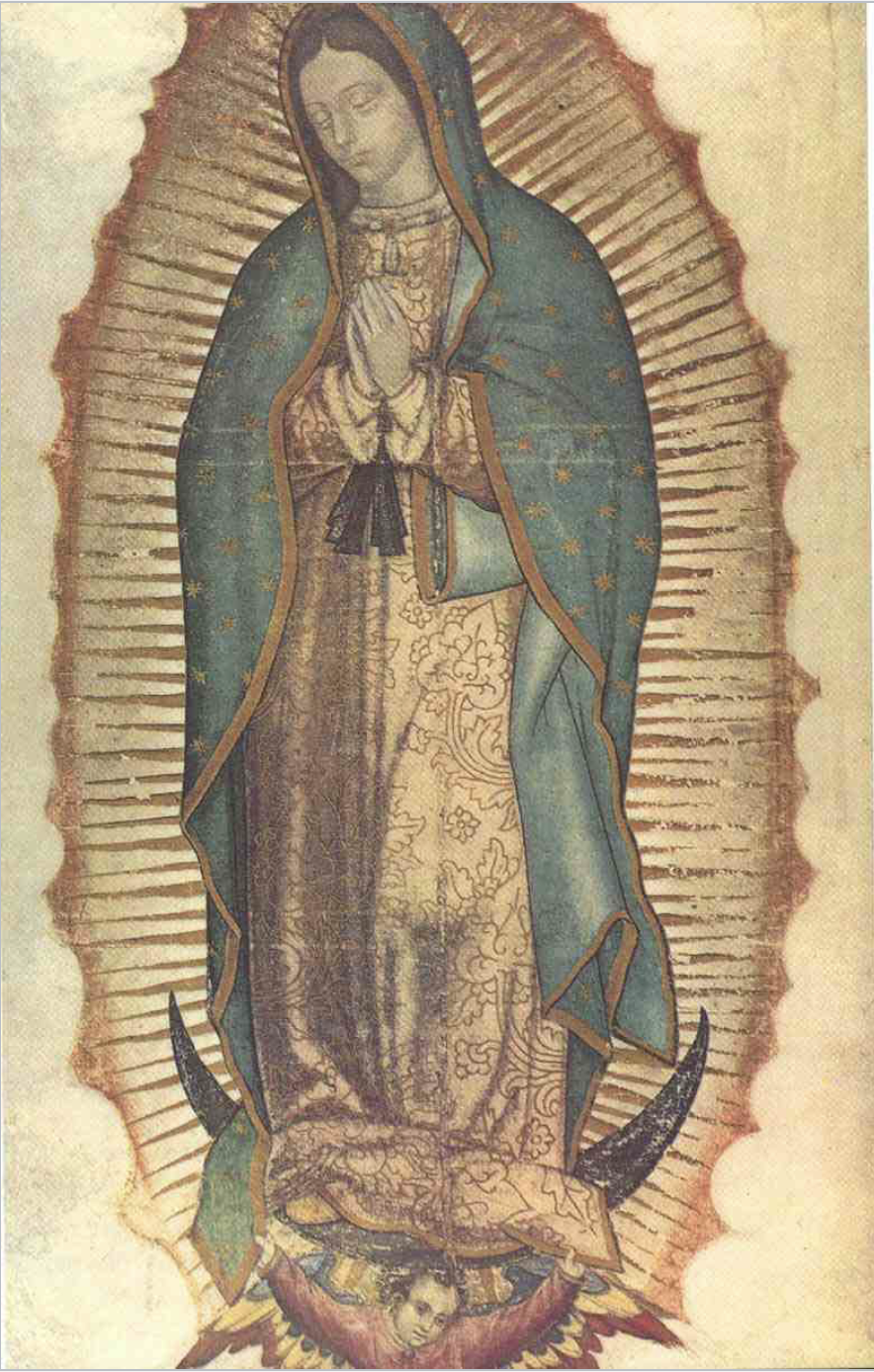
Marcos Cipac de Aquino
Virgin of Guadalupe
1556
she wants a shrine, juan diego tells the bishop, bishop says no way, virgin says go to hill, diego goes to hill, finds castillian roses in the middle of winter, brings back to bishop, roses fall out and image of virgin is imprinted onto juan diegos cloak. this is reminiscent of the veronica, so it combines the acheropita idea from europe with indigenous stories and representations of indigenous appearances in religion. syncretism.

Artist
Title
Date
Significance
Jose Juarez
Legend of the Virgin of Guadalupe appearing to Juan Diego
1665
There are actually accounts of marcos cipac de aquino painting the virgin of guadelupe in 1556, but the story of the miraculous appearances occurred in 1531. there was a conscious erasure of the painting story to align with the european acheropita validation.