BIO 308: Exam 2 :D
 Call Kai
 Learn
 Practice Test
 Spaced Repetition
 Match
 Flashcards
 Knowt Play
1/15

Earn XP
Description and Tags
help
16 Terms
How do xylem and phloem interact?
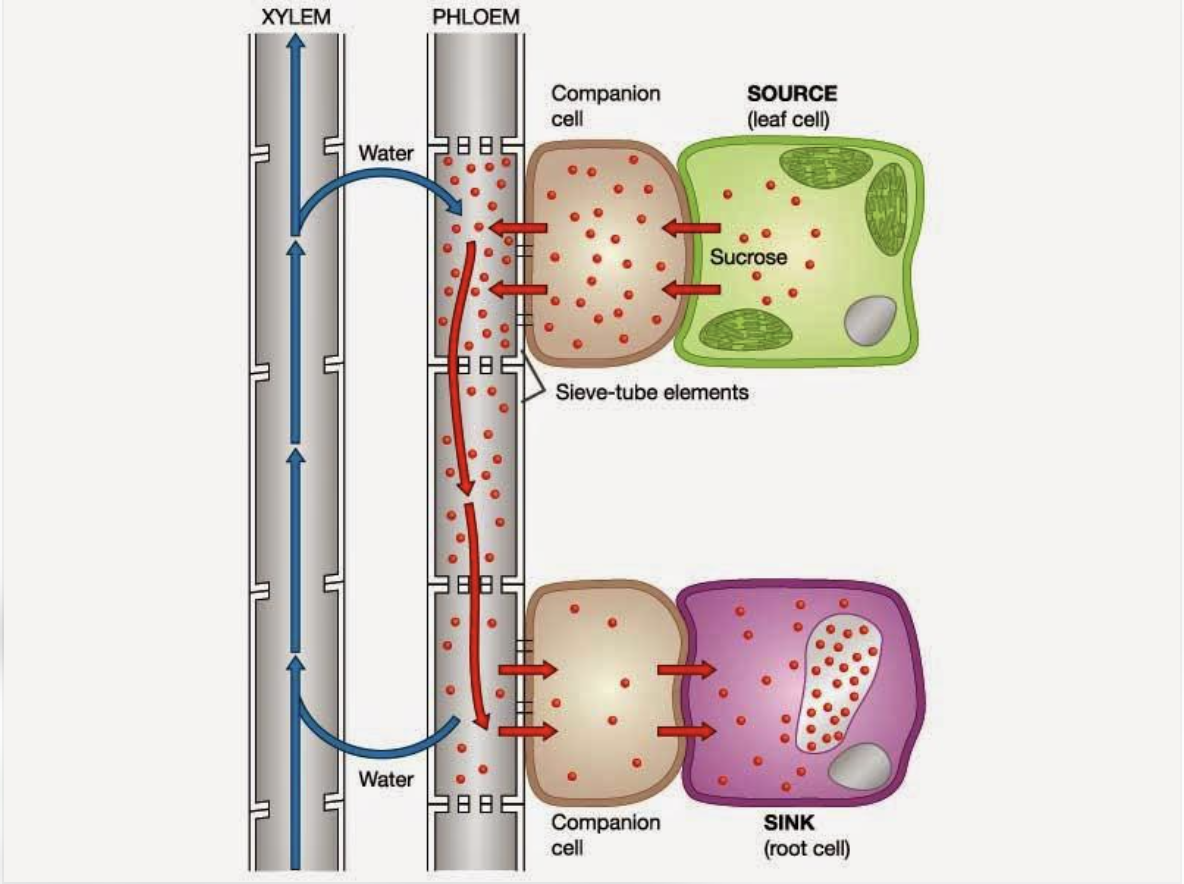
Xylem: transports water and minerals from roots upward
Phloem: transports sugars (mainly sucrose) from sources to sinks
water moves between the two tissues through osmosis
xylem supplies water to phloem, helping generate the pressure needed for sugar transport
What substances are transported in the phloem?
sucrose (main sugar)
amino acids
hormones
organic nutrients
water and dissolved substances
phloem primarily transports sugars produced during photosynthesis
What is a source?
a plant tissue that produces or releases more sugar than it uses
examples: mature leaves, storage organs releasing stored sugars
source = sends sugar

What is a sink?
a plant tissue that consumes or stores more sugar than it produces
examples: growing roots, fruits, seeds, young leaves, storage organs storing sugars
sink = receives sugar

What happens when sucrose is loaded into phloem at a source?
1.) sucrose enters the phloem
2.) solute concentration increases
3.) water potential decreases (becomes more negative)
4.) water moves from the xylem into phloem by osmosis
5.) pressure increases inside phloem
6.) sugar-rich sap moves toward sinks
osmosis: passive movement of water molecules across a semi-permeable membrane from a region of lower solute concentration to a region of higher solute concentration

What happens when sucrose is unloaded at a sink?
1.) Sucrose leaves the phloem
2.) solute concentration decreases
3.) water potential increases (becomes less negative)
4.) water moves out of phloem and into xylem
5.) pressure decreases
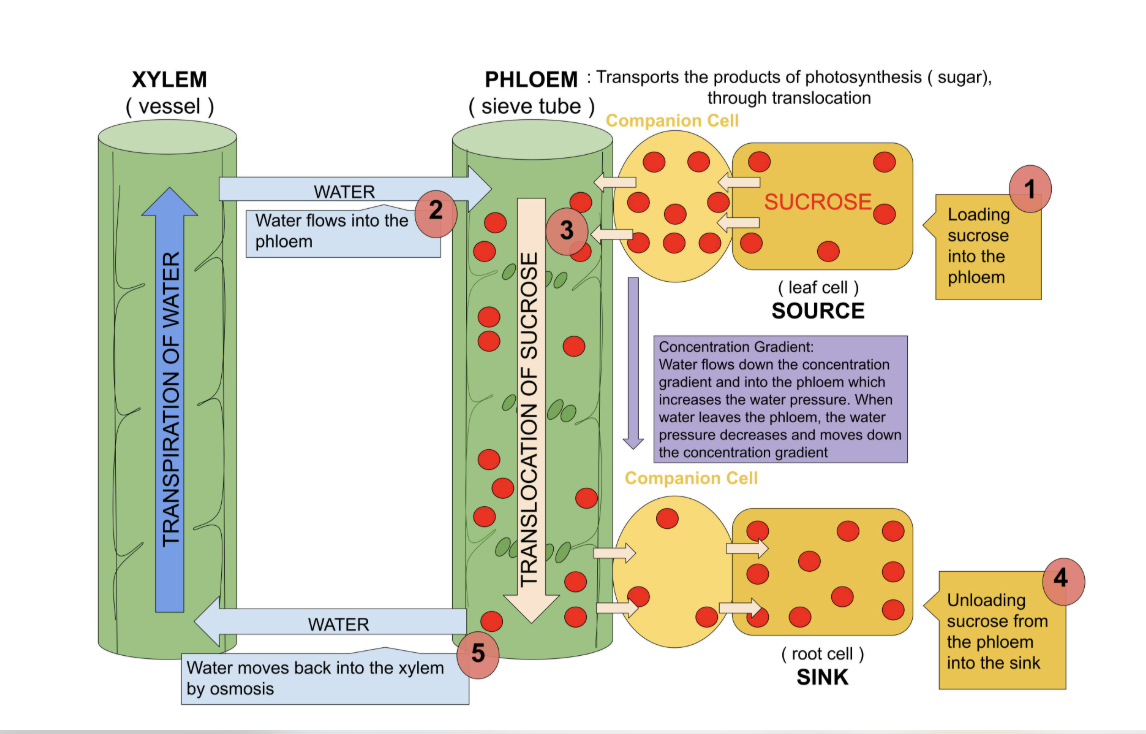
sugar → water → pressure → flow
sugar loading draws water in, increasing pressure
sugar unloading allows water to leave, decreasing pressure
What is the pressure-flow hypothesis?
the theory that sugar moves through phloem from high-pressure sources to low-pressure
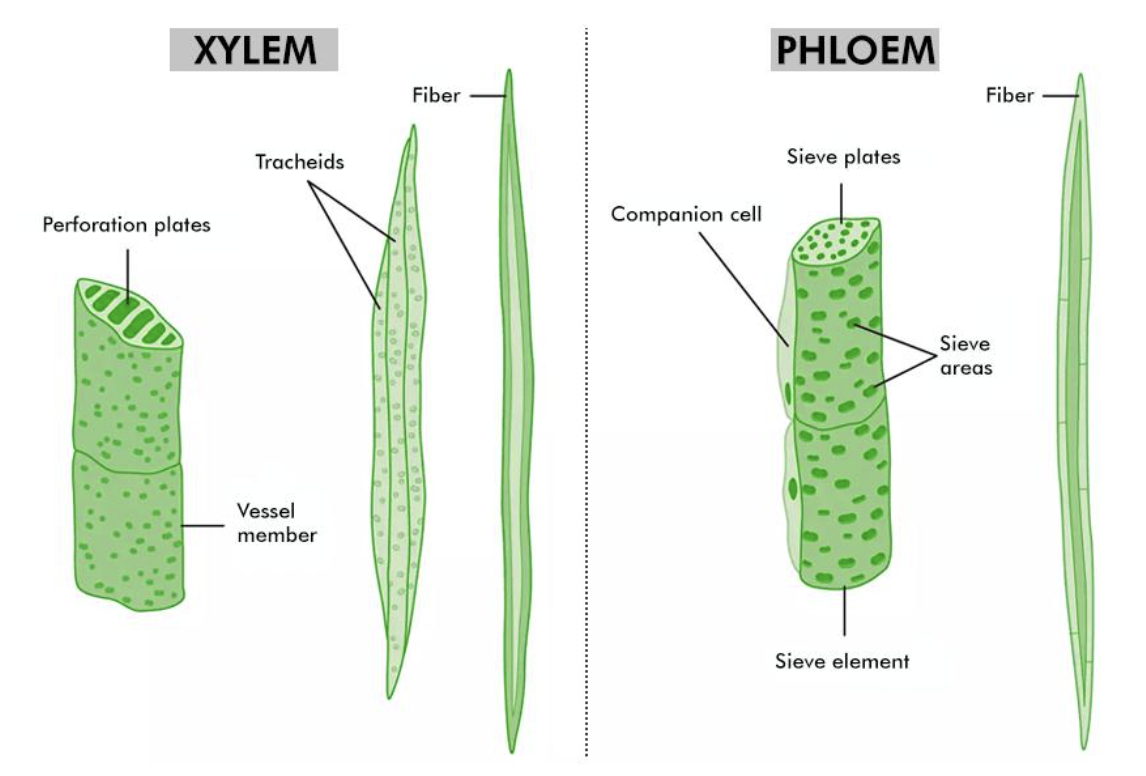
What are the differences between xylem and phloem?
Xylem
water transport
mostly dead cells
thick, lignified walls
mostly upward flow
tracheids and vessels
Phloem
sugar transport
living conducting cells
generally non-lignified walls
source to sink flow
sieve tube elements
What are tracheids and vessel elements?
tracheids: long, narrow, dead cells that transport water
vessel elements: wider, dead cells that connect to form water-conducting vessels
What are sieve tube elements?
living phloem cells that transport sugars through the plants.
connected by sieve plates
What are companion cells?
Living cells that support sieve tube elements and help load and unload sugars