Descriptive, Correlational, Experimental
 Call Kai
 Learn
 Practice Test
 Spaced Repetition
 Match
 Flashcards
 Knowt Play
1/32

There's no tags or description
Looks like no tags are added yet.
33 Terms
Descriptive Studies
researcher defines a problem and variable of interest
Doesn’t necessarily make prediction
Doesn’t control or manipulate anything
Case Study
Best Use: rare/unusual phenomena, generate ideas
Limitations: no cause/effect - cannot generalize
Surveys and Interviews
Best Use: Describe attitude and behavior of many people
Limitations: no cause/effect, biased responses, generalizable?
Naturalistic Observation
Best Use: describe natural behavior/ideas
Limitations: no cause/effect, lack of contact
Representative Samples
same proportions of different groups in study group (ethnicity or class)
Unrepresentative Samples
groups are not proportional/representative of different groups
Case Study Def.
descriptive and exploratory analysis of person, group, or event that investigates a phenomenon within its real-world context
a. rare phenomena (not as many subjects/cannot generalize/directly interact to subjects (not anonymous))
b. can lead to lying or biases - inaccurate results
Characteristics of Case Studies
Rare Phenomena
Few Participants: one cannot generalize results beyond study
Long Duration
Direct Interaction
Biased Interpretation
Possible Consequences of Direct Interaction
Participants respond in socially desirable manner for positive impression
not answer all questions/provide partial responses
feel uncomfortable/validated depending on researcher’s verbal/non-verbal responses → changes how normally respond and level of detail in their responses
socially sensitive, personal, or controversial topics affect detail, honesty, and completeness of participant’s responses relative to anonymous conditions
Strengths of Case Studies
a. good way to generate hypotheses (e.g insight for future studies)
b. provide data other methods cannot
c. provide illustrative anecdotes
Disadvantages of Case Studies
a. incomplete/unrepresentative info
b. can only rely on self-report data (subject to bias, misleading)
c. can be very subjective (often only 1 investigator)
d. cannot test theories/treatments (e.g. no cause/effect relationships)
Surveys Def.
used to collect information from predetermined sample of people
a. gain insight into attitudes, beliefs, values, and behaviors related to particular topic
b. representative: sample using, random sampling
Strengths of Surveys
a. good way to generate hypotheses
b. provide info about many people
c. fast and cost-effective
Disadvantages of Surveys
a. relies only on self-report data
b. can be very subjective
c. cannot test theories/treatments
Naturalistic Observation Def.
observing and recording behavior in naturally occurring situations without trying to manipulate or control situation
Characteristics of Naturalistic Observations
Natural Setting
No manipulation (lack of control means one cannot test cause/effect relationships)
Actual Behavior
Unobtrusive Observation
Biased Interpretation
Consequences of being unobtrusive
a. natural/spontaneous behavior → provides information about behavior in natural environment (ecological validity)
b. if people notice being observed, may change how normally behave
c. some phenomena very difficult to study unobtrusively (e.g.sexual interactions)
d. typically observed without giving their consent, which raises ethical and privacy concerns
Strengths of Naturalistic Observations
a. good way to generate hypotheses
b. provide info about behavior in natural environment
Disadvantages of Naturalistic Observations
a. some phenomena very difficult to study unobtrusively
b. can be very subjective
c. cannot test theories/treatments
Correlational Studies
measure two or more variables and their relationship to each other
a. If X and Y vary together, this implies they are related
b. cannot be used to show cause-effect relationship
c. when researcher cannot manipulate the variables to examine their relationship
Correlation Coefficient
numerical representation of strength and direction of relationship between two variables
a. MAX +1.00 → perfect positive relationship
b. MIN -1.00 → perfect negative relationship
Scatter Plots
Graphs depicting relationship between two variables
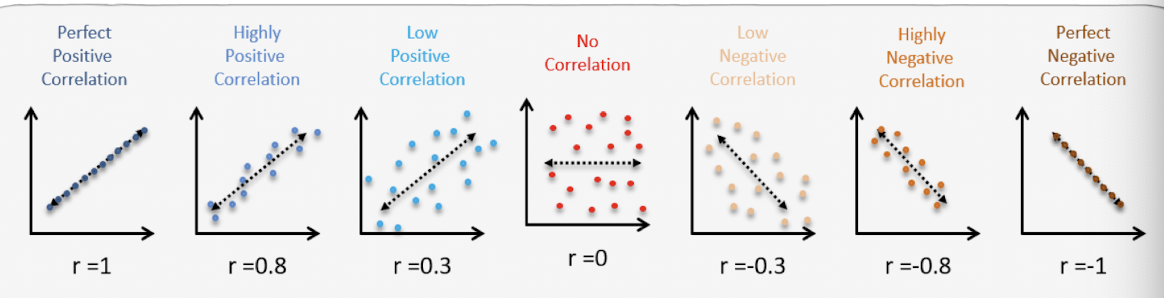
Types of Bi-variate Correlations

Directionality and 3rd Variable Problems

If X and Y naturally covary, could share some underlying process → could also mean one influences the other
Problem: reason is always unclear

Correlation does not mean causation (1)
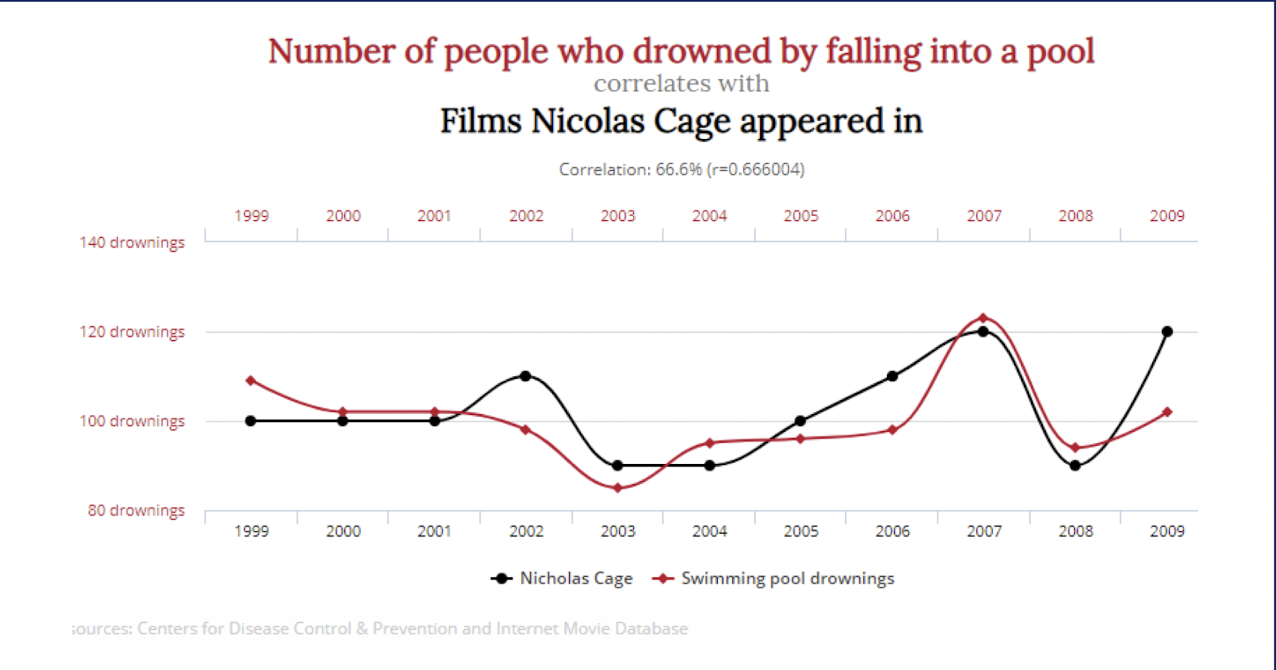
Correlation does not mean causation (2)
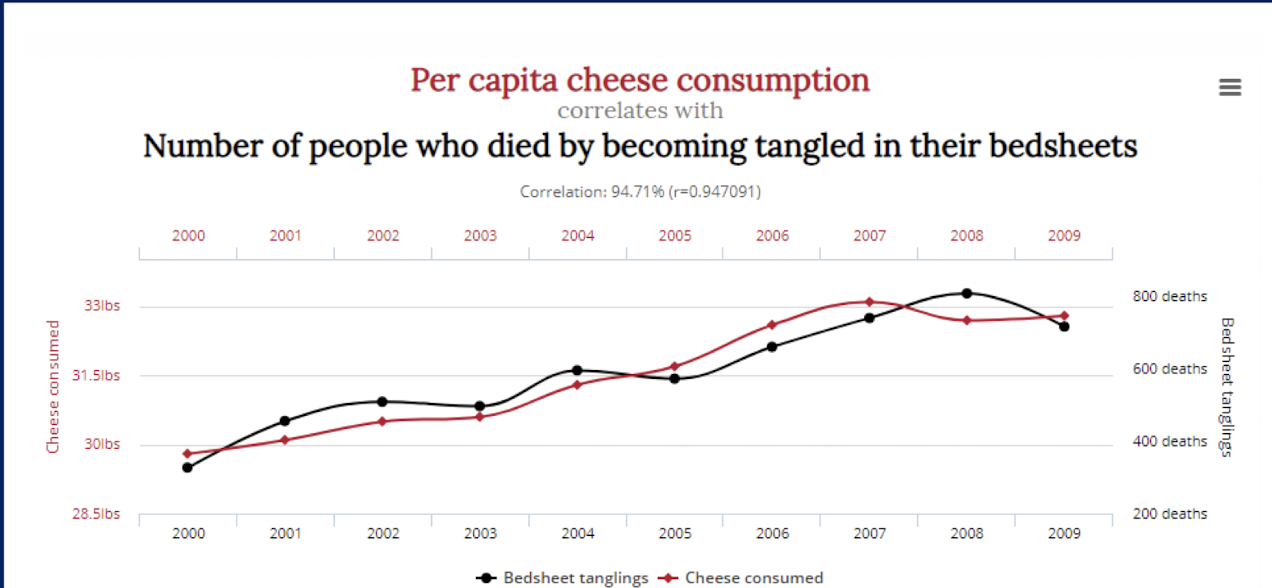
Correlation does not mean causation (3)

Correlation does not mean causation (4)

Rule out other variables
tries to address third variable problem: Z → Y and Y (do this statistically by including covariates)
Cross-Sectional design:
basic (measure X, Y, Z at same point in time) → identify an effect of Z on X and/or Y at Time 1 (can measure multiple Z variables)
Cross-sectional design: trends
(measure X, Y, Z multiple times over time) → tries to address third variable problem: X→Y (measure X, Y, Z multiple times - look for trends in relationship between all variable over time)
Very high X: Y relationships could mean that X is Y
X:Y relationships sometimes diagnostics of a problem