ASL - Unit 5
 Call Kai
 Learn
 Practice Test
 Spaced Repetition
 Match
 Flashcards
 Knowt Play
1/349

There's no tags or description
Looks like no tags are added yet.
350 Terms
Sign “stay”

(and move both hands downwards)

(and move both hands downwards)
What does this mean?
Stay
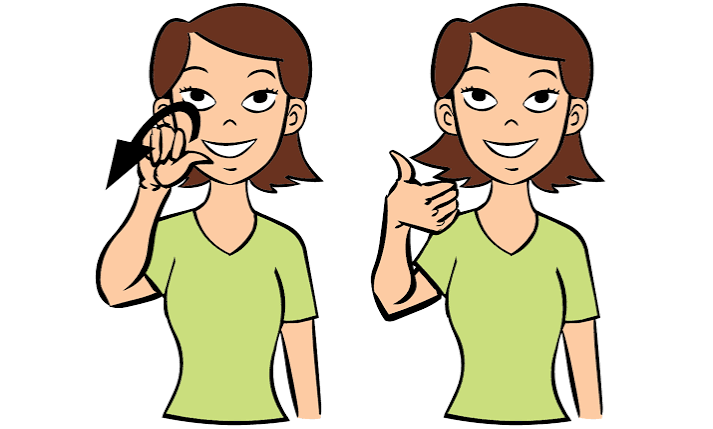
Sign “best friend”


What does this mean?
Best friend
Sign “funny”


What does this mean?
Funny
Why do you raise your eyebrows instead of furrowing them when making a question followed by giving the answer immediately at the same time?
Because you are explaining and not actually asking the question (it’s a narrative dynamic)
The word “tell” in ASL is a what?
An agreement verb
Sign “tell” (context = “I tell you”)

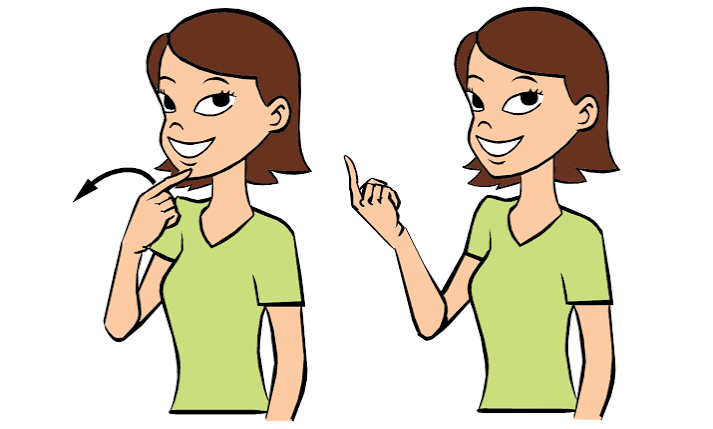
What does this mean?
Tell (“I tell you”)
Sign “tell” (context = “you tell me”)
(but reverse the order)
(but reverse the order)
What does this mean?
Tell (“you tell me”)
Sign “work”


What does this mean?
Work
Sign “job”


What does this mean?
Job
Sign “tree”
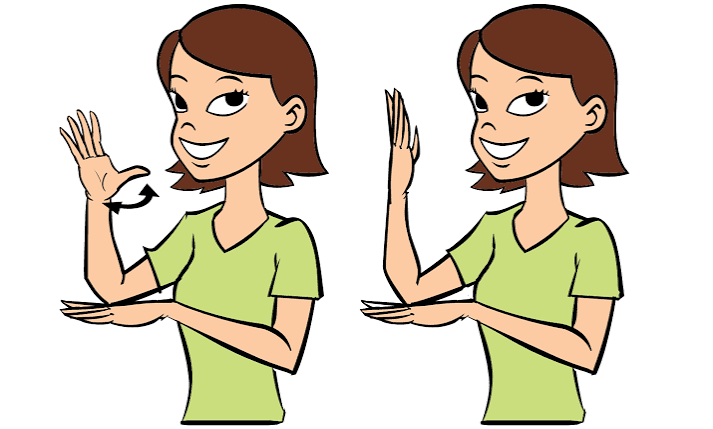

What does this mean?
Tree
Sign “walk”


What does this mean?
Walk
Sign “area”


What does this mean?
Area
Sign “hungry”


What does this mean?
Hungry
Sign “coffee”


What does this mean?
Coffee
Sign “sandwich” (way #1)
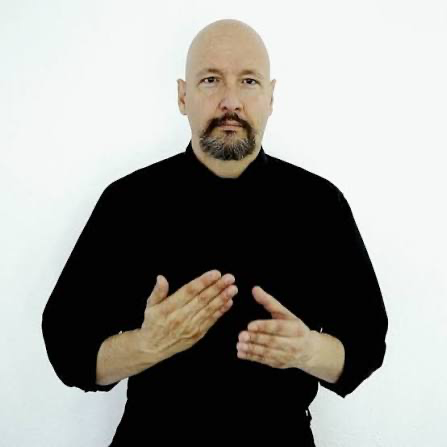
(then connect hands together)

(then connect hands together)
What does this mean?
Sandwich (Way #1)
Sign “sandwich” (way #2)
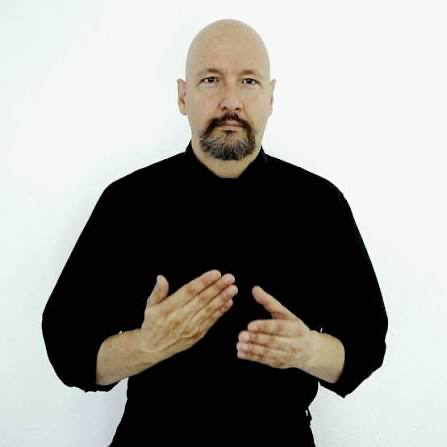
(make this handshape of a more flattened letter “c” and shake hand by mouth)
(make this handshape of a more flattened letter “c” and shake hand by mouth)
What does this mean?
Sandwich (Way #2)
Sign “doctor”

What does this mean?
Doctor
Sign “lunchbox”

(sign “box” followed by this)

(sign “box” followed by this)
What does this mean?
Lunchbox
Sign “forest”
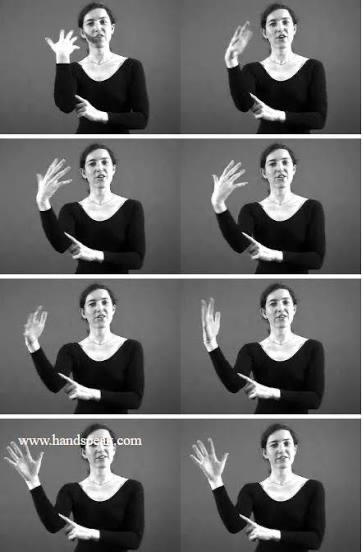

What does this mean?
Forest
Signing “forest” is like signing _____ but signing it many times?
“Tree”
When signing “forest,” we need to what?
Explain it more
Sign “plaid”

(move hand across chest and then downwards in a cross like shape)
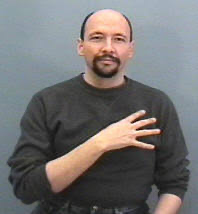
(move hand across chest and then downwards in a cross like shape)
What does this mean?
Plaid
Sign “axe”
(you need to explain the axe’s shape when signing it)
Sign “stethoscope”
(take index fingers on both hands and curl finger tips slightly. Then move them to ears and downwards in front of you. Then make a hand shape like the letter “c” and move hand around like you’re touching something with it)
(take index fingers on both hands and curl finger tips slightly. Then move them to ears and downwards in front of you. Then make a hand shape like the letter “c” and move hand around like you’re touching something with it)
What does this mean?
Stethoscope
Sign ““Timber””
(look as though you are yelling it and mouth the word out)
Sign “yell”


What does this mean?
Yell
The word “call” in ASL is a what?
An agreement verb
How many ways are there to sign the word “call” in ASL?
3 - each depends on the context
Sign “call” (summon)


What does this mean?
Call (summon)
Sign “call” (phone")

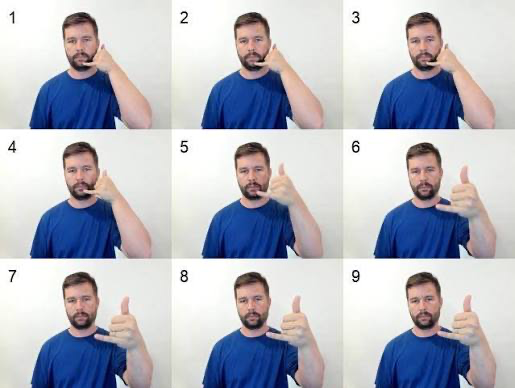
What does this mean?
Call (phone)
Sign “call” (name)
(touch hands together and then move hands forward)
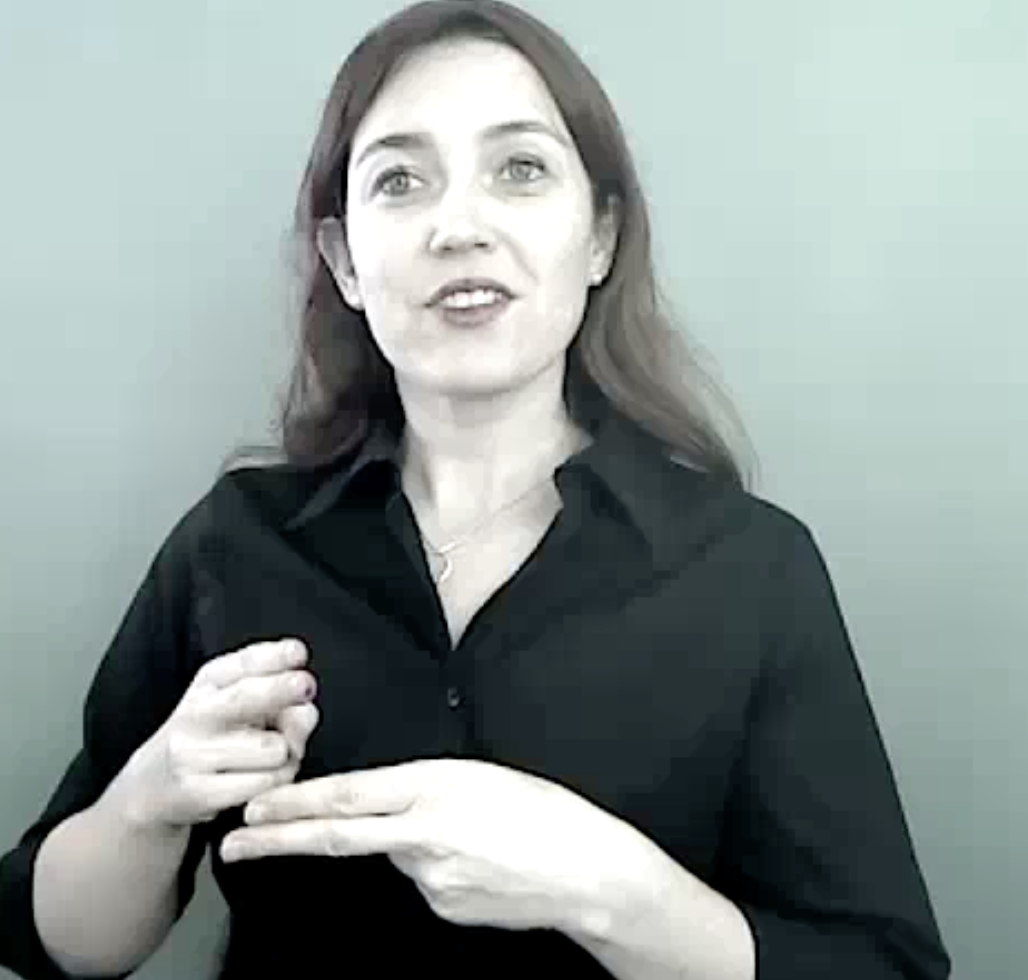

(touch hands together and then move hands forward)
What does this mean?
Call (name)
Sign “fun”
(Finger spell, but make a semi circle motion when signing the letter “u” upwards and down into the letter “n”)
Sign “silly”
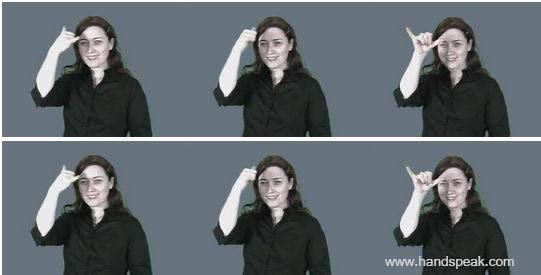
What does this mean?
Silly
Sign “laugh”


What does this mean?
Laugh
Sign “thirsty”

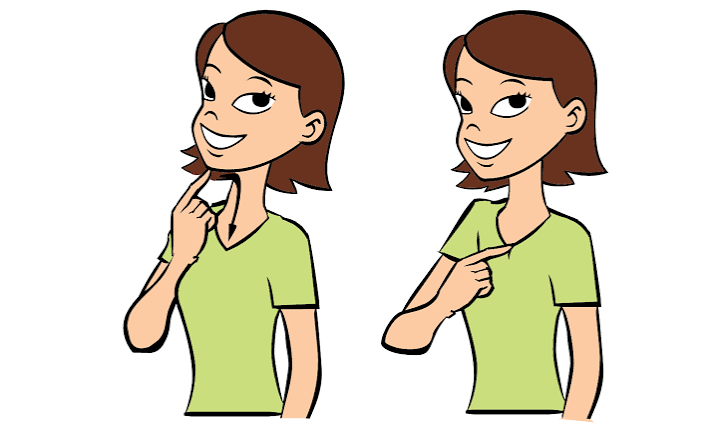
What does this mean?
Thirsty
Sign “nurse”
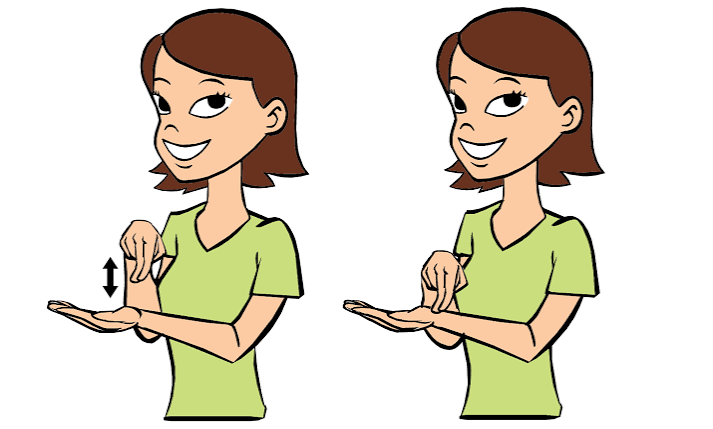

What does this mean?
Nurse
Sign “breakfast”


What does this mean?
Breakfast
Sign “lunch”


What does this mean?
Lunch
Sign “dinner”

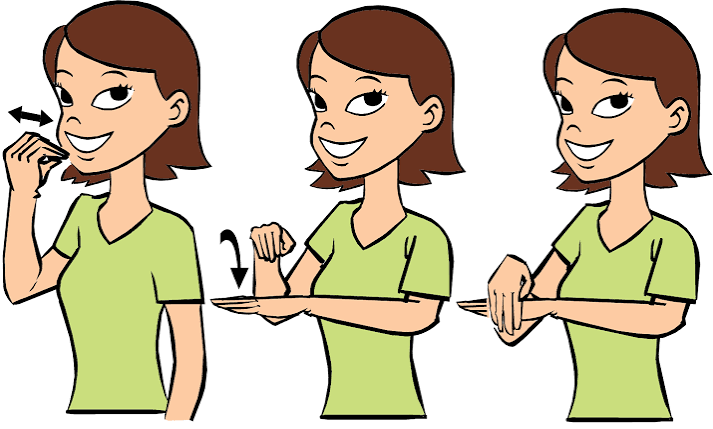
What does this mean?
Dinner
Sign “heavy”
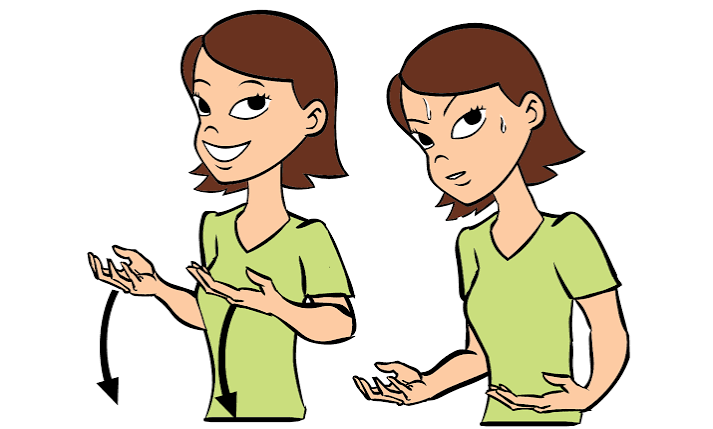

What does this mean?
Heavy
Sign “rainfall”


What does this mean?
Rainfall
Sign “step back”

(and move hands backwards at opposite times)

(and move hands backwards at opposite times)
What does this mean?
Step back
Sign “team”

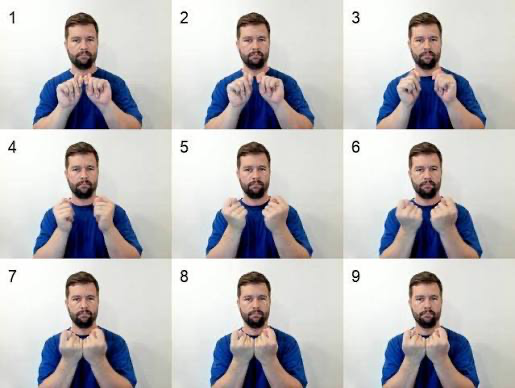
What does this mean?
Team
What are 4 elements to help you tell a story well?
Transitions (start with raised eyebrows)
Engaging the audience (use facial expressions)
Use of signing space
Sticking the ending (use a closer, such as “thank you” or “bye”)
One-person role allows the narrator to show what when telling a story?
To show how a character behaves
The narrator becomes the character, taking on his/her actions, manners, and feelings.
What must happen for an effective role shift to occur in a one-person role shift?
It involves both your body and your eyes.
Your gaze must appear as though you are “truly” looking at the person, place, or thing you are interacting with or referring to.
All these elements must be in agreement for the role shift to be successful.
Two-person role allows the narrator to show what when telling a story?
Interactions between two characters in a story.
The narrator shifts between the two characters, adopting each character’s actions, manners, and feelings as well as comments.
What must happen for an effective role shift to occur in a two-person role shift?
Turn your head just enough to complete the shift, but not so much that the listener cannot see your facial expressions.
Only your upper body and head turn slightly to make the shift.
Don’t move your feet.
For transitions in a story, you must do what?
Use raised eyebrows to signal the beginning of a new scene or segment.
When trying to engage the audience when telling a story, you must do what?
Make deliberate eye contact with your audience and maintain eye contact throughout the story so that the listener is more attentive to the story.
The only time you should break eye contact with the audience is when you role shift into a new character.
Tell the story with deliberate enthusiasm by stepping into the story and making it come alive.
How do you use signing space effectively when telling a story?
To make the presentation visually appealing, make your signs larger and deliberate.
On the day of filming an ASL video, what 4 things must you adhere to?
Wear solid colour clothes.
Pin hair out of your face.
Don’t wear hats due to the shadows hiding your face.
You shouldn’t have anything in your mouth (if you do, this can risk not using facial grammar correctly).
Sign “back”
(make the hand shape of the letter “b” with dominant hand, but have palm of hand facing to the side. Then move hand towards you and change into the hand shape of the letter “k”)
(make the hand shape of the letter “b” with dominant hand, but have palm of hand facing to the side. Then move hand towards you and change into the hand shape of the letter “k”)
What does this mean?
Back
Sign “schedule”
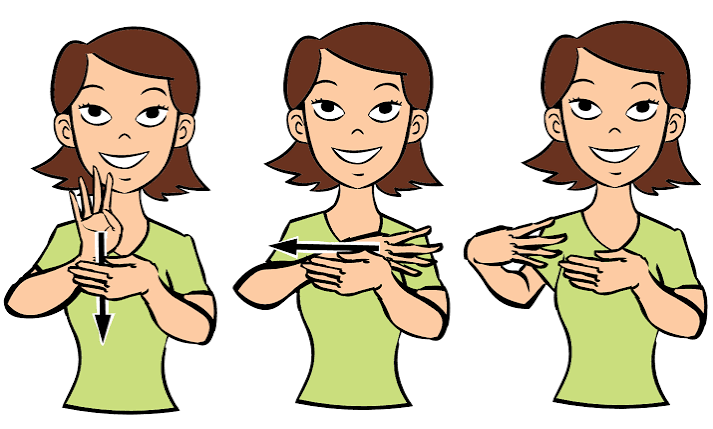

What does this mean?
Schedule
Sign “weekly”

(and repeat motion)

(and repeat motion)
What does this mean?
Weekly
Sign “week”
What does this mean?
Week
Sign “bi-weekly”


What does this mean?
Bi-weekly
Sign “yesterday”
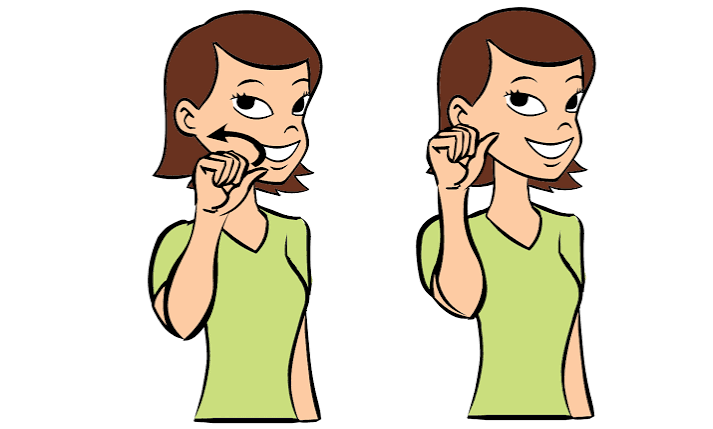

What does this mean?
Yesterday
Sign “tomorrow”