03- SOCIOCULTURAL BASIS & HISTORICAL PERSPECTIVE
 Call Kai
 Learn
Learn Practice Test
 Spaced Repetition
 Match
Match Flashcards
 Knowt Play
1/152

There's no tags or description
Looks like no tags are added yet.
Name | Mastery | Learn | Test | Matching | Spaced | Call with Kai | Chat |
|---|
No analytics yet
Send a link to your students to track their progress
153 Terms
Prehistoric & Ancient Times
Natural factors that affect the development and growth of urban areas
Potential for natural calamities (fire, flooding, volcano eruptions, etc.)
Presence of fertile soil, bodies of water, and other natural resources
Slope and terrain and other forms of natural defenses
Climate
Linear

Axial

Radial

Grid

Precinctual

Rectilinear Land Pattern

Rectilinear Land Pattern
originated in agricultural societies, deriving from the obvious logic of parallel plowing.
Rectilinear Land Pattern
have endured the test of time because they are extremely suitable for orderly land planning, property ownership, and construction
Circular Land Pattern

Circular Land Pattern
came from the practices of herding communities
Circular Land Pattern
Enclosing the maximum amount of land with the minimum amount of fence
Circular Land Pattern
This was later applied to defensive architecture such as forts
KHIROKITIA
An archaeological site on the island of Cyprus dating from the Neolithic age
KHIROKITIA
had a population of about five hundred people and was protected by a massive stone wall almost 3 meters thick.
KHIROKITIA
First documented city with a major street
KHIROKITIA

CATAL HÜYÜK
The city dates back as far as 7400 BCE; by the third millennium BCE it had a population of about eight thousand.
CATAL HÜYÜK
The city consisted of rectangular flat roofed houses packed together into a single architectural mass with no streets or passageways
CATAL HÜYÜK
Largest Neolithic city
CATAL HÜYÜK

JERICHO
Early settlement in Israel enclosed with walls, built around a reliable source of water.
JERICHO
is one of the earliest continuous settlements in the world, dating perhaps from about 9000 BCE.
JERICHO

ERIDU
was revered as the oldest city in Sumer
ERIDU
continued to maintain its importance during the early Neo-Babylonian period but faded into obscurity after the rise of Babylon.
ERIDU

DAMASCUS
Founded in the 3rd millennium B.C., Damascus is one of the oldest cities in the Middle East. In the Middle Ages, it was the centre of a flourishing craft industry, specializing in swords and lace.
DAMASCUS

DAMASCUS
Considered as the oldest continually inhabited city.
BABYLON
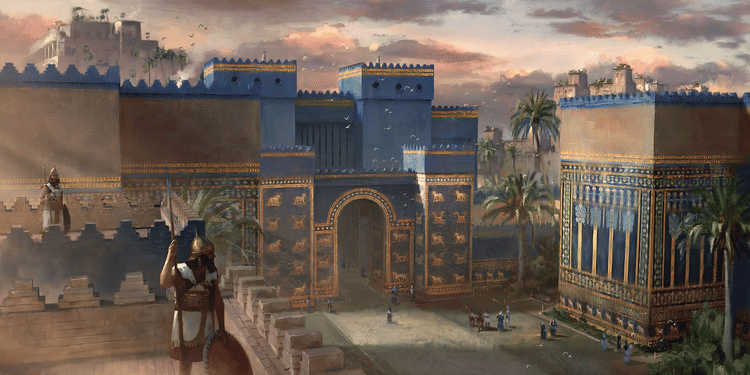
Nebuchadrezzar’s ______ was the largest city in the world, covering about 4 square miles (10 square km) with 80,000 to 200,000 inhabitants
BABYLON
THEBES AND MEMPHIS
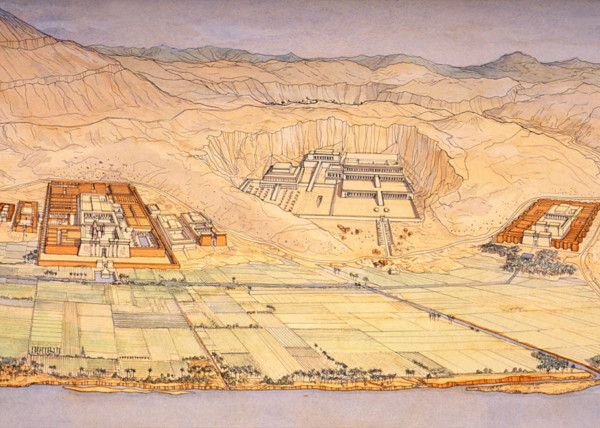
Along the Nile River
THEBES AND MEMPHIS
Monumental architecture
THEBES AND MEMPHIS
Dependence on the Nile—dug canals for irrigation
THEBES AND MEMPHIS
Organized labor of a large number of workers.
THEBES AND MEMPHIS
MOHENJO-DARO AND HARAPPA
Administrative and religious centers with about 40,000 inhabitants
MOHENJO-DARO AND HARAPPA
Imposing citadels
MOHENJO-DARO AND HARAPPA
Advance civilization characterized by housing variations, sanitary, and sewage systems.
MOHENJO-DARO AND HARAPPA

ANYANG
an ancient city with a history of over 3,000 years and is one of the Eight Ancient Capitals of China, and also one of the best preserved. It is one of the key birthplaces of Chinese ancient culture.
ANYANG
Largest city of the Yellow River Valley
ANYANG
BEIJING
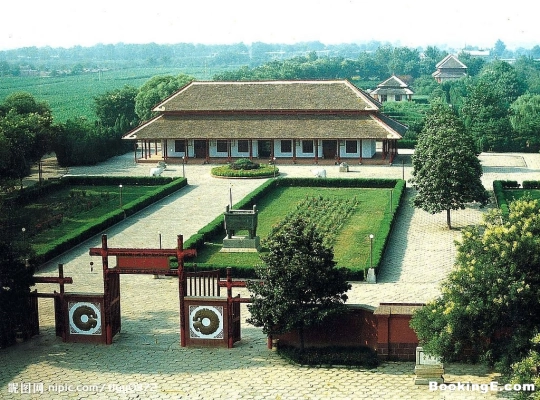
Founded approximately at the same location as it is today
CLASSICAL GREECE
Some of the earliest and most influential town planning principles evolved in classical Greece.
CLASSICAL GREECE
Each city-state was organized with an urban center and the surrounding countryside. Characteristics of the city in a polis were outer walls for protection, as well as a public space that included temples and government buildings
HIPPODAMUS OF MILETUS
Greek town planning was largely formulated by whom?
HIPPODAMUS OF MILETUS
He planned Greek towns using a rectilinear pattern of blocks that terminate in an irregular enclosing wall, largely determined by the topography.
POLIS
The city state with an ideal population of about 5,000 male citizens
POLIS
These towns contained a harbor, a market, a theater, a temple and other public buildings.
POLIS
The size of the towns are limited by the food supply obtainable from the surrounding region
POLIS
hen a town reaches the largest practical size, a new town is started at another nearby site
PALEOPOLIS
old town
NEOPOLIS
new town
AGORA
The center of activity in any Greek city.
AGORA
A large open area that served as the marketplace and meeting place for the town.
AGORA
Around the outside of the agora were long, open air buildings called stoas that had shops in the back.
AGORA
The citizens of the city would meet here to discuss politics, hear speeches, and buy goods.
AGORA

ACROPOLIS
Large cities often had a hill or high point in the town called the?
ACROPOLIS
This area would be used as a last area of defense if the city was attacked.
ACROPOLIS
City of the Gods
ACROPOLIS

TEMPLES
Often there were temples to the gods situated around the agora and in the Acropolis.
TEMPLES
Most cities had a single god called a patron god that the city was dedicated to.
TEMPLES
They would have a special large area and temple for their patron god.
TEMPLES

THEATERS
Many Greek cities had a large open-air theater where plays were held during festivals.
THEATERS
Greek theater was a popular form of entertainment.
THEATERS
Some theaters were large enough to hold over 10,000 people.
THEATERS

STADIUM
The Greeks also enjoyed sporting events and contests. They built large stadiums (called the stadion) and had gymnasiums.
hippodrome
The __________ was a stadium designed to hold chariot races.
STADIUM

HOUSES
Some areas of the city were designated for?
housing
In some towns the _______ was planned such that the soldiers lived in one area, the craftsmen in another, and the farmers in another area.
Greek homes
_______ were plain and closed off from the outside, but were quite open on the inside and centered around a large courtyard.
special sanctuary
Some towns also had a ___________ nearby. The sanctuary was a place dedicated to a god where the sick could go to be healed and people would go to hear prophesies about their future.
PRIENE, TURKEY
An Ancient Greek Town
ATHENS & SPARTA
One of the largest Greek Cities
orthogonal
A standard Roman city plan was based on a grid of ________ (laid out on right angles) streets.
ROMAN TOWN PLANNING
It was founded on ancient Greek city models, described by Hippodamus. It was used especially when new cities were established, e.g. in Roman coloniae.
ROMAN TOWN PLANNING
Largely derivative of Greek principles, but with some notable variations
rectilinear form
Roman towns used the __________ like the Greeks
cardo
The main street, oriented north-south, was called the
decumanus
The secondary main street, oriented east-west, was called the
Oppidum
One of the two types of Roman towns which is called commercial town
Castrum
One of the two types of Roman towns which is called military town
Republican Forum
Full of odd orders and informal layout.
Imperial Forum
Spacious and Open, layout is orderly.
INSULA
the apartment house for the poorest people.
INSULA
these houses usually had 3-4 stories and would be built from the cheapest materials like timber and poor concrete.
INSULA
the ground floor of an ______ was usually taken by shops, whose owner would most likely live right over it
INSULA
Those first floors could have water and were considered the best and more expensive parts of the building to rent. The upper stories were extremely crowded and usually taken by the poorest citizens and slaves,
INSULA

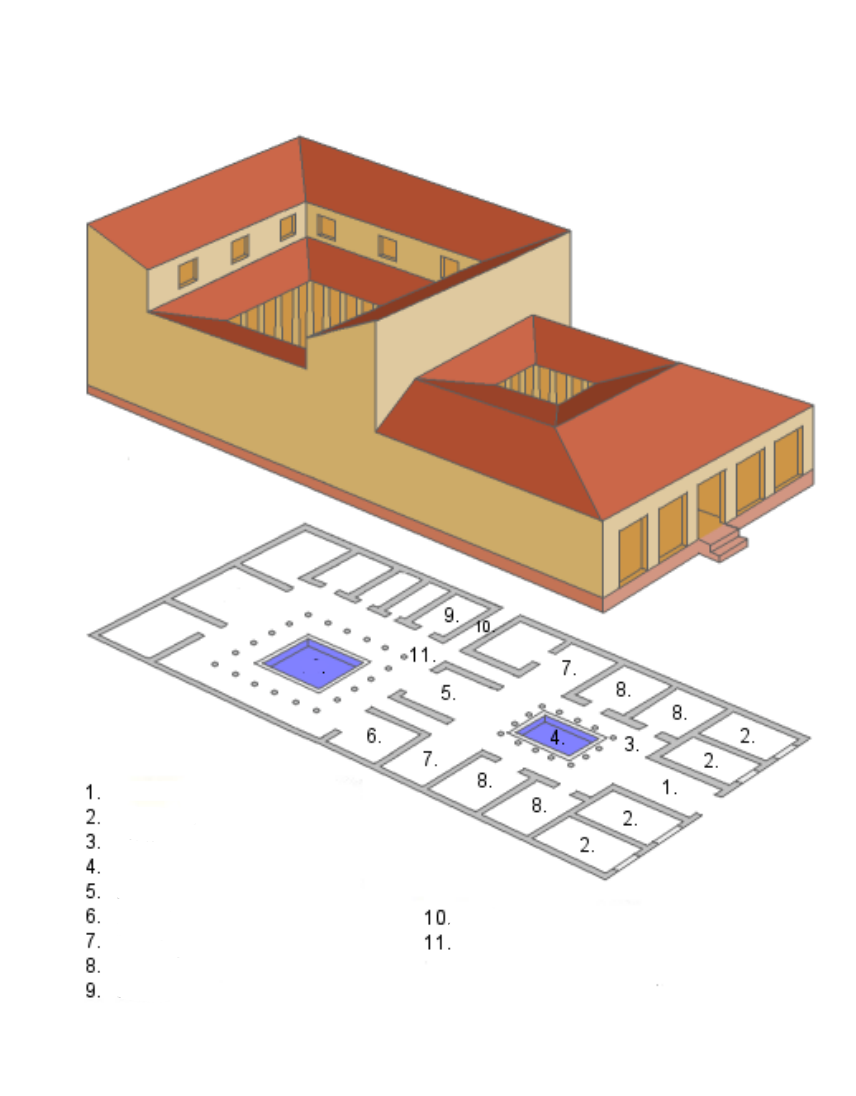
DOMUS
private family residence of modest to palatial proportions, found primarily in ancient Rome and Pompeii.
DOMUS

FAUCES
1
FAUCES
narrow entrance or passageway, the main entrance to a home, but with one side open to the street.
