ART HIS 40A Midterm 1 Object List
 Call Kai
 Learn
 Practice Test
 Spaced Repetition
 Match
 Flashcards
 Knowt Play
1/60

There's no tags or description
Looks like no tags are added yet.
61 Terms
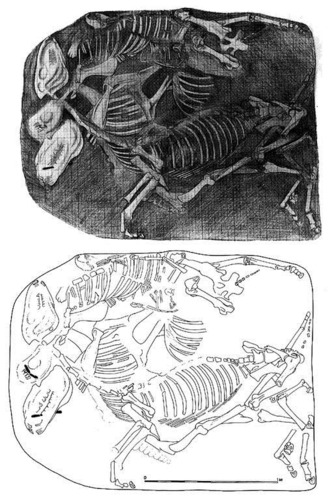
Term: The "hero's grave" from Lefkandi (cremation and horse burial), 10th century BC
Era: Geometric Era
Importance: Monumental apsidal tomb with horse sacrifices; shows elite warrior status and early Homeric-style hero cult.

Term: East Greek kotyle with inscription ("Nestor's Cup"), 720 BC
Era: Geometric Era
Importance: Sympotic drinking cup; contains one of the earliest Greek alphabetic inscriptions referencing Homer's poetry.

Term: Attic Geometric amphora ("Dipylon Amphora"), 760–735 BC
Era: Geometric Era
Importance: Elite female grave marker; depicts prothesis (laying out the dead) with mourners; marks return of human narrative art.

Term: Attic Geometric krater with ekphora and chariots, 760–735 BC
Era: Geometric Era
Importance: Elite male grave marker; depicts ekphora (funeral chariot procession) and warriors; highlights aristocratic martial rank.

Term: Attic Geometric krater with prothesis and battle scene, 760–735 BC
Era: Geometric Era
Importance: Funerary mixing vessel; links personal death directly to civic combat and heroic warrior arete (virtue).
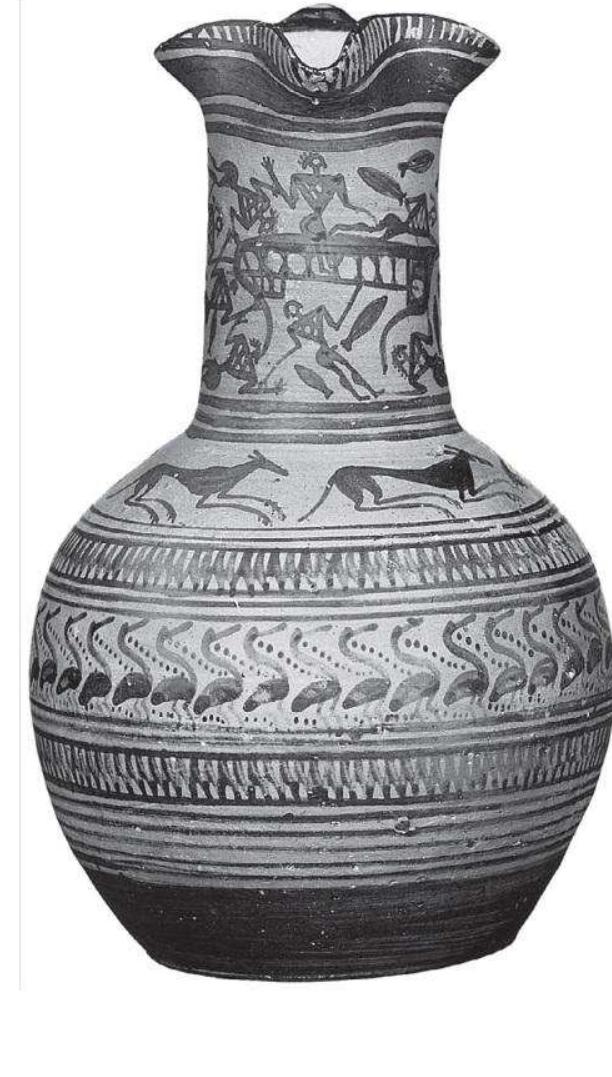
Term: Attic Geometric oinochoe with shipwreck scene, ca. 740–720 BC
Era: Geometric Era
Importance: Wine-pouring jug; depicts shipwrecked sailors swimming among fish; early narrative reflecting dangerous sea colonization.

Term: Terracotta and bronze offerings to Zeus from ash altar at Olympia, 9th–7th centuries BC
Era: Geometric Era
Importance: Votive animal figurines; reflects pastoral wealth, equestrian prestige, and Panhellenic competitive piety.

Term: Bronze tripod leg showing struggle for the tripod(?), Olympia, 8th c. BC
Era: Geometric Era
Importance: Prize cauldron support; depicts two warriors wrestling over a tripod; reflects athletic funeral games and mythic combat.

Term: Bronze figurine of Apollo dedicated by Mantiklos, 700 BC
Era: Orientalizing Era
Importance: Votive statuette with inscribed hexameter text on thighs; embodies "do ut des" ("I give so that you might give").

Term: Protoattic amphora by the Analatos Painter with chariots, dancers, sphinxes, 700-680 BC
Era: Orientalizing Era
Importance: Display vase; blends Geometric bands with Near Eastern floral patterns, sphinxes, chariots, and dancing men and women.

Term: Protocorinthian alabastron with griffin, lotuses, tree of life, 660–650 BC
Era: Orientalizing Era
Importance: Perfume vessel; displays Corinthian luxury trade and Near Eastern hybrid beast and lotus iconography.

Term: Protocorinthian aryballos with lion head and battle scene, 640 BC
Era: Orientalizing Era
Importance: Athlete's oil flask; combines sculpted lion head with miniature hoplite battle frieze; links athletics to warfare.

Term: Phoenician silver bowl, 750–600 BC
Era: Orientalizing Era
Importance: Imported luxury banquet bowl; repoussé Egyptian and Near Eastern motifs illustrate foreign trade goods in Greek dining.

Term: Chigi olpe (wine jug) with judgment of Paris, hoplite battle, riders, hunt, 650-640 BC
Era: Orientalizing Era
Importance: Wine jug; depicts hoplite phalanxes clashing to flute music, Judgment of Paris, and hunts; key visual of the hoplite reform.

Term: Kore known as the "Lady of Auxerre," 650–600 BC
Era: Orientalizing Era
Importance: Limestone statuette in Daedalic style (triangular face, wig-like hair); earliest stone foundation for Archaic female korai.

Term: Kore dedicated by Nikandre to Artemis, mid-7th century BC
Era: Orientalizing Era
Importance: Earliest surviving life-size Greek marble statue; plank-like form; inscription stresses elite female aristocratic lineage.

Term: Attic black-figure dinos signed by Sophilos ("Sophilos Dinos"), 580–570 BC
Era: Archaic Era
Importance: Wine-mixing bowl; earliest signed Attic vase; depicts gods arriving at wedding of Peleus and Thetis, replacing animal bands with myth.

Term: Attic black-figure krater, known as “The François Vase”, with scenes from the life of Peleus and Achilles, signed by Kleitias as painter and Ergotimos as potter, 570 BC
Era: Archaic Era
Importance: Volute krater signed by Kleitias and Ergotimos; encyclopedic friezes depicting Homeric myths (Trojan games, Achilles, boar hunt).

Term: Attic black-figure amphora: Achilles and Ajax gaming (signed by Exekias), 540–530 BC
Era: Archaic Era
Importance: Wine amphora; depicts heroes playing dice during Trojan War; masterwork of incision, psychological tension, and doomed fate.

Term: Attic black-figure amphora: Suicide of Ajax (signed by Exekias), 550–540 BC
Era: Archaic Era
Importance: Wine amphora; depicts solitary Ajax preparing his sword; emphasizes internal tragic psychological shame over combat action.

Term: Attic red-figure krater: Sarpedon carried by Sleep and Death (signed by Euphronios), 515 BC
Era: Archaic Era
Importance: Pioneer red-figure mixing vessel; depicts Thanatos and Hypnos carrying dead Sarpedon; revolutionary foreshortening and anatomy.

Term: Attic red-figure amphora: Dancing revelers (signed by Euthymides), late 6th century BC
Era: Archaic Era
Importance: Wine storage vessel; twisted dancing revellers; features famous rival inscription: "as never Euphronios [could do]."

Term: Attic kouros ("New York kouros"), 590 BC
Era: Archaic Era
Importance: Rigid standing marble youth; adopts Egyptian monumental grid canon while introducing Greek heroic public male nudity.

Term: Calf-bearer from the Athenian Acropolis (Moschophoros), 560 BC
Era: Archaic Era
Importance: Votive marble dedication; clothed elite citizen carrying sacrificial calf; balanced composition showing citizen piety and Archaic smile.

Term: Kore from the Athenian Acropolis, 520–500 BC
Era: Archaic Era
Importance: Votive maiden statue; shows intricate pleated drapery (chiton and himation) and original pigment; elite sanctuary dedication.

Term: Grave monument (kore) of Phrasikleia, 540 BC
Era: Archaic Era
Importance: Funerary maiden statue; epitaph notes she died unwed, taking death as her husband instead of marriage; preserves vivid pigments.

Term: Grave monument (kouros) of Kroisos (Anavysos kouros), 530 BC
Era: Archaic Era
Importance: Muscular marble youth; funerary marker for a young warrior slain in battle; embodies aristocratic athletic arete preserved in death.

Term: Archaic grave stelai of warriors and athletes (various), 550–510 BC
Era: Archaic Era
Importance: Tall stone relief slabs; depicts deceased men as armed hoplites or athletic youths; public monuments to citizen martial excellence.

Term: Siphnian Treasury at Delphi, 525 BC
Era: Archaic Era
Importance: Marble island treasury; friezes show Gigantomachy and assembly of gods; pediment shows Apollo/Herakles tripod struggle.

Term: Kritios Boy from the Athenian Acropolis, 480–460 BC
Era: Early Classical Era
Importance: Votive youth; first clear use of contrapposto (weight-shift onto one leg); abandons Archaic symmetry and Archaic smile.

Term: Doryphoros (spear-bearer), Roman marble copy of Greek original by Polykleitos, 440 BC
Era: Classical Era
Importance: Theoretical statue embodying Polykleitos' "Canon"; utilizes mathematical proportion (symmetria) and dynamic counterbalance.

Term: Parthenon (metopes and frieze), 447–432 BC
Era: Classical Era
Importance: Acropolis temple; metopes show Greeks defeating Centaurs/Amazons (order over chaos); continuous frieze depicts Panathenaic procession.

Term: Classical Athenian grave stelai with women and children (various), 430–330 BC
Era: Classical Era
Importance: Private relief tombstones; emphasizes domestic bonds (oikos), seated mothers, and children; reflects private grief and citizenship.
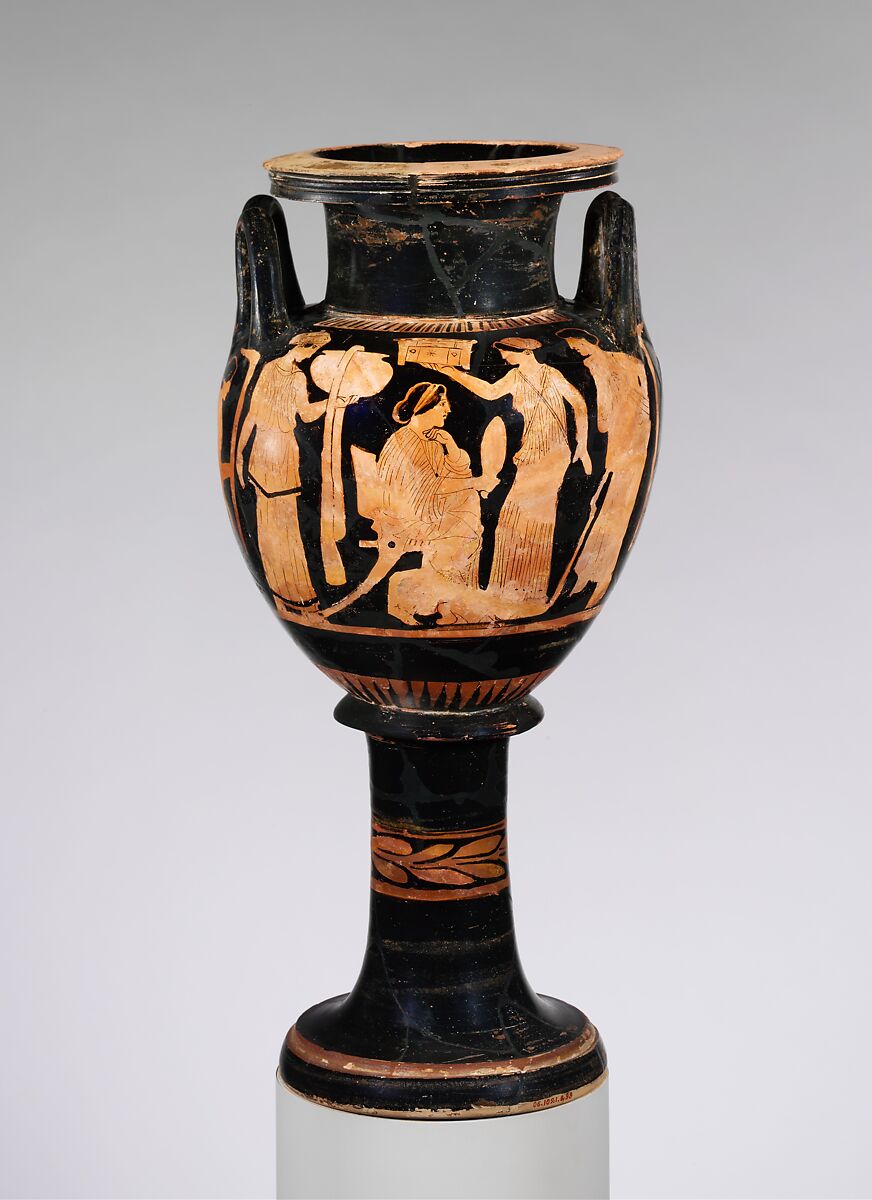
Attic red figure lebes gamikos (wedding vase) with preparations for wedding, 410 BC
Era: Classical Era
Importance: Ritual wedding vessel for bridal bath water; depicts bride attended by women with mirrors and chests; reinforces female domestic roles.

Term: Classical Athenian grave stele of Hegeso with maid, end of 5th c. BC
Era: Classical Era
Importance: Private funerary relief; seated elite woman examining jewelry held by maid; visualizes female domestic seclusion and family status.

Term: Attic black-figure loutrophoros with prothesis scene, late 6th c. BC
Era: Archaic Era
Importance: Elongated vessel used for funerary rites of unmarried youths; depicts prothesis mourning scene; marks death before marriage.
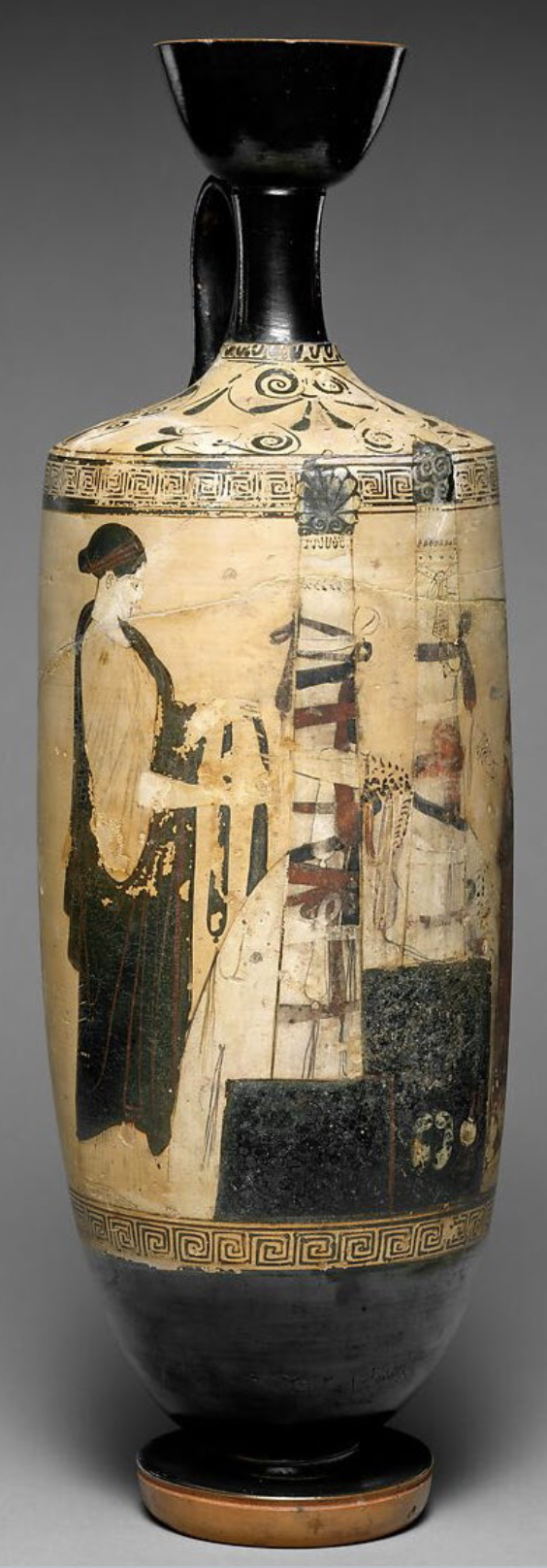
Term: Attic white-ground lekythos with preparations to visit the grave, 440 BC
Era: Classical Era
Importance: Funerary oil vessel; delicate polychrome painting shows mourners visiting tomb; highlights private bereavement and rituals.

Term: Attic black-figure lekythos with weaving scenes, 550–530 BC
Era: Archaic Era
Importance: Oil vessel; depicts women spinning, weighing wool, and using an upright loom; visualizes the primary virtuous labor of Athenian women.

Term: Attic red-figure hydria with domestic scene of woman spinning, 450–425 BC
Era: Classical Era
Importance: Water jar; depicts women working wool inside secluded domestic quarters; reinforces civic ideology of female modesty and industry.

Term: Temple of Apollo at Bassae (frieze), late 5th c. BC
Era: Classical Era
Importance: Interior temple frieze; depicts violent combat of Centauromachy and Amazonomachy with dynamic swirling drapery and emotional pathos.

Term: Attic black-figure and red-figure plates with Scythians, 520–500 BC
Era: Archaic Era
Importance: Ceramic dining plates; depicts Scythian archers in patterned trousers and caps; shows Athenian familiarity with foreign mercenary police.

Term: Attic red-figure kylix with Greek defeating Persian, 480 BC
Era: Classical Era
Importance: This kylix tondo demonstrates post-Persian War Athenian propaganda, visually asserting Greek military superiority by framing the upright hoplite over a collapsing foe. It also illustrates the Greek practice of "othering" through dress, contrasting standard Greek military attire with the exotic, patterned trousers of the defeated Persian.

Term: Attic red-figure amphora by Myson with abduction of Amazon queen Antiope, 490 BC
Era: Archaic Period
Importance: Wine vessel; depicts Theseus abducting Antiope; mythological victory used in Athens to celebrate triumph over Eastern barbarian threats.

Term: Attic red-figure kantharos with Greek and Amazon, 430–420 BC
Era: Classical Era
Importance: High-handled cup; depicts disciplined Greek soldier clashing with an Amazon; equates foreign enemies with unnatural gender inversions.
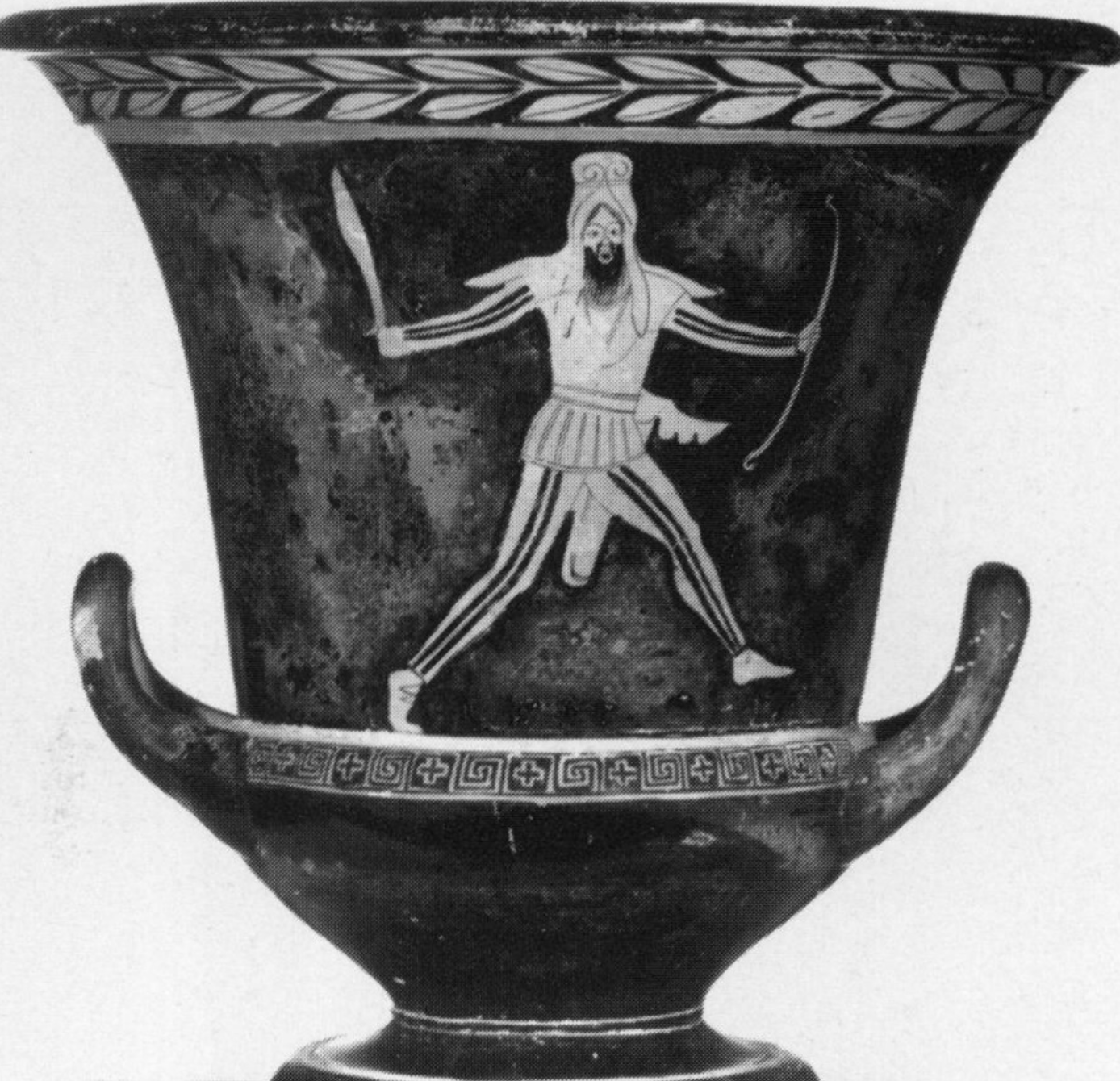
Term: Attic red-figure krater with fleeing Persian, 460 BC
Era: Classical Era
Importance: Wine-mixing vessel; depicts retreating Persian warrior; reinforces post-war stereotypes of Eastern cowardice versus Athenian bravery.

Term: Attic red-figure amphora with satyr holding wine skein and rhyton, 490–480 BC
Era: Archaic Period
Importance: Dionysian wine vessel; depicts lustful, animalistic satyr; symbolizes wild, unrestrained bodily excess contrasting with citizen moderation.

Term: Attic red-figure kylix with maenads and satyrs reveling, 490–480 BC
Era: Archaic Period
Importance: Symposium cup; portrays ecstatic Dionysian revelry; explores ritual madness and emotional release outside ordered polis life.

Term: Attic red-figure tondo scenes from interior of cups, late 6th and early 5th c. BC
Era: Archaic Period
Importance: Interior cup discs; depict symposia drinking games (kottabos), athletics, and courtship, revealed as wine is drunk.

Term: Temple of Athena Nike (frieze and parapet), 420 BC
Era: Classical Era
Importance: Acropolis bastion; frieze portrays historic battles (Greeks vs. Persians); parapet shows sensuous "wet-drapery" Nikai adjusting sandals.

Term: Bronze boxer from Olympia, 350 BC
Era: Late Classical Era
Importance: Athletic victor portrait; depicts broken nose, cauliflower ears, and battered face; breaks with classical idealism toward physical toll.

Term: Aphrodite of Knidos by Praxiteles, Roman marble copy of original from 350–340 BC
Era: Late Classical Era
Importance: First monumental full-scale female nude in Greek art; depicts goddess preparing for bath; humanizes divinity through intimate sensuality.

Term: Tomb of King Erbinna from Xanthos ("Nereid Monument"), 390–370 BC
Era: Late Classical Era
Importance: Lycian dynastic tomb; blends Greek Ionic temple architecture and floating Nereids with Persian-style reliefs of a ruler holding court.

Term: Great Altar at Pergamon with Gigantomachy, 160 BC
Era: Hellenistic Era
Importance: Monumental victory altar frieze; theatrical Hellenistic baroque showing gods crushing Giants; allegorizes Attalid triumph over invading Gauls.

Term: Portrait of Alexander the Great, 336 BC or Roman copy
Era: Hellenistic Era
Importance: Royal portrait type created by Lysippos; depicts youthful commander with upturned gaze and leonine hair; defined Hellenistic ruler portraits.
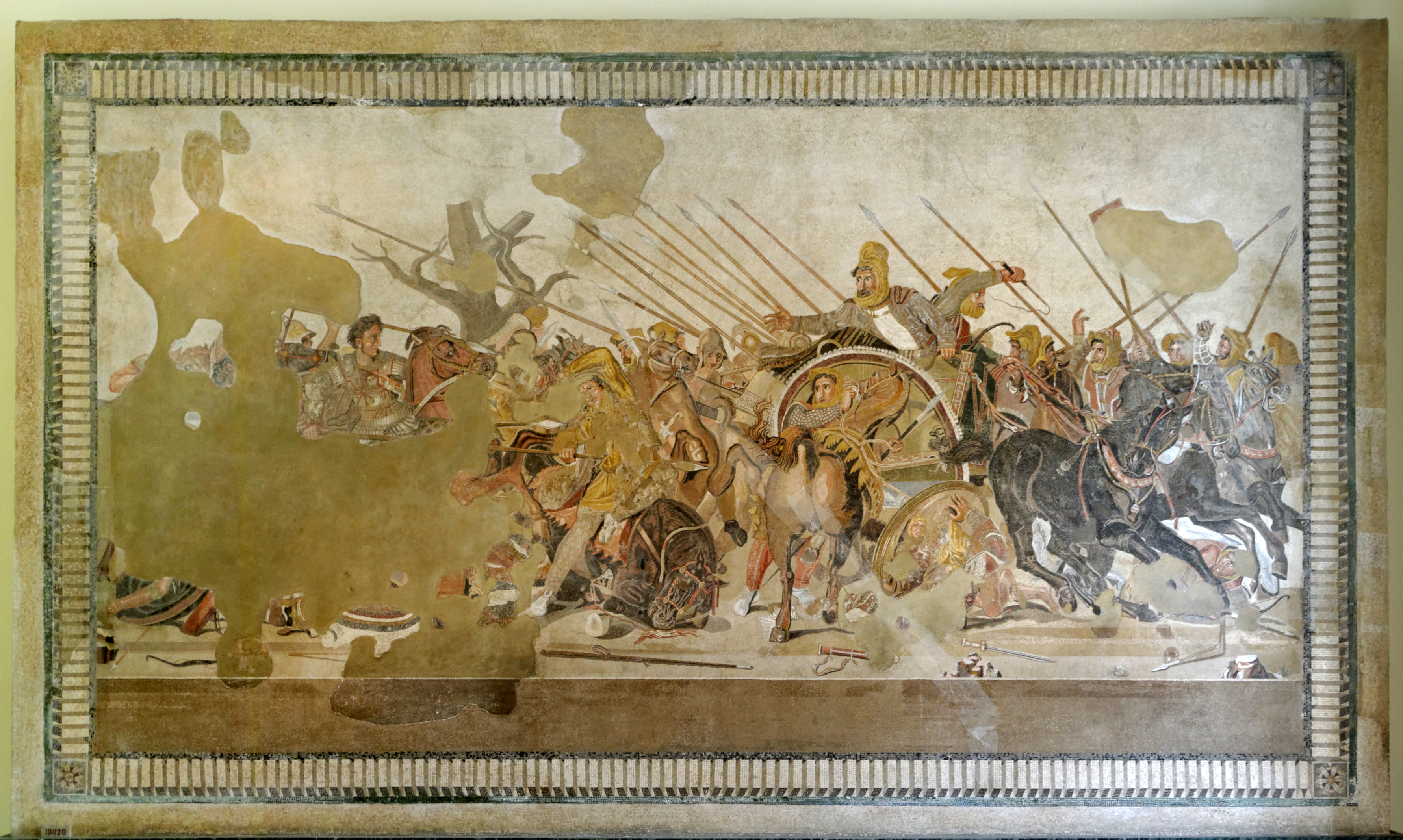
Term: The Alexander Mosaic (Roman mosaic copy of Greek painting), 4th c. BC
Era: Hellenistic Era
Importance: Floor mosaic of Battle of Issus; depicts fierce Alexander charging terrified King Darius; masterwork of dynamic foreshortening and psychology.

Term: Sarcophagus of King Abdalonymos of Sidon (the Alexander Sarcophagus), late 4th c. BC
Era: Hellenistic Era
Importance: Royal Phoenician marble coffin; reliefs show Greeks and Persians fighting together, then hunting together; visualizes multi-ethnic Hellenistic empire.

Term: Statuette of Serapis, Roman marble copy of Greek original, 3rd c. BC
Era: Hellenistic Era
Importance: Syncretic god created under Ptolemy I; combines Greek Zeus/Hades with Egyptian grain basket; visual tool for imperial religious unity.

Term: Coin of King Lysimakhos of Thrace with head of Alexander, 305–281 BC
Era: Hellenistic Era
Importance: Silver tetradrachm; depicts Alexander with ram horns of Zeus Ammon; royal propaganda legitimizing successor kings through divine descent.

Term: Protoattic amphora, known as the "Eleusis Amphora," with Odysseus and the cyclops, 650–625 BC
Era: Orientalizing Era
Importance: Monumental infant burial container (encheirismos) and grave marker. Depicts Odysseus and his men blinding Polyphemus on the neck, and Perseus fleeing Gorgons on the body. Shows the early emergence of Homeric mythological narrative, the transition away from Geometric stick figures to large silhouettes and outline drawing, and the Orientalizing taste for exotic Near Eastern hybrid monsters.

Term: Attic red figure kylix with symposium scene, 490–480 BC
Era: Classical Era
Importance: Wide, shallow drinking cup used by elite citizen men during private drinking parties (symposia). Depicts reclining citizens drinking wine, socializing, and playing music. Illustrates aristocratic leisure culture, male civic networking, and the educational/erotic bonds between older men (erastes) and younger youths (eromenos), with the painted interior (tondo) revealed as wine was drunk.

Term: Silver coin with the head of Herakles or Alexander the Great as Herakles, 336–323 BC
Era: Late Classical Era (Reign of Alexander the Great)
Importance: Standardized silver royal currency (tetradrachm) used to pay troops and conduct empire-wide trade. Depicts the mythic hero Herakles in a lion-skin headdress with features that closely evoke Alexander himself. Served as mass-produced imperial propaganda that visually asserted Alexander's divine lineage from Zeus, legitimizing royal Macedonian authority across his conquered territories.