CBC Exam Review Flip Cards
 Call Kai
 Learn
Learn Practice Test
 Spaced Repetition
 Match
Match Flashcards
 Knowt Play
1/63

There's no tags or description
Looks like no tags are added yet.
Name | Mastery | Learn | Test | Matching | Spaced | Call with Kai | Chat |
|---|
No analytics yet
Send a link to your students to track their progress
64 Terms
H shaped vertebra are associated with?
Sickle cell anemia
Hair on end calvarium is most likely associated with
Thalassemia
List the microcytic hypochromic anemias
IDA, CBL (really and IDA), ACD/ARD, and Thalassemia
What would be the expected TIBC associated with an IDA?
Increased
Describe secondary polycythemia
An erythropoietin mediated increase of RBC’s and hemoglobin due to hypoxia, often associated with pulmonary, cardiac or kidney disorders
Relative polycythemia
Cause of RBC increase: Decreased plasma volume
Erythropoietin levels: ???
Normal
Secondary polycythemia
Cause of RBC increase: Hypoxia
Erythropoietin levels: ????
Decreased
Primary polycythemia
Cause of RBC increase: Overproduction by bone marrow
Erythropoietin levels: ????
Decreased
Your patient had as CBC and they have been told they have a microcytic anemia. What follow up testing would be helpful?
History, clinical presentation, iron parameters, fecal occult blood test
What are the iron parameter levels in thalassemia?
Normal iron, ferritin and TIBC
Your pt has signs and symptoms of a pneumonia. The pt’s CBC result show 14.4 WBCs, 80 neutrophils, 12 bands and 8 lymphocytes. The diagnosis is most likely an/ a
Bacterial pneumonia
Your patient has normal WBC’s numbers and a normal differential. Although the CBC reveals normal RBC’s low hemoglobin and Hematocrit. The RCB indices were all decreased. What is the most likely dx and what is the ddx?
IDA, CBL, ACD/ARD and thalassemia
Most likely IDA caused by CBL bc it is the MC
What is the expected TIBC for thalassemia
Normal
Increased TIBC can be seen in which microcytic anemias?
IDA and CBL
Which microcytic anemias have decreased TIBC levels?
ACD and ARD
Chronic blood loss can result in which cell sized anemia?
Microcytic anemia
Your patient is anemic with a normal MVC, they also have 43.5 WBC's, 10 segs, 10 lymphs and 80 blasts. What are the diagnoses and which is most significant?
They have a normocytic anemia and acute myelocytic anemia. Of course the AML is more significant than the anemia. The differential for the normocytic anemia is: ABL, ACD, aplastic anemia and a hemolytic anemia
Your patient has 105 WBC's with 20 segs, 10 lymphocytes, 5 monocytes, 20 L Pros and 45 L Blasts.
ALL
Acute lymphocytic leukemia the most likely diagnosis.
Your patient has 44.7 WBC's with an inverted ratio and negative biopsy findings. What is the most likely diagnosis?
Lymphocytic leukemoid reaction
Your patient has 44.7 WBC's with an inverted ratio and negative biopsy findings. The most likely diagnosis is a lymphocytic leukemoid reaction.
Your patient has 110 WBC with 15 neutrophils, 5 bands, 75 lymphocytes, and 5 monocytes. The likely diagnosis is
CLL
Your patient has 43 WBC's with 45 segs, 35 bands and 20 lymphs. What is the diagnosis or differential diagnosis?
Neutrophilic leukemoid Rx or CML
Your patient has 42.5 WBC's with 30 segs, 5 bands, 60 lymphs, 5 monocytes. What is the diagnosis or differential diagnosis?
Lymphocytic leukemoid Rx or CLL
Your patient has 47 WBC's with 20 segs, 20 bands, 20 lymphs, 5 metas, 5 myelos, 10 pros, 20 blasts. What is the diagnosis or differential diagnosis?
The most likely diagnosis is acute myelocytic leukemia. The blasts and pros makes this AML and not a leukemoid reaction.
What is the differential diagnosis for an ivory vertebra?
Blastic mets, Paget's and lymphoma
Your 23 year old patient has an ivory vertebra at L3. What is the most likely diagnosis?
Lymphoma is the most likely because they are 23 years old.
The "CRAB" mnemonic as it relates to Multiple Myeloma refers to what findings?
The "CRAB" mnemonic relates to full blown Multiple Myeloma and refers to elevated calcium, renal dysfunction, anemia and bone lesions.
Your patient had lab work accomplished and it revealed suspected multiple myeloma. What diagnostic procedure would be helpful to further help confirm Multiple Myeloma?
Protein electrophoresis
Bence Jones proteinuria would suggest what diagnosis?
Multiple Myeloma
What are thrombocytes?
Platelets
On a CBC what would an inverted ratio mean?
Lymphs greater than Segs
On a CBC an inverted ratio is associated with
Viral inf, lymphocytic leukemia, lymphocytic leukemoid Rx or maybe normal
Which type of lymphocyte is involved with humoral immunity?
B cell
A malignant proliferation of plasma cells is called
Multiple Myeloma
Plasma cells produce
Antibodies
Atypical lymphocytes are usually associated with what type of infection?
Mono
Mononucleosis is due to what organism?
Epstein-Barr virus
15 year old patient presents with fatigue, sore throat, swollen lymph nodes in their neck. Their CBC reveals a decreased segs, increased lymphocytes, presence of atypical lymphocytes. And a total WBC count of 14,387 and a positive monospot test. What is the most likely Dx?
Late Mono
Mononucleosis and because of the elevated WBC count it is later Mono
A 15 year old patient presents with fatigue, sore throat, swollen lymph nodes in their neck. Their CBC reveals a decreased segs, increased lymphocytes, presence of atypical lymphocytes. And a total WBC count of 4,233. What is the most likely Dx?
Early Mono
Mononucleosis and because of the decreased lymphocytes early mononucleosis would be suspected.
Your patient has the following CBC results: normal RBC, low Hgb, low Hct, low MCV and a biochemical profile reveals elevated TIBC. What is the most likely diagnosis?
IDA or CBL anemia
They have a microcytic anemia with an elevated TIBC which reflects either an IDA or a chronic blood loss anemia. A CBL anemia is really an IDA.
Your patient has a microcytic anemia with normal iron parameters. The likely diagnosis is ___________.
Thalassemia
A malignant increase of WBC's above 50,000 with a proliferation of myeloblasts and promyelocytes would indicate what diagnosis?
AML
A malignant increase of WBC's above 50,000 with a proliferation of myeloblasts and promyelocytes would indicate acute myelocytic leukemia.
A malignant increase of WBC's above 50,000 with a proliferation of lymphoblasts and prolymphocytes would indicate what diagnosis?
ALL
A malignant increase of WBC's above 50,000 with a proliferation of lymphoblasts and prolymphocytes would indicate acute lymphocytic leukemia.
A malignant increase of WBC's above 50,000 with a proliferation of E blasts and E pros would indicate what diagnosis?
AEL
A malignant increase of WBC's above 50,000 with a proliferation of E blasts and E pros would indicate acute eosinophilic leukemia
A total WBC count below 5000 WBC's per cubic millimeter is called
Leukopenia
A total WBC count above 10,000 WBC's per cubic millimeter is called
Leukocytosis
A total WBC count above 50,000 WBC's per cubic millimeter is usually due to
Leukemia
What is the WBC range for a typical infection.
10-18k
A total WBC count in the 30,000 to 50,000 range usually indicates
Leukemoid Rx or leukemia
A neutrophilic leukocytosis of 16,285 WBC in a patient with a sore throat would likely indicate
Bacterial pharyngitis
A lymphocytic leukocytosis of 16,285 WBC in a patient with a sore throat would likely indicate
Viral pharyngitis
Eosinophils primarily combat
Allergy and parasites
In an infection, lymphocytes primarily combat
Viral
In a potential infection neutrophils function to combat
Bacteria
A malignant increase of WBC's above 50,000 with a proliferation of B blasts and B pros would indicate what diagnosis?
ABL
A malignant increase of WBC's above 50,000 with a proliferation of Mo blasts and MO pros would indicate what diagnosis?
AMoL
What age of patients are most likely to get acute lymphocytic leukemia?
less than 20
A 10 year old patient has 85,000 WBC with 20 neutrophils and 15 lymphocytes, 10 prolymphocytes and 55 lymphoblasts. What is the most likely diagnosis?
ALL
A Philadelphia chromosome is usually identified with
CML
Your 63 year old patient has 75 WBC's, 20 segs, 30 bands, 10 lymphs, 30 metas, 8 myelos, 1 pro and 1 blast. According to the WHO what would be the most likely diagnosis?
CML
An increase in immature WBC's on a CBC is termed
shift to the left
An increase in the number of bands on a WBC differential is termed
shift to the left
Your patient is anemic and they have a normal MCV, 46.4 WBC, 55 segs, 30 bands and 15 lymphs. What is the DX or DDx?
They have a normocytic anemia and either chronic myelocytic leukemia or a neutrophil leukemoid reaction
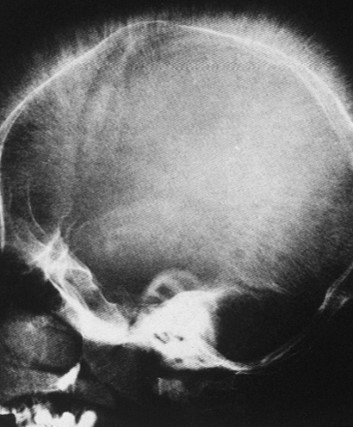
What is the most likely diagnosis?
Thalassemia

What is the diagnosis and what test may help ensure the diagnosis?
Sickle Cell anemia. A CBC would be helpful to see if they have a normocytic anemia.