Biotech Exam 3
 Call Kai
 Learn
 Practice Test
 Spaced Repetition
 Match
 Flashcards
 Knowt Play
1/99

There's no tags or description
Looks like no tags are added yet.
100 Terms
Microbes (microorganisms):
are tiny organisms that are too small to be seen individually by the naked eye
- bacteria, fungi, algae, and protozoa
Less than 1% if all bacterial species have been identified, cultured, and studied; estimated to comprise over 50% of the earth’s biomass
Bioprospecting:
the discovery & development of new products from biological resources
Microbial Enzymes:
used in applications from food production to molecular biology research
Microbial Enzymes Examples:
Taq DNA polymerase
- Heat stabile, isolated from a thermophile
Cellulose
- Makes animal food more easily digestible
- Stone-washed jeans
Subtilisin
- Laundry detergents
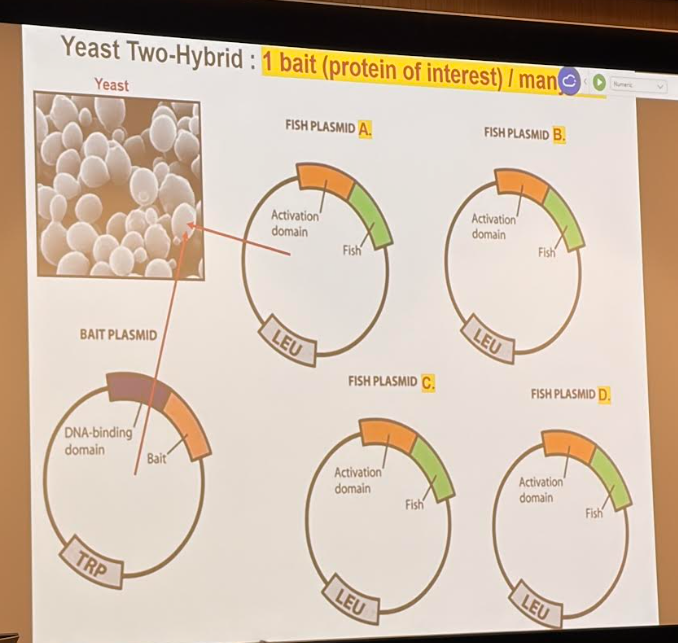
The Yeast Two-Hybrid System
Determine if proteins ‘A’ and ‘B’ interact with each other
- Two fusion proteins are created that include
One is a fusion of protein ‘A’; the “Bait” with a DNA binding domain (DBD) of a transcription factor that will bind to the promoter; the bait is your protein of interest!
The second is a fusion of protein ‘B’; the “Fish” with an activator domain (AD) that “normally” binds to the enhancer
~ if protein ‘A’ and ‘B’ interact, the DNA binding domain and activator domain will be brought together
~ this active transcription initiation complex results in expression of a specific reporter gene; Ex. lacZ


CRISPR
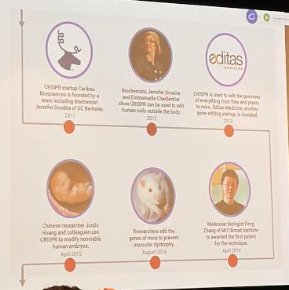
CRISPR: Clustered regularly interspaced short palindromic repeats
- Prokaryotic immune system that provides acquired immunity
- Found in approximately 50% of sequenced bacterial genomes
- Segments of DNA containing short, repetitive base sequences
- These segments are repeated and palindromic
- Each repeat is followed by a short segment of spacer DNA
- Spacer DNA is from previous exposures to foreign DNA (Ex. virus or plasmid)
- Cas genes are located next to CRISPR sequences
- Cas9 must be complexed with a crRNA and a separate trans-activating crRNA (trRNA or tracrRNA) to cleave target DNA
~ 3 parts: Cas9, crRNA, trRNA



Food Products
microbes are used with traditional & modern biotechnology to make many foods, including bread, yogurt, cheese and alcoholic beverages
the 1st recombinant DNA food ingredient approved by the Food and Drug Administration (FDA) in 1999 was a recombinant form of an enzyme used to make cheeses
curds to make cheeses are made traditionally from rennin, an enzyme which is extracted from the stomach of calves
Chymosin: is a rennin that was cloned and expressed in bacteria and is less expensive and easier to produce
Fermentation:
process of deriving energy from sugars in the absence of oxygen
Lactic acid fermentation:
used to make yogurt, sour cream, sauerkraut, vinegar and certain cheese and breads.
Alcohol fermentation:
used to make beer, wine, champagne, and breads

Therapeutic Proteins
bacteria are used to produce medically important proteins
Insulin, the 1st recombinant molecule expressed in bacteria for use in humans is an excellent example
- First genetically engineered 1978
- Humulin commercially available by Genentech in 1982


Antigen
foreign substance that stimulates an immune response
- Whole bacteria, fungi, and viruses
- Proteins, liquids, or carbohydrates
Immune system responds to antigens by producing antibodies…
called antibody-mediated immunity
B cells recognize and bind to the foreign antigen
B cells, with the help of T helper cells, undergo activation to form plasma cells that produce antibodies
Antibodies:
are very specific
bind to the foreign antigen
macrophage can then recognize the antigens coated with antibodies and phagocytize them
sometimes our natural production of antibodies is not enough to protect us from pathogens
Vaccines
parts of a pathogen or whole organisms that can be given to humans or animals by mouth or by injection to stimulate the immune system against infection by those pathogens
Four Major Strategies to Make Vaccines
subunit vaccines
attenuated vaccines
inactivated (killed) vaccines
mRNA vaccines
Subunit vaccines:
Attenuated vaccines:
use live bacteria or viruses that have been weakened through aging or by altering their growth conditions to prevent replication
Inactivated (killed) vaccines:
are made by killing the pathogen and using the dead or inactivated microorganism for the vaccine
mRNA vaccines:
are non-replicating mRNA encased in a lipid nanoparticle coat so it can enter cells
Ex. Pfizer/BioNtech and Moderna vaccines
Currently, a majority of ____________ are made using recombinant DNA approaches in which the vaccine is produced in microbes
subunit vaccines
Hepatitis B
genes for proteins on outer surface of virus are cloned into plasmids & transformed into yeast
fusion proteins produced by the yeast are purified
Gardasil
protects against 9 strains of human papillomavirus (HPV)
Biotechnology companies are working on over 50 targets for new vaccine development, including:
Influenza
Tuberculosis
Malaria
HIV
Coronavirus (Covid-19)
What does CRISPR stand for?
Clustered regularly interspaced short palindromic repeats
The first vaccine developed in 1796 by Edward Jenner was directed against which deadly pathogen?
Smallpox
Why sequence microbial genomes?
Identify genes involved in bacterial metabolism, cell division, and genes that cause human and animal illnesses
Find new strains
- For bioremediation or other tasks
- Identify disease causing organisms
Metagenomics:
is the study of genetic material recovered directly from environmental samples
Microbiome:
collective genomes of microorganisms inhabiting a particular environment, especially on or in the human body
Human Microbiome Project was announced by NIH in 2008:
five-year project to sequence 600 genomes of microorganisms that live on and inside humans
currently over 5,000 genomes from human-associated microbes are catalogued
Goals of the Human Microbiome Project:
determine if individuals share a core human microbiome
understand how we acquire & maintain microbial communities
understand how changes in the microbiome can be correlated with changes in health & conditions that affect the microbiome
develop new methods for analysis of the microbiome
address ethical, legal, and social implications raised by human microbiome research
Microbial Diagnostics
techniques used to detect and track microbes
Bacterial Detection Strategies
RFLP analysis, PCR, and DNA sequencing (Southern blot)
Databases are available for comparison of clinical samples
Used to detect & track bacterial contamination of food

Microarrays for Tracking Contagious Diseases
Microarrays have created new approaches for detecting and identifying pathogens and for examining host responses to infectious diseases (50,000 species tested in parallel)
Microarrays also used to find “signature” changes in gene expression for a particular pathogen
Future of Agriculture: Plant Transgenics
The world population has nearly doubled in the past 40 years, while arable land has only increased by 10%
Improved crop breeding through traditional methods has enabled plant geneticist to feed larger numbers of people
The development of new modern methods has resulted in more productive crops which has been accelerated by direct transfer of genes
Plant Transgenesis:
direct transfer of genes to plants
Ex. development of plant vaccines, plants that produce their own pesticides and are resistant to herbicides
in 2018, a significant portion of several key crops in US, were transgenic
- 94% of soybeans, 92% of corn, 96% of cotton
GMOs are now present in 75 to 80 percent of conventional processed food in the U.S.
Focus of considerable controversy
Hectare
approximately 2.47 acres or 10,000 square meters, commonly used to measure large areas of land

Conventional “traditional methods”
selective breeding &
hybridization
Cloning (PTC) “modern methods”
Protoplast fusion w/plant tissue culture (PTC)
Leaf fragment technique & Ti Plasmid w/PTC
Gene guns w/PTC
Chloroplast engineering w/PTC
Antisense technology w/PTC
Cloning with Plant Tissue Culture (PTC)
African Violet Callus with TDZ Induction
African Violets with MS Rooting Media
Conventional Selective Breeding and Hybridization “traditional methods”
Sexual cross between two lines w/ artificial pollination and repeated backcrossing between hybrid offspring and parent can take years
Polyploid plants (multiple chromosomes)
- Increases desirable traits, especially size
- Using colchicine followed by hybridization, whole chromosomes can be transferred rather than single genes; can result in larger fruits and vegetables
Cloning “modern methods”
growing plants from a single cell w/PTC
Protoplast fusion:
the fusion of 2 protoplast cells from different plant species
- Fusion of the two protoplast cells, using polyethylene glycol creates a cell that can grow into a hybrid plant
- Ex. Broccoflower (Publix: $4.41 each)
Protoplast
a plant cell whose cell wall has been dissolved by the enzyme cellulase

(Cloning) Leaf fragment technique & Ti Plasmid wi/ PTC
Small discs are cut from leaf
Cultured in a medium containing genetically modified (Rhizobium radiobacter) AKA: Agrobacterium tumefaciens
- a soil bacterium that infects dicot plants only
- R. radiobacter contains a plasmid, called the Ti plasmid, that can be genetically modified (Ti = tumor-inducing)
- T-DNA from the Ti plasmid integrates with genomic DNA of plant host cell (T = transfer)
Transfected leaf discs are treated with plant hormones to first stimulate callus formation, then shoot and root development


(Cloning) Gene Guns
Used to blast tiny metal beads (1 greek um) coated with DNA (plasmid) into an embryonic plan cell; animal cells, fungi, etc.
- Ex. gold, silver, or tungsten
Aimed at the nucleus or the chloroplast
Marker genes used to distinguish genetically transformed cells
- Antibiotic resistance
Technique is useful in plants that are resistant to R. radiobacter
- Ex. Monocot plants

(Cloning) Chloroplast Engineering
DNA in chloroplast can accept several new genes at once
- Ex. polycistronic mRNA
High percentage of genes will remain active
Chloroplast DNA is completely separate from genomic DNA
No chance that transformed genes will be carried on wind to distant crops because pollen from a majority of flowering plants don’t have chloroplasts
Methods Used in Plant Transgenesis:
Polycistronic mRNA
Monocistronic mRNA
Polycistronic mRNA
Present in prokaryotes, mitochondria, and chloroplasts
Contains codons for more than 1 gene (cistron)
Transcribed from more than 1 gene
Codes for more than 1 protein
Many initiation (start) and termination codons
- Ex. Bt Cry operon
Monocistronic mRNA
Present in eukaryotes
Contains codons of a single gene (cistron)
Transcribed from a single gene
Codes only for a single protein
includes 1 initiation and 1 termination (stop) codon
- Ex. Guy’s 13 monoclonal antibody (targets Streptococcus mutans)

(Cloning) Antisense Technology
Process of inserting a complimentary copy of a gene into a cell
Complemenatry gene encodes an mRNA molecule called an antisense molecule
Antisense mRNA molecule binds to normal mRNA (sense molecule) and inactivates it; no translation
- Ex. Flavr Savr tomato
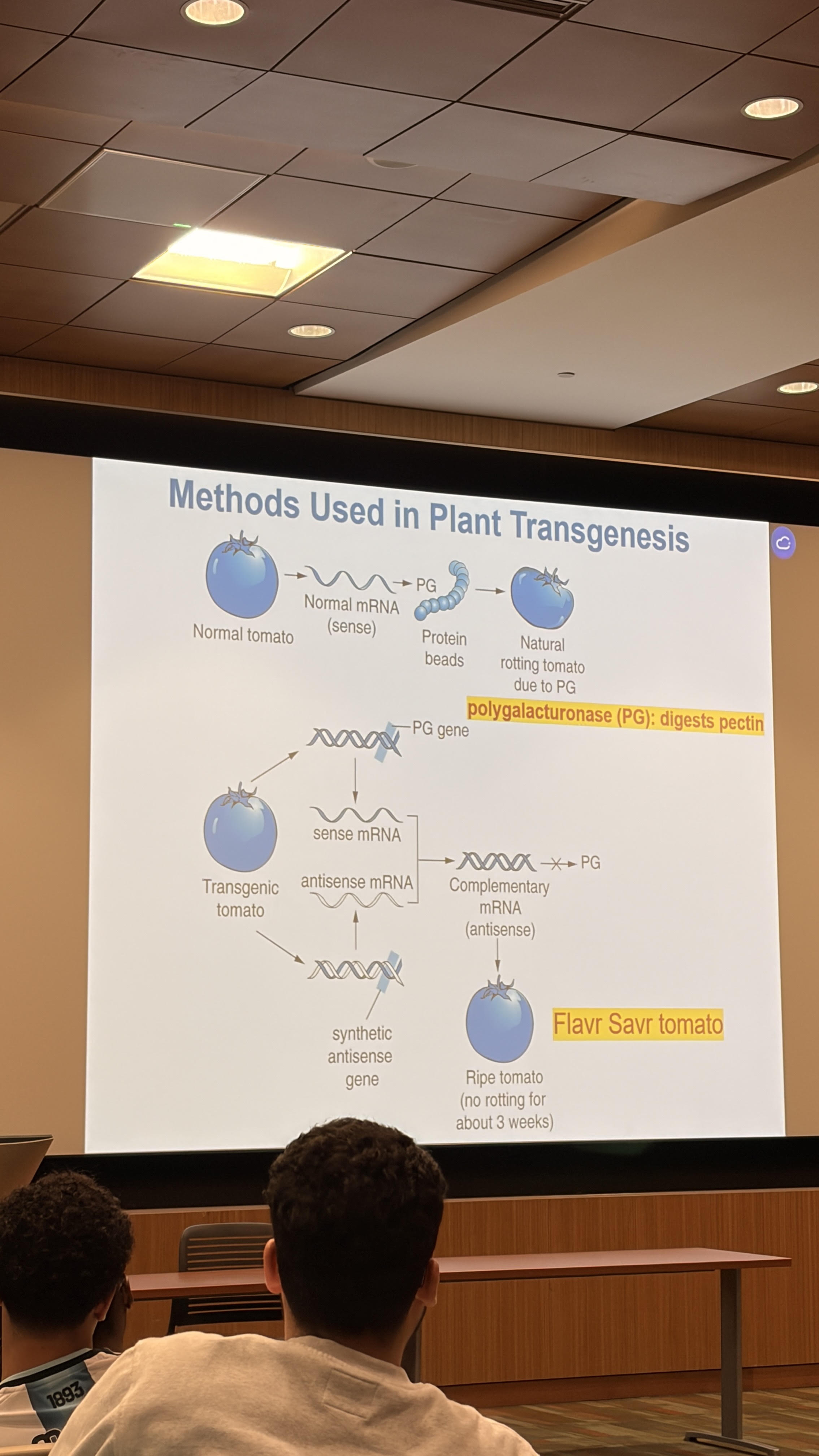
Polygalacturonase (PG):
digests pectin
Practical Applications in the Field
Vaccines for plants
Genetic pesticides
Herbicide resistance
Enhanced nutrition
The future: from pharmaceuticals to fuel
Vaccines for Plants
Vaccine is encoded in a plant’s DNA
For example, a gene from Tobacco Mosaic Virus (TMV) inserted into tobacco plants
- Protein produced from the viral gene stimulates the plant’s immune system
- Plant becomes resistant to TMV virus

Genetic Pesticides
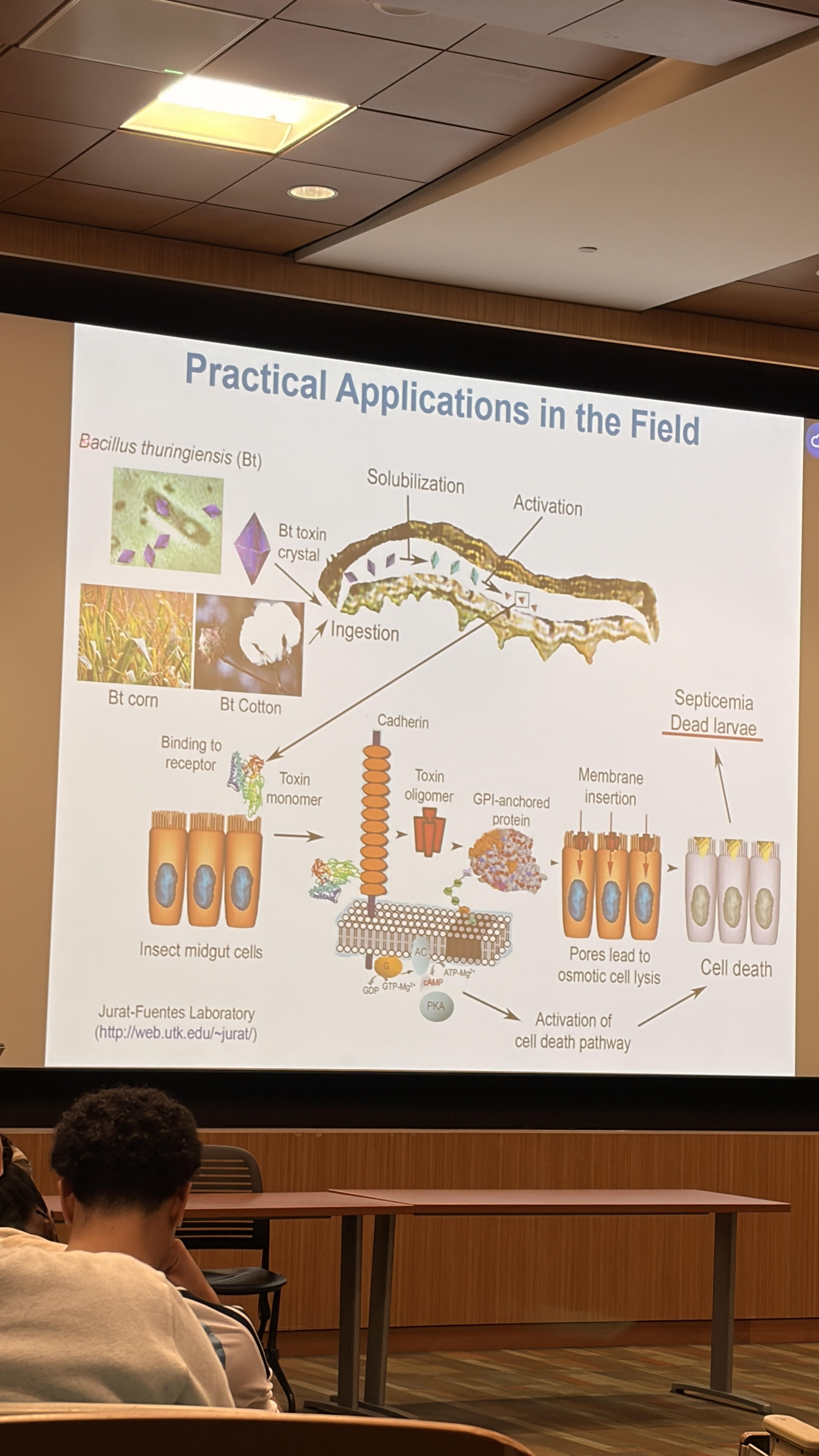
Bacillus thuringiensis (Bt) is a bacterium that produces a protein that kills harmful insects and their larvae
used as a natural pesticide for over 100 years
BT Cry genes can be inserted into a plant’s DNA
- crystalized protein fuses to gut lining of insects
- creates a built-in defense against certain insect pests
Controversy surrounding Monarch butterflies

Herbicide Resistance
Traditional weed killers eliminate desirable plants along with the weeds
Can generally engineer crops to be resistant to common herbicides
- Ex. glyphosate
Allows farmers to control weeds with chemicals that are milder and more environmentally friendly than typical herbicides
One example is resistance to glyphosate, which blocks the plants enzyme EPSPS, which functions in a key biochemical pathway in plants
Crops that transgenically produce an alternative EPSPS (bacterial) are not affect by glyphosate
Most soybeans grown today contain herbicide resistance genes
Unfortunately, glyphosphate resistant weeds have evolved

Enhanced Nutrition
golden rice has been engoneered to contain large amounts of beta carotene, which the body converts to vitamin A
However, as of 2011, no farmers have planted golden rise due to concerns voiced by environmental organizations
Vitamin A deficiency (VAD) affects about 1/3 of children under five years old worldwide
- approx. 670,000 deaths annually in children under 5
- 250,000 to 500,000 children becoming blind annually
Future of Plant Biotechnology in Pharmacology
Plants can be ideal protein factories
Used to grow medicines
- Inexpensive edible plant based vaccines that do not require refrigeration
- “Molecular farming” of phytochemicals that are beneficial to human health
Phytochemicals, antibodies, blood products, cytokines, growth factors, hormones and recombinant enzymes
The Fuel Plant Biotechnology: Fuels
Biofuels are fuels produced from biological products, such as plants
The need for alternatives to fossil fuels is increasing
However, it takes 7 gallons of gasoline to produce 10 gallons of kernel corn ethanol
In the future, scientist want to convert plant wastes, such as husks and stems, to sugars that can be converted to ethanol
Is Duckweed the next alternative to petroleum?
Human Health Concerns
Opponents fear the effects of foreign genes, bits of DNA not naturally found in plants
- Allergic reactions
- Antibiotic-resistance marker genes could spread to disease-causing bacteria in humans
- Cause cancer
To date, science has not supported any of these concerns
Environmental Concerns
genes for pest or herbicide resistance could spread to weeds
Few experts predict this will happen, further studies are needed
Regulation
FDA: regulates foods on the market
USDA: oversees growing practices
EPA: controls use of Bt proteins & other pesticides
Genetically engineered animals can be used to:
develop new medical treatments
improve our food supply
enhance our understanding of all animals, including humans
presents tough scientific and ethical challenges
Animal Model Organisms/ for human disease
many genetic and physiological similarities exist between animals and humans
Research using animals has been the key to most medical breakthroughs in the past century
- Polio vaccine
- Dialysis
- Cataract surgery
Animal health is also directly benefited
- Biotechnology has developed over 111 USDA-approved veterinary biologics and vaccines
Ex. Heartworm, arthritis, parasites, allergies, & heart disease
Could research assays with cells grown in vitro replace experimentation on animals?
In vitro cell-based assays can replace animal testing in some research contexts, but full replacement is not yet possible — they are increasingly used as complementary, human‑relevant alternatives that can reduce or replace animal use in specific applications.
Animals most often used in research are:
Purebred mice and rats
Other species used in research include:
Zebra fish (70% homologous genes)
Fruit flies (44% homologous genes)
Nematodes (35% homologous genes)
Dogs, cats, monkeys, and chimpanzees make up <1 % of total number of research animals
Zebrafish are ideal (model organisms) for studies of development, genetic research, and understanding biological processes because:
rapid growth
embryo is visible inside the egg; transparent
easy to transfer genes into the egg
do not need surrogate mother for gestation

What percent of their genes match yours?
another human: 100%
Chimpanzee: 98%
Mouse: 92%
Zebrafish: 70%
Fruit Fly: 44%
Nematode: 35% (C. elegans)
Yeast: 26%
Rats superior to mice for early drug toxicity tests
have more human like responses to drugs
larger size facilitates surgical and physiological experimentation