Skeletal System Diagram
 Call Kai
 Learn
 Practice Test
 Spaced Repetition
 Match
 Flashcards
 Knowt Play
1/59

There's no tags or description
Looks like no tags are added yet.
60 Terms
Tendon
Connects muscle to bone

Ligament
Connects bone to bone
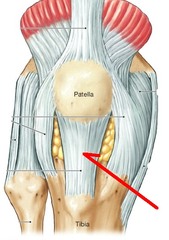
Compact Bone
dense outer layer of bone

Spongy Bone
composed of small needle like pieces of bone and lots of open space

Yellow Marrow
stores fat

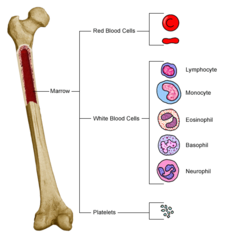
Red Marrow
produces blood cells
Mineral storage
One of the basic functions of the skeletal system
Ossification
process of bone formation

Osteocytes
mature bone cells

Osteoblasts
Bone building cells

Axial
head, neck, trunk

Movement facilitation
One of the basic functions
Lumbar
pertaining to the lower back

Coccyx
tailbone

Cranium
Skull

Mandible
Jaw

Clavicle
Collar bone

Scapula
Shoulder blade

Sternum
Breastbone

Rib Cage
12 bones that protect vital organs of the chest

Humerus
Upper arm long bone

Radius
Forearm bone that follows the thumb

Ulna
Forearm bone that follows the pinky.

Spine
Made up of individual vertebra

Pelvis
Hip bone

Carpals
Wrist bones

Metacarpals
Palm bones

Phalanges
Fingers or toes

Femur
Thigh bone

Patella
Kneecap

Tibia
Long bone that follows the big toe

Fibula
Long bone that follows the pinky toe

Tarsals
Ankle bones

Metatarsals
Bones of the sole of feet

Cartilage
a strong flexible connective tissue

cervical vertebrae
The portion of the spinal column consisting of the first seven vertebrae that lie in the neck.

thoracic vertabrae
each of the twelve bones of the backbone to which the ribs are attached

lumbar vertebrae
Contains 5 vertebrae.

sacral vertebrae
Single bone formed by the fusion of the 5 embryonic vertebrae.

The amount of spinal curves...
4
Primary curves
Includes the thoracic and sacral - appear late in fetal development.
Secondary curves
Includes cervical and lumbar - appear months after birth.
ilium
part of the hip bone

sacrum
segment of the vertebral column that forms part of the pelvis

pubis
forms the anterior portion of the pubic bone, located just below the urinary bladder

ischium
forms the lower posterior portion of the pubic bone and bears the weight of the body when sitting

ball and socket joint
hip and shoulder joints

hinge joints
Joints that can bend and straighten but cannot rotate; they restrict motion to one plane.
elbow and knee

pivot joint
neck: allow limited rotation or turning of the head.

ellipsoidal joints
gliding joints allow bones to slide over one another

calcaneus
heel bone

temporal bone
Bones that cover the sides of the head, near the ear

cheek bones
zygomatic

occipital bone
back of head

parietal bone
top of head

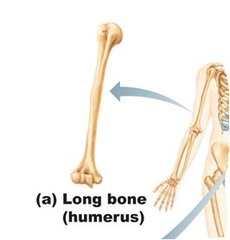
long bones
bones of the arms and legs
short bones
bones of the wrist and ankles

flat bones
bones of the ribs, shoulder blades, pelvis, and skull

irregular bones
bones of the vertebrae and face

Sesamoid
Small and round bones that protect from stress and wear on tendons
