The Digestive System
 Call Kai
 Learn
 Practice Test
 Spaced Repetition
 Match
 Flashcards
 Knowt Play
1/33

There's no tags or description
Looks like no tags are added yet.
34 Terms
digestion
The process by which the body breaks down food into small nutrient molecules

Absorption
The process by which nutrient molecules pass through the wall of the digestive system into the blood
saliva
the enzyme in the mouth that changes STARCH to SUGAR

enzyme
A type of chemical (a protein) that breaks down food into smaller molecules.

Epiglottis
A flap of tissue that seals off the windpipe and prevents food from entering.

Esophagus
A muscular tube that connects the mouth to the stomach.

mucus
A thick, slippery substance produced by the body
Peristalsis
Involuntary waves of muscle contraction that keep food moving along in one direction through the digestive system.

stomach
A J-shaped, muscular pouch located in the abdomen.

small intestine
The part of the digestive system in which MOST chemical digestion takes place.

liver
The largest organ in the body; and produces bile.

Bile
A substance produced by the liver that breaks up fat particles.

Gallbladder
the organ that stores bile after it is produced by the liver

Pancreas
A triangular organ that lies between the stomach and first part of the small intestine. It produces enzymes that break down starches, proteins, and fats.

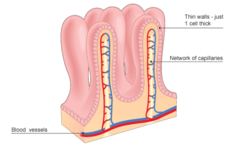
villi
Tiny finger-shaped structures that cover the inner surface of the small intestine and provide a large surface area through which digested food is absorbed
large intestine
The last section of the digestive system, where water is absorbed from food and the remaining material is eliminated from the body

Rectum
The end of the large intestine where waste material is compressed into a solid form before being eliminated
anus
A muscular opening at the end of the rectum through which waste material is eliminated from the body
chemical digestion
Enzymes break down food into smaller molecules
mechanical digestion
Physical breakdown of large pieces of food into smaller pieces

Chyme
thick liquid form of food
gastric juice
juice produced in the stomach that contains mucus, pepsin, and hydrochloric acid
Pepsin
enzyme that digests proteins
Bile
is a substance that PHYSICALLY breaks up large fat droplets into smaller fat droplets
colon
another name for the large intestine
nutrients
Substances in food that your body NEEDS to grow, to repair itself, and to supply you with energy

bolus
slippery mass (ball of food) formed in the mouth then gets swallowed
pharynx
throat; passageway for food to the esophagus and air to the larynx
lipid
Energy-rich organic compounds, such as FATS & oils,

Carbohydrates
nutrient that supplies ENERGY and can be broken down into sugar (glucose) and starches
feces
solid wastes; stool
Starch
is a complex carbohydrate found in foods from plants such as potatoes, rice, wheat, and corn

Protein
is a nutrient made up of amino acids. Ex: animal sources, such as meat & eggs. Also plant sources, such as beans, grains, and nuts.

Lipase
an enzyme that breaks down fat (lipids)