Coma and Brain Death
 Call Kai
 Learn
 Practice Test
 Spaced Repetition
 Match
 Flashcards
 Knowt Play
1/26

There's no tags or description
Looks like no tags are added yet.
27 Terms
Define Coma
Describe the Mech of COMA
Primary Mech
What are most causes of COMAs presenting to the ER caused by?
Definition of COMA:
UNarousable; UNresponsiveness
impaired responsiveness or unresponsiveness to external stimuli and are either difficult to arouse or unarousable
Mechanisms of Coma
Primary Mechanisms
Toxic
Metabolic:
ALWAYS CHECK GLU Finger stick in ER!
Infectious
Hypothermia
Most cases of coma presenting to the ER are due to:
Trauma:
ALWAYS Clear the C-Spine
CVA
Intoxications
Infections
Seizures
Metabolic Derangement


What are these causes of Comas:
Time Course:
Abrupt
Gradual
Fluctuating
Focal Signs
Initial hemiparesis
Transient visual sx
HA and N/V
Time Course
Abrupt
(SAH, SZ)
Gradual
(Brain Tumor)
Fluctuating
(Metabolic, Sub Dural Hematoma, Recurring SZ)
Focal Signs prior to LOC
Initial hemiparesis
(Structural lesion)
Transient visual sx
(Posterior circulation ischemia)
HA and N/V
(SAH)
List the different types of Intracranial Herniation; What does Uncal Herniation cause?


Distinguish between signs of deCORTicate and deCEREBrate

Differentaite between the causes of deCORTicate and deCEREBrate positioning
Decorticate Posture
Lesion of Corticospinal tracts @ cerebral hemispheres and basal ganglion
Abnormal flexion
Decerebrate Posture
Lesion at Midbrain/Cephalic Pons
Abnormal Extension

What is Asterixis?
Asterixis:
Flapping of extended arms and wrists frequently seen in alcoholics indicative of metabolic (hepatic) encephalopathy
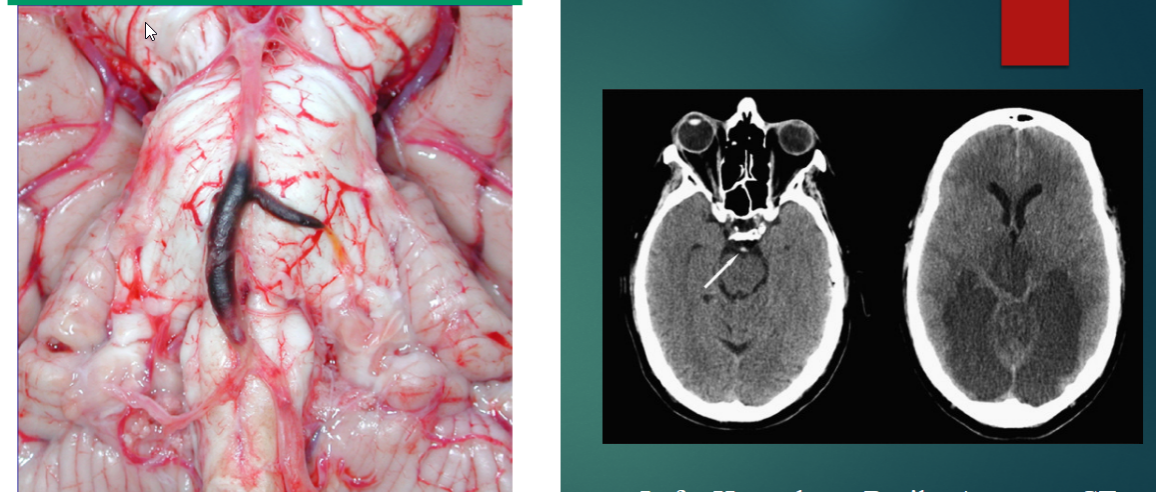
Artery pic = Basilar Artery Thrombosis
Left: Hyperdense Basilar Artery on CT
Right: Hypodense infarcted Brainstem, Cerebellum and Occipital Lobes
Describe Locked-In Syndrome:
Req for Dx
Cause
DDX
Locked-In Syndrome:
Req. for Dx:
Retained Alertness and Cognitive abilities
limbs + oral structures Paralysis
some preservation of voluntary blinking and vertical eye movements
Cause:
Focal injury to the base of the pons usually by embolic occlusion of the basilar artery
DDX:
Severe Upper Spinal Cord Lesion
Motor Neuropathy
Myopathy
Neuro-Muscular Junction Disease
Extreme Muscle Rigidity
Severe Parkinsonism
Neuroleptic Malignant Syndrome
Describe Akinetic Mutism
What is it?
Cause
Akinetic Mutism
What is it?
Lack of motor response in an awake individual
Can follow w/ eyes; but can’t obey commands/initiate movements
INTACT: Tone, Reflexes, Postural
Cause:
injury to prefrontal or premotor (including supplementary motor) areas
Responsible for initiating movements
Describe Psychogenic Unresponsiveness
What is it?
Pt Characteristics?
Key Differentiating factor:
Psychogenic Unresponsiveness
What is it?
Prolonged, Motionless, Dissociative Attack of reduced or absent response to external stimuli
Pt Characteristics:
resist passive eye opening
Roll away from painful stimuli
turn eyes to floor no matter which side they are lying on
Key Differentiating factor:
Nystagmus with cold caloric stimulation supports diagnosis
Describe a Vegetative State:
Vegetative State:
No awareness of self or environment
PRESENT: cycling of arousal states and periodic eye-opening


Define Brain Death
How is it clinically Diagnosed?
Brain Death: Definition
IRREVERSIBLE LOSS of all Brain and Brainstem function,
Clinically diagnosed by demonstrating:
Absence of consciousness
Lack of Motor response to noxious stimuli
Disappearance of:
Brainstem Reflexes
Respiratory Drive
How do we determine Brain Death?
Clinical Evaluation (Prerequisites)
Clinical Evaluation (Neurologic Assessment)
Clinical Evaluation (Prerequisites)
Establish causes of coma (irreversible and proximate)
Drugs/Toxins
Make sure pt = euthermic
Check for admin of neuromuscular blocking agents or pain or sedating medications
CLEAR C SPINE
No severe electrolyte disorder or endocrine disturbance
Achieve normal systolic blood pressure-Systolic BP > 100 mm Hg
Perform 2 neurologic examinations with documentation
Clinical Evaluation (Neurologic Assessment)
Absence of Brainstem reflexes:
pupillary response
ocular movements
oculocephalic testing and oculovestibular reflex testing.
corneal reflex
Facial muscle movement to noxious stimulus
pharyngeal and tracheal reflexes
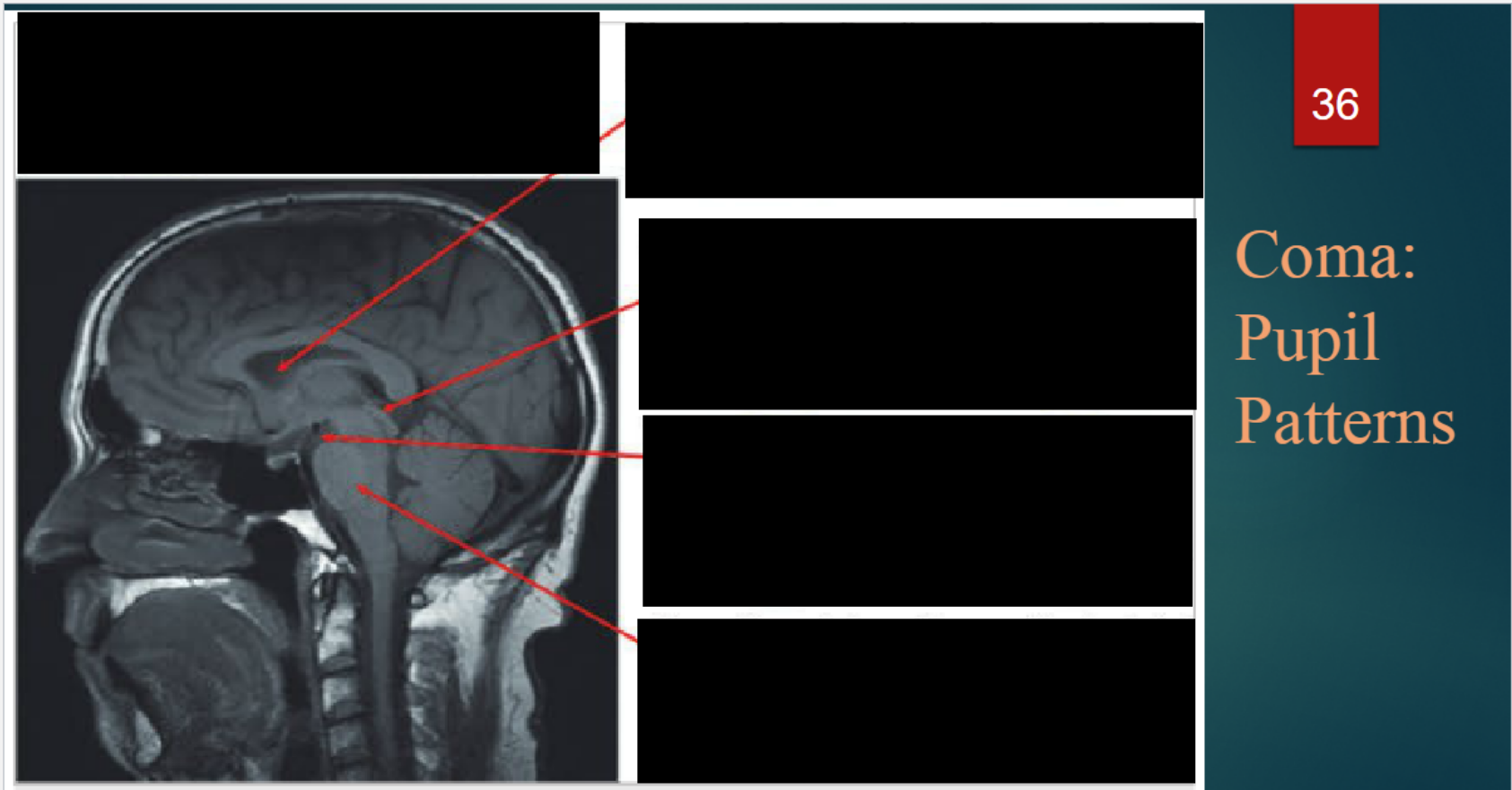

Describe how to perform the Oculocephalic or Oculovestibular or VOR Testing:
Oculocephalic or Oculovestibular or VOR Testing:
Procedure:
C-spine is CLEARED
Pt = supine w/ head straight
Grasp head with both hands and quickly rotate left or right
NORMAL: Eyes lag -> correct orientation
Abnormal: “Eyes STUCK in head”
Describe how to do Caloric Testing
What happens if both ear?
Caloric Testing:
Procedure:
Place head of bed up 30 degrees from the horizontal
Make sure tympanic membrane = intact/ free of significant cerumen
Infuse 50ml Cold Water into RIGHT ear
NORMAL:
Eyes slowly deviate to the right (Left Mid-Brain INTACT)
Nystagmus toward Midline (Frontal Lobe INTACT)
COMATOSE:
eyes deviate to the right (Intact left midbrain) with no nystagmus (No cortical response)
Must wait at least one minute
The eyes do not deviate or have nystagmus
(No midbrain or Cortical response)
must test BOTH ears to fulfill Brain Death Testing Criteria
Wait 3-4 min before testing other side
NOTE: opposite effects when using warm water
If Infusion of BOTH Ears:
Cold: Eyes go Down
Hot: Eyes go Up
How to do Corneal Reflex?
Corneal Reflex:
Explain procedure to pt
Avoid visual threat: pt look away
Touch the CORNEA with a wisp of cotton
Stimulates SENSORY V1 and the response is from MOTOR VII (Obicularis Oculi)
Look for direct and consensual reflexes
Do on other side
Describe how to test Facial Nerve Reflex
Facial Nerve:
Deep pressure on mandibular condyles @ TMJ as well as supraorbital ridge
No facial muscle movement should occur
How to do the GAG and Cough Reflex?
GAG (Pharyngeal Reflex):
Stimulation of posterior pharynx w/ tongue blade or suction device
COUGH (Tracheal Reflex):
Tracheal Suctioning:
catheter -> inserted into trachea -> level the carina -> one or two suctioning passes
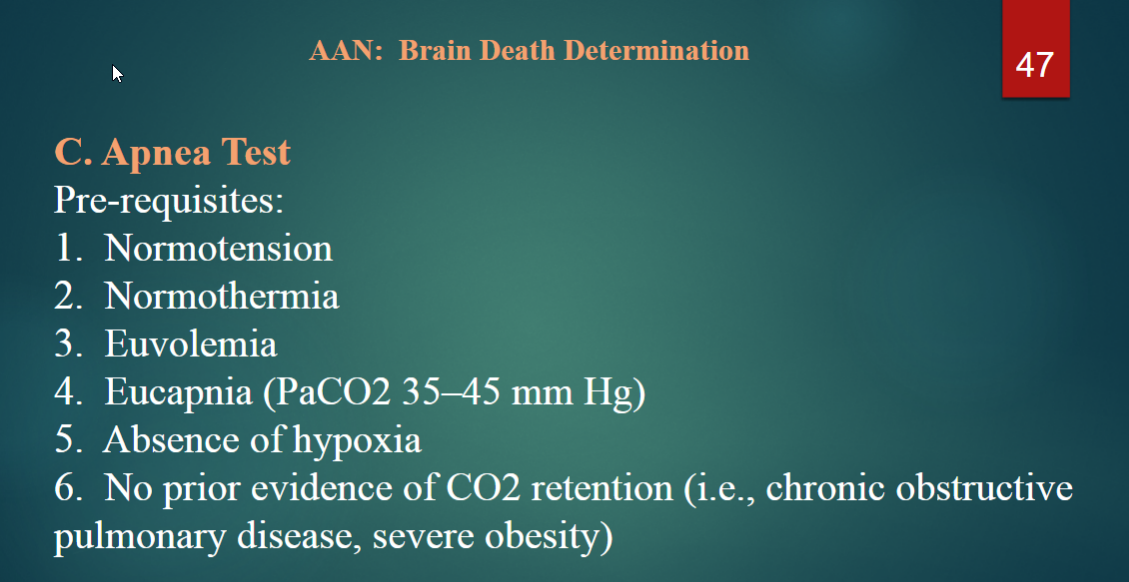
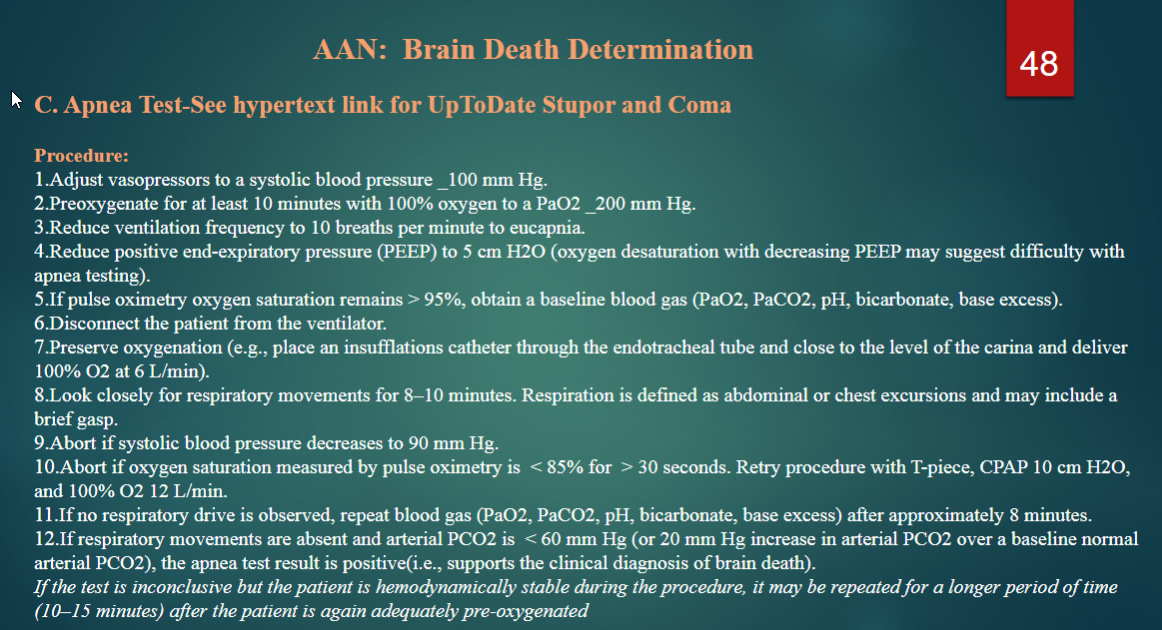
List the Ancillary tests
Ancillary tests
EEG
Cerebral angiography
Nuclear scan
Trans Cranial Dopplers
CT Angiography
MRI/MRA