Weather
 Call Kai
 Learn
 Practice Test
 Spaced Repetition
 Match
 Flashcards
 Podcast
1/17

There's no tags or description
Looks like no tags are added yet.
18 Terms
Climate
long-term pattern of temperature and precipitation over a large area.
Weather
short-term pattern of precipitation, wind, and other conditions over a small area.
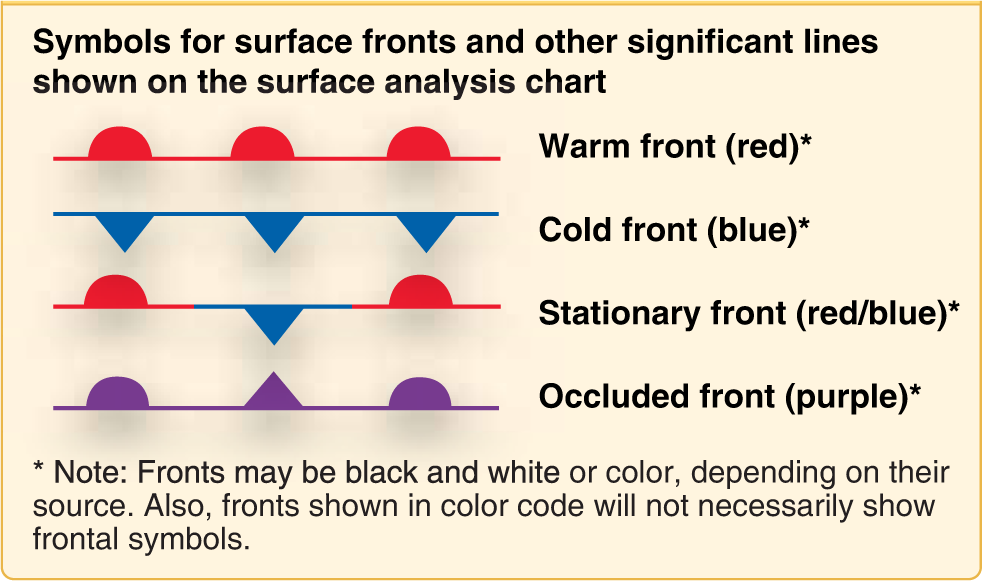
Front
where any two air masses of different temperatures and pressures meet.
High pressure
pressure associated with clear weather

Low pressure
pressure associated with wet or cloudy weather

Precipitation
water falling from clouds as rain, snow, sleet, or hail

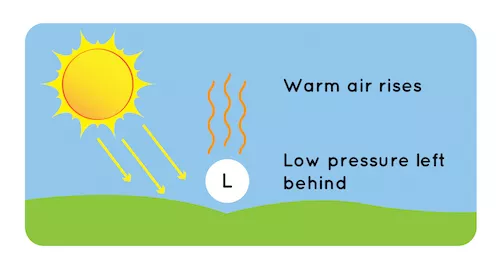
Convection
heat transfer through a moving liquid or gas; warmer rises, cooler sinks

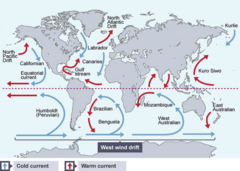
Ocean current
regular flow of warm or cold water within the ocean
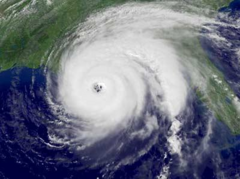
Hurricane, typhoon, or cyclone
forms over warm ocean water
Greenhouse effect
Earth's atmosphere traps the sun's heat, warming the planet

El Nino
warmer temperatures in the Pacific Ocean that causes cooler and wetter weather in Texas
La Nina
cooler temperatures in the Pacific Ocean that causes warmer and drier weather in Texas
stationary front
warm air mass and a cold air mass push against each other and don’t move—neither front wins

occluded front
cold front overtakes a warm front, lifting the warm air mass off the ground.

equator
warmest part of Earth, hit most intensely by the sun’s direct rays

poles
coldest part of Earth, hit by the weakest rays of the sun indirectly

heat
rises
cool air/liquid
sinks
