Mineral Nutrition
 Call Kai
 Learn
 Practice Test
 Spaced Repetition
 Match
 Flashcards
 Knowt Play
1/146

There's no tags or description
Looks like no tags are added yet.
147 Terms
What are the three non-mineral essential nutrients obtained from water or carbon dioxide
Hydrogen, carbon, and oxygen
What is the difference between macronutrients and micronutrients
Macronutrients are required in larger amounts, while micronutrients are required in smaller amounts
What are the three possible nutrient concentration levels in soil
Deficient, adequate, and surplus
What are the three ways plants obtain nutrients from soil
From the soil solution, through cation exchange with soil particles, and through relationships with microbes
What is the primary biochemical function of nitrogen in plants
Nitrogen is a major component of amino acids, proteins, nucleic acids, and chlorophyll
How does nitrogen deficiency affect protein synthesis
Protein synthesis declines
How does nitrogen deficiency affect cell division
The rate of cell division decreases
How does nitrogen deficiency affect chlorophyll production
Chlorophyll synthesis declines, causing leaves to become light green or yellow
What is the primary biochemical function of sulfur in plants
Sulfur is a component of certain amino acids and proteins
Why is sulfur important for protein formation
It is needed to make sulfur-containing amino acids that are used to build proteins
What is the primary biochemical function of phosphorus in plants
Phosphorus is important for energy storage and transfer, particularly through ATP
What molecule is responsible for transferring energy within plant cells
ATP (adenosine triphosphate)
Why is phosphorus important for cell division and plant growth
It is involved in energy transfer and the formation of DNA and RNA
What happens to sugars and anthocyanin production when phosphorus is deficient
Sugars accumulate, stimulating anthocyanin production and causing dark green to purple coloration
What is the primary function of silicon in plants
It contributes to cell wall development and structural strength
What happens to new growth when silicon is deficient
Cell wall development is inhibited
How does silicon help protect plants
It helps strengthen plant tissues, making plants less susceptible to fungal infections
What is the primary biochemical function of boron in plants
Boron is important for cell wall formation and structural integrity
What plant processes are affected by boron deficiency
Shoot tip development, flowering, and seed development
Why does boron deficiency affect growing points
Boron is important for the development of actively growing tissues
What is the primary biochemical function of potassium in plants
Potassium regulates enzyme activity, osmotic balance, and stomatal opening and closing
How does potassium help regulate water movement
It helps control osmotic pressure and water movement in plant cells
Why is potassium important for stomatal function
Potassium movement in guard cells controls their turgor pressure, allowing stomata to open and close
What is the primary biochemical function of calcium in plants
Calcium is important for cell wall structure and membrane stability
What structural component of the cell wall requires calcium
Calcium pectate, which helps hold cell walls together
Why does calcium deficiency cause brittle cell walls
Calcium is needed to maintain cell wall strength and integrity
Why does calcium deficiency affect young leaves and growing points first
Calcium is relatively immobile within the plant and is needed by actively growing tissues
What is the primary biochemical function of magnesium in plants
Magnesium is the central atom in the chlorophyll molecule
Why is magnesium necessary for photosynthesis
It is required for chlorophyll, which captures light energy
What other important biochemical function does magnesium perform
It activates many plant enzymes, including enzymes involved in energy metabolism
What is the biochemical function of chlorine in photosynthesis
Chlorine is required for water splitting during the light reactions of photosynthesis
What process does chlorine help support during the light reactions
The splitting of water, which provides electrons for photosynthesis
What is the primary biochemical function of manganese in plants
Manganese is involved in enzyme activation and the water-splitting process during photosynthesis
Why is manganese important during photosynthesis
It helps the plant split water and release electrons during the light reactions
Why do C4 and CAM plants require sodium
Sodium is required for carbon fixation and helps recycle PEP (phosphoenolpyruvate)
What is the role of sodium in C3 plants
It may help with cell expansion and can sometimes substitute for potassium
What is the primary biochemical function of iron in plants
Iron is involved in electron transport and redox reactions
Why is iron important for photosynthesis and respiration
It is part of proteins involved in electron transport
What is the primary biochemical function of zinc in plants
Zinc is an enzyme activator and is involved in enzyme function and protein synthesis
Why is zinc important for plant growth
It supports enzyme activity and processes involved in growth and development
What is the biochemical function of copper in photosynthesis
Copper is part of the plastocyanin molecule
What does plastocyanin do during the light reactions of photosynthesis
It accepts electrons from plastoquinone and transfers them through the electron transport chain
What enzyme complex requires nickel
Urease
What does the urease enzyme do
It breaks down urea into ammonia and carbon dioxide
Why is nickel important for nitrogen fixation
It is required by Rhizobium bacteria for the nitrogen fixation process
What happens when plants are deficient in nickel
Urea accumulates in leaves, which can cause leaf tip necrosis
What other processes is nickel important for
Seed development and iron utilization
What is the primary biochemical function of molybdenum in plants
It is a component of enzymes involved in nitrogen metabolism
Why is molybdenum important for nitrogen utilization
It is required for nitrate reductase, which converts nitrate into nitrite during nitrate assimilation
Why is molybdenum important for nitrogen fixation
It is a component of nitrogenase, the enzyme responsible for converting atmospheric nitrogen into ammonia
How do anions behave around negatively charged soil particles
They are repelled and generally remain in the soil solution
How do anions enter plant roots
Through bulk flow of water
Give two examples of anions that enter plants through the soil solution
Nitrate and chloride
How do cations interact with negatively charged soil particles
They can be adsorbed to soil particles and exchanged with other cations or hydrogen ions
What happens to phosphorus in some soils containing aluminum and iron
Phosphate can become bound to aluminum or iron, reducing its availability
What soil pH range provides the best availability for most nutrients
Approximately 5
5–6
5
What happens to the availability of P, K, Mn, B, Mg, Fe, and Zn when soil pH is above 7
Their availability decreases
What are mycorrhizae
Fungi that form an association with plant roots
How do fungal hyphae help plants absorb nutrients
They extend farther into soil pores than root hairs, increasing the area available for nutrient absorption
What do plants provide mycorrhizal fungi
Carbon
What do mycorrhizal fungi provide plants
Soil nutrients and improved water absorption
What are the two main types of mycorrhizal fungi
Ectomycorrhizal and endomycorrhizal fungi
Where do ectomycorrhizal fungi grow in relation to plant roots
They form a net around the root surface, with some hyphae penetrating the root cortex
What nutrients do ectomycorrhizal fungi help plants absorb
Particularly phosphorus
Where do endomycorrhizal fungi grow
Within root cells
What are arbuscules responsible for
Transferring nutrients to plant cells
What are vesicles associated with
A possible reproductive function
What nutrients can vesicular-arbuscular mycorrhizae help plants absorb
Phosphate, nitrogen, zinc, copper, and water
What are signs of nitrogen deficiency?
General chlorosis of older leaves, firing, defoliation
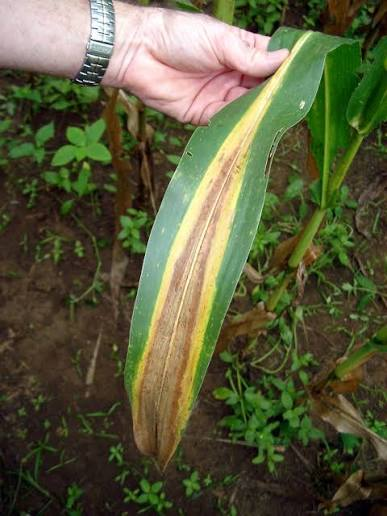
Nitrogen deficiency

Nitrogen deficiency

Nitrogen deficiency
What are signs of potassium deficiency?
Marginal chlorosis of older leaves, and marginal necrosis

Potassium deficiency

Potassium deficiency
What are signs of phosphorous deficiency?
Base to top, darker green to purple of older leaves, stunted.

Phosphorous deficiency
What are signs of magnesium deficiency?
Interveinal chlorosis of older leaves, veins remain green

Magnesium deficiency

Magnesium deficiency
What are signs of calcium deficiency?
Top to base, tip/bud necrosis, deformed leaves and fruit/flowers

Calcium deficiency

Calcium deficiency
What are signs of sulfur deficiency?
General necrosis of newer leaves, smaller leaves, stunted
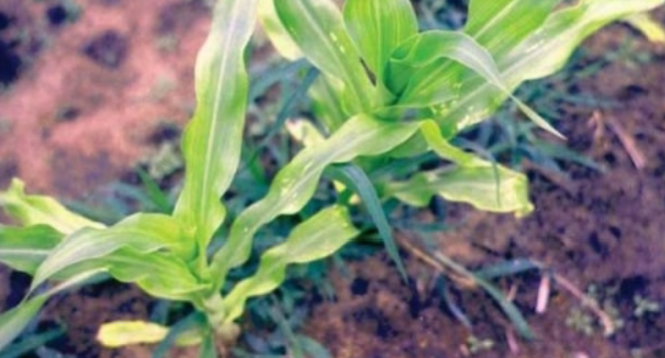
Sulfur deficiency

Sulfur deficiency
What are signs of iron deficiency?
Interveinal chlorosis of younger leaves
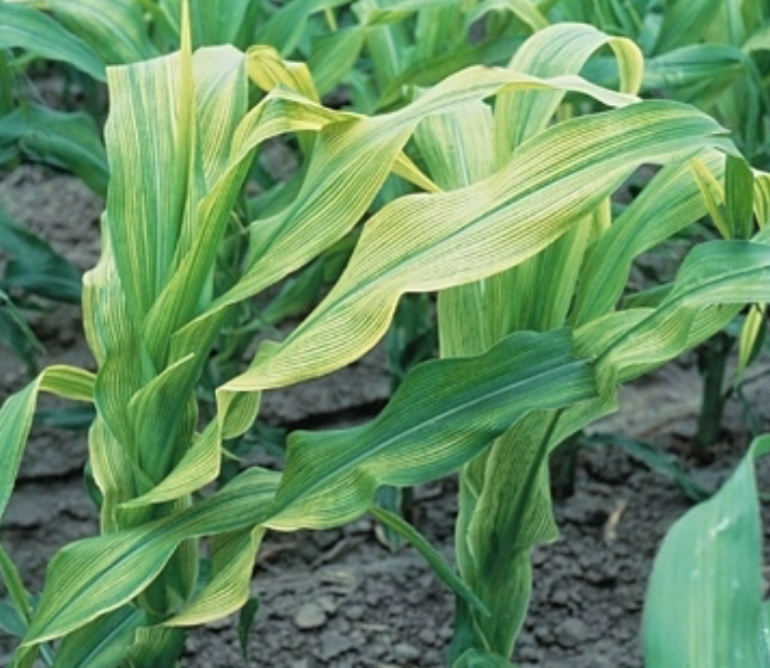
Iron deficiency
What are signs of manganese?
Interveinal chlorosis of younger leaves, severe is interveinal necrosis and shot holes

Manganese deficiency
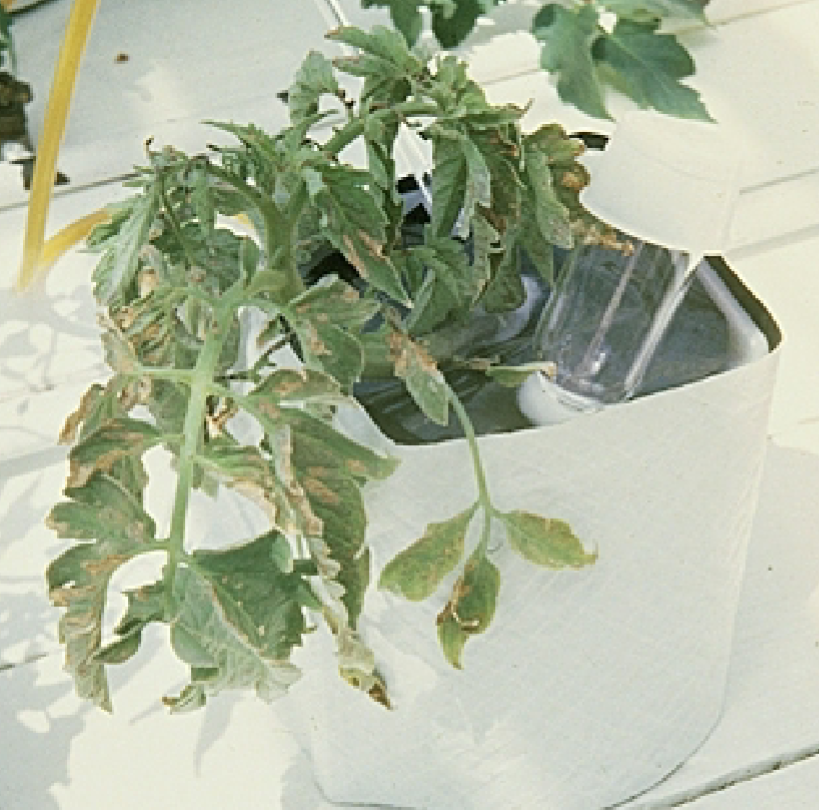
Manganese deficiency
What are signs of zinc deficiency?
Interveinal chlorosis of younger leaves

Zinc deficiency

Zinc deficiency
What are signs of boron deficiency?
Top to base, tip/ bud necrosis, deformation of leaves, fruit or flowers

Boron deficiency

Boron deficiency