Elasticities and Price Crises
 Call Kai
 Learn
 Practice Test
 Spaced Repetition
 Match
 Flashcards
 Knowt Play
1/19

There's no tags or description
Looks like no tags are added yet.
20 Terms
Income Elasticity of Demand (IED)
measures consumer demand for specific good
reacts to changes in real income
(IED) Typical Value for all Food
0 < E1 < 1, almost everywhere
(IED) Imply About Poverty
Richer people eat better
not proportionally more
Good has EI = −0.3 and Income falls 10%.
Calculate change in Consumption
+3%

Good has EI = −0.3 and Income falls 10%.
What kind of good this?
Inferior Good
State Engel’s Law
As income rise, share of budget spent on food falls
Even though amount spent rises
Why State Engel’s Law, same food price shock is an Inconvenience in one country
30% rise in world food price is in Massachusetts
because affects avg US households ~10-12%
Why State Engel’s Law, same food price shock is an Catastrophe in one country
30% rise in world food price in Malawi
because is low income country
affects 50-70% of poor households.
Why demand for animal products rising faster than demand for food overall matters for grain demand?
plan grain demand rise more than food number suggest
Own-price elasticity of demand

Why do we compare absolute values?
(Own-price elasticity of demand)
- 2.0 more elastic than - 0.4
Always negative for normal demand curve (Price Up, Quantity Down)
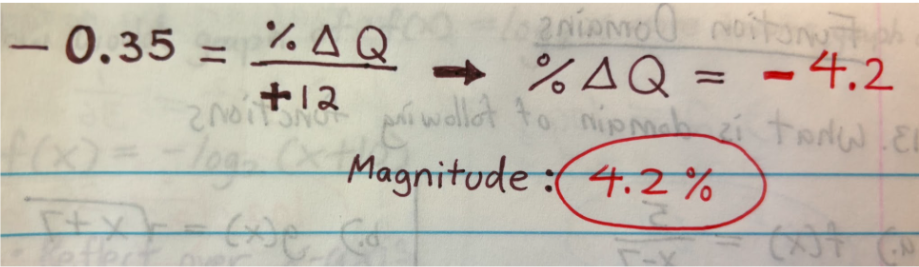
Price rises 12%, EP = −0.35. Calculate the change in quantity demanded.
How Change in Quantity demand effect on the poor?
Nutritional status of poor: worse, food is less affordable, cut consumption of staple
Caveat: poor households sell rice again, Net buyers lose.
Self-Targeting
Choosing good:
subsidy finds right people
without anyone having to be identified, means tested or registered
Which elasticity does it exploit? (Self Targeting)
E1 < 0
Inferior Good
Why does Self Targeting doesn't need to be tested?
course grain subsidy is taken up mainly by the poor
5% supply shortfall with demand elasticity −0.2:
Roughly what price rise clears the market?
~25%
Why are Food Prices so much more Volatile?
Small shortfall produces large price rise
when demand is inelastic and supply cannot respond
2007–08 and 2022, world production was near record and hunger rose, Why?
Availability for food was fine. Access failed: through price.
Sen Mechanism for Bengal 1943: operating globally instead of 1 province
India banned wheat exports in May 2022.
Who gained, who lost, and what does Hsiao, Moscona & Sastry find about this pattern in general?
Gained: Indian Consumers
Lost: Indian Farmers, Importing Countries, Consumers in importing countries
General Pattern: same across 81 countries