elements, compounds, and mixtures
 Call Kai
 Learn
 Practice Test
 Spaced Repetition
 Match
 Flashcards
 Knowt Play
1/12

There's no tags or description
Looks like no tags are added yet.
13 Terms
atom
the simplest particle of matter
molecule
two or more atoms, chemically combined
element
a substance that is made up of only one kind of atom and cannot be broken down into any other, simpler substances
compound
a substance made up of two or more different elements that are chemically combined (can only be separated by electrolysis or chemical reactions, e.g. thermal decomposition)
mixture
a combination of two or more substances (elements and/or compounds) that aren’t chemically combined (separated easily by physical methods like separation techniques, e.g. evaporation, filtration, distillation, chromatography, etc)
examples of a compound
water, carbon dioxide, sodium chloride
examples of a mixture
air, seawater, rocks

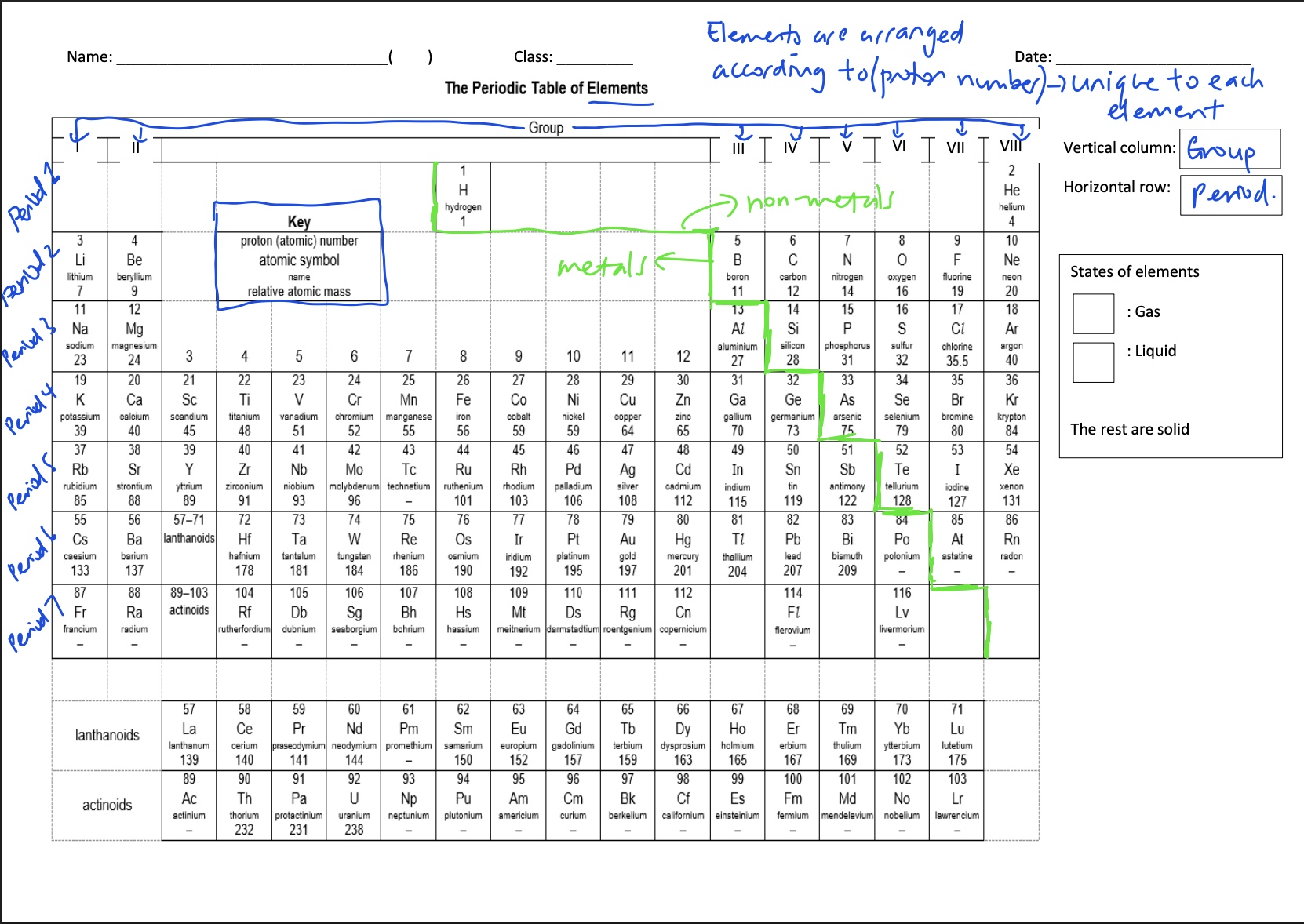
periodic table’s staircase
metal vs. non-metals
properties of a compound
the properties of a compound are generally different from the elements that form it
salt on road
salt makes the ice melt faster. thus, the roads will be less slippery.
a period
row

a group
a column (when asked for which group a element is in, always answer in roman numbers)
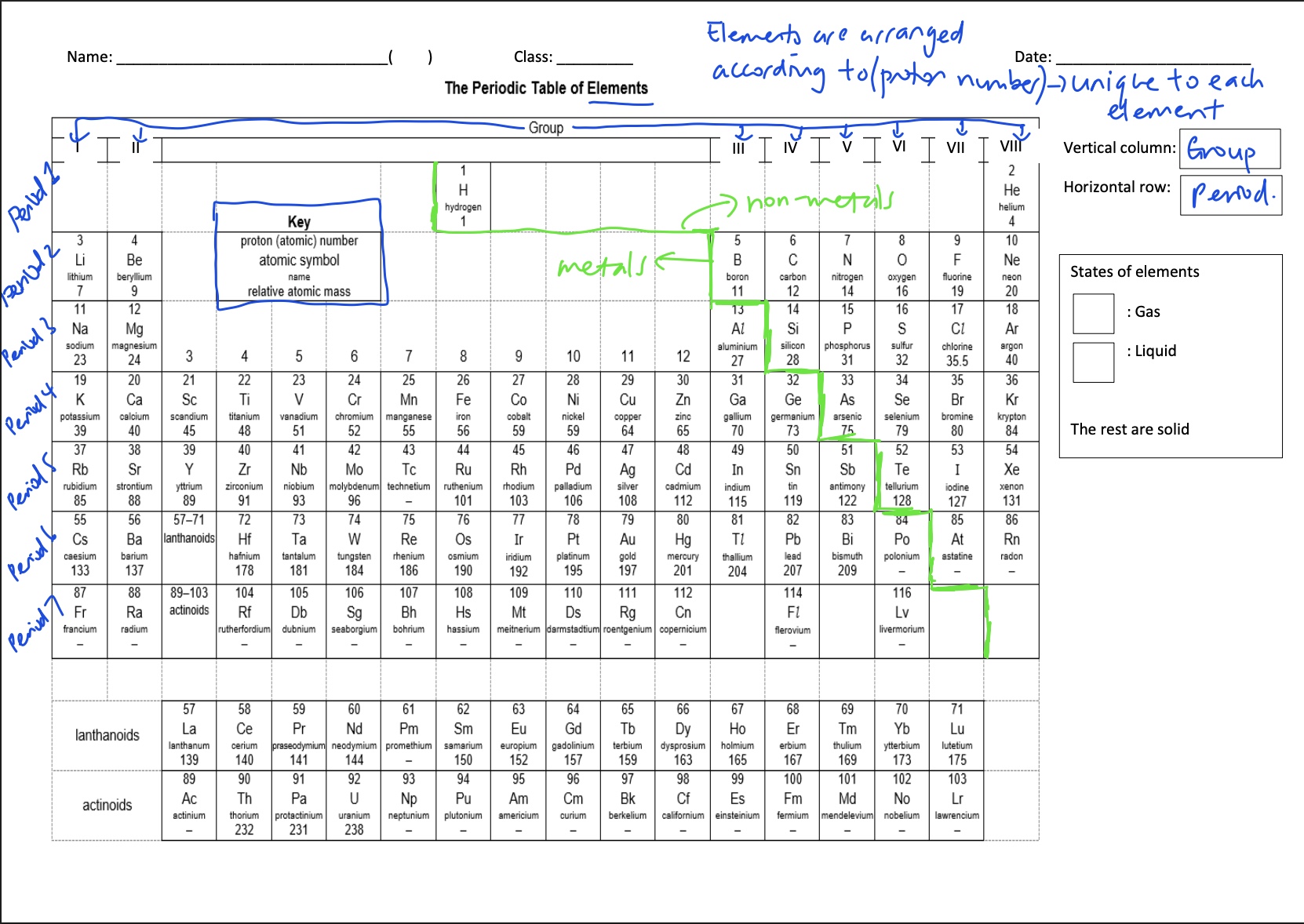
shared properties example (given that the question states that chlorine can react with hydrogen)
Bromine can react with hydrogen because it is in the same group as chlorine. Thus, chlorine and bromine will share similar properties.