Chronic Neurologic Disorders
 Call Kai
 Learn
 Practice Test
 Spaced Repetition
 Match
 Flashcards
 Knowt Play
1/26

There's no tags or description
Looks like no tags are added yet.
27 Terms
multiple sclerosis (MS)
progressive demyleniation of neurons in the brain, spinal cord, and cranial nerves
different types of MS
variation in effects, severity, and progression
loss of myelin interferes with conduction of impulses in affected fibers
may affect motor, sensory, and autonomic fibers
occurs in diffuse pathches in the nervous system
onset usually between ages 20 -40
cause unknown
may be an autoimmune disease
may be nutritional deficit
may be change in blood flow to neurons
may have genetic, immunologic, and enviromental compononents
increased risk for close relatives of affected individuals
MS - earliest lesions
inflammatory response
loss of myelin in white matter of brain or spinal cord
MS - plaques
larger areas of inflammation and demyleniation
develop later, become visible
frequetntly beside the lateral ventricles, brainstem, and optic nerve
plaques vary in size
several may coalesce into a single patch
Ms - recurrence
initial inflammation may subside
neural func may return to normal for short period of time
in time, neural degeneration becomes irreversible
func is permanently lost
each recurrence causes additional areas of CNS to become affectsMS varies in severity
MS - signs and symptoms
early
manifestations determined by areas of demyelination
blurred vision; weakness in legs
diplopia (double vision); scotoma (spot in visual field)
dysarthria
paresthesia, numbness, burning, tingling
late
progressive weakness and paralysis extending to the upper limbs
loss of coordination; bladder, bowel and sexual dysfunc; chronic fatigue
MS - distribution of lesions

MS - diagnostic tests and treatment
diagnostic tests
no definite test
MRI for diagnosis and monitoring
treatment
no definitive treatment approved at this time
several research trials in progress
therapy includes physical therapy, occupational therapy
manifestations require individual attention
parkinsons disease
progressive degenerative disorder
dysfunc of the extrapyramidal motor system
progressive degeneration in bassal nuclei
imbalance between excitation and inhibition in basic nuclei
excess stimulation affects movement and posture
resting tremors
muscular rigidity
difficulty initiating movement
postural instability
Parkinsons disease - primary/secondary
primary or idiopathic Parkinsons disease
usually develops after age 60
secondary parkinsonism due to
encephalitis
trauma - ex: sports injuries
vascular disease
drug induced (phenothiazine tranquilizers
Parkinsons disease - early signs and symptoms
fatigue
muscle weakness, muscle aching
decreased flexibility
less spontaneous changes in facial expression
tremors in the hands at rerst, repetitive “pill rolling” motions of hands
Parkinsons disease - later signs and symptoms
tremors affect hands and feet, face, tongue, lips
increased muscle rigidity
difficulty initiating movements
slow movements
lack of associated involuntary movements
characteristic standing posture is stooped leaning forward
propulsive gait
complex activities become slow and difficult
Parkinsons disease - what they look like
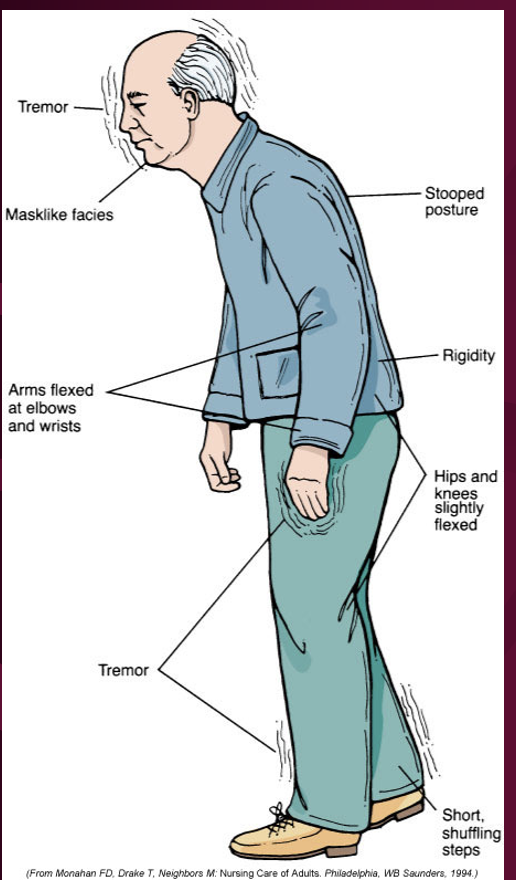
Parkinsons disease - other affected funcs
low voice, devoid of inflection
dysarthria
chewing and swallowing become difficult
prolonged eating time
reccurent drooling
face might resemble a mask
blinking of eyelids reduced
blank staring face
impairs communication
autonomic dysfunc
urinary retention
constipation
orthostatic hypotension
threat of falls increases
urinary tract and respiratory tract infections are common comps
dementia develops late in course of disease
Parkinsons disease - treatment
removal of cause if known
dopamine replacement therapy
levodopa - dopamine precursor
anticholinergic drugs
speech and language pathologist
PT
OT
improve balance, coordination
monitoring and treatment of respiratory and UTIs
amyotrophic lateral sclerosis (ALS)
also referred to as Lou gehrig disease
no identified cause
genes on various chromosomes have been linked to the disease
progressive degerative disease affecting upper motor neurons in the cerebral cortex and lower motor neurons in brain stem and spinal cord
no idication of inflammation around the nerves
cognition unimpaired
loss of upper motor neurons in cerebral cortex
spastic paralysis and hyperreflexia
damage to lower motor neurons
flaccid paralysis
decreased muscle tone and reflexes
progressive muscle weakness and loss of fine motor coordination
stumbling and falls are common
death occurs due to respiratory failure
ALS - treatment
no specific treatment to slow degeneration
stem cell therapy under investigation
riluted (drug) to slow further damage to neurons
moderate exercise and rest
RT, appropriate nutrition, speech pathology, OT, PT, psychological treatment
Myasthenia gravis
autoimmune disorder
auto antibodies to ACh receptors form
destruction of receptor site
prevention of further muscle stimulation
skeletal muscle weakness
facial and occular muscles usually affected first
not dysphagia and aspiration are significant problems
Myasthenia gravis - diagnostic tests and s/sx
diagnostic tests
electromyography
serum antibody test
s/sx
muscle weakness in face and eyes
impaired vision; monotone speech
difficulty chewing and swallowing
head droops; arms become weaker
upper respiratory infections common
Myasthenia gravis - treatment
anticholinesterase agents
temp improvement of neuromuscular transmission
glucocorticoids
suppression of immune system
plasmaphoresis
removal of antibodies from the blood
thymectomy
huntington disease
inherited disease
autosomal dominnat gene
carried on chrom 4
does not usually manifest until 40+ years
progressive atrophy of brain
particularly in basal ganglia (nuclei) and frontal cortex
depletion of GABA in the basal nuclei
levels of ACh in brain appears to be reduced
huntington disease - s/sx, diagnostic tests, treatment
s/sx
mood swings, personality changes
restlessness, choreiform movements in arms and face
diagnostic tests: DNA analysis
treatment
currently no therapy to slow progress of disease
symptomatic therapy only
dementia
progressive chronic disease
cortical func decreased
impaired cognitive skills
impaired thinking, judgment and learning
memory loss
confusion
behavioral and personality changes
many causes of dementia
vascular disease
infections
genetic disorders
alzheimer disease (AD)
progressive cortical atrophy
neurofibrillary tangles and plaques
ACh deficit due to loss of neurons
no definite diagnostic tests available
exclusion of other disorders
careful medical and psychological history
specific cause unknown
repetitive DNA sequences on different chromosomes have been associated with AD
AD - S/sx
signs and symptoms extend over 10-20 yrs
early
behavioral changes
irritability, hostility, mood swings
gradual loss of memory and lack of concentration
impaired learning, poor judgment
decline of cognitive func, memory, and language
late
change in food intake
inability to recognize family, lack of enviromental awareness, incontinence, inability to func
AD - treatment
no specific treatment
anticholinesterase drugs
some temp improvements
OT, psychologists, speech therapy
team approach needed to support client and caregivers
vascular dementia
Caused by cerebrovascular disease
Often a result of multiple small brain infarctions
Common in persons older than 70
Especially in those with hypertension
Onset insidious
Memory loss, apathy, inability to manage daily routines
Progression may be in stages.
Other neurologic impairment is common.
Aids dementia
Common in later stages of AIDS
Virus invades brain tissue.
May be exacerbated by other infections and tumors
Gradual loss of memory and cognitive ability
Impaired motor function
Children with congenital HIV infection
Brain frequently affected
Severe developmental delay