Animal Reproduction
 Call Kai
 Learn
Learn Practice Test
 Spaced Repetition
 Match
Match Flashcards
 Knowt Play
1/51

There's no tags or description
Looks like no tags are added yet.
Name | Mastery | Learn | Test | Matching | Spaced | Call with Kai | Chat |
|---|
No analytics yet
Send a link to your students to track their progress
52 Terms
What are the two main types of reproduction in the animal kingdom?
Asexual and sexual reproduction.
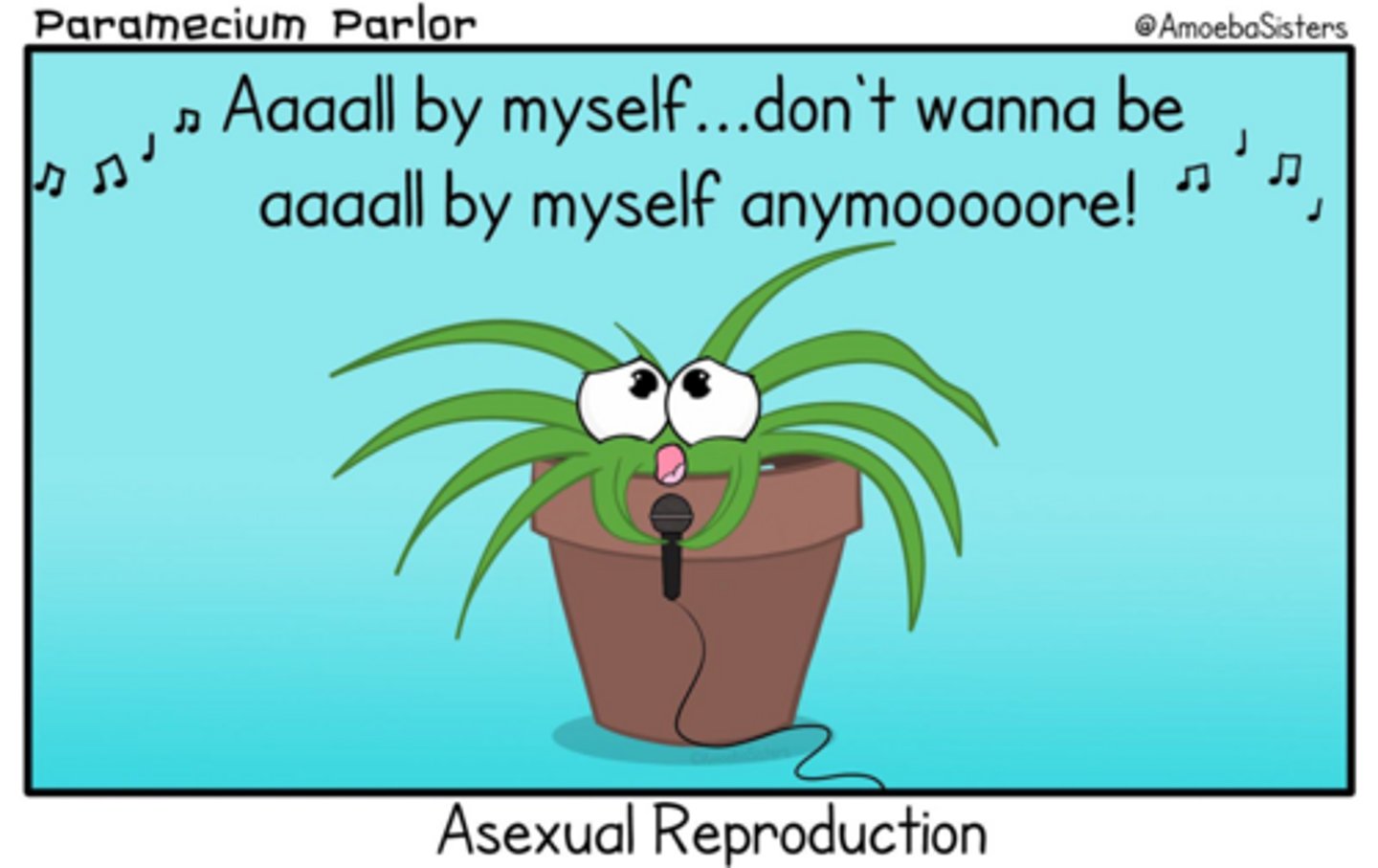
What is asexual reproduction?
A process that results in new individuals generated without the fusion of egg and sperm, relying on mitotic cell division.
What is sexual reproduction?
A process involving the fusion of haploid gametes (eggs and sperm) to form a diploid cell (zygote).
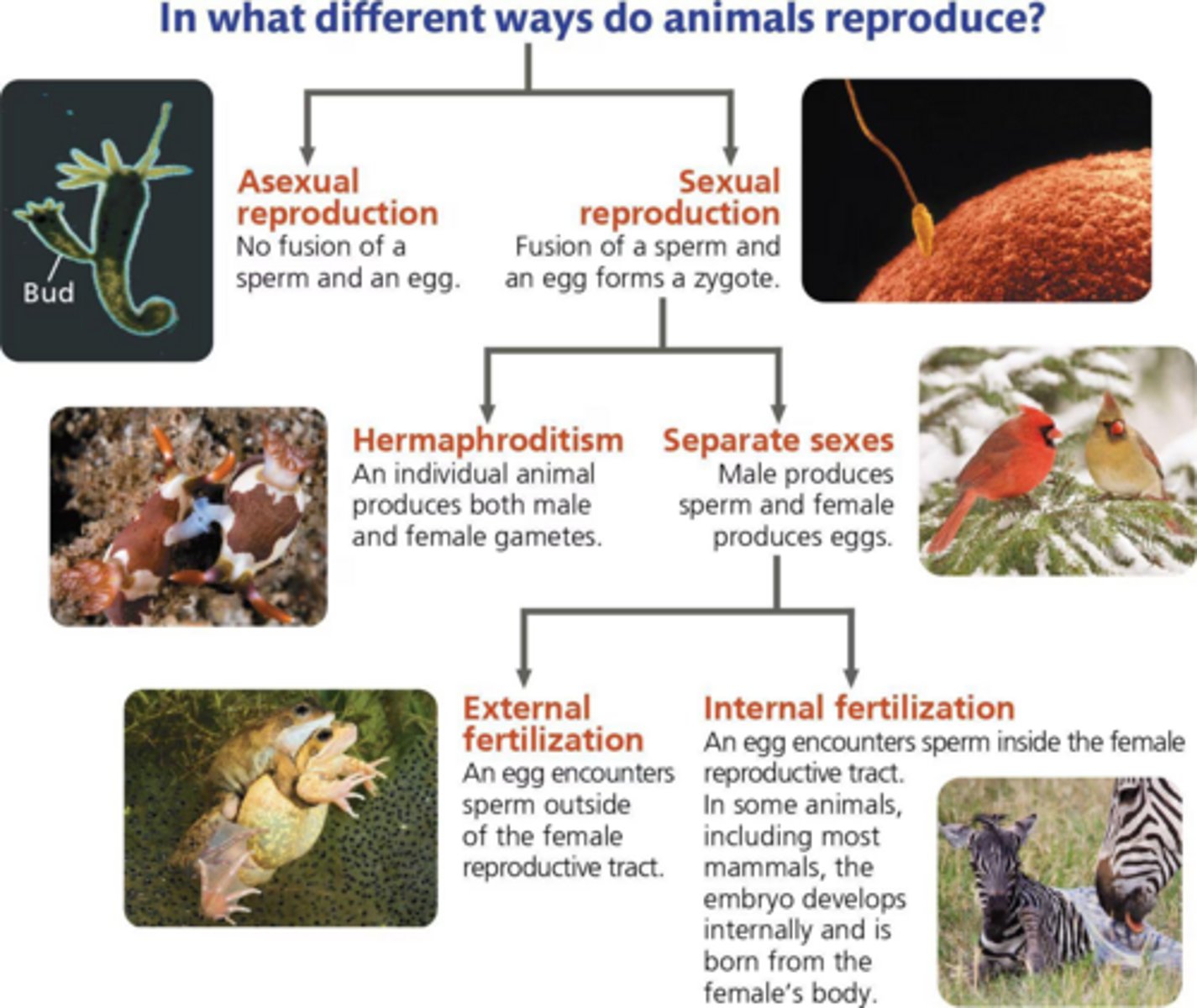
What is budding in asexual reproduction?
A method where new individuals arise from outgrowths of existing ones, as seen in stony corals.
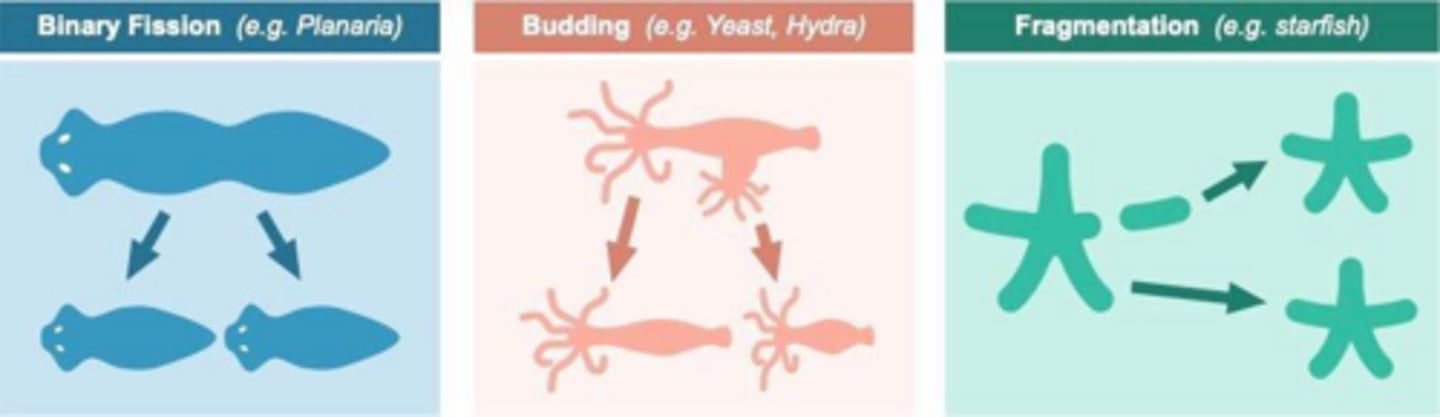
Define fission in the context of asexual reproduction.
The separation of an organism into two or more individuals of about the same size.
What is fragmentation in asexual reproduction?
The breaking of the body into pieces, some or all of which develop into adults, requiring regeneration.
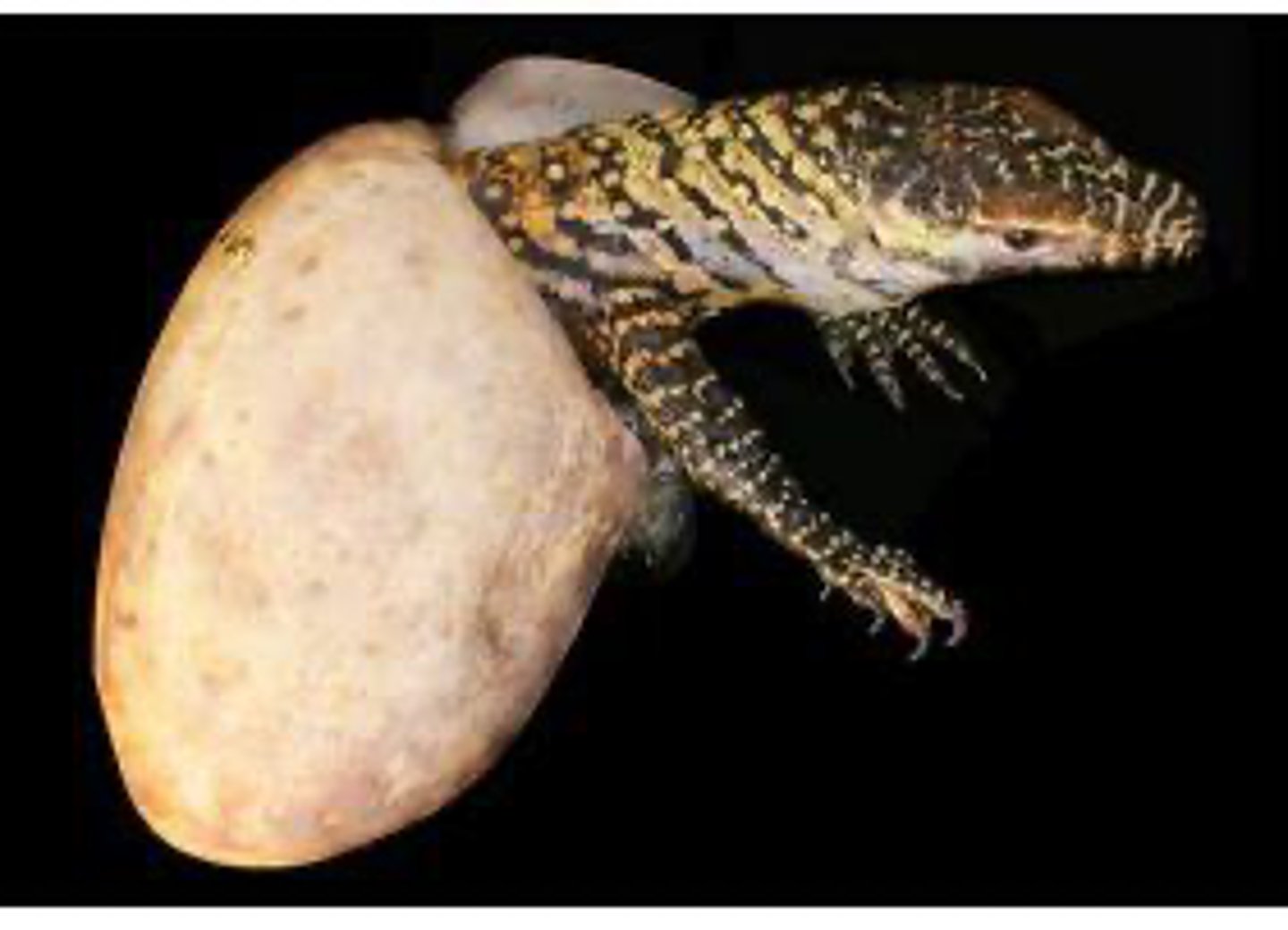
What is parthenogenesis?
The development of a new individual from an unfertilized egg, mainly observed in invertebrates.
What is hermaphroditism?
A condition where each individual has both male and female reproductive systems, common among sessile animals.
What is the significance of reproductive cycles in animals?
They are related to changing seasons and controlled by hormones and environmental cues.
What is ovulation?
The release of mature eggs at the midpoint of a female reproductive cycle.
How does internal fertilization differ from external fertilization?
Internal fertilization occurs within the female reproductive tract, while external fertilization involves fertilization in the external environment.
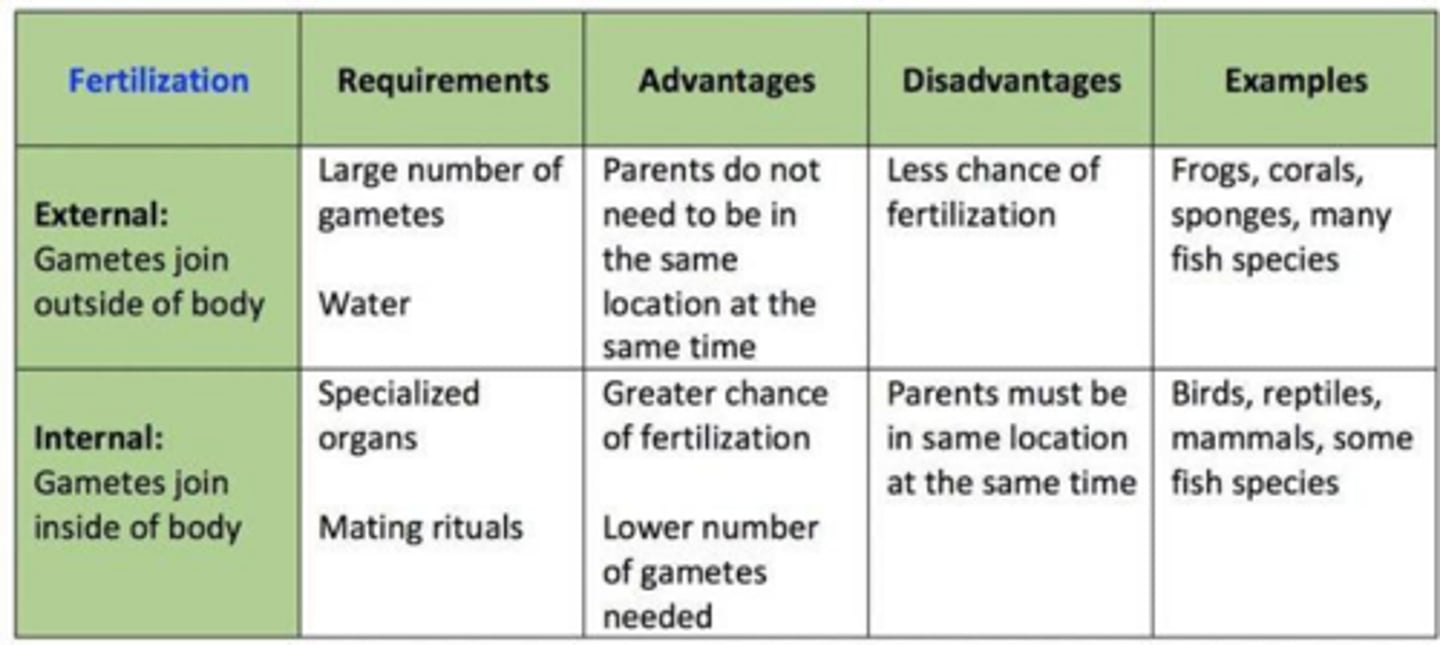
What is spawning?
A process where individuals cluster in the same area to release their gametes into the water at the same time.
What role do pheromones play in reproduction?
They are used by mating animals to attract partners and facilitate reproductive interactions.
What is a spermatheca?
A sac in the female reproductive system where sperm is stored, allowing for fertilization under optimal conditions.
What is the cloaca?
A common opening between the external environment and the digestive, excretory, and reproductive systems, found in nonmammalian vertebrates.
What is the 'twofold cost' of sexual reproduction?
Sexually reproducing females have half as many daughters as asexual females due to the need for a male partner.
Why might sexual reproduction be advantageous in fluctuating environments?
It produces genetically varied offspring, which may enhance the reproductive success of parents.
What adaptations are associated with internal fertilization?
It typically involves fewer gametes but higher survival rates of zygotes due to protective mechanisms.
What is the role of parental care in offspring survival?
Parental care helps ensure the survival of offspring but can also be costly for the parent.
What is the function of gonads in sexual reproduction?
Gonads are organs that produce gametes necessary for sexual reproduction.
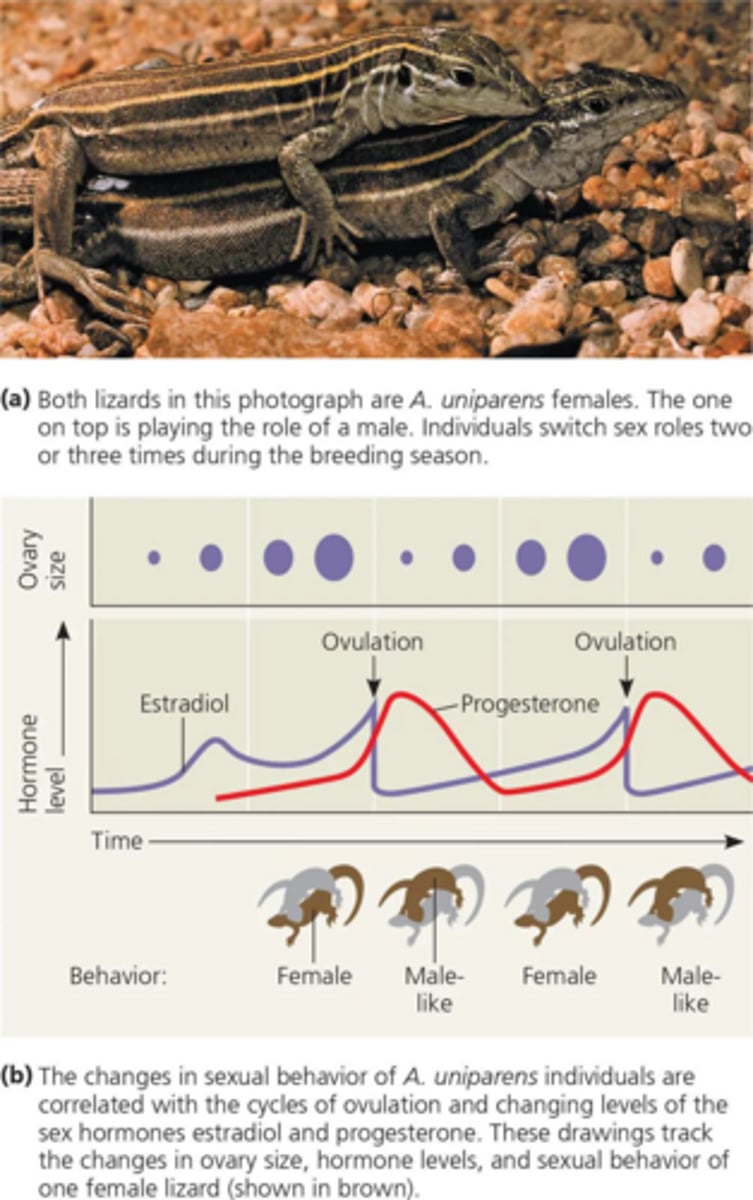
How do some organisms alternate reproductive roles?
Some species, like whiptail lizards, can mimic male behaviors and alternate roles during the breeding season.
What environmental factors can influence reproductive success?
Seasonal temperature and environmental cues can significantly impact reproductive cycles and success.
What is the significance of gamete production and delivery systems?
These systems include organs and structures that carry, nourish, and protect gametes and developing embryos.
What is the impact of climate change on animal reproduction?
Climate change can decrease reproductive success by disrupting seasonal cues necessary for reproduction.
What are accessory glands in the male reproductive system?
Glands that secrete products necessary for sperm movement and survival.
What is the primary function of the testes?
To produce sperm in the seminiferous tubules.
Why are the testes located outside the abdominal cavity?
To maintain a cooler temperature necessary for normal sperm production.
What is the epididymis?
A coiled tubule next to the testes where sperm is stored and matures.
How long does it take for sperm to mature in the human epididymis?
Approximately 3 weeks.
What are the accessory glands of the male reproductive system?
Seminal vesicles, prostate gland, and bulbourethral glands.
What is the role of seminal vesicles?
To secrete a fluid component that lubricates and nourishes sperm, contributing about 60% of semen volume.
What does the prostate gland do?
Secretes its products directly into the urethra through small ducts.
What is the function of bulbourethral glands?
To secrete a clear mucus that neutralizes acidic urine in the urethra before ejaculation.
What is the main function of the penis?
To serve as the copulatory structure and contains the urethra.
What are the external reproductive structures of the female?
Clitoris and two sets of labia.
What are the ovaries?
Female gonads that produce eggs and reproductive hormones.
What is the function of the oviduct (fallopian tube)?
To convey the egg from the ovary to the uterus.
What is the uterus and its role?
The organ where eggs are fertilized and where development of the young occurs.
What is the cervix?
The neck of the uterus that opens into the vagina.
What is the vagina?
A muscular chamber that serves as the repository for sperm during copulation and as the birth canal.
What are mammary glands?
Exocrine glands that secrete milk for nourishing the young.
What is spermatogenesis?
The formation of sperm in the testes, which is continuous and prolific.
What is oogenesis?
The development of a mature egg, which is a prolonged process.
How do spermatogenesis and oogenesis differ?
All four products of meiosis develop into sperm, while only one of the four becomes an egg in oogenesis.
What hormones regulate mammalian reproduction?
Hormones from the hypothalamus, anterior pituitary, and gonads, including GnRH, FSH, and LH.
What is the role of follicle-stimulating hormone (FSH)?
Stimulates the production of eggs by the ovaries and sperm by the testes.
What does luteinizing hormone (LH) do?
Stimulates ovulation in females and androgen production in males.
What are the three major types of steroid sex hormones?
Androgens (Testosterone), Estrogens (Estradiol), and Progesterone.
What is biological sex?
Typically reflects the genitals present at birth and the child's chromosomes (XX for female, XY for male).
What is the difference between cisgender and transgender?
Cisgender individuals have a gender identity that aligns with their assigned sex, while transgender individuals experience a mismatch.
What is sexual orientation?
Identifies the gender of people to whom an individual is attracted romantically, emotionally, and sexually.
What role do FSH and LH play in the male reproductive system?
FSH stimulates Sertoli cells to nourish developing sperm, while LH causes Leydig cells to produce testosterone.