BIOL172 Exam 2: Sponges
 Call Kai
 Learn
Learn Practice Test
 Spaced Repetition
 Match
Match Flashcards
 Knowt Play
1/16

There's no tags or description
Looks like no tags are added yet.
Name | Mastery | Learn | Test | Matching | Spaced | Call with Kai | Chat |
|---|
No analytics yet
Send a link to your students to track their progress
17 Terms
Porifera
Sponges
Invertebrates (most are marine species)
Share a putative recent common ancestor with choanoflagellates
No true tissues (no gastrulation: no germ layers)
Specialized cells forming functional tissues
Sponge Larvae
Flagellate
Adult Sponge
Sessile
Diffusion
Gas exchange, circulaton, and excretion
Porifera lack complex... systems (4)
Digestive, respiratory, circulatory, and nervous systems
Digestive Process
Intracellular
- break down food in cells rather than a digestive cavity
Food: bacteria, tiny crustaceans
Reproduction
Sexual and asexual
Sexual:
- gamete formation
- monoecious (both female and male), some hermaphroditic (produce eggs and sperm)
Asexual:
- fragmentation / budding
- gemmules (resistant / dormant structures, only freshwater species)
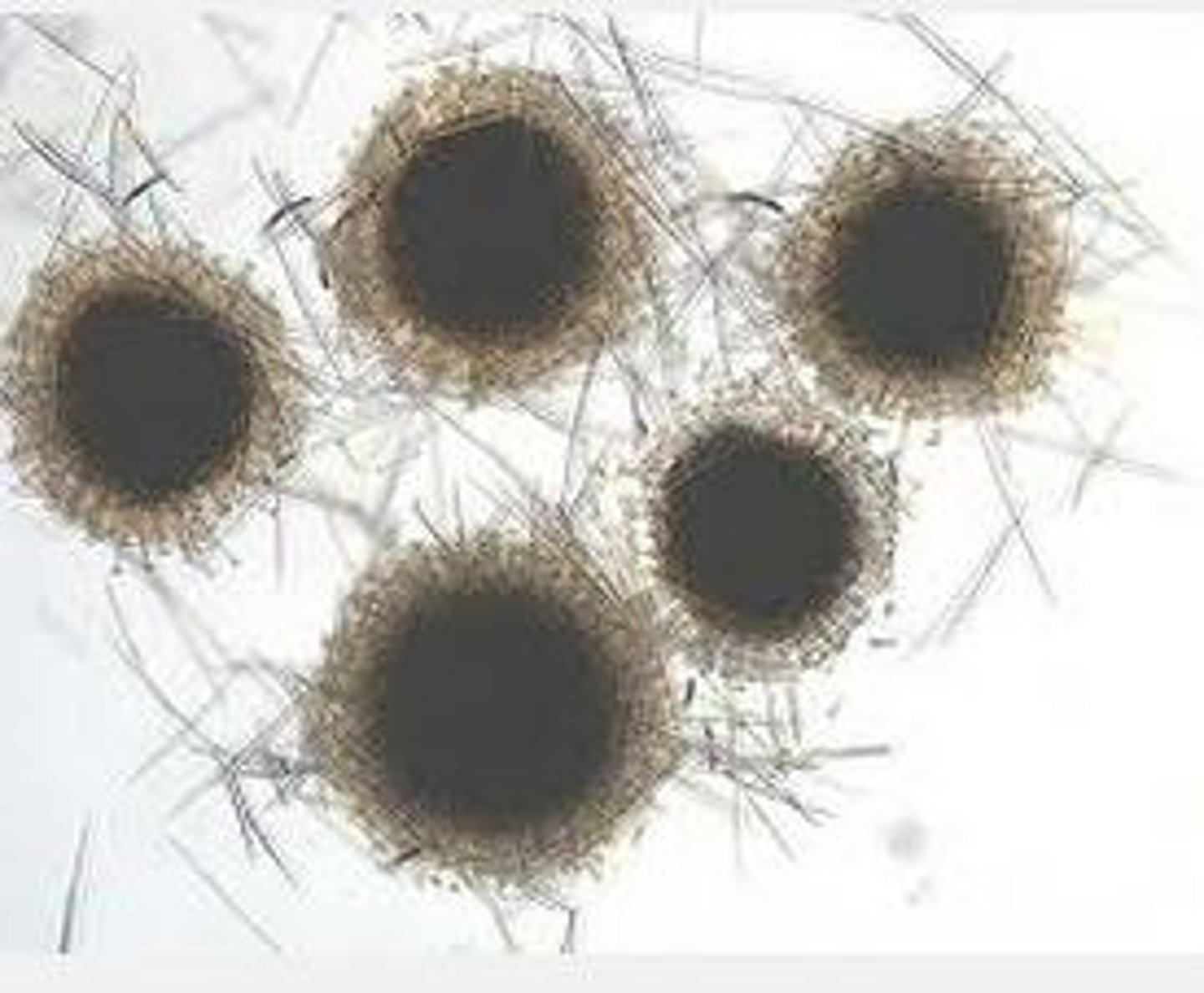
Gemmules
Specialized, asexual, internal reproductive buds produced by freshwater sponges / Porifera to survive harsh conditions like freezing or drought
Allow sponges to survive in a dormant state and later develop into new adults when environmental conditions improve.
Lophocyte / Collenocyte
Produce a collagen-like protein that supports the mesohyl
Amoebocyte
Delivers nutrients to cells and differentiates into other cell types
Mesohyl
Jelly like substance which contains collagenous fibres
Choanocyte
Generates water current and filters food particles from water
Spermatozoa
Body Cells and Structure
Spongin fibres made by spongocytes
Spicules partially surrounded by spongin (made by sclerocytes)
Choanocytes
Choanocytes
Collar cells that line the body cavity and have flagella that circulate water in sponges
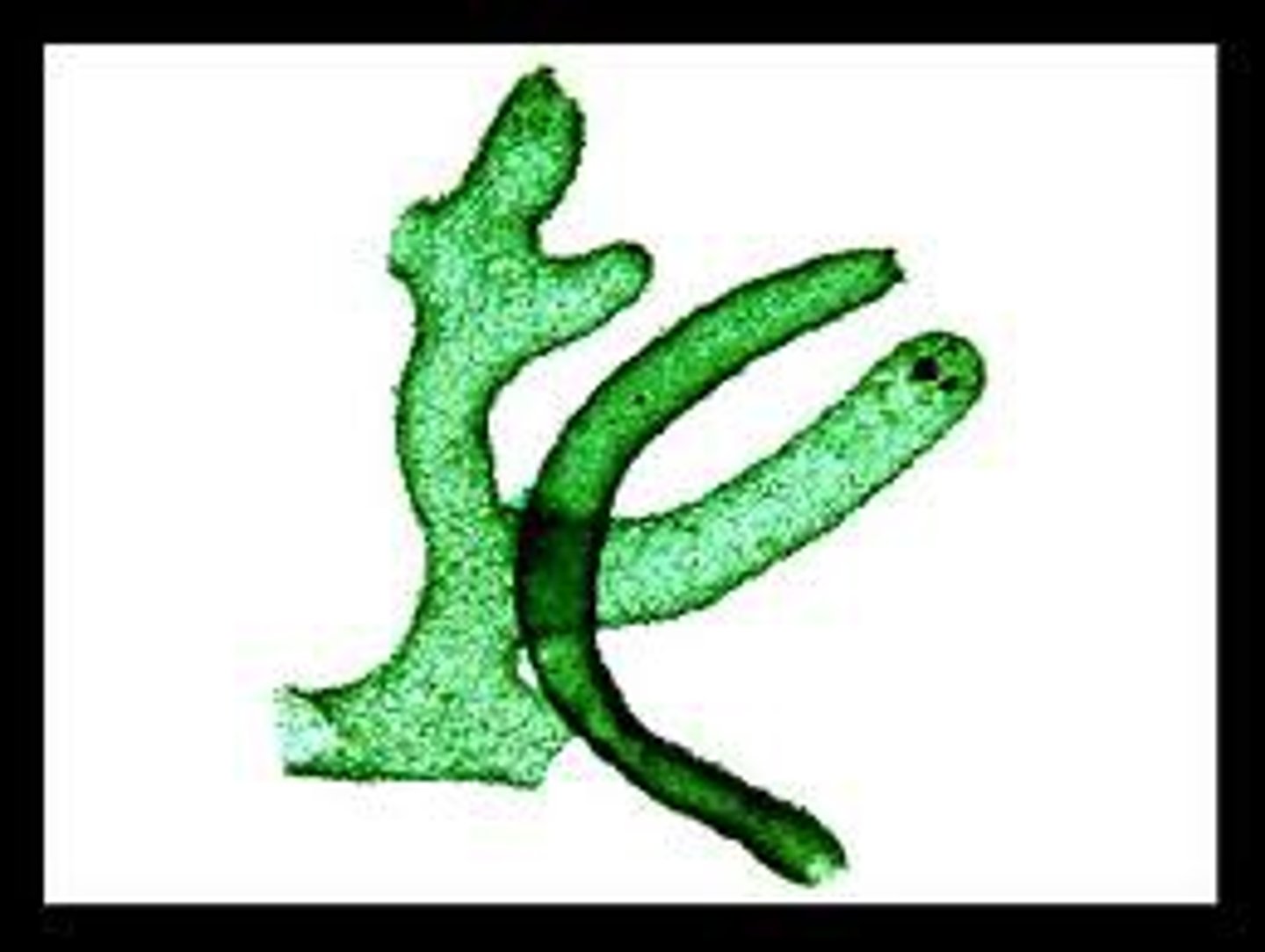
Ascon Sponge
has no folding to its body wall and is simply a hollow tube just a few cells thick with a prominent osculum at the top; generally small
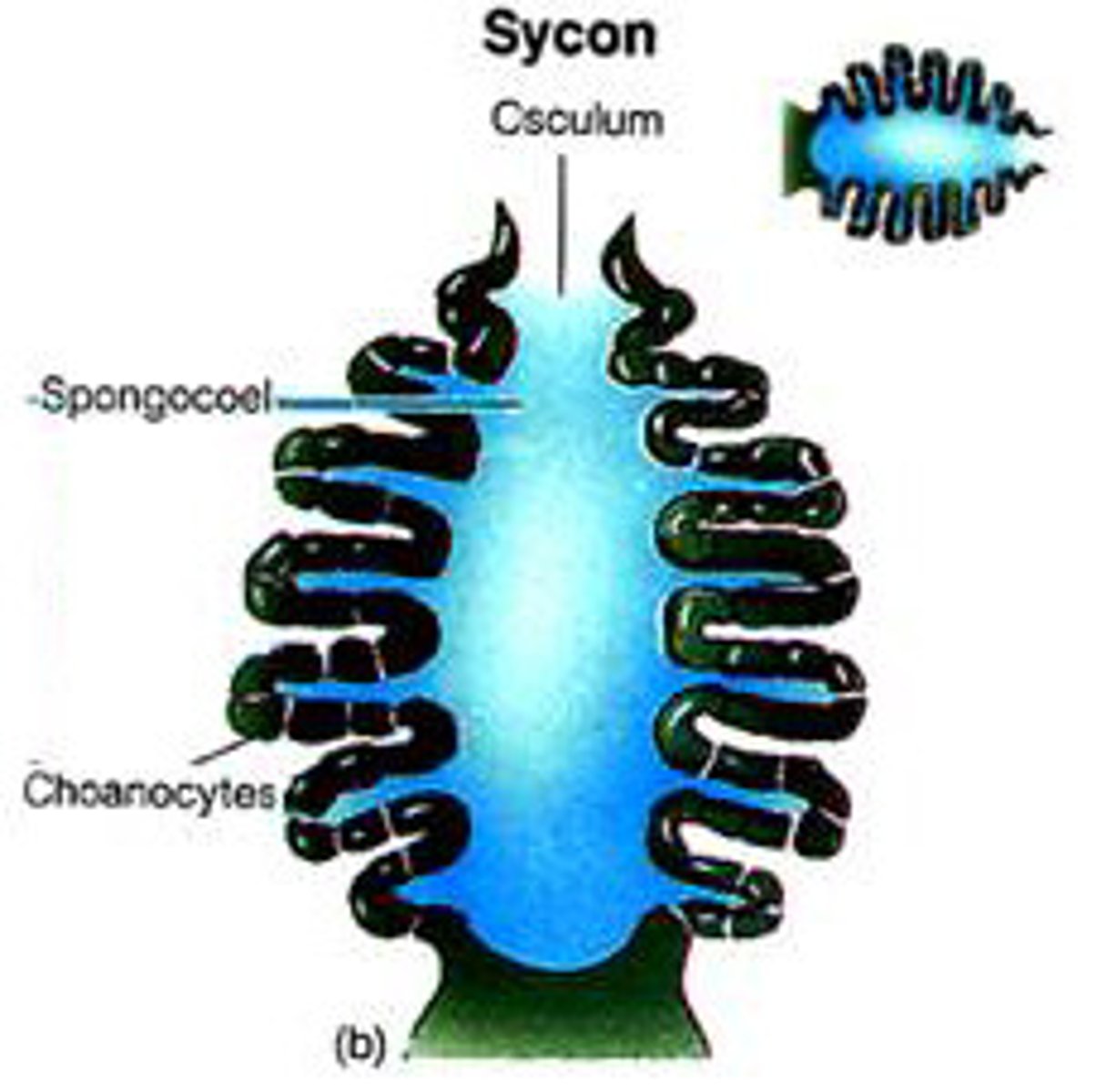
Sycon Sponge
Simple infolding to body walls; increased surface-to-volume ration allows them to be larger
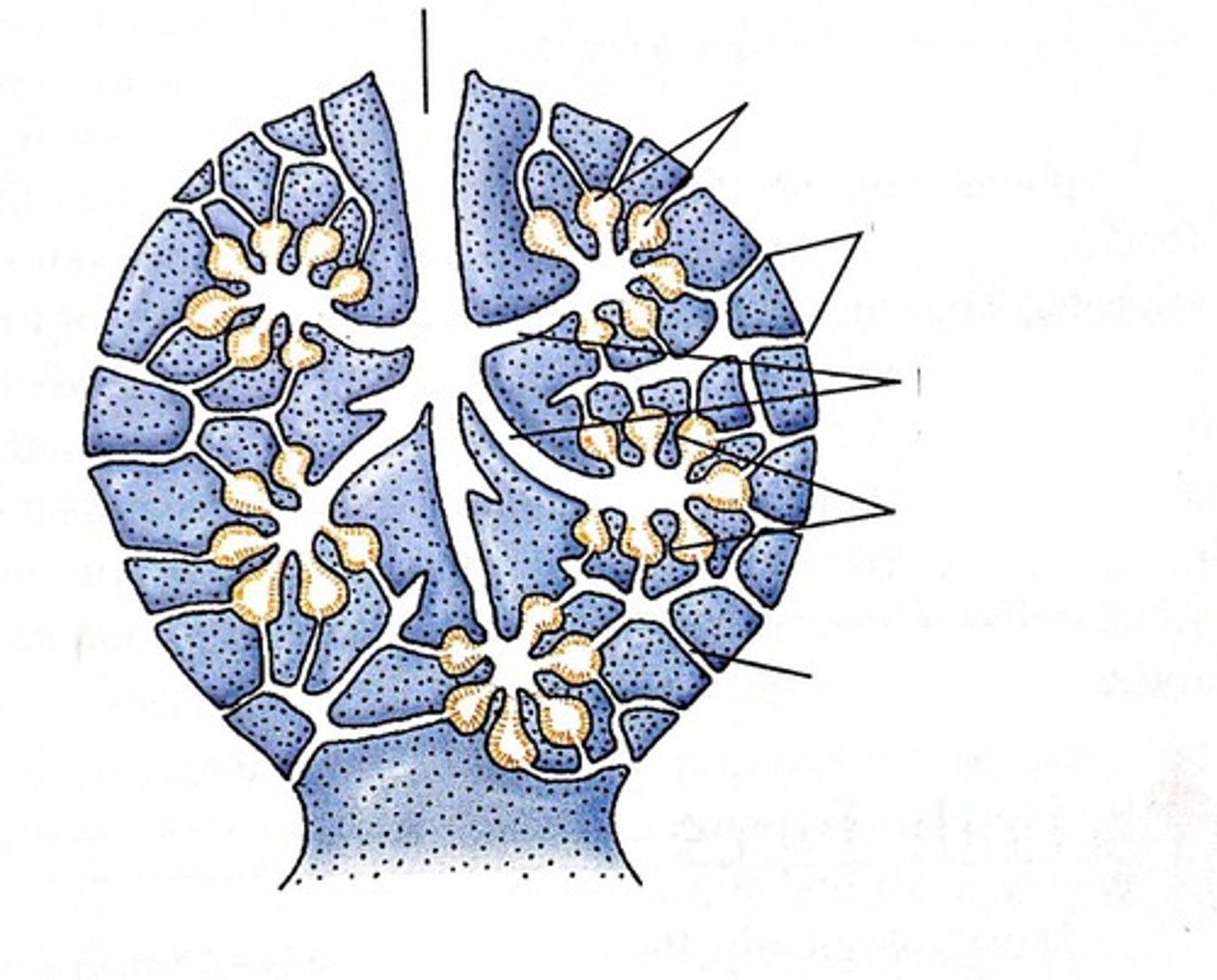
Leucon Sponge
Vast majority of sponges living today are this type; most complex type with body folds that are themselves folded resulting in chambers connected by canals