Pterygopalatine Fossa, Nasal Cavity, and Paranasal sinuses
 Call Kai
 Learn
Learn Practice Test
 Spaced Repetition
 Match
Match Flashcards
 Knowt Play
1/51

There's no tags or description
Looks like no tags are added yet.
Name | Mastery | Learn | Test | Matching | Spaced | Call with Kai | Chat |
|---|
No analytics yet
Send a link to your students to track their progress
52 Terms
What is the pterygopalatine fossa?
Small pyramidal space below apex of orbit on lateral side of skull

What is indicated by A?
Inferior orbital fissure

What is indicated by B?
Sphenopalatine foramen

What is indicated by C?
Foramen rotundum

What is indicated by D?
Pterygoid canal

What is indicated by E?
Palatovaginal canal

What is indicated by F?
Palatine canal

What is indicated by G?
Alveolar foramen
What is the boundaries of the nasal cavity?
Anteriorly the nares and posteriorly the choanae, floor is hard palate
What forms the hard palate?
Palatine process of maxillary bone and horizontal plate of palatine bone
What forms the nasal septum?
Septal cartilage, vomer bone, perpendicular plate of ethmoid, and maxillary + palatine crest
Where is the most common site for a deviated nasal septum?
Between vomer and septal cartilage
What are the nasal concha?
Curved shelves of bone protruding from the lateral wall into nasal cavity
Where does the superior nasal concha derive?
Ethmoid bone
Where does the middle nasal concha derive?
Cribriform plate and ethmoid bone
What is the function of the erectile tissue over conchae?
Humidifies and warms inspired air for upper respiratory passage

What is indicated by A?
Frontal sinus

What is indicated by B?
Atrium
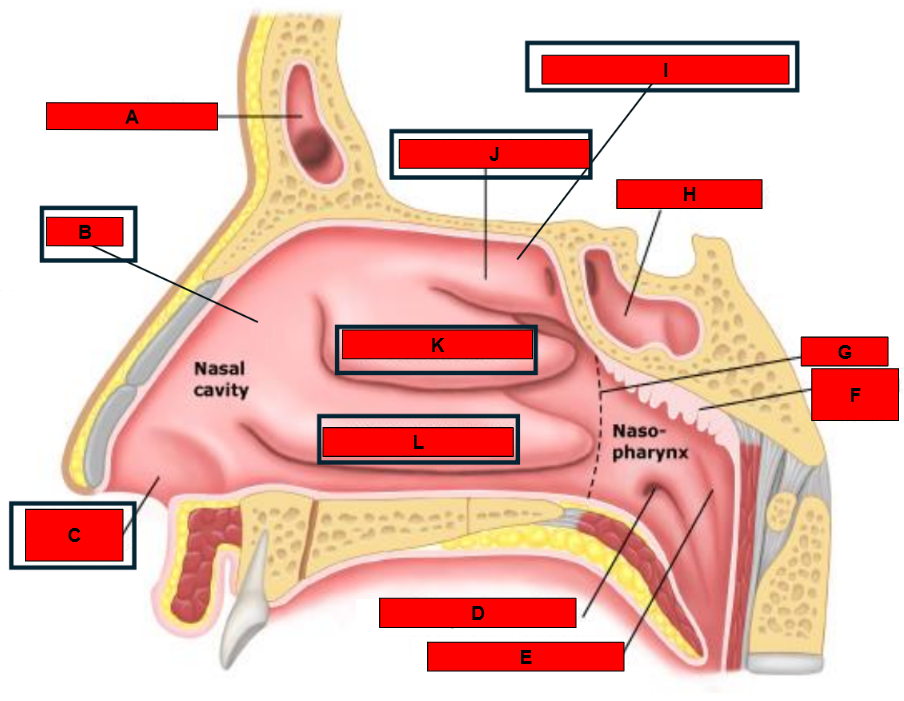
What is indicated by C?
Nasal vestibule

What is indicated by D?
Auditory tube recess

What is indicated by E?
Pharyngeal recess
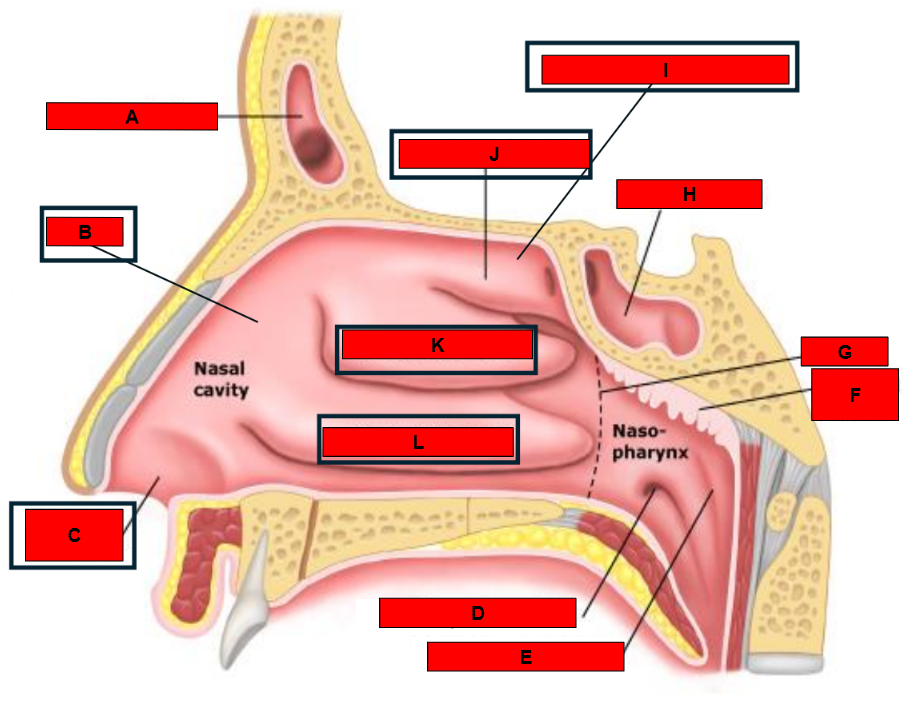
What is indicated by F?
Adenoid pad
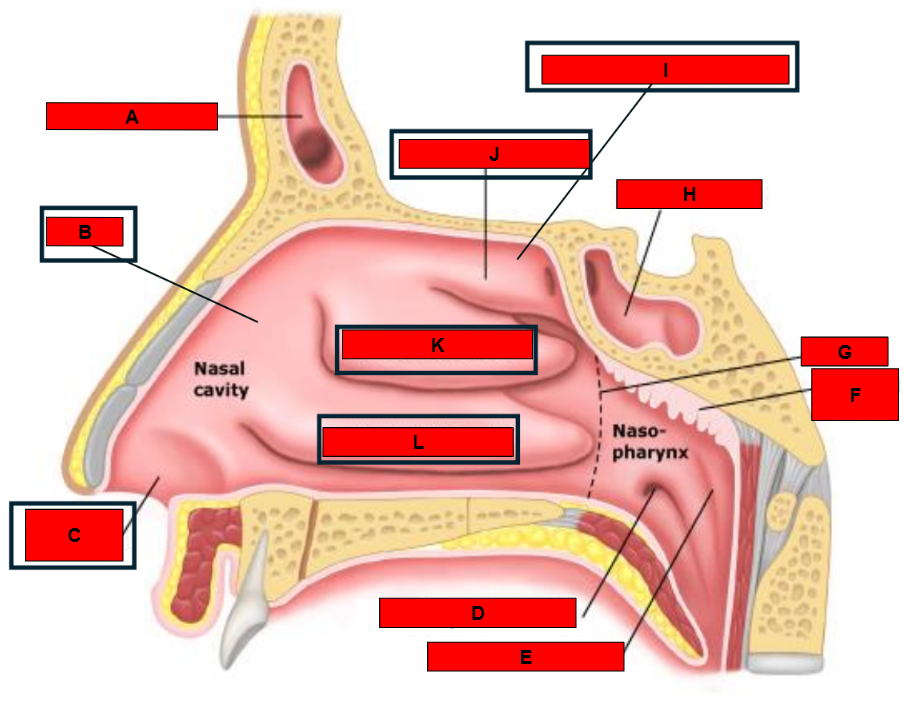
What is indicated by G?
Choana

What is indicated by H?
Sphenoid sinus

What is indicated by I?
Sphenoethmoidal recess

What is indicated by J?
Superior turbinate

What is indicated by K?
Middle turbinate

What is indicated by L?
Inferior turbinate
What does the superior nasal meatus contain?
Opening of posterior ethmoidal air cells
What does the middle nasal meatus contain?
Semilunar hiatus and ethmoid bulla
What does the inferior nasal meatus contain?
Opening of nasolacrimal duct
What are paranasal sinuses?
Air-filled extensions of the nasal cavity that are lined with respiratory epithelium and produce mucus that drains your nose, keeping it free from pathogens
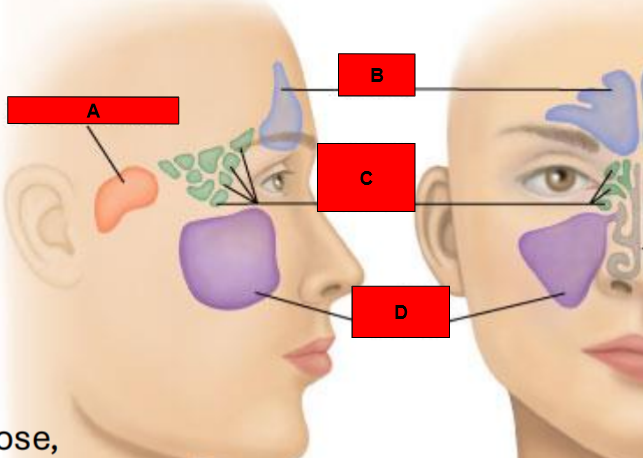
What is indicated by A?
Sphenoid sinus

What is indicated by B?
Frontal sinus
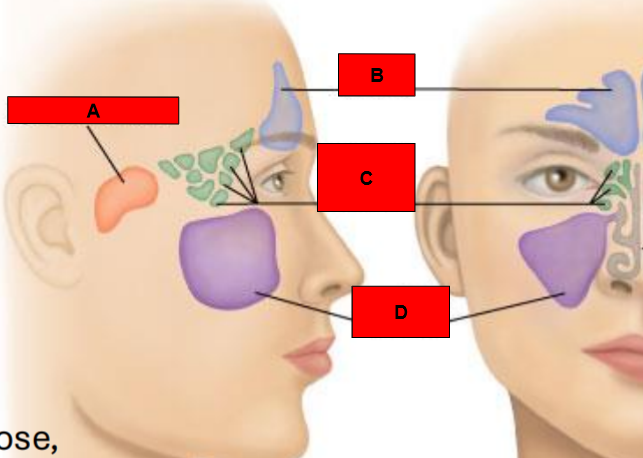
What is indicated by C?
Ethmoid sinuses

What is indicated by D?
Maxillary sinus
Where do the frontal and anterior ethmoidal sinuses drain?
Rostral and superior aspect of the semilunar hiatus
Where does the middle ethmoidal sinus drain?
Openings of ethmoidal bulla on superoposterior aspect of semilunar hiatus
What separates the ethmoid air sinuses?
Lamina papyracea
The pituitary gland can be accessed through which sinus?
Sphenoid sinus
What is found in the pterygopalatine fossa?
Terminal portion of maxillary artery, accompanying veins, CN V2, pterygopalatine ganglion
What are the branches of the maxillary artery in the pterygopalatine fossa?
Posterior superior alveolar, infraorbital, artery of the pterygoid canal, sphenopalatine artery, descending palatine, and deep temporal artery
What does the posterior superior alveolar artery supply?
Maxillary molars, premolars, gums, maxillary sinus
What does the infraorbital artery supply?
Inferior oblique and rectus muscles, lacrimal sac, maxillary canines and incisors, maxillary sinus, and skin of infraorbital region
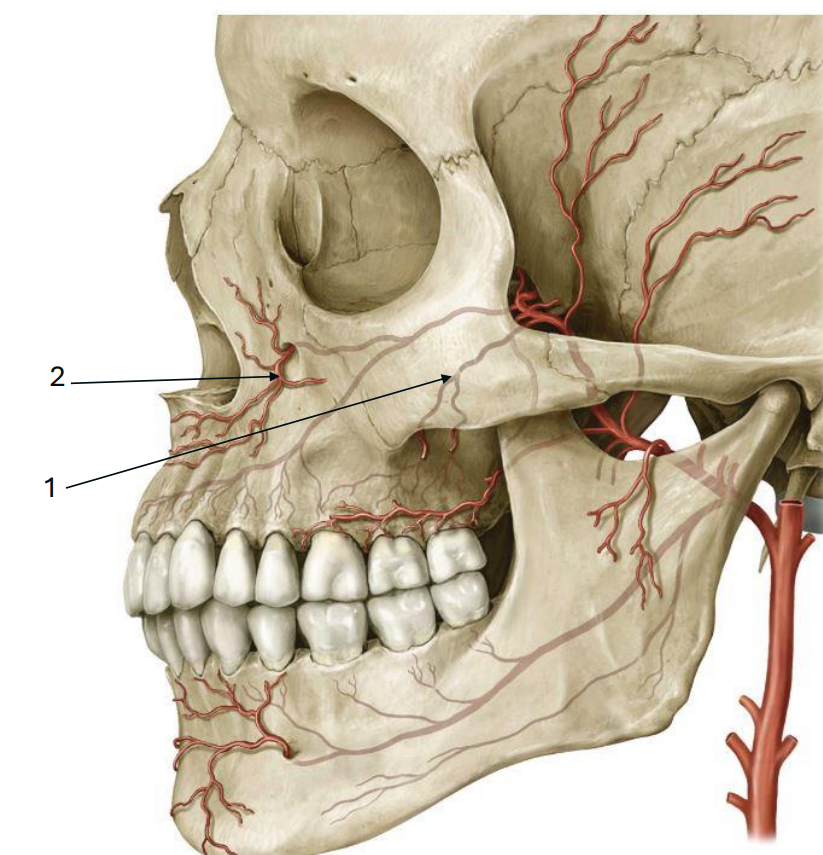
What is indicated by 1?
Posterior superior alveolar artery
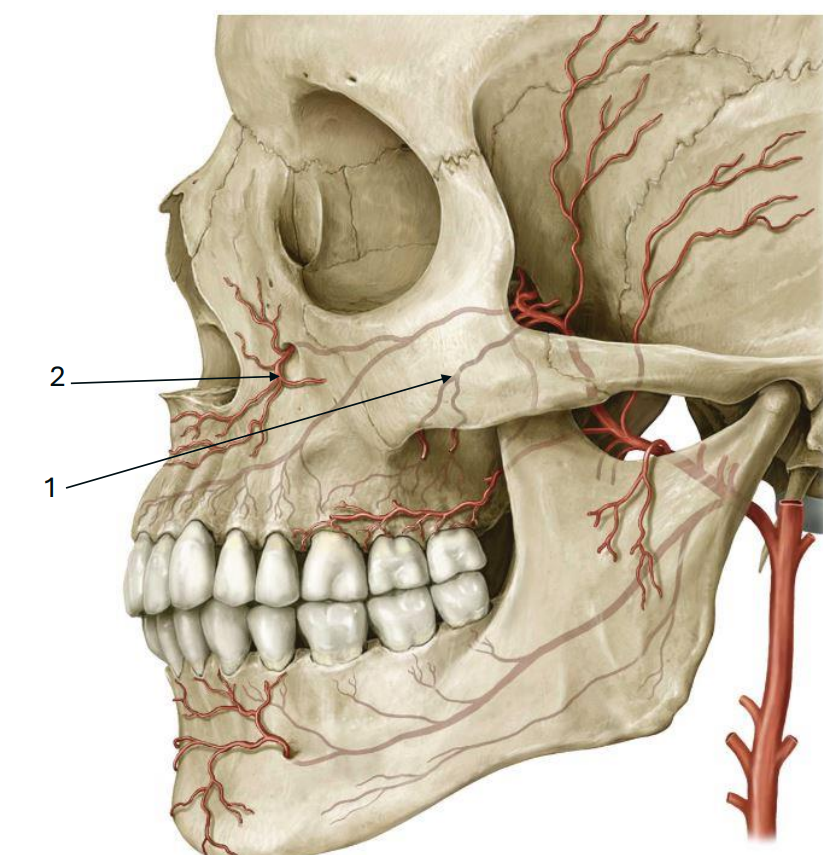
What is indicated by 2?
Infraorbital artery
What does the artery to pterygoid canal supply?
Superior pharynx, auditory tube, tympanic cavity
What does the sphenopalatine artery supply?
Walls and septum of nasal cavity, anterior palate, sinuses
What does the descending palatine arteries supply?
Mucosa and glands of hard and soft palate
What ganglion are associated with hay fever?
Pterygopalatine ganglia
What nerves innervate the skin of the nose?
Infratrochlear nerve and infraorbital nerve
What innervates the tip of the nose?
Anterior ethmoidal branch of the nasocilliary nerve