9. Skeletal System: Axial Skeleton - Skull
 Call Kai
 Learn
 Practice Test
 Spaced Repetition
 Match
 Flashcards
 Knowt Play
1/54

There's no tags or description
Looks like no tags are added yet.
55 Terms
axial skeleton
protect central nervous system structures
skull contains:
cerebral hemispheres
brainstem
cerebellum
vertebral column contains:
spinal
skull
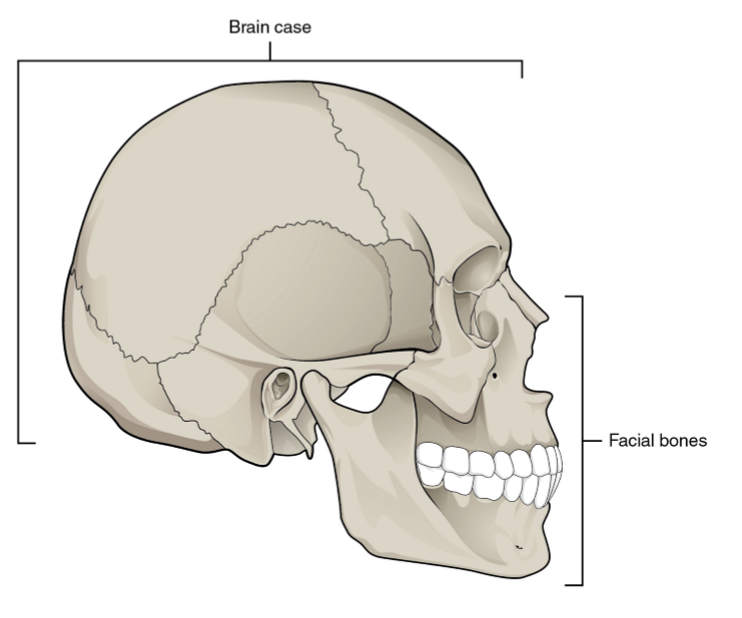
has 22 bones
21 → form immobile encasing for brain, brainstem, cerebellum
1 → mandible = capable of movement
2 parts
cranial vault = calvaria + base
protection of brain
contains middle + inner ear structures
facial bones
contributes to structure of nasal cavity, bony orbits of eye, anchoring points for teeth
cranial bones
forms calvaria + base = cranial vault
surrounds cranial cavity = protects brain
bones:
1 frontal
2 parietal
1 occipital
2 temporal
1 sphenoid
1 ethmoid

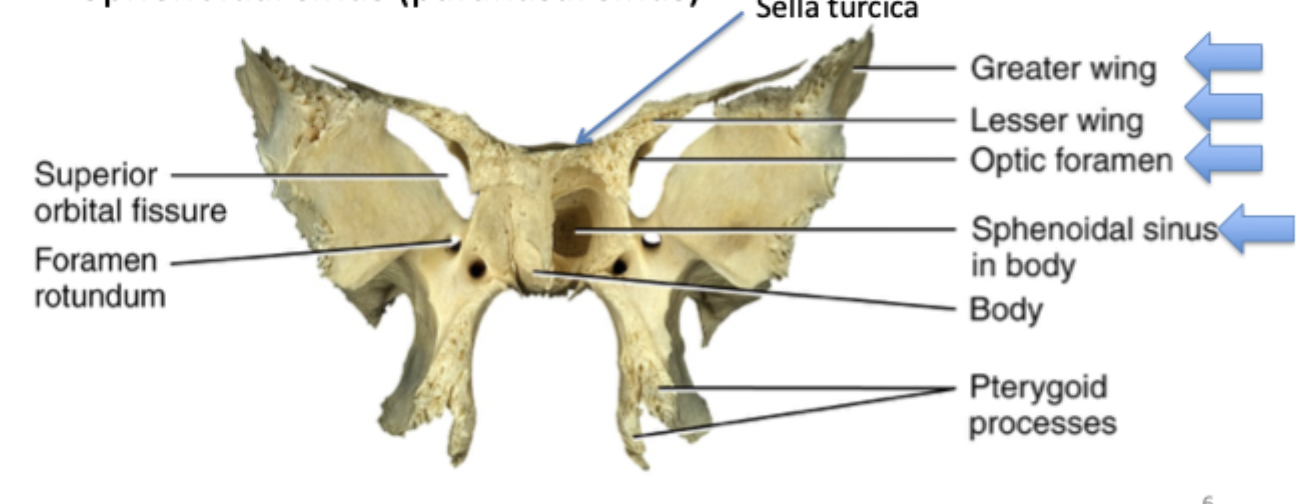
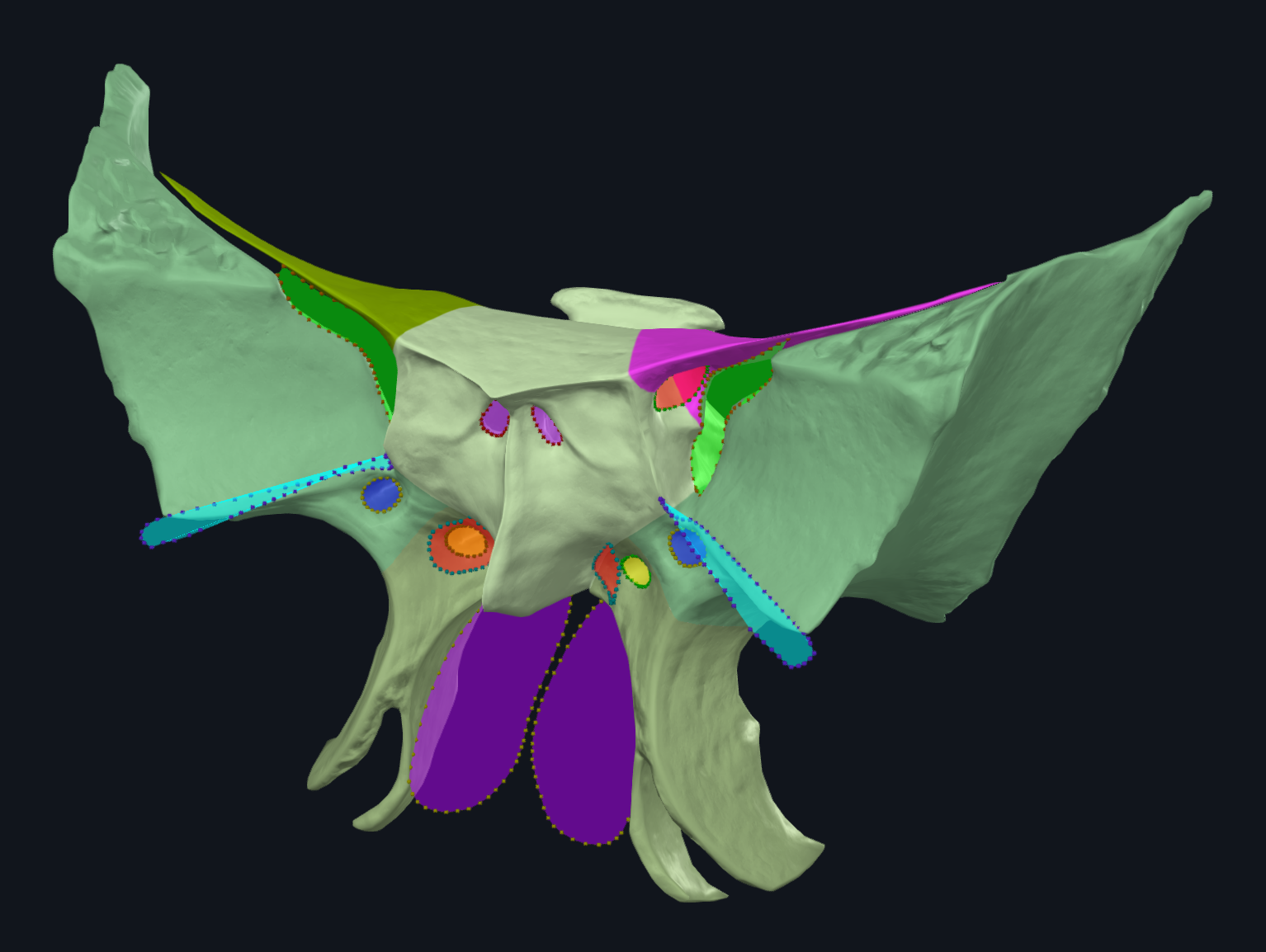
sphenoid bone
contributes to calvaria + base of skull, also posterior bony orbits - has different parts:
greater wings
lesser wings
sella turcica
sphenoidal sinus = paranasal sinus
greater wings
part of sphenoid bone
contribute to walls of cranial vault

lesser wings
part of sphenoid bone
contain optic canals (foramina) for optic nerve
sella turcica
part of sphenoid bone
superior depression for pituitary gland
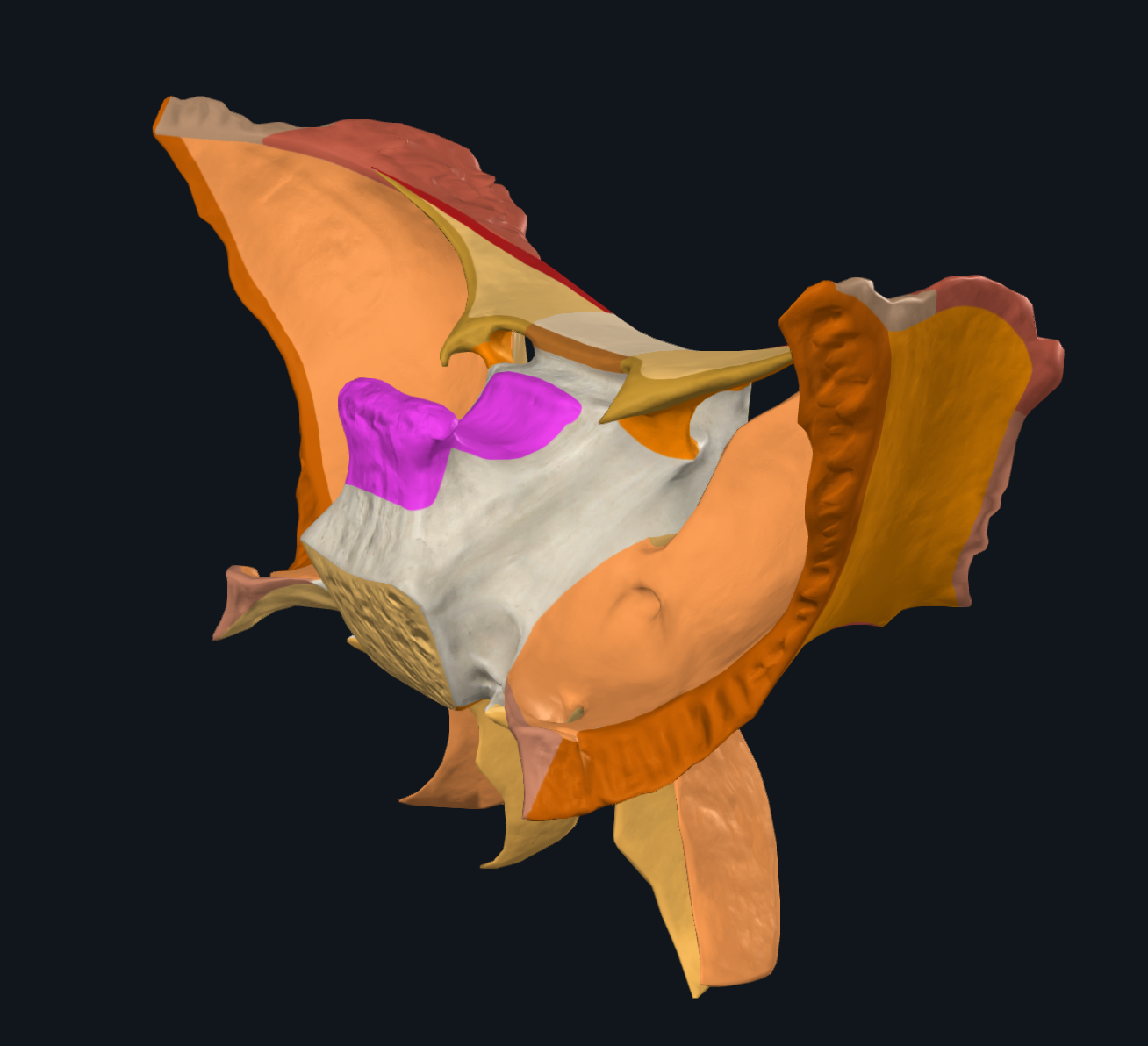
sphenoidal sinus (paranasal sinus)
part of sphenoid bone

ethmoid bone
anterior to sphenoid bone → comprises walls + roof of nasal cavity, also medial walls of bony orbits
cribriform plate
crista galli
ethmoidal air cells = paranasal sinuses
perpendicular plate
contributes to partition b/w nasal cavities
superior + middle nasal conchae

cribriform plate
superior part ofir ethmoid bone
holes for olfactory neurons

crista galli
thick, triangular superior process of ethmoid bone
attachment site for falx cerebi
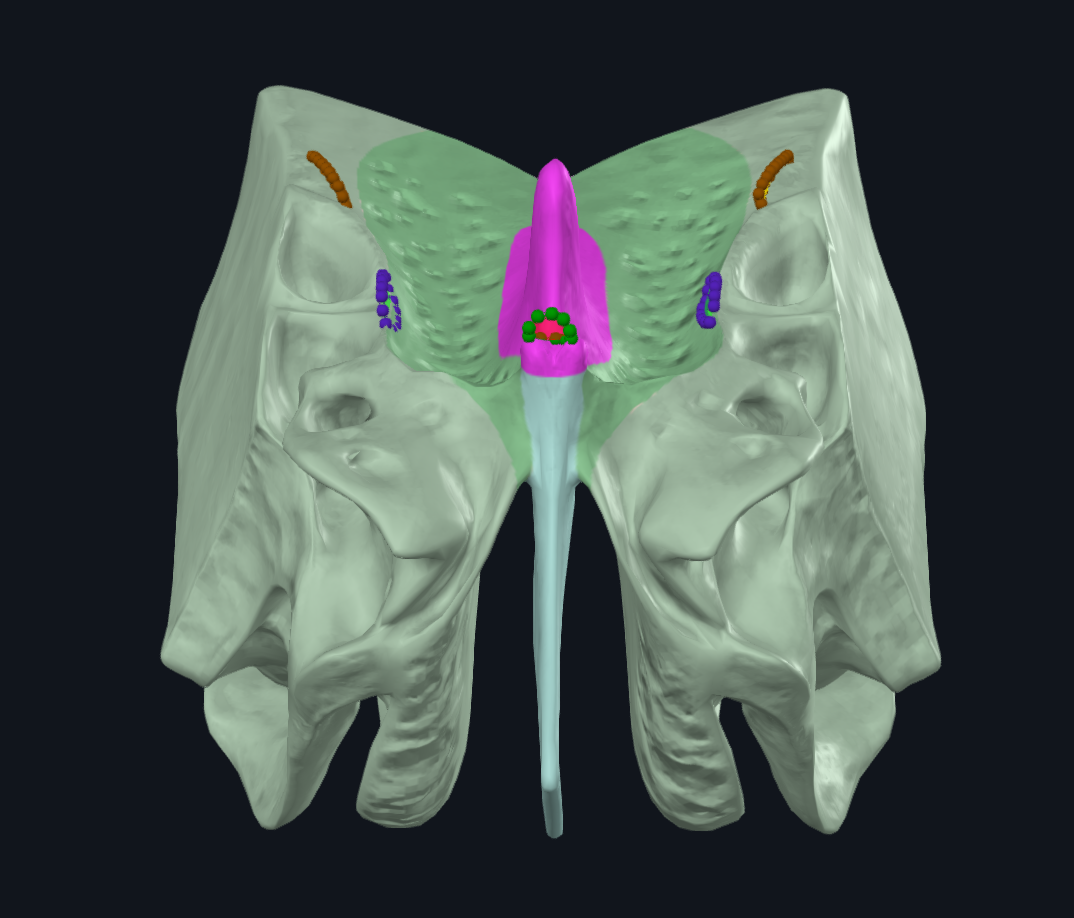
ethmoidal air cells (paranasal sinuses)
small, air-filled spaces b/w orbits within ethmoid bone
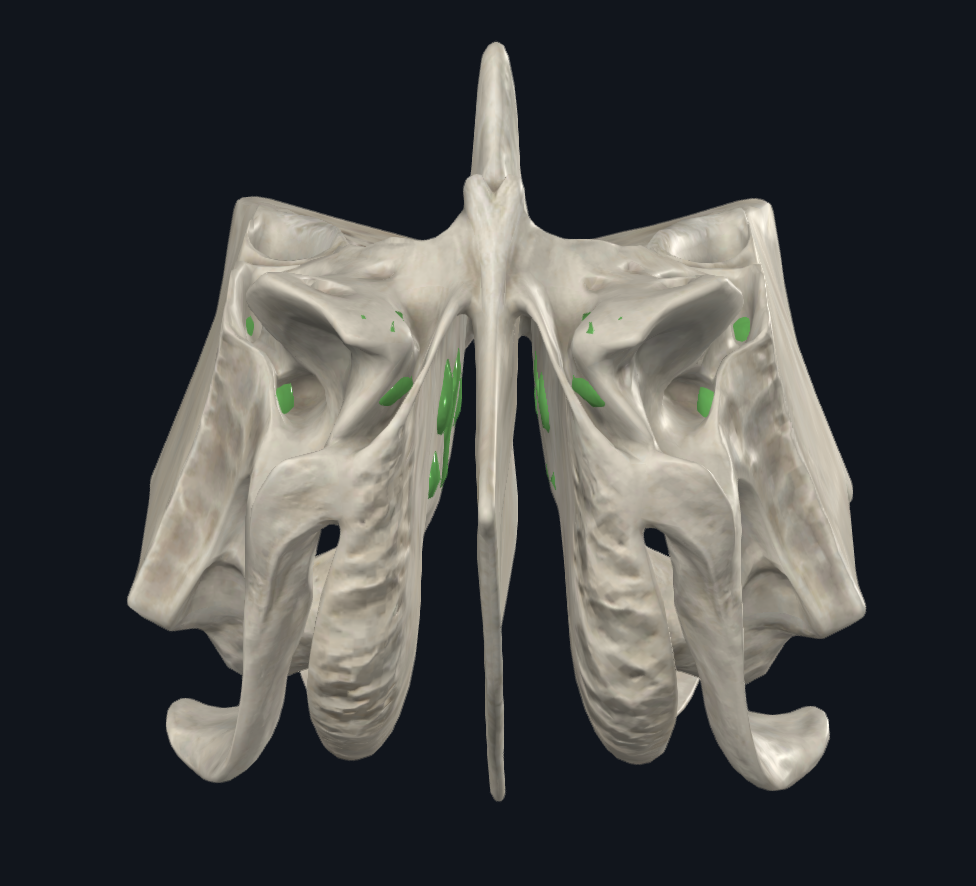
perpendicular plate
flat, vertical, inferior projection along midline of ethmoid bone
contributes to partition b/w nasal cavities

nasal conchae
curved bony plates along ethmoidal labyrinths
swirls incoming air
internal nasal cavity lined w/ respiratory mucosa → moistens air + captures particulates

facial bones
14 bones
2 maxillary
2 zygomatic
1 mandible
2 lacrimal
2 nasal
2 inferior nasal conchae
2 palatine
1 vomer

suture
fibrous joint exclusive to skull - articulation b/w bones that comprise cranial vault
major cranial ______s
squamous
sagittal
coronal
lambdoid
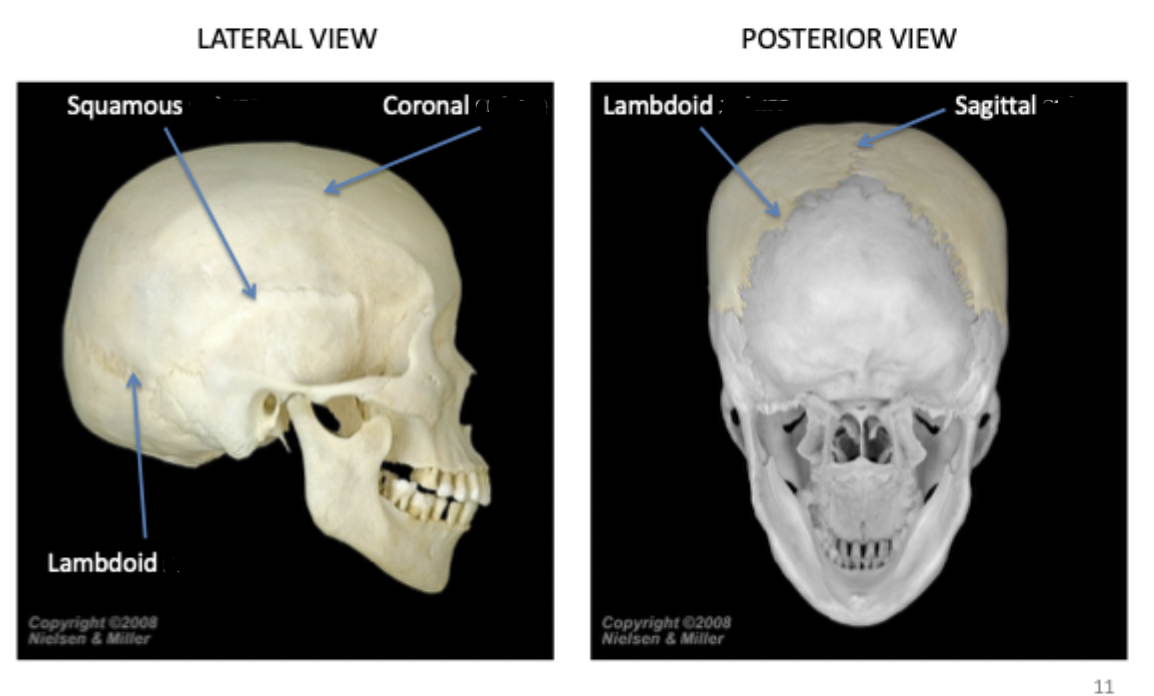
squamous suture
connects parietal bone to temporal bone

sagittal suture
connects right + left parietal bones
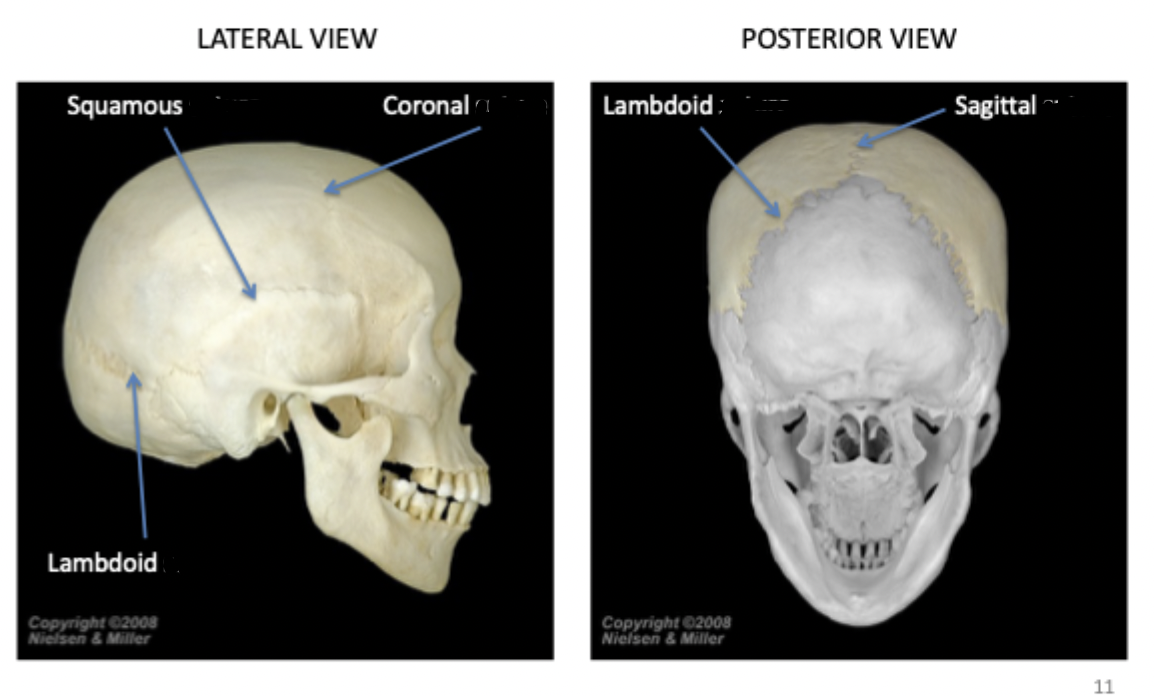
coronal suture
connects parietal bone + frontal bone

lambdoid suture
connects parietal bone + occipital bone

pterion
suture connecting frontal, parietal, sphenoid, temporal bones
wormian bones
additional pieces of bone interspersed within given suture
not present in every skull
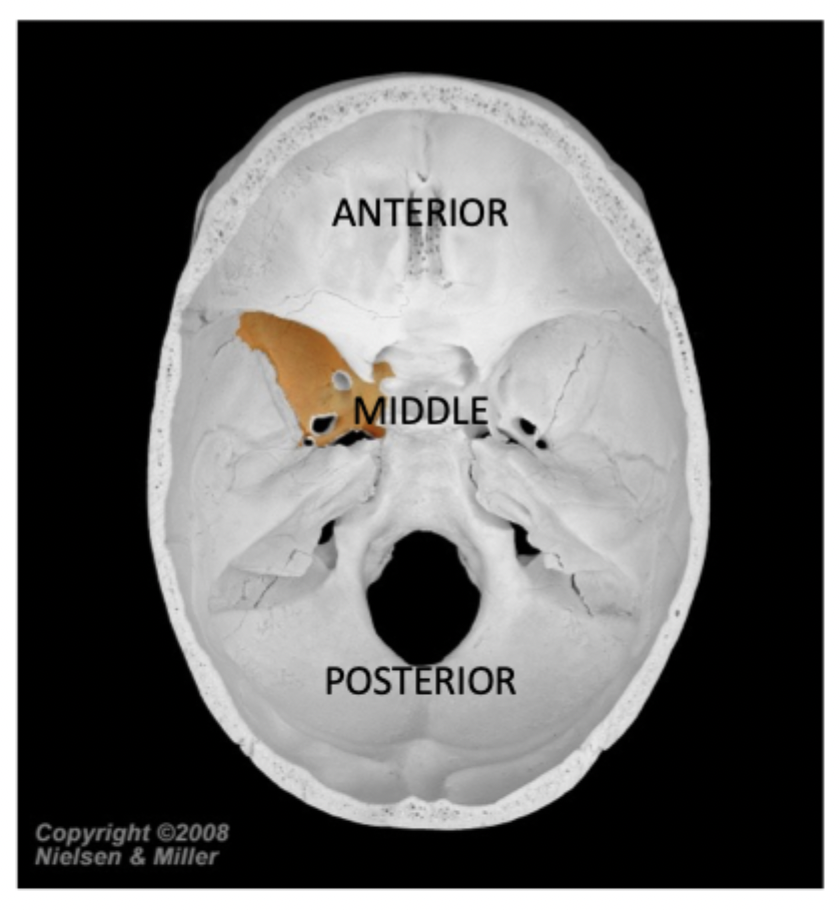
cranial fossae
provide inferior support for brain
anterior
supports frontal lobe
middle
supports temporal lobe
posterior
supports cerebellum
frontal lobe
(1) supported by anterior cranial fossa
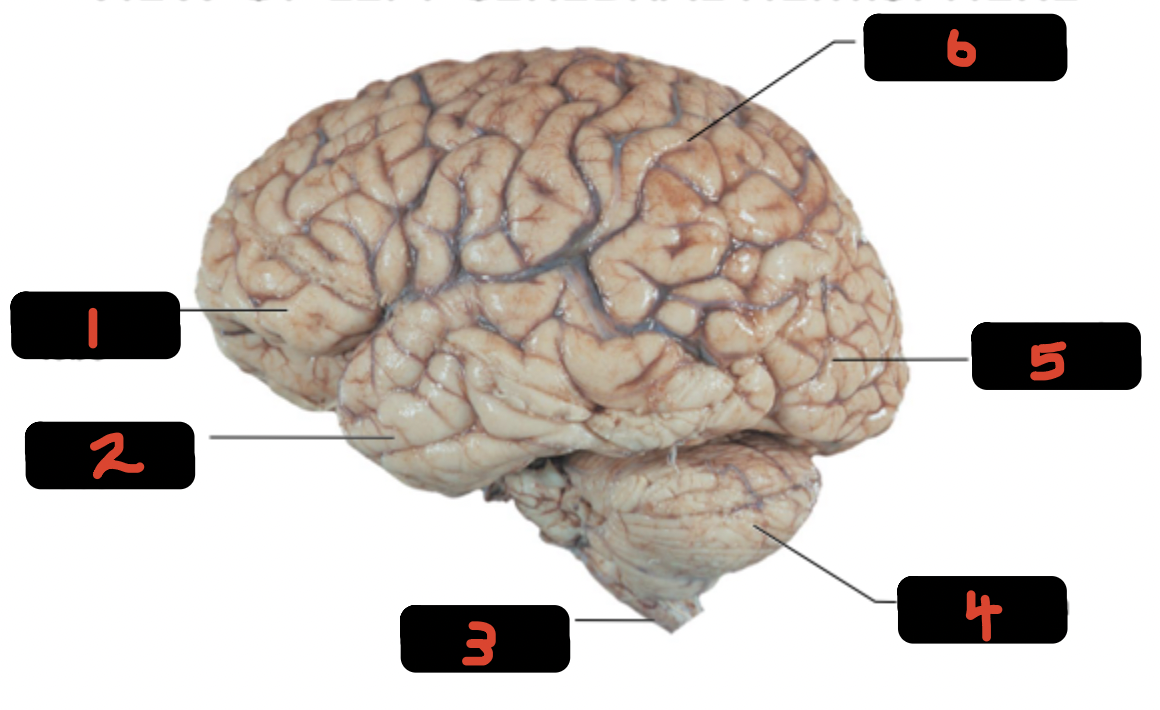
temporal lobe
(2) supported by middle cranial fossa

brain stem
(3)

cerebellum
(4) supported by posterior cranial fossa

occipital lobe
(5)

parietal lobe
(6)

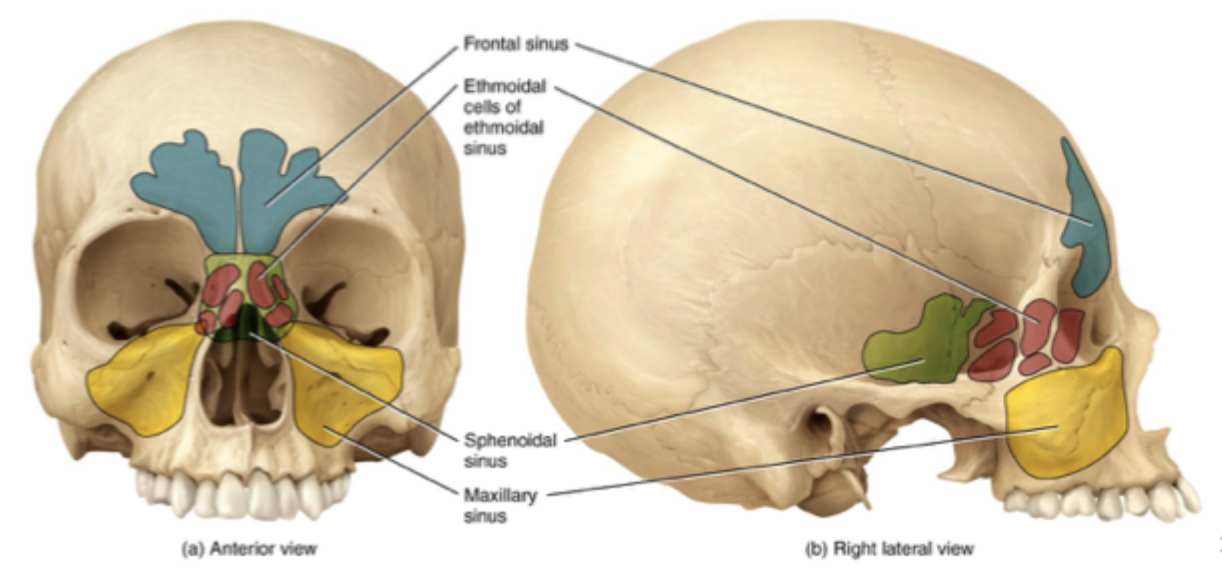
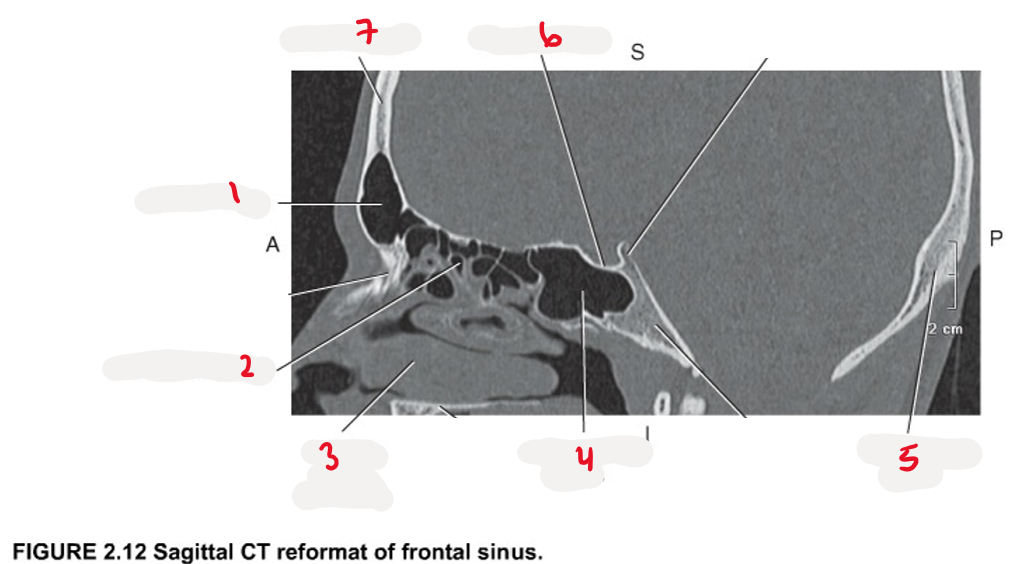
paranasal sinuses
air-filled sinuses that open into nasal cavity → respiratory system function
used as general relational anatomy landmarks for head
within
frontal
ethmoid
sphenoid
maxillary
frontal sinus
(1)

ethmoid air cells
(2)
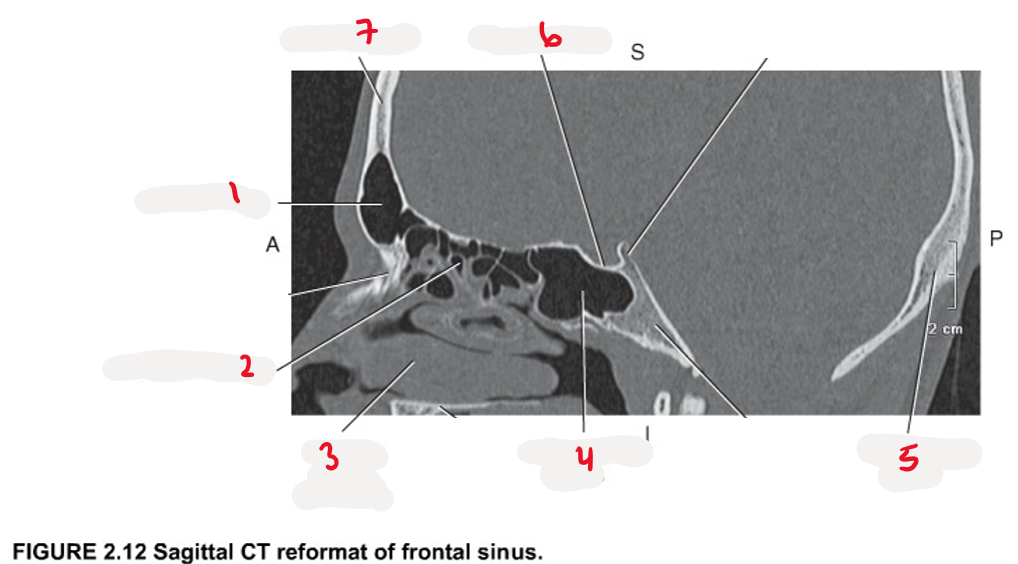
inferior nasal conchae
(3)
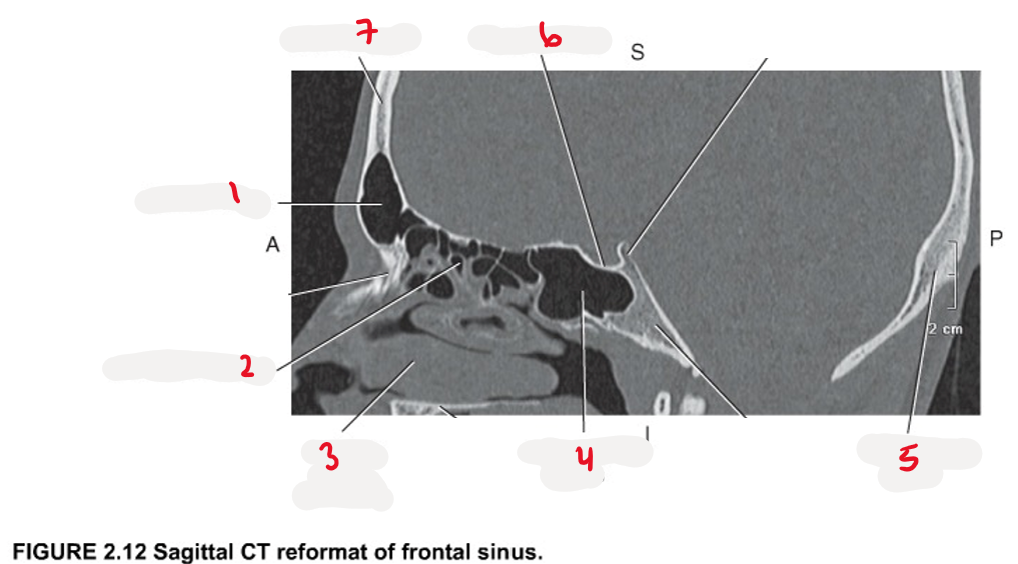
sphenoid sinus
(4)
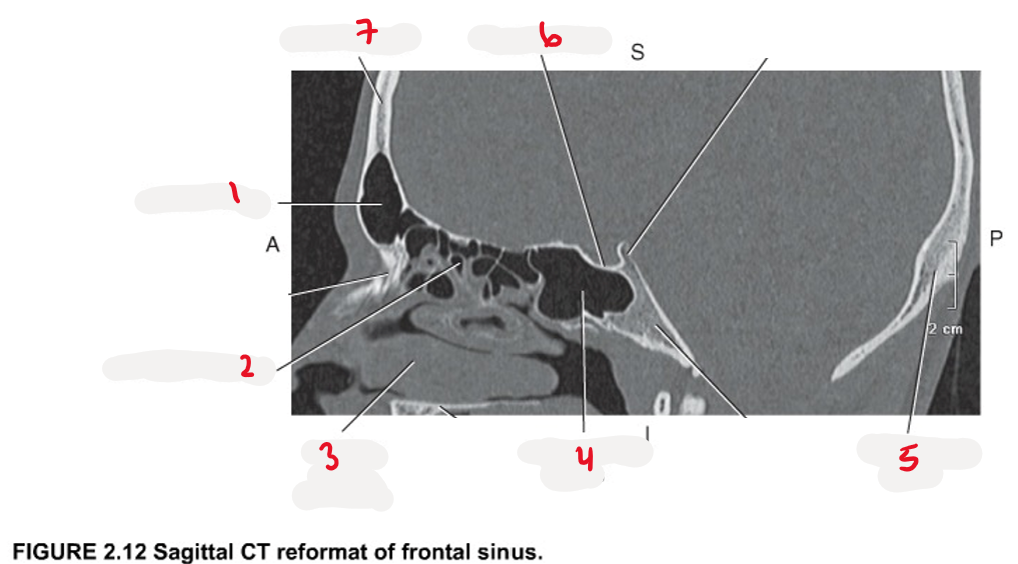
occipital bone
(5)

sella turcica
(6)

frontal bone
(7)
frontal bone
(1)
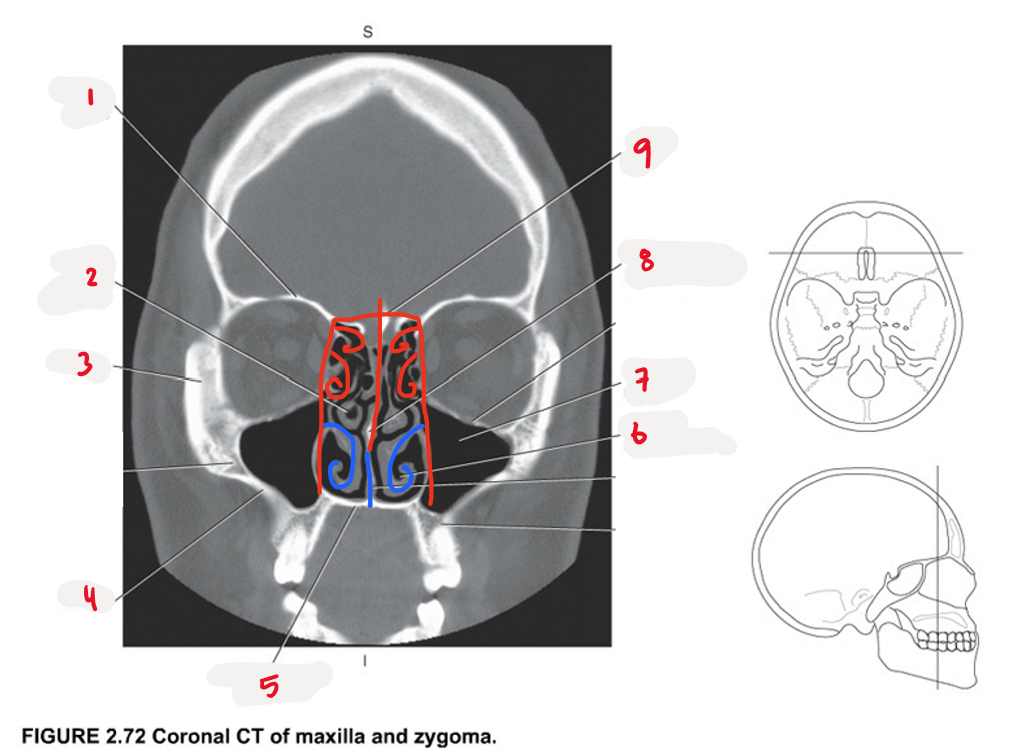
middle nasal conchae
(2)

zygoma
(3)
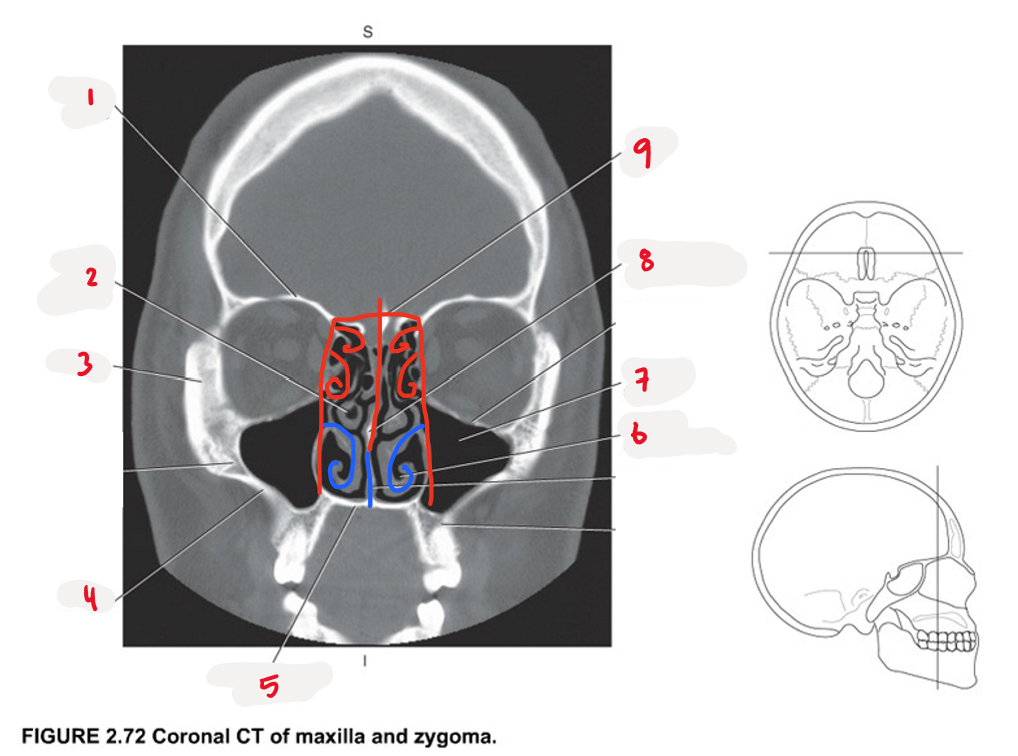
maxilla
(4)
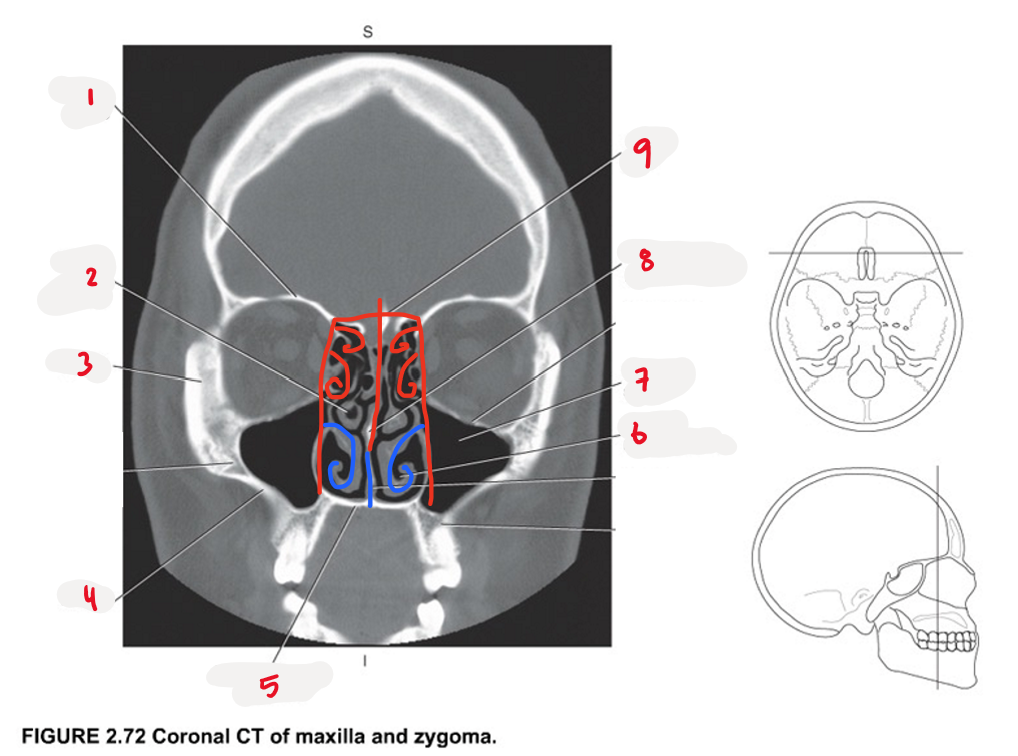
palatine process
(5) part of maxilla
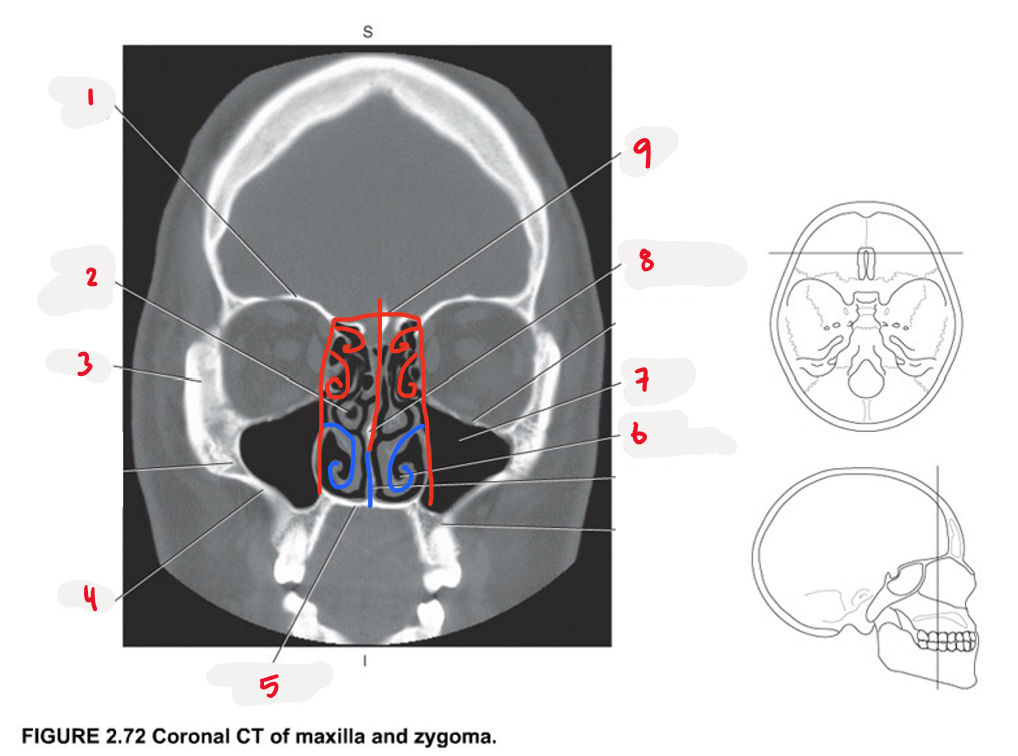
inferior nasal conchae
(6)

maxillary sinus
(7)
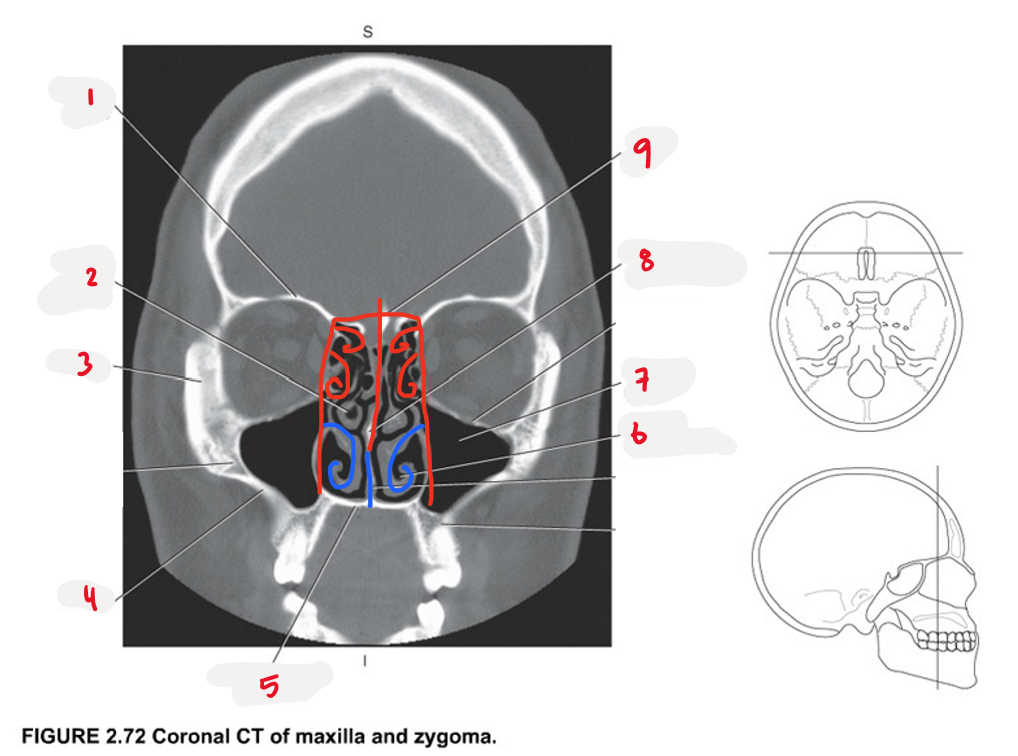
perpendicular plate
(8) part of ethmoid

crista galli
(9)

ethmoidal air cells
(1)
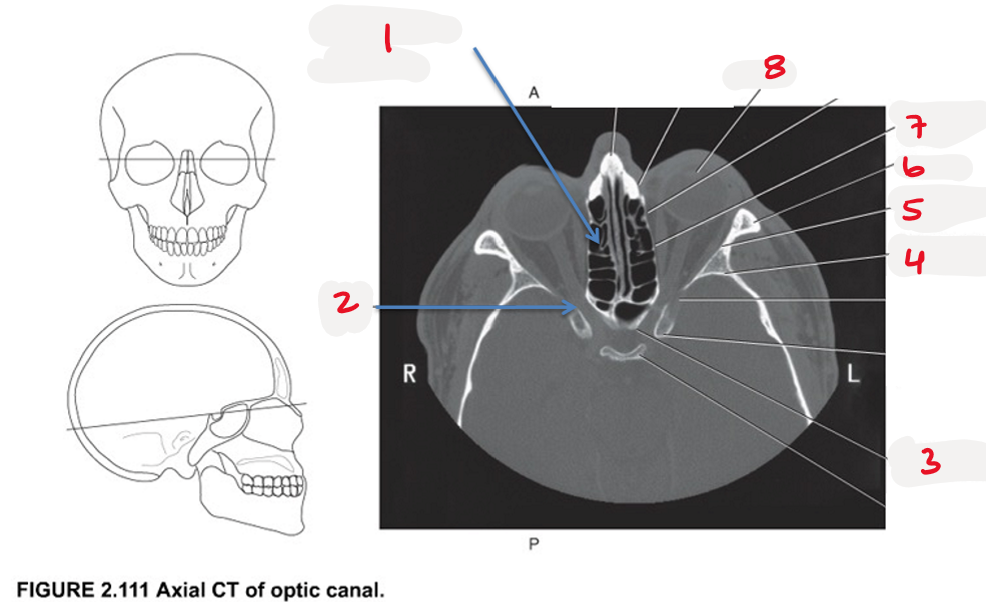
optic canal
(2)
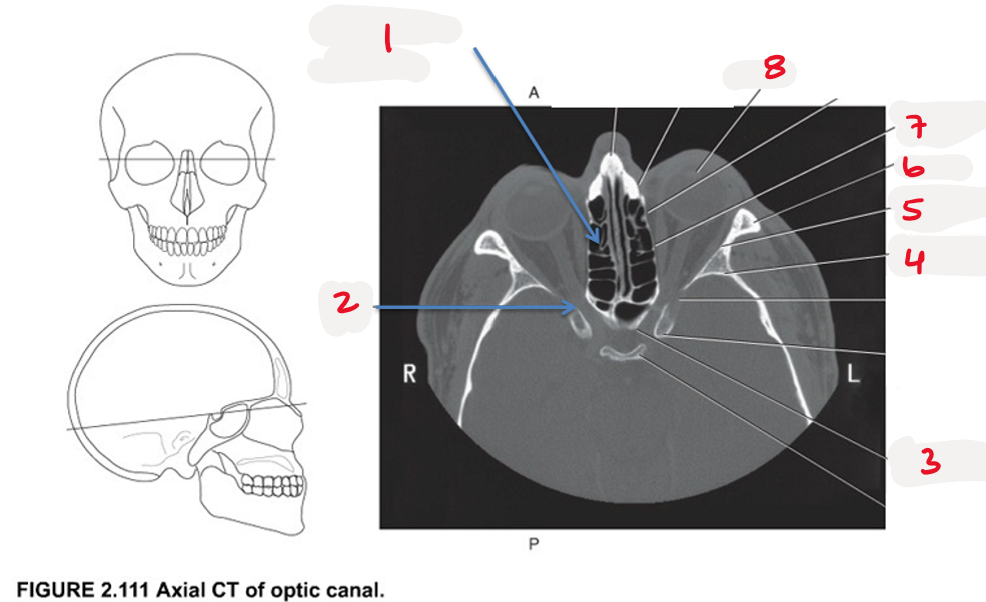
body of sphenoid
(3)
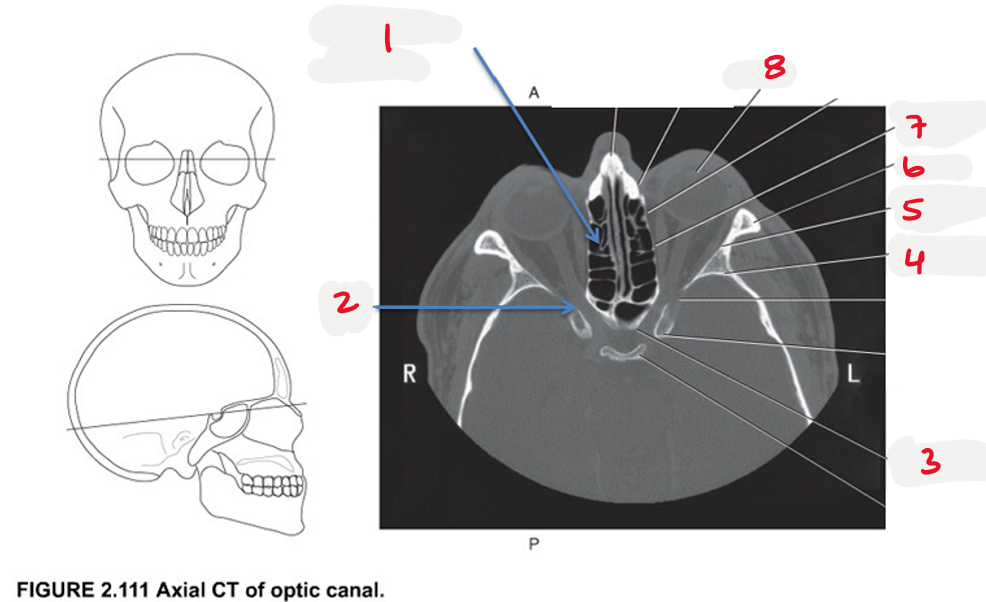
greater wing
(4) part of sphenoid

lateral wall of orbit
(5)

zygoma
(6)

medial wall of orbit
(7)

globe (eyeball)
(8)

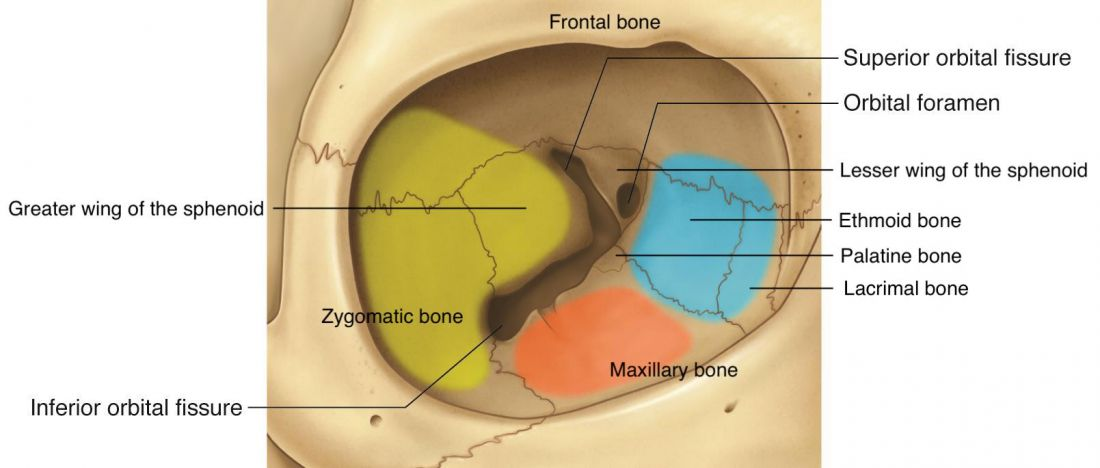
bony orbit of eye
formed by
1. | Frontal bone
|
2 . | Sphenoid bone (lesser and greater wing)
|
3. | Zygomatic bone
|
4. | Maxillary bone
|
5. | Palatine bone
|
6. | Ethmoid bone
|
7. | Lacrimal bone
|