(NDT) Ch. 1: The Science of Nutrition
 Call Kai
 Learn
Learn Practice Test
 Spaced Repetition
 Match
Match Flashcards
 Knowt Play
1/33

There's no tags or description
Looks like no tags are added yet.
Name | Mastery | Learn | Test | Matching | Spaced | Call with Kai | Chat |
|---|
No analytics yet
Send a link to your students to track their progress
34 Terms
What is Nutrition?
The scientific study of food and how it nourishes the body and influences health. (simple def.)
This includes how we consume digest, metabolize and store nutrients
What are the determinants of our health?
Personal
Social
Economic
environmental
The evolution of nutrition includes…
Mid 1700s: observation of an association between food and disease
1800s: nutrients identified
Early 20th: research focus on nutrient deficiency diseases
1950s-present: Nutrition research focus on chronic diseases, supported by wellness
What is wellness?
An active process including a nutritious diet that provides a energy and functional chemicals for mental and physical tasks and boosts out ability to fight infections.
What are the two key components of wellness?
Nutrition
Physical activity
What are the 6 groups of nutrients?
Carbohydrates
Lipids (fats and oils)
Proteins
Vitamins
Minerals
Water
Which of the 6 nutrients are organic? (CONTAINS hydrogen and carbon)
Carbs
Lipids
Proteins
Vitamins
Inorganic? (Does NOT contain hydrogen or carbon)
Water
Minerals
Macronutrients
Nutrients that are required in regularly large amounts to support health and to provide energy and fuel to our bodies.
Carbohydrates
Proteins
Lipids
Alcohol
Not considered a nutrient, considered both a drug and toxin. Does not support the regulation of bodily functions or repairing of tissues.
Carbohydrates
(Primary fuel source for the body for neurologic functioning and physical exercise) Composed of chains of carbon, hydrogen and oxygen
(e.g.) grains (wheat, rice), vegetables, fruits, legumes, nuts and milk products
Fiber

Lipids (fats and oils)
(Primary fuel source for the body) Diverse group of organic substances that are largely insoluble in water. Triglycerides are the most common lipid in foods.
(e.g.) Vegetable oils, butter, dairy, fat in animal products
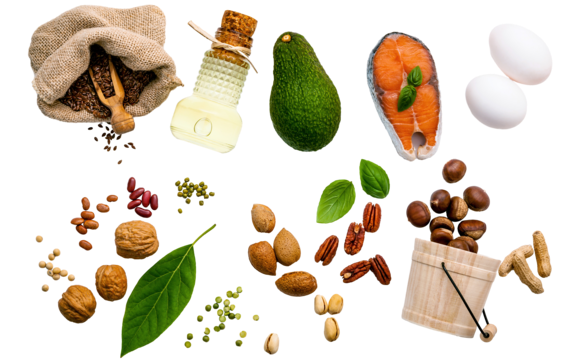
Proteins
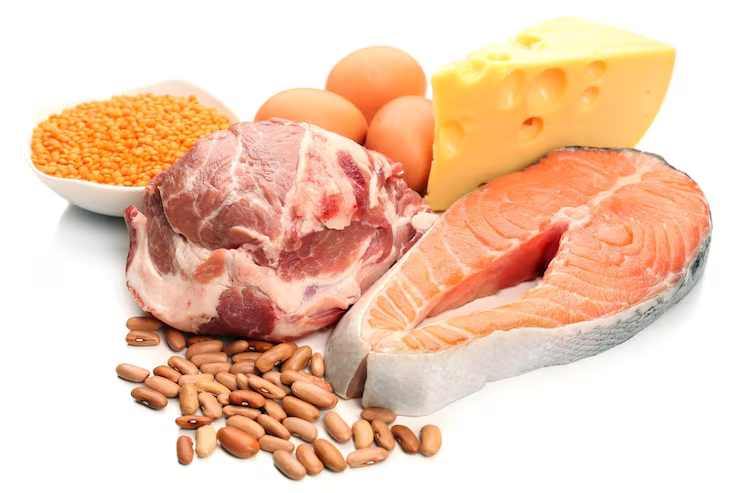
(NOT a primary source of fuel) Amino acids are the building blocks forming peptide bonds (polypeptides). Made up up hydrogen and carbon as well as NITROGEN.
(e.g.) Meats, dairy, nuts, seeds and legumes
Kcal per gram…
1g of protein: 4 kcal
1g of carb: 4 kcal
1g of lipids: 9 kcal
Micronutrients
Nutrients that are needed in minimal amounts (mg)
Vitamins (fat soluble and water soluble)
Minerals
Vitamins
Micronutrients that assist in regulating body processes:
Vitamins are not a source of energy but aid the process of creating energy from macronutrients
Fat-soluble vitamins
Soluble in fat meaning that it’s stored in adipose tissue (Toxicity can occur due to overconsumption).
(e.g) A, D, E, K
Water- soluble vitamin
Soluble in water, not stored heavility in the body. Excess is excreted in urine.
Minerals
Inorganic substances required for body processes (major and trace) :
regulate fluid and energy production
support bone and blood health
cannot be broken down
Water
Necessary macronutrient needed for fluid balance nutrient transport and excretion of waste products.
Dietary Reference Intakes (DRIs)
Aim to reduce and prevent the risk of chronic disease (promoting optimal health). Dietary standards for HEALTHY people ONLY.
Expands upon the RDA
Used to refer to other nutrient based references
DRIs (Dietary reference intakes) refer to…
Estimated Average Requirement (EAR)
Recommended Dietary Allowance (RDA)
Adequate Intake (AI)
Tolerable Upper Intake Level (TUI)
Chronic Disease Risk Redcution (CDRR)
Estimated Average Requirement (EAR)
The average daily intake level of a nutrient to meet the needs of 50% of the healthy people.
Used to calculate the recommended dietary allowance (RDA)
Recommended Dietary Allowance (RDA)
The average Daily nutrient intake level that meets the needs of 97-98% of healthy people in a particular life stage and sex group.
Adequate Intake (AI)
Recommended average daily nutrient intake level based on observed and experimentally determined estimates of nutrient intake by a group of healthy people.
Used when the RDA is not available
Tolerable Upper Intake Level (TUIL)
Highest daily average nutrient intake likely to prose no risk of adverse health effects.
Right before intoxication
Above TUIL will increase potential risk of toxic effects
Estimated Energy Requirement
Average energy requirement to maintain energy balance in a HEALTHY adult.
defined by age, gender, weight, height and level of physical activity
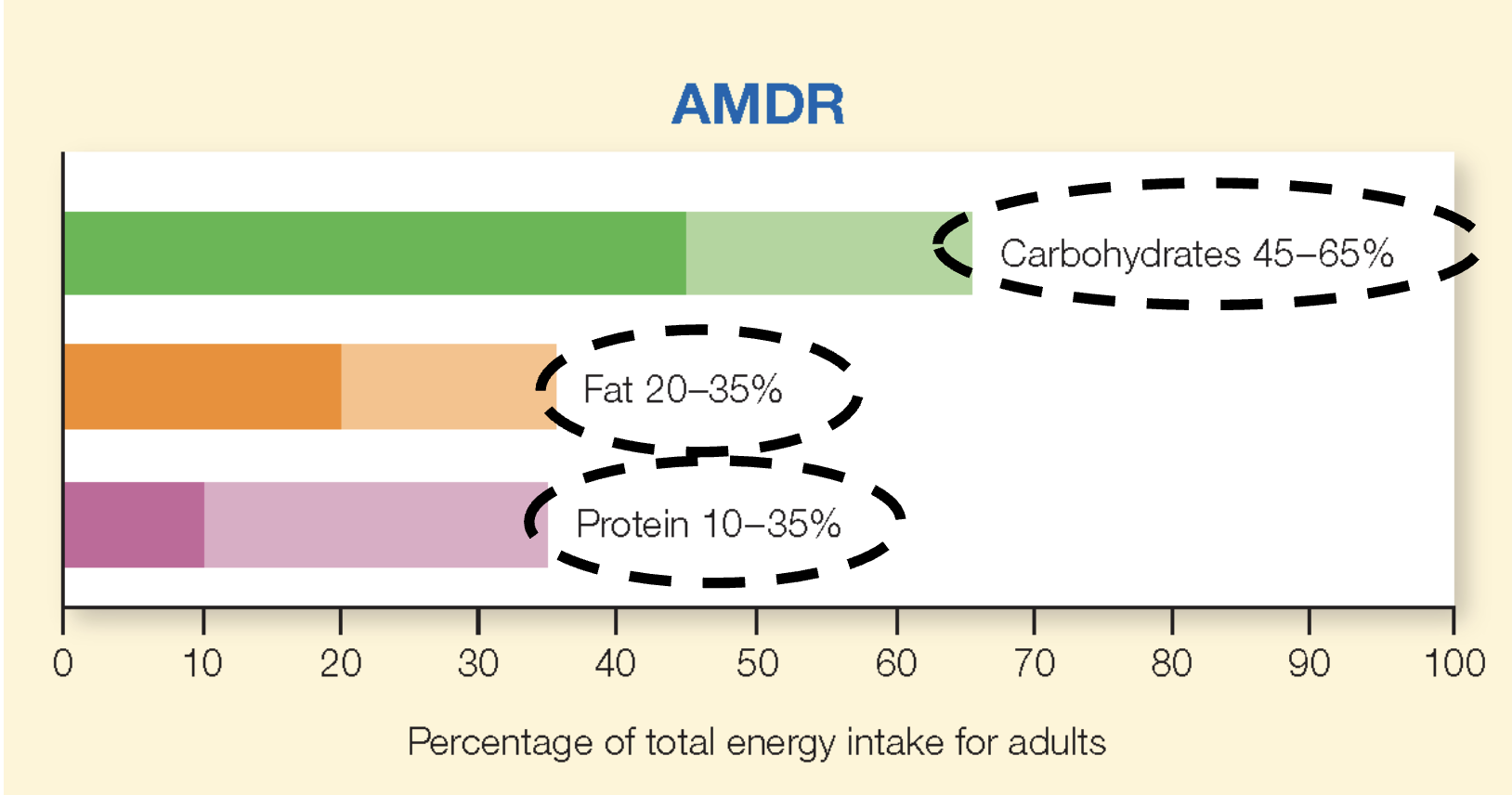
Acceptable Macronutrient Distribution Ranges (AMDR)
Ranged of energy intakes from macronutrients that provide adequate intakes of essential nutrients while reducing the risk of chronic disease.
Anthropometrics
Body weight, height
waist circumference
BMI
Malnutrition
Nutritional status is out of balance: with too much of too little of a particular nutrient.
Overnutrition
Undernutrition
Covert
Symptoms that are not visible to the eye and require laboratory tests
Overt
Obvious signs (visible) and symptoms of nutrient deficiency
Primary deficiency
When a person does not consume enough of a nutrient a direct consequence of inadequate intake.
Secondary deficiency
A person cannot absorb enough of a nutrient, a deficiency that is indirectly caused by something else occurring.