Acute nociceptive pain
 Call Kai
 Learn
 Practice Test
 Spaced Repetition
 Match
 Flashcards
 Knowt Play
1/5

There's no tags or description
Looks like no tags are added yet.
6 Terms
Multimodal Pain Management
Using multiple medications with different mechanisms of actions to produce a synergistic effect
Results in needing a lower dose of medications
Results in more minor adverse effects
Reduces need for opioid
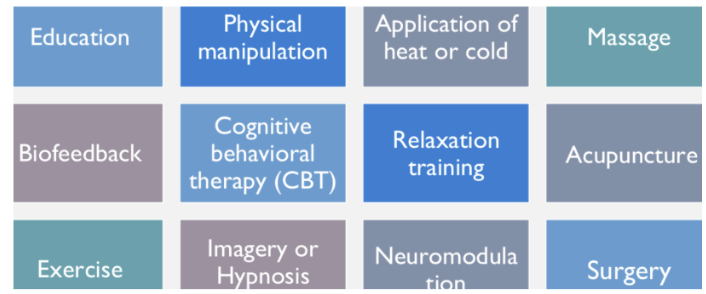
Must be combined with non-pharm
Non-pharm
Pharmacology Therapy: Acute Nociceptive pain
Mild:
Ex: muscle soreness, sinus/tension headache
First line: APAP and NSAIDs (OTC)
Moderate:
Ex: sprain, strain, minor surgeries, simple fractures
APAP and NSAIDs
Severe or lack of relief from first line therapy:
Ex: motor vehicle accident, amputations, burns
Consider opioids as component of multimodal analgesia
General Recommendations for acute pain

For opioids good start low and go slow; reassess and titrate as needed
Titration depends on
Pain severity, pt response, prior analgesic use, comorbidities
Naloxone should be ordered when opioid order is placed
Risk of respiratory depression highest with initial dosing and dose increase
Opioid dosing strategies (inpatient)
Around the clock (ATC)/scheduled
Preferred in initial stages of acute for pain assumed to last >24 hours
Can convert to PRN when pain is no longer severe (or if pain in intermittent)
ATC plus breakthrough/PRN
Used most commonly with opioids
Continuoid IV opioid infusions
Not recommended in most patient due to high adverse effects (reserve for opioid tolerant patients)
For severe pain with rapid titration needs
Patient controlled analgesia (PCA)
Preferred for severe, breakthrough pain
Direct CNS route treatment
