Electrophysiology II
 Call Kai
 Learn
 Practice Test
 Spaced Repetition
 Match
 Flashcards
 Knowt Play
1/25

There's no tags or description
Looks like no tags are added yet.
26 Terms
depolarization
phase of AP characterized by loss of polarization
MP becomes less negative
repolarization
phase of AP where polarization is reestablished
MP is increased as the inside of the cell becomes more negative
fast response AP
occur in the atrial and ventricular myocytes and Purkinje cells

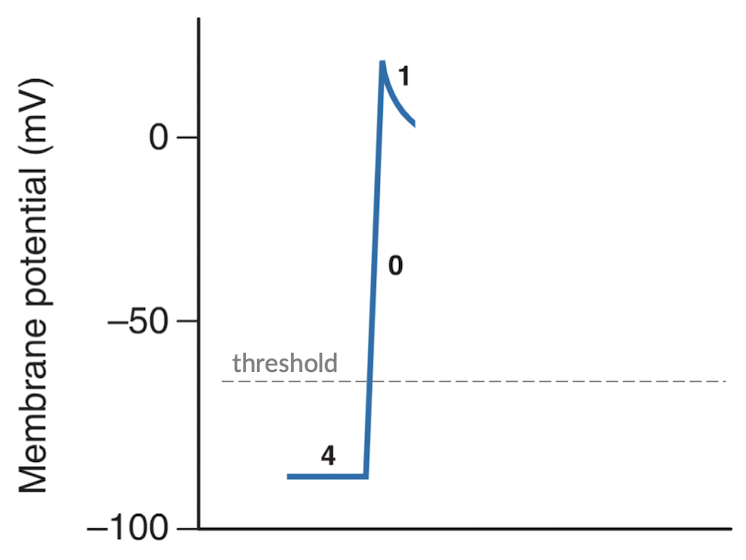
phase 4 - RMP (fast)
membrane potential -90mV
K ion partitioning across the membrane is the primary determinant of the RMP
no net ion movement

phase 0 - rapid depolarization (fast)
stimulus from adjacent cells (small influx of + ions) reduces the MP (becomes less negative) enough to reach threshold (-65 to -70mV)
rapid influx of Na+ occurs through voltage-gated, fast Na channels
the interior of the cell rapidly becomes more positive
rate of phase 0 is key determinant of the cell to cell conduction velocity

events triggered when threshold is met
activation gate (m gate) of voltage-gated Na+ channels opens quickly
inactivation gate (h gate) of voltage-gated Na+ channels close slowly
voltage-gated K+ channel (Ikv) opens slowly
allows for rapid Na+ influx for a brief period

phase 1 - initial repolarization (fast)
initial repolarization via opening of K+ channels
K+ out of the cell
phase 2 - plateau (fast)
MP is relatively stable
combination of ion movements
Na+ channels inactivated
long acting Ca++ channels opened (Ca influx)
K+ channels opened (K+ efflux)

phase 3 - completion of repolarization (fast)
K+ channels are fully activated and opened allowing for efflux of the K+ ions
MP is retuned to the RMP
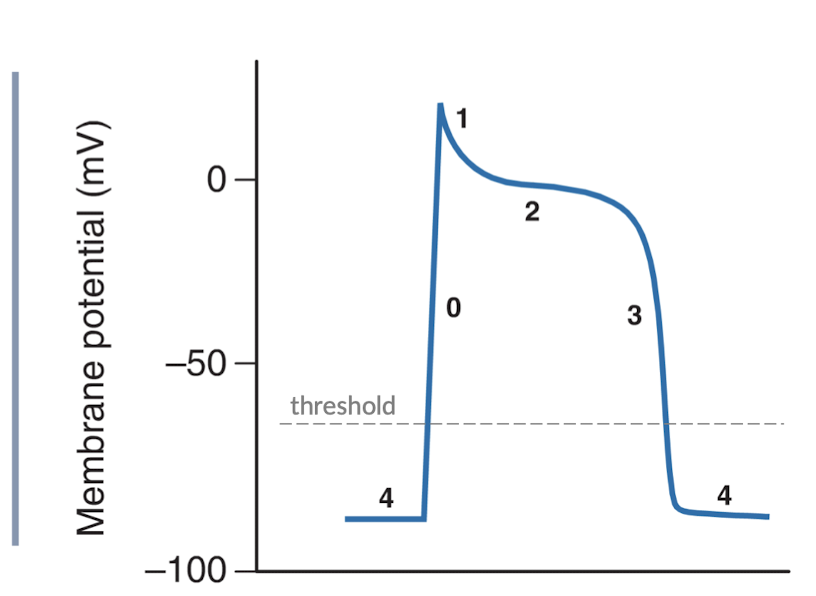
fast response AP - summary of ion movements
4 - resting membrane potential
0 - depolarization
1 - initial repolarization
2 - plateau
3 - repolarization

slow response AP
occur in SA and AV nodes

phase 4 - RMP & spontaneous depolarization (slow)
less negative RMP of - 60mV
continuously drifting towards threshold of -40mV allowing for spontaneous depolarization of the pacemaker cells in the SA node
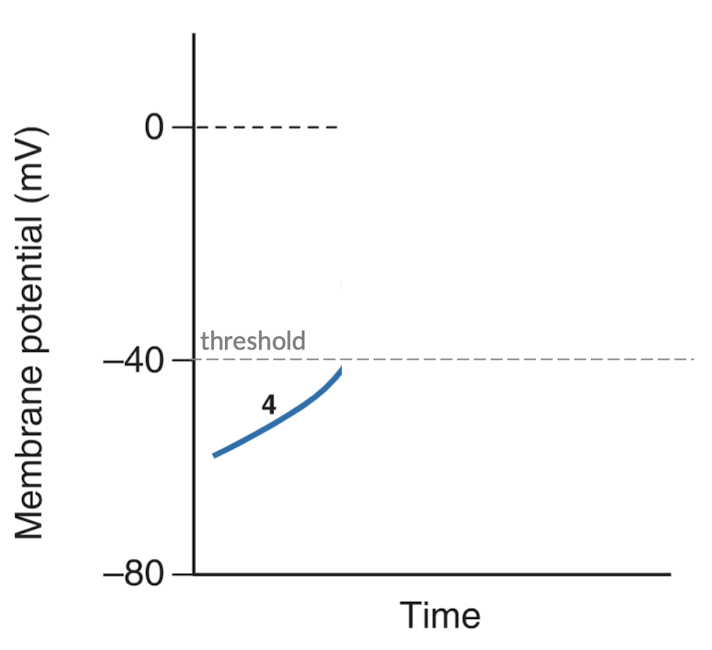
phase 0 - depolarization (slow)
slow upstroke via a slow influx of Ca+

why do you think slow response AP use Ca influx to depolarize instead of Na influx?
fast response Na channels need to be reset to the resting state to work (-90mV)
slow response APs RMP is -65mV, so most Na channels are inactivated
phase 3 - repolarization (slow)
K+ currents are responsible for repolarization - K+ channels open
as the inside of the cell becomes more (-) the MP is returned to RMP
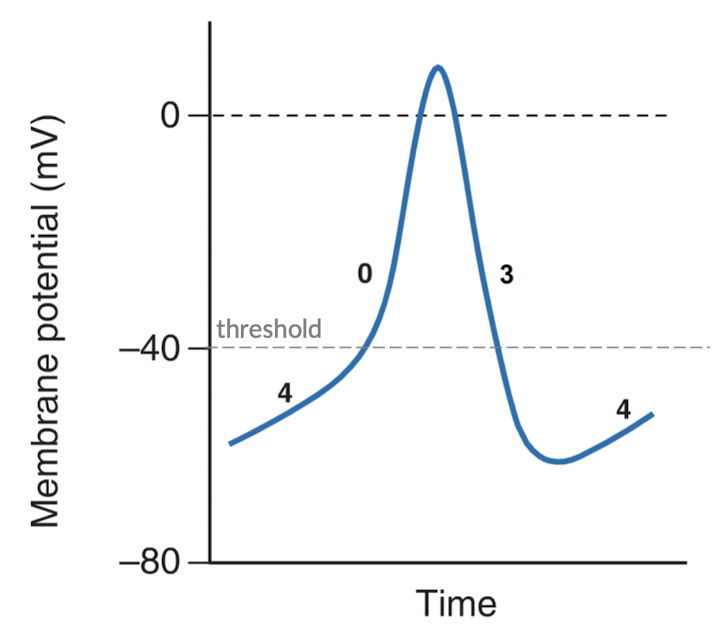
slow response AP - summary of ion movement
4 - spontaneous diastolic depolarization
0 - full depolarization
3 - repolarization

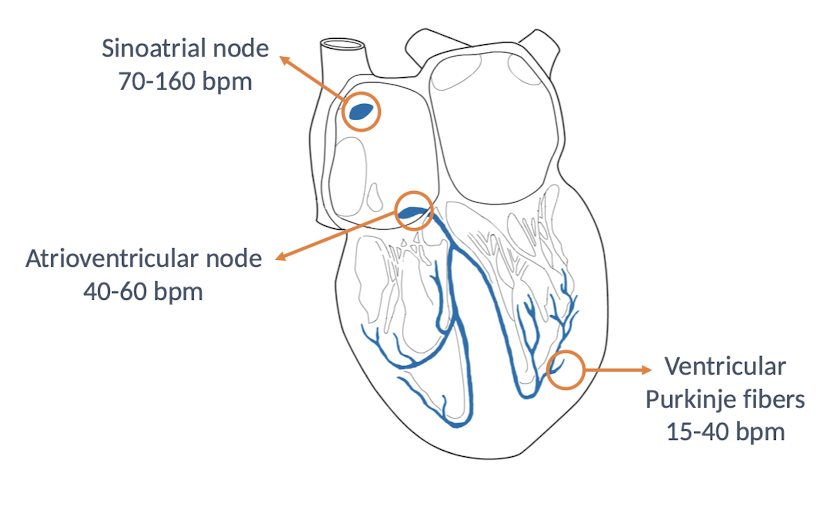
automaticity and subsidiary pacemakers
nodal cells display automaticity and the SA node typically has the fastest depolarization rates (acts as pacemaker)
some other parts of the conducting system can also display automaticity and act as subsidiary pacemakers if the SA node fails to discharge
depolarization rates in subsidiary pacemakers
SA node - 70-160 bpm
AV node - 40-60 bpm
Purkinje fibers - 15-40 bpm
AP propagation
gap junctions allow ions to pass from a depolarized cell to the adjacent cell propagating the depolarization wave
refractory period (RP)
cells are unresponsive to restimulation

relative refractory period (RRP)
a stronger than normal stimulus from an adjacent cell can prematurely excite the cells
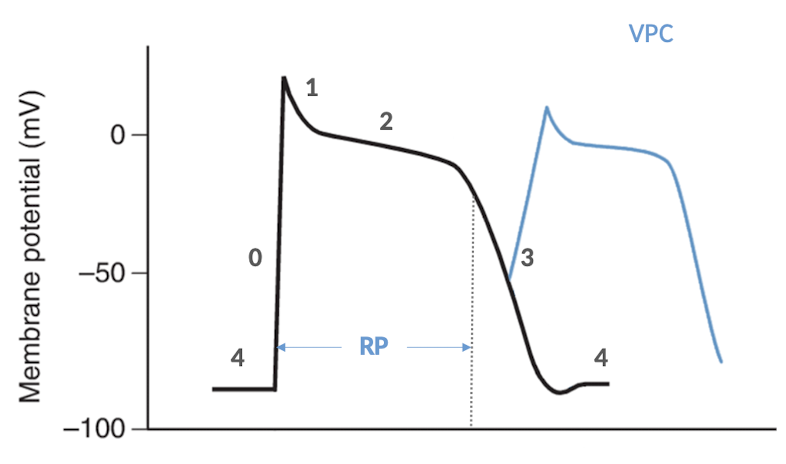
ventricular premature complexes (VPC)
an arrhythmia caused by abnormally early depolarization of ventricular cardiomyocytes
treatment - drugs that prolong the refractory period
Sotalol - blocks beta receptors and K+ channels

how would sotalol help to prevent the ventricular premature complex form occurring?
extend total/complete refractory period, so the stimulus falls in RP
how does serum hyperkalemia affect the AP
less negative RMP
slower depolarization (fewer Na+ channels available to open)
faster repolarization (more K+ channels open)
extracellular hyperkalemia effects on different tissues in the heart
sensitivity to hyperkalemic effects: atrial > ventricular myocytes > nodal tissues
in nodal tissues, hyperkalemia reduces the funny current and slows the rate of spontaneous phase 4 depolarization (mimics inc parasympathetic tone)

Which of the following AP events allows sinoatrial nodal cells to act as the pacemaker of the heart?
a. A slower depolarization during phase 0.
b. Spontaneous diastolic depolarization during phase 4.
c. A less negative resting membrane potential
d. the influx of Ca through the L-type calcium channel during phase 2.
B. Spontaneous diastolic depolarization during phase 4.