Week 1 Lecture 2
 Call Kai
 Learn
 Practice Test
 Spaced Repetition
 Match
 Flashcards
 Knowt Play
1/28

Earn XP
Description and Tags
29 Terms
Economics
a social science concerned with use of scarce resources in the production and distribution of goods and services to satisfy the unlimited human wants.
Positive Economics
it describes the facts as they are. _______ is concerned with “what is.” Example: “More educated people are paid better.”
Normative Economics
tells us what the world should be. It is “prescriptive” rather than descriptive. _____ is concerned with what “should be.” Example: “Governments should invest in educating poor people.
Microeconomics
the branch of economics that is concerned with individual entities such as markets, individuals, and firms
Macroeconomics
is concerned with the over all performance of the economy and focuses on aggregate indicators such as GDP, unemployment rates, and inflation.
The Three Main Economic Questions
What and How Much to produce?
For Whom to produce?
How to produce?
The Scientific Method in Economics
Observation
Assumption
Modeling
Prediction
Testing
Command Economy
The government makes all the important decisions about production and distribution. Government owns the resources for production; it decides how to produce; and it determines who will consume the outputs of production.
Market Economy (Modern)
Economic decisions are made by individuals and firms. Individuals and firms, and the interactions between them determine “What?”, “How?”, and “For Whom?” will be produced.
Barter system
Market system in which goods or services are traded directly for other goods or services.
Major Components of the Market System
Money
Specialization
Trade
Capital/Investment
Market
Is a mechanism which brings “buyers” and “sellers” together.
The Price
in a market system, is the exchange-value of the goods and services in terms of money.
Market Equilibrium
is defined as the balance between all the buyers (the demand) and all the sellers (the supply) in a market.
Negative Externality
Occurs when agents who are not involved a specific market are negatively affected by the actions of the agents in the market. E.g.- building 76rs arena will affect everyone negatively but the sixers, pollution, traffic, erasure.
How the government promotes/restores efficiency and equality
progressive taxation
transfer payments (unemployment benefits)
minimum wages.
How the government promotes/restores stability and growth
Monetary Policy (Money Supply, Interest Rate)
Fiscal Policy (Taxation, Government Spending)
Capital Goods
Goods that are produced in order to produce other goods.
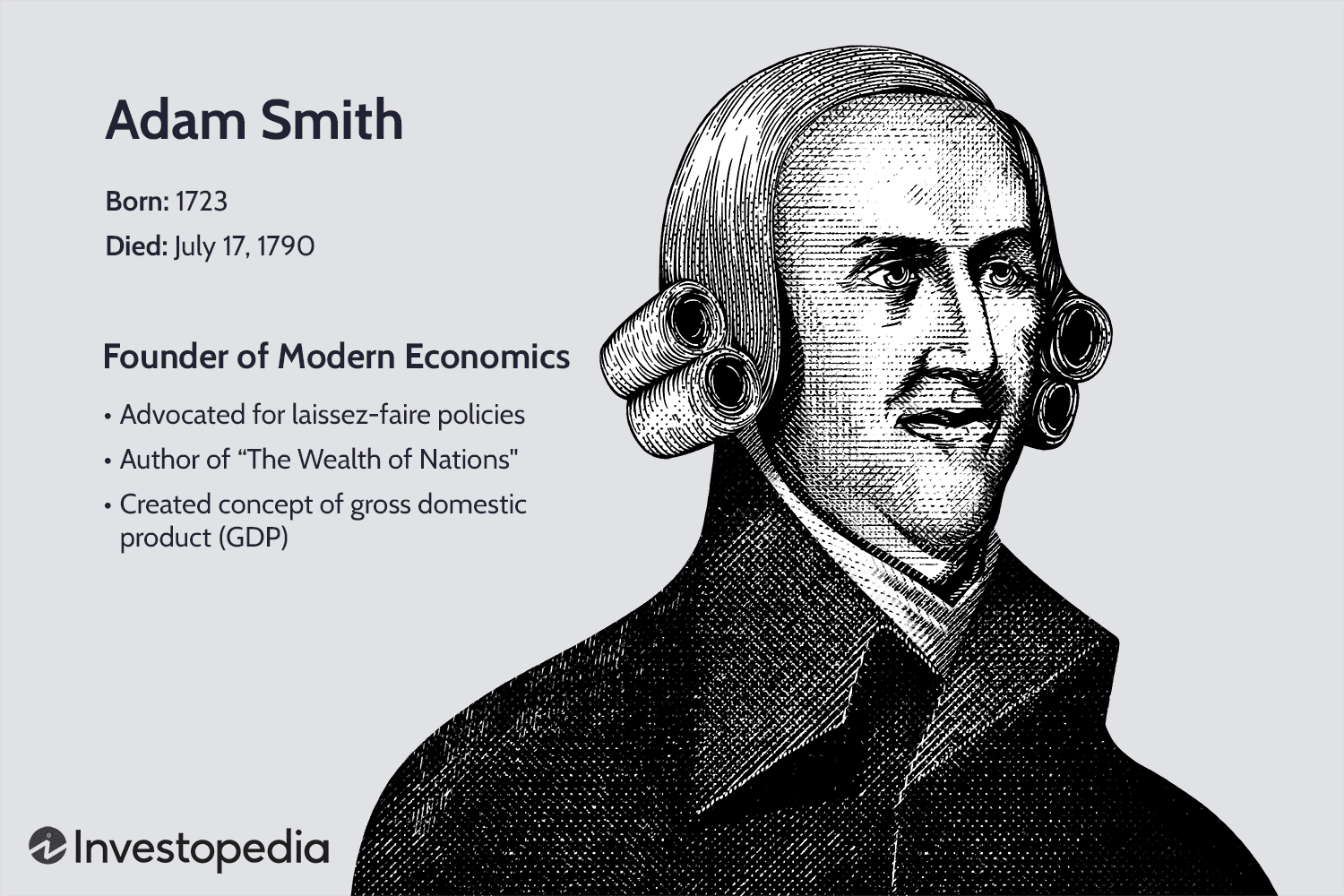
Adam Smith
Major work: “An Inquiry into the Nature and Causes of the Wealth of Nations” (1776).
Theories/Ideas: ‘the invisible hand’, ‘laissez-faire’, ‘specialization’
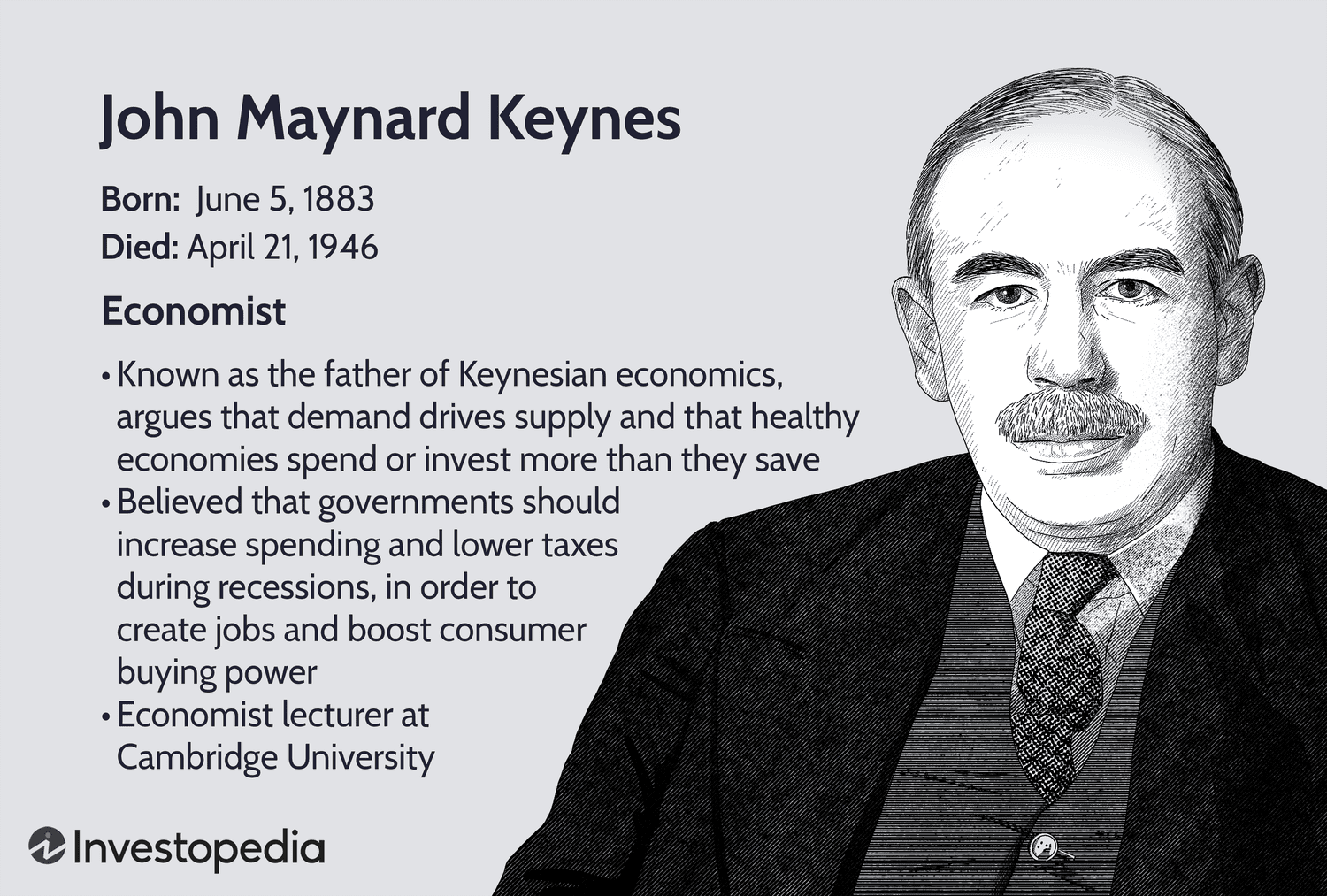
John Maynard Keynes
Major work: “The General Theory of Employment, Interest and Money” (1936).
Theories/Ideas: ‘slumps are due to lack of demand’, ‘government should interfere’
Branch of economics named after him.
“In the long run, we are all dead”
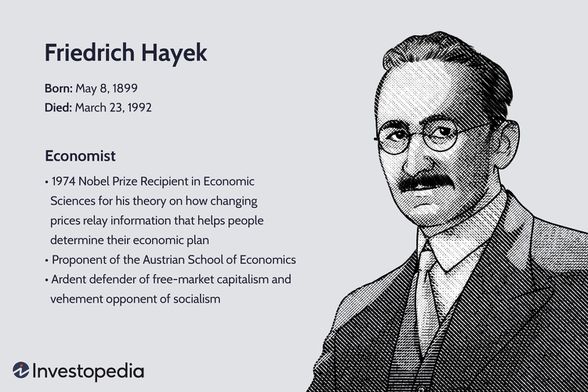
Friedrich August von Hayek
Major work; “The Political Order of Free People”
Theories/Ideas: ‘criticized socialism’
‘Nobel Prize Winner’ ‘74
Not well liked in his time (Unlike Keynes)
Fallacy of Composition
When we draw conclusions by assuming that parts or members of a whole will have the same properties as the whole.
Bumper Harvest Paradox
An increase in food supply from a good harvest actually decreases total revenue for farmers.
Post Hoc Fallacy
After that, Therefore, Because of it. Ultimately this boils down to correlation vs causality.
Ceteris Paribus Assumption
“All else equal” One assumes that all other variables except those under immediate consideration are held constant
Specialization
Not possible without trade, your skills must be valuable to be paid
Trade
The exchange of goods and services between individuals, businesses, or countries.
Perfectly Competitive Markets
No individual buyer or seller is capable of affecting the prices in the economy. In this case, both firms and consumers are said to be price takers.
The Market System Will Work If,,.
Rational Economic Agents (Consumers & Firms);
Perfectly Competitve Markets
No Negative Externalities
Fair and Just distribution
Stable & Growing Economy