Biodiversity Exam #3
 Call Kai
 Learn
 Practice Test
 Spaced Repetition
 Match
 Flashcards
 Knowt Play
1/149

There's no tags or description
Looks like no tags are added yet.
150 Terms
list the groupings within the subphyla vertebrata (6)
1) agnathans
2) chondrichtheys
3) osteichthyes
4) amphibia
5) reptilia
6) mammalia
list the makeup of the clade agnathans
jawless fishes —> hagfish and lamprey
what distinguishes the agnathans from other subclades of vertebrata
agnathans are jawless; all other subclades have jaws
characteristics of agnathans (3)
1) mostly cartilaginous, some skeletal elements
2) lack scales
3) lack paired fins
discribe the characteristics of hagfishes
1) mostly cartilaginous, some skeletal elements
2) lack scales
3) lack paired fins
4) agnathans
5) marine
6) slime glands
explain the function of the slime glands with the hagfishes
slime glands line the flank of the hagfishes in the water and create a viscous cloud in the water that limits predation
list the characteristics of lamprey
1) mostly cartilaginous, some skeletal elements
2) lack scales
3) lack paired fins
4) agnathans
5) marine or freshwater
6) spawn in freshwater
7) filter feeders and free living or parasitic
explain the major impact of the lamprey
highly destructive sea lamprey in the great lakes with fish, invasive species that fish were not coevolved with
list the animals that make up the subclade chondrichthyes
sharks and rays
list the key characteristics of chondrichtheyes
1) cartilaginous fishes
2) mineralized jaws
3) ampullae of lorenzini
4) lateral line system
5) oviparous, ovoviviparous, and viviparous
list the two main enhancing sensory features of the chondrichthyes and their purpose
1) ampullae of lorenzini —> detect electromagnetic fields allowing for close range prey detection
2) lateral line system —> detects vibrations around the body with detection lines down the flanks of the sharks body
list and explain each of the options and diversity within the chondrichthyes reproduction methods
1) viviparous —> live bearing, absence of a yolk sac
2) ovoviviparous —> live birth, depended on yolk sac
3) oviparous —> egg laying, yolk sac dependent
what are chondrichthyes considered with the IUCN list
amoung the most at-risk vertebrate group, over 40% are data deficient or not evaluated
how many million years of history are contained within Chondrichthyes
26 million years of unique evolutionary history
direct effects on shark conservation
1) shark finning
2) over 100 million sharks harvested annually for consumption
3) shark fin soup as a status symbol
4) nearly 20% or 181 species placed in threatened catagory
indirect impacts of shark conservation
1) marine ecosystem is degraded, crippled and unbalanced
2) low prey and predatory density
3) North West Atlanttic effects of cod industry collapse with a switch to targeting swordfish and tuna, thereby harming larger sharks in those areas as their food sources are depleated
what are the indicator species of sharks with NW atlantic population declines
1) Scalloped Hammerhead
2) Great White
3) Thresher
describe the animal makeup of the subclade osteichthyes
bony fish, bass, tuna, guppies, etc.
what are the major impactful features of the osteichthyes and their purpose
1) operculum: bony covering over gills with muscules and tendons that creates a pressurized system pulling water over and into gills that allows bony fish to breath more efficintly and avoid water ramming
2) swim bladder: derived from ancestral lung tissues, as the fish moves up and down in water the swim bladder pressurizes and depressurizes allowing for neutral bouyancy
how much of the subphyla vertebrata are osteichthyes
50%
describe the relationship between lobe finned fishes and tetrapods
lobefinned fishes contained the ancestro to all tetrapods with many morphological intermediate forms (who likely lived in shallow water) between lobed finned fishes and amphibians
describe the unsustainable harvest of the fisheries across the world
most of the commercial fisheries are on the brink of collapse or are collapsing
describe the key example of fishery collapse
the north atlantic cod fishery collapse in 1992 after cod stocks were depleated to around 1% of the total initial population. the area is only now, 40 years later, beginning to recover.
list potential solutions to the fishing industry crisis
1) kill fewer fish
2) UN conversations with unifying regulatory frameworks
3) catch share system
explain the significance of the catch-share system
share of each fisher has fluctiations based on the health of the fish populations, adjusting the share value allows and incentives long term fish population health over short term catch profits
list the order groups that make up amphibians
1) anura (frogs)
2) urodela (salamanders)
3) apoda (caecilians)
list the characteristics of amphibians
1) water permiable skin
2) skin as a critical organ that allows for gas exchange, osmoregulation, toxin production
3) water needed for reproduction
4) dependency on aquatic enviornments
5) conspicuoious metamorphosis
key amphibian examples with common and latin name
1) spotted salamander (Ambystoma maculatum)
2) voiceless treefrog (Chrardrahyla altipotens)
3) oxacan caecilian (Dermophis oaxacae)
quantify the amount of caecilian diversity
around 200 species
list the characteristics of caecilians
1) elongate
2) legless
3) vistigial eyespots
4) nonfunctional eyes
5) heavily ocified skulls
6) long recurved teeth
7) venomous
8) maternal care (maternal dermis and intrauterine nursing)
quantify the amphibian conservation concern with percentage estimate
40-50% of amphibians are close to extinction within our lifetimes
primary drivers of amphibian conservation challenges
1) fungal (cutanious) skin disease with a pathogen that attacks the primary and key organ of the amphibians called Chytridiomycosis
2) climate change
3) habitat distruction
examples of amphibian conservation challenges
1) golden toad is extinct
2) midwife toad in alpine landlocked ponds
what groups makeup the amniota subclade
reptiles and mammals
define amniota
groups that develop with 4 extraembryonic membranes, such as reptiles and mammals
contrast amphibians and amniota
amphibians rely on water bodies for reproduction. the subclade amniota avoids this dependence on water bodies by creating the layers of extraembryonic membranes that act as the water body. with this method, each embryo has their own aquatic space for development.
list the layer, order, and purpose of each key amniotic layer
1) chorion: outer layer
2) allantois: ancestral placenta, the vascular connection between the embryo and mother
3) yolk sac: contains the yolk which is sometimes secondarily reporposed
4) amnion: fluid filled sac that contains the embryo
how to classify within amniota (characteristic)
temporal fanestra —> mammals have 1, reptiles have 2
describe the relationship between mammals and reptiles
sister clades within amniota
ancestral condition of reptiles
skin covered in waterproofing keratin based scales
list the main characteristics of reptiles
1) not lungless or gill bearing, all use lungs
2) most are ectotherms, birds are endothermic
3) waterproofing keratin based scales (feathers as modified scales)
define endotherms and ectotherms
endotherms —> able to regulate body temp with metabolism
ectotherms —> cannot regulate internal body temp with metabolism
describe the makeup of the testudines
1) turtles
2) terapines
3) tortosises
characteristics of testudines
1) bony shell that is an extension of the axial skeleton
2) aquatic and terrestrial
3) dermal shell that radiates out from the sturnim and ribs that becomes fused
4) dermal scales on top, underneath is the bony ribcage
5) highly keritinized beak and jaw
6) lack teeth
7) egg laying or oviporous
8) temperature sex determination (TSD)
draw amniotes cladogram diagram
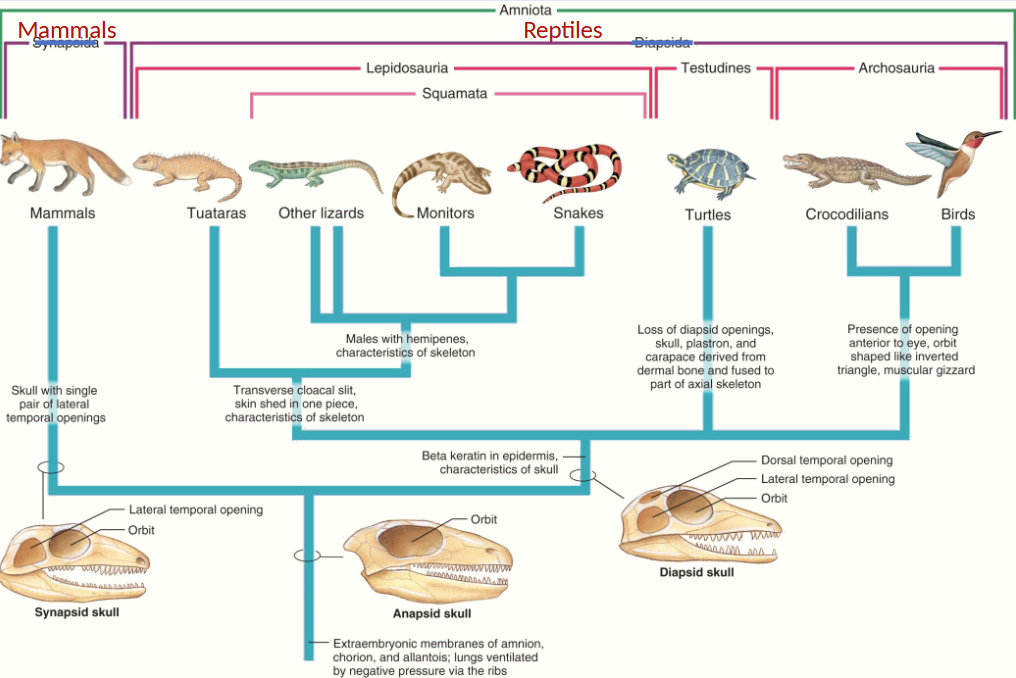
list the makeup of the lepidasauria
1) squamates —> lizards and snakes
2) tuatara
base characteristics of lepidasauria
1) three chambered heart
2) terrestrial, arborial, aquatic, fossorial, exploit each ecological niche
3) exploit each reproductive pathway - ovo, ovovivi, vivi
discribe the classification of snakes within lizards
snakes as a unique radiation nested within lizards and the squamates
distinguish between lizards and snakes (4)
1) shedding: lizards slowly shed their skin in flakes, snakes shed in one large slip
2) eyelids: lizards have functional eyelids, snakes dont have eyelids
3) ear openings: lizards have ear openings, snakes dont have external ear opening
4) jaw and skull flexibility: lizards have a gape limit where the maxilla is not moveable and depend on the mandible, snakes have a lighter maxilla and mandible without a frontal connection which is bridged by a ligament, allows for consumption of larger prey items
list the makeup of the group archosauria
1) crocodilians
2) birds
3) dinosaurs
key characteristic that distinguishes archosauria from lepidasauria
archosauria has a 4 chambered heart, lepidasauria has a three chambered heart
how are birds (aves) and crocodilians related
both within the archosauria grouping, very distantly related but both have their own evolutionary pathways
number of species of crocodilia
25, including crocodiles, caimen, alligators, gharials
characteristics of crocodilians
1) bony-like plates osaoderms
2) complete secondary pallate (allows respiration while eating prey)
3) egg laying (oviparous)
4) maternal care is extensive
5) temperature sex determination
key paper about conservation of non-avian reptiles
2013 global collaboration (Bohm et al.) with 244 authors that evaluated the conservation and populations of non-avian reptiles
statistics about non-avian reptiles species and conservation
20% of reptiles are threatened with habitat loss as the primary driver of threat, about 20% of reptiles are data deficient
highest threatened in group of reptiles (2)
1) turtles
2) crocodilians
*aquatic species especially threatened*
example species with conservation of reptiles
1) american alligator
2) gopher tortoise
3) galapagos marine iguana
impacts of climate change on non-avian reptiles
temperature sex determination (TSD) has unique cost with climate change and temperature disruption. key example with the painted turtle, extreme thermal fluxuations year to year and skewed sex cohorts, typically female skewed and rapid decline as the birth rate and skew cannot outpace natural mortality
explain the placement of aves within reptiles
aves (birds) nested within crocodilians and archasauria
what did aves evolve from
2 legged dinosaurs, the therapods, evolved 150 million years ago with fossil evidence for the first primative bird derived from therapods (morphological intermediate) being the Archaeopterynx
characteristics of Archaeopterynx and modern birds with decent with modification
1) covered in feathers (birds)
2) broad wings
3) long beak
4) post anal extention into tail (dino)
5) long form digits with claws on wings (dino)
6) beak with teeth (dino)
characteristics of modern aves
1) no claws, teeth, or tails
2) feathers, wings, keritin based beaks
3) endothermic condition
4) respitory pathwas with paired lungs, 9 unidirectional air sacs which increase surface area for gas exchange and allow for more efficient respiration
list and explain the adaptations used by aves for flight
1) feathers as modified scales
originally used for thermoregulation and display
gliding, powered flight later
2) reduced body weight
reduced osification (bony makeup)
keritanized beak
pneumatic bones, porus, mainained with internal filamentus joints and structural integrity
how concerning is aves conservationism
lowest proportion of threatened species in the ICUN red list, 10-15% of all bird taxa threatened
examples of aves that have been threatened, endangered or extinct
1) harvest of songbirds in europe
2) waterfowl with habitat distruction
3) passenger pigeon (extinct in 1914)
4) whooping crane, critically endangered (population growth from 20 to 200)
introduced predators that threaten aves
domestic cats —> globally
brown tree snakes —> guam
characteristics of mammalia
1) hair, keriin based hair unless secondarily lost
2) mammary glands
3) maternal care (behavioral and nutritional)
4) endothermic
5) heterodont and diphyodont dentition
7) body glands, subacous and sudoriferus glands
define heterodont and diphyodont dentition
heterodont - different teeth structures associated with different diets
diphyodont - the number of teeth and form changes across lifespans
list the three mammalian subgroupings
1) monotremes
2) marsupial
3) eutherians
monotremes characteristics
1) oviparous (eye laying)
2) lack nipples, secrete milk onto abdomen
3) low diversity group
4) closest to ancestral condition
list examples of monotremes
1) duck billed platapus
2) echidnas
list the characteristics of marsupials
1) globally distributed
2) marsupium
3) brief gestation period with longer juvenile development in marsupium while nursing
4) maternal care
examples of marsupials
1) kangaroos
2) koalas
3) Tasmanian devil
4) wallabies
5) opossums
list the characteristics of eutherians
1) long and complex placenta
2) gestation normally correlated with size
3) post birth young vary from altricial to precocious
define altricial and precocious
altricial —> helpless, dependent on parents and mother
precocious —> able to function, still dependent on parents for nutrition
describe the conservation of mammals
-most familiar and marketable group
-majority of recent conservation successes are with mammals
-en-situ and ex-situ conservation method
-bias with abundance of resources available relative to less marketable groups
examples of mammalian extinctions
-carribean monk seal (extinct 1952)
-yangtze river dolphin (likely extinct)
describe the mammal conservation in australia
-decline of australian mammals since european settlement
-habitat modification and introduction on non-native species
-over 10% have gone extinct in the last 200 year
-20% currently threatened
-unique declines in undisturbed areas
examples of threatened or extinct australian mammal species
1) tasmainian tiger (extinct)
2) desert bettong (extinct)
3) tasmanian devil (endangered)
define and describe a negative feedback loop
a loop that holds something to a constant set point and maintains homeostasis, constraining. the change or stimulus is detected by receptors, then carried out by effectors that oppose the stimulus, bringing it back to the set point.
list examples of negative feedback loops
1) thermoregulations w/ endotherms, maintaining body temp
2) osmoregulation, the salt and water balance within the body
3) body fluid pH
4) blood pressue
5) blood glucose
6) blood calcium
describe positive feedback loops
an acure response or upregulation, amplification response to a stimulis that departs from the set point, short term.
list examples of positive feedback loops
1) blood clotting with wounds and blood loss
2) parturition and childbirth
3) breast-feeding
is thermoregulation a positive or negative feedback loop
negative, return to set point, constraining
draw the loops of thermoregulation

list the pathway of excretion for osmoregulation
kidneys —> ureters —> urinary bladder —> urethra
define osmoregulation and explain its purpose within the body
the water and salt balance within the body, connected with the excretory (urinary) system, eliminates nitrogenus waste from the body
what is urine and excretion regulated by
hormones - antidiuretics (amount of water reabsorption in kidneys)
what is the purpose and regulatory effects of osmoregulation with urine production and excretion
rids the body of nitrogenous waste, toxins and drugs, excess water
regulatory effects with blood pressure (BP), body fluid pH, and blood calcium
list the 4 steps of digestion
1) ingestion
2) digestion
3) absorption
4) elimination
list the 3 macronutrients and their makeups when broken down
1) carbohydrates —> simple sugars
2) proteins —> amino acids
3) fats —> glycerol and fatty acids
list the major digestive organs
1) oral cavity
2) esophagus
3) stomach
4) small intestine
5) large intestine
6) rectum
7) anus
list the accessory digestive organs
1) salivary glands
2) liver
3) gall bladder
4) pancreas
discribe the function of the following the the digestive process: oral cavity
-mechanical digestion w/ mastication and breakdown of food
-chemical digeston of starch w/ accessory salivary glands
discribe the function of the following the the digestive process: esophagus
-long thin tube of smooth muscle that connects mouth and stomach
-parastalsis with smooth muscle contractions that are autonomic and involuntary
discribe the function of the following the the digestive process: stomach
-mechanical with churning
-chemical with protein digestion from gastric juices
discribe the function of the following the the digestive process: small intestine
-site of most chemical digestion and pancreatic juices
-absorption begins in the small intestines
discribe the function of the following the the digestive process: large intestine
absorption of water and salt; the small intestine does the majority of absorption for nutrients
discribe the function of the following the the digestive process: rectum
stores feces prior to excretion