Chemistry of Drug Degradation
 Call Kai
 Learn
 Practice Test
 Spaced Repetition
 Match
 Flashcards
 Knowt Play
1/23

There's no tags or description
Looks like no tags are added yet.
24 Terms
Adverse effects of drug degradation
Inactive/less effective products:
Loss of therapeutic efficacy
Effect in dose/outcome
Toxic/harmful degradation of products
Adverse reactions
Side effects
Can be directly harmful or potentially have downstream effects
Innocuous side product
Could producing change in the product’s appearance
Main mechanisms of drug degradation
Hydrolysis
Oxidation
Photochemical drug degradation
Isomerisation
Dimerisation and polymerisation
Hydrolysis
Nucleophilic addition of water (or a derivative such as a hydroxide) to a labile bond
Most often, addition-elimination reactions with a carbonyl (overall substitution)
Affects carboxylic acid derivatives
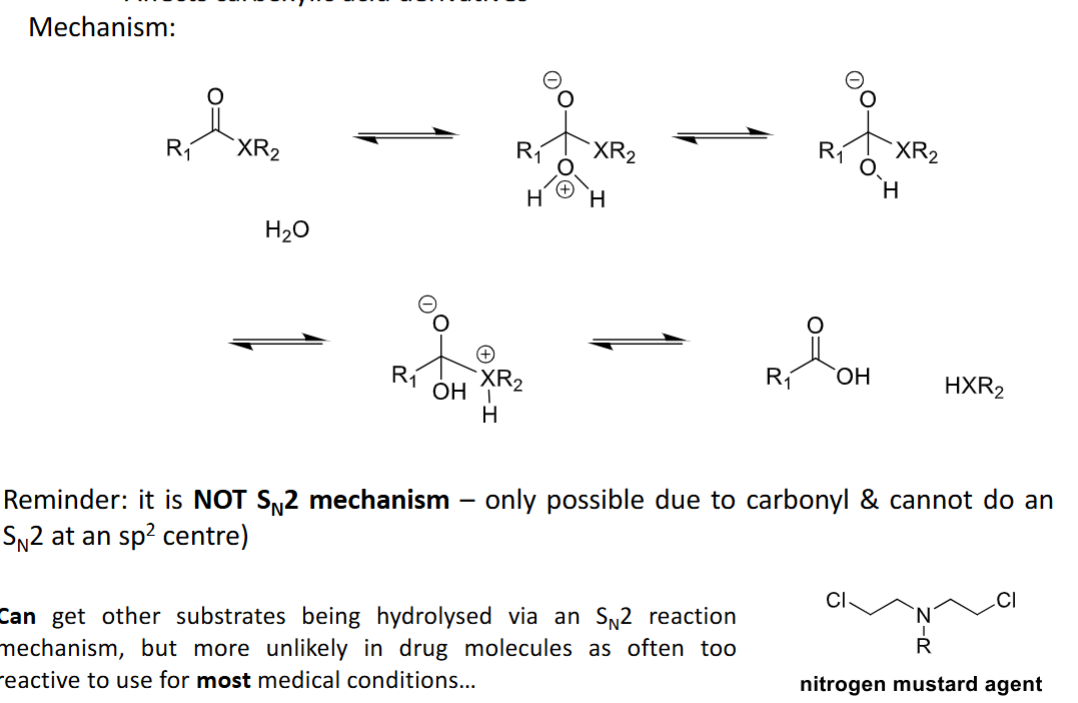
Hydrolysis at carbonyls
The more electronegative the substituent, the greater the partial positive charge on the carbon atoms of the carbonyl group
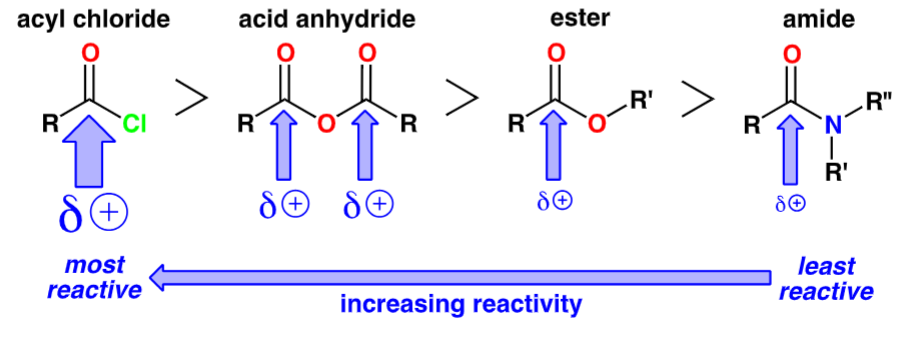
Hydrolysis at carbonyls - examples
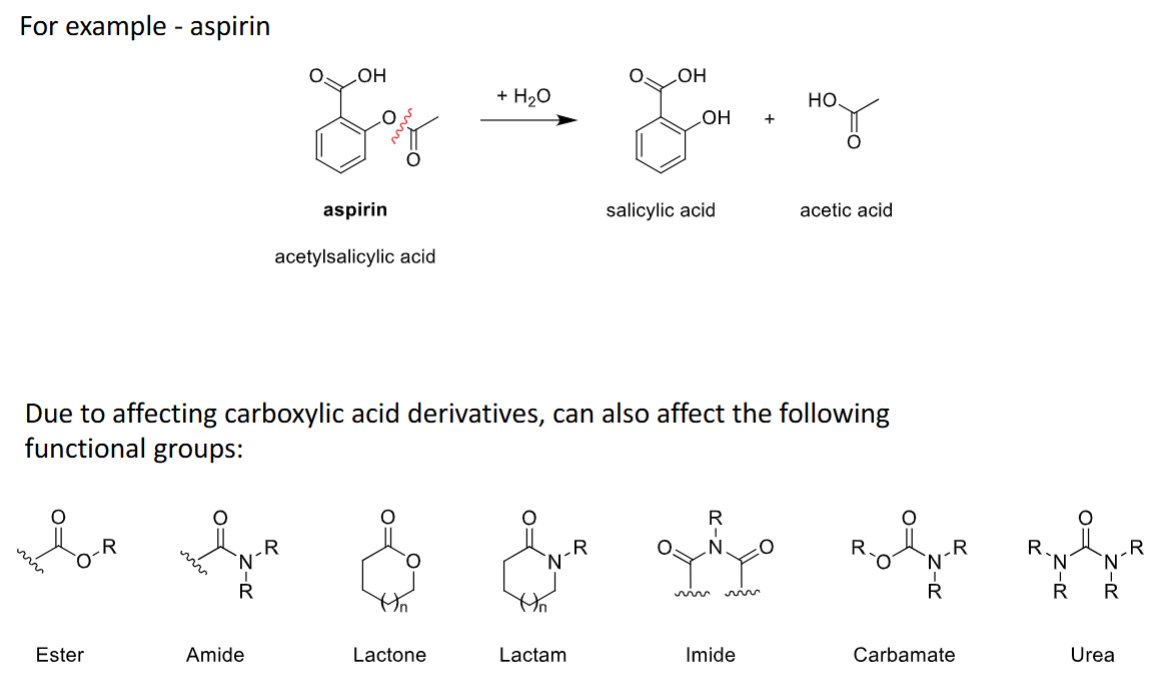
Hydrolysis at carbonyls - examples cont.

Hydrolysis - pro drugs examples

Hydrolysis - affecting the reaction rate
Major factors that can affect the rate of hydrolysis:
Concentration of water/moisture
Temperature
Presence of catalyst (e.g. H+/OH-)
Hydrolysis requires the drug to be in solution and accessible for reaction with water
These factors can be influenced by:
Formulation
Packaging
Storage
Patient advice/adherence
The reaction rate can be decreased by:
Decreasing solubility
Solubilisation in the core of surfactant micelles
Formulation choices - e.g. as a suspension rather than a solution
Hydrolysis - acid/base catalysis
Hydrolysis can be catalysed by acids or bases in solution
The pH can affect the rate of reaction and so rate of degradation
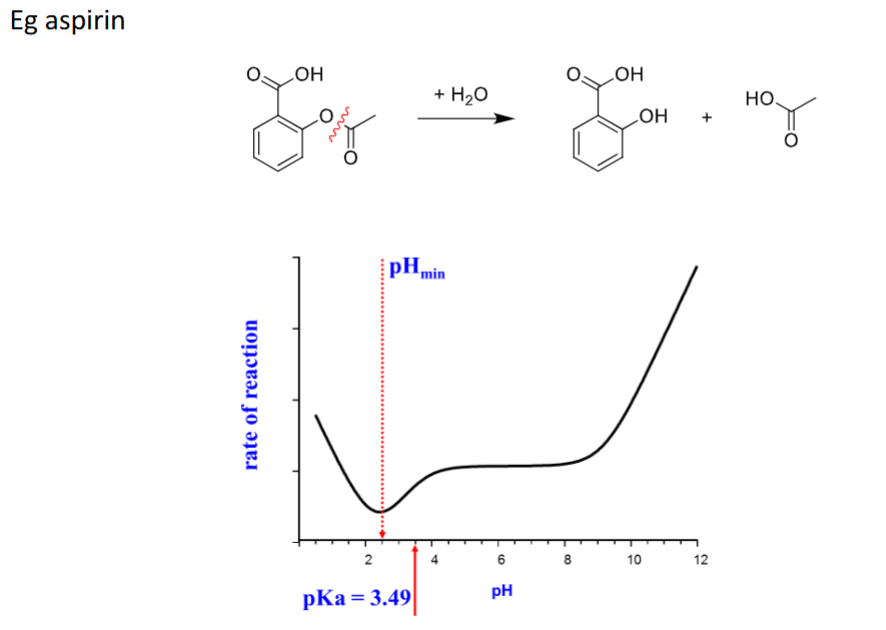
Hydrolysis - acid/base catalysis examples (acid)

Hydrolysis - acid/base catalysis examples (base)

Hydrolysis - aspirin

Oxidation
Removal of electrons and can often feature the addition of oxygen/dehydrogenation
Often a radical process
Can occur by autooxidation - this is uncatalysed and quite slow caused by molecular oxygen
Can involve chain processes consisting of the chain reactions of free radicals: initiation, propagation and termination reactions
This means that catalysed free radicals generated by light, heat or transition metals
Reactions proceeds until the free radicals are destroyed by inhibitors or by side-reactions that eventually break the chain

Oxidation - functional groups
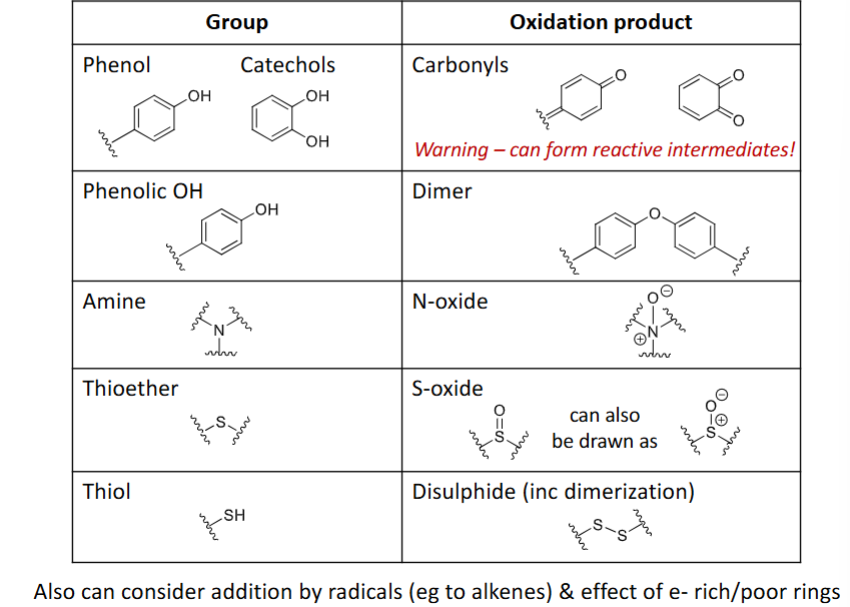
Oxidation - examples

Oxidation - practical considerations
Oxidation is accelerated by the formation of free radicals - e.g. light/heat/trace metals
Can put processes in place to slow down/prevent oxidation degradation:
Adding antioxidants
BHA, BHT, gallates, tocopherols
Ascorbic acid and sodium ascorbate
Adding reducing agents
Sodium metabisulphite
Selecting packaging carefully
Protect from light
Packaging impearmeable to gases or packaging in inert gas
Controlling temperature, pH and ionic strength
Decrease metal impurities as much as possible
Impurities and contamination during processing
Photochemical degradation
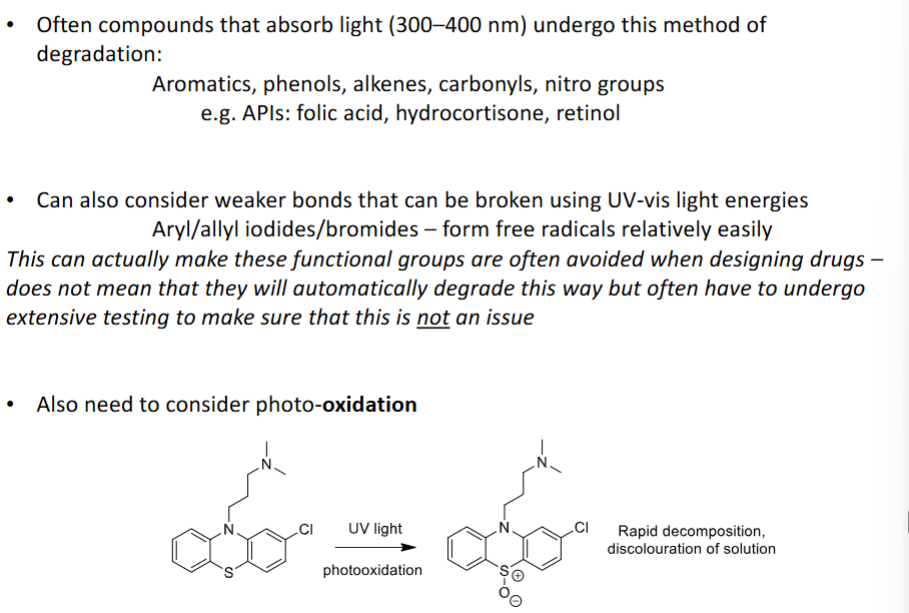
Some compounds are photosensitive and can undergo light-catalysed/light-induced decomposition or photo-induced oxidation
Drug molecules absorbs UV via light
To decrease rate of degradation can:
Add radical scavengers, reducing agents
Decrease radical formation/propagation methods
If considering photo-oxidation that also can exclude oxygen
Protect from certain wavelengths of light including;
Adequate packaging
Primary pack - amber glass, opaque blister pack
Secondary pack - cardboard box
Polymeric coating containing a UV-light blocking agent e.g. oxybenzone

Photochemical degradation - example
Isomerisation
Conversion between isomers which can include converting between:
Enantiomers (R/S)
Diastereoisomers (including multiple chiral centres and E/Z isomers)
Stereoisomerisation means the conversion of one isomer to another. Can have compounds that are enantiopure (just one enantiomer) and also enantiomerically enriched (often majority one isomer)
Racemisation is a specific term to describe isomerisation of the stereocentre in an enantiomerically pure sample of a drug to results in a racemic mixture (a 50:50 mix of the two enantiomers)
Epimerisation is a term to describe conversion between two diastereoisomers by altering only one stereocentre in the molecule to change the overall 3D shape
Can also include converting between structural isomers, but this is rarer
Isomerisation factors
often epimerisation (R/S) can be catalysed by acid/base - loss/addition of protons but in equilibrium reaction they return to starting materials in different configuration

Isomerisation factors cont.
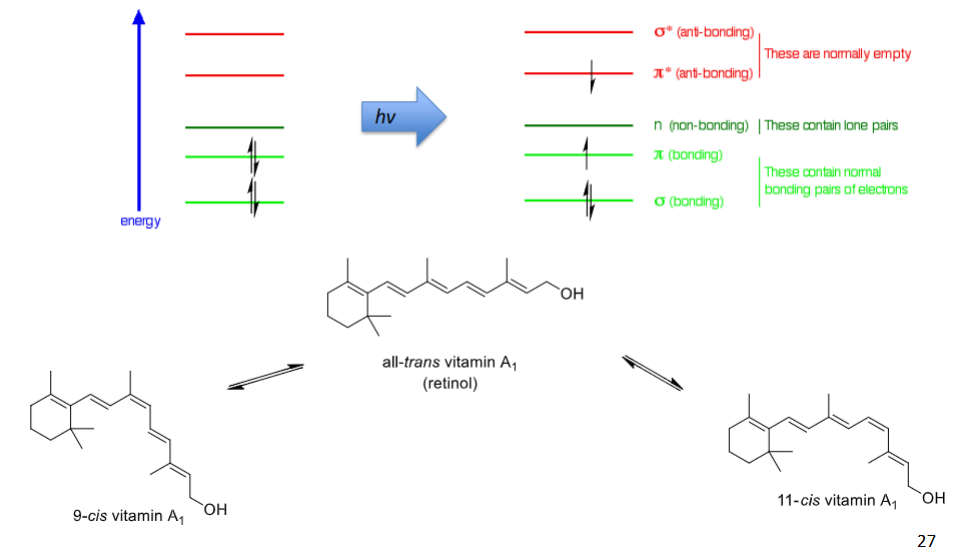
Geometric isomerisation (E/Z) can often be catalysed by light or radicals
Alkenes can absorb light/electrons are prompted and then the bond can rotate
Alternatively, radicals can give the same effect
Dimerisation/polymerisation
Dimerisation
Combination of 2 drug molecules
Polymerisation
Combination of multiple molecules to create a long chain
Both are reactions between molecules and can either be a radical reaction or though standard chemical reactions between 2 functional groups within a molecule that can react with each other
Dimerisation - examples

Prescribing domains
Assessing the patient
Shared decision making
Prescribing safely and professionally
Providing information
Prescribing and review
Improving prescribing practice