UNIT 2 KBATS (ap hug)
 Call Kai
 Learn
 Practice Test
 Spaced Repetition
 Match
 Flashcards
 Knowt Play
1/47

There's no tags or description
Looks like no tags are added yet.
48 Terms
demography
the scientific study of population characteristics
demographic transition model (DTM)
a 5-stage model that shows how a country’s birth/death rates and population change growth changes overtime
ecumene
portion of Earth’s surface occupied by a permanent settlement
arithmetic density
number of people / total area of land
physiological density
total number of people / total area of farmable land
agricultural density
number of farmers and their families / total amount of farmable land
crude birth rate (CBR)
total number of live births per year for every 1000 people alive
crude death rate (CDR)
total number of deaths per year for every 1000 people alive
natural increase rate (NIR/RNI)
percentage of growth in a population per year calculated as the CBR minus CDR
doubling time (& rule of 70)
number of years needed to double a population, to find amount of years: 70 / NIR
total fertility rate (TFR)
average number of children a woman will have during her child bearing years
infant mortality rate (IMR)
total number of infant 1yrs and under deaths in a year per every 1000 live births
life expectancy
average number of years someone will live given the current social, economic, and medical conditions
carrying capacity
maximum population an environment can support without degrading the natural resources
agricultural revolution
the time when humans started domesticating plants and animals instead of hunting and gathering
industrial revolution
series of improvements in industrial tech that changed the process of manufacturing goods
medical revolution
medical tech invented in Europe/North America diffused to poorer countries, eliminating many traditional causes of death, letting people live longer
zero population growth (ZPG)
decline in total fertility rate so that the natural increase rate is zero or close to zero
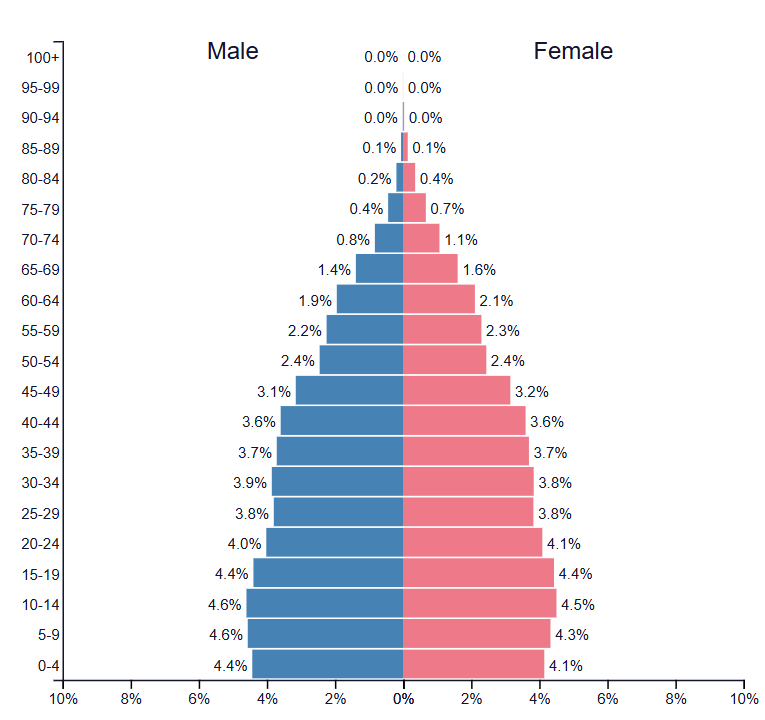
population pyramid
bar graph that represents distribution of population by gender and age
dependency ratio
number of people under age 15 and over age 64 compared to number of people in the active labor force
elderly support ratio
number of working-age people (15-64) / people age 65 or older
pro/anti natalism
people who support/don’t support people having more babies
sex ratio
number of males per 100 females
Thomas Malthus/Neo-Malthusians
a guy who theorized that population growth will eventually outpace food production or people who don’t support Malthus’s theory
epidemiological transition model (ETM)
a model that shows the process of change in distinctive causes of death in each stage of the demographic transition
pandemic
a disease that occurs over a wide geographic area and affects a high proportion of people
migration
form of relocation diffusion involving a permanent move to a new location
emigration vs immigration
moving away from a country vs moving into a country
net migration
difference between number of immigrants and number of emigrants
circulation
constant, short-term repetitive movement by a person
push factor
factor that makes people move out of their current home
pull factor
factor that makes people move to a new location
refugee
someone who was forced to move out of their country and cannot go back in fear of persecution due to race, religion, nationality, membership in a social group, or political stand
intervening obstacle
environmental/cultural feature of landscape that hinders migration
international migration
permanent move from one country to another
voluntary migration
implies that the migrant has chosen to move for economic improvements
forced migration
migrant was compelled to move by cultural factors
internal migration
permanent movement within a particular country
interregional migration
movement from one region of a country to another region
intraregional migration
movement within a region
migration transition model
change in migration pattern in a society that results from industrialization, population growth, and other social + economic changes that also makes the DTM
chain migration
migration of people to a specific location
quotas
reference to migration, law that places a maximum limit of people that can immigrate to a country each year
brain drain
large-scale emigration by talented people
guest workers
term once used for workers who migrate to the developed countries of Northern/Western Europe, often from Southern/Eastern Europe or North Africa, looking for better jobs
nativism
policy of favoring native people rather than immigrants
counter-urbanization
net migration from urban to rural areas in MDCs
remittances
transfer of money by workers to family from their home country