Clinical Disease of Reptiles 1
 Call Kai
 Learn
 Practice Test
 Spaced Repetition
 Match
 Flashcards
 Knowt Play
1/64

There's no tags or description
Looks like no tags are added yet.
65 Terms
What are the zoonotic risks of reptiles?
Salmonella spp., Campylobacter spp., Non tuberculous mycobacteria (M. chelonae, M. genavense, M. foruitum, M. marinum), snake mites
What does snake mites cause in humans?
pruritic dermatitis
Who is typically affected by Nutritional secondary hyperparathyroidism (NSHP)?
lizards and chelonia
What are the clinical signs of Nutritional secondary hyperparathyroidism (NSHP)?
Lethargy/weakness, muscle tremors, bone fractures, scoliosis/kyphosis, softness to carapace/plastron, rubber jaw, reproductive disease, prolapse

What disease is this image indictivative of?
Nutritional secondary hyperparathyroidism (NSHP)
What is the etiology of Nutritional secondary hyperparathyroidism (NSHP)?
malnutrition, low calcium in diet, imbalance in the calcium to phosphorus ratio in the diet, no/inappropriate UV = hypovitaminosis D
What are the diagnostics for Nutritional secondary hyperparathyroidism (NSHP)?
clinical exam and history, radiography, biochemistry
What on biochemistry should you look at for Nutritional secondary hyperparathyroidism (NSHP)?
low ionized calcium
renal function - ammonia, urea, uric acid, depending on species
Elevated PTH is nephrotoxic so risk ___
What is the immediate specific treatment for Nutritional secondary hyperparathyroidism (NSHP) if neurological signs are present?
give injectable calcium gluconate until ionized calcium is normal
IV/IO/IM/Intracoelomic dose - 10-100mg/kg
What is the immediate specific treatment for Nutritional secondary hyperparathyroidism (NSHP) if neurological signs are NOT present?
oral calcium gluconate
high calcium:phosphorus supplement
What are other treatments for Nutritional secondary hyperparathyroidism (NSHP)?
pain relief
if fracture present use external coaptation
improve husbandry! - UV light, appropriate diet
supportive care - prevent further trauma, O tube, IO therapy
Address elevate phosphorus
injectible calcitonin if blood calcium levels okay

Look at this analgesia chart
I am analgesed
What are the uses of NSAIDs in reptiles?
Consider anti inflammatory but not analgesic if now - more studies needed and care in dehydrated patient
What are the uses of opioids in reptiles?
trauma or pre-operatively
morphine is most effective - can take some time to take effect - leads to respiratory depression (use loewest effective dose)
What are the clinical signs of Pyramidal growth in chelonia?
humped carapace
shouldn’t occur in any tortoise except tent tortoise
What is the etiology of Pyramidal growth in chelonia?
unknown, only seen in captivity
hypothesized to be related to low humidity, inappropriate UV, diet too high in protein or excessive feeding
What are the diagnostics for Pyramidal growth in chelonia?
PE and husbandry are pathognomonic
What are the treatment options for Pyramidal growth in chelonia?
None, you cannot reverse these changes but you need to stop them progressing
Provide husbandry appropriate for species. To do this you must identify which species you have in front of you
What is the etiology of shell trauma?
trauma from lawn mowers, cars or other tortoises
burns, secondary infections, flystrike, devitalized scutes, fracture
How should you treat shell traumas?
Like any other bone fracture
analgesia and antibiotics
debride then flush
treat as an open wound or secondary closure
check for underlying disease
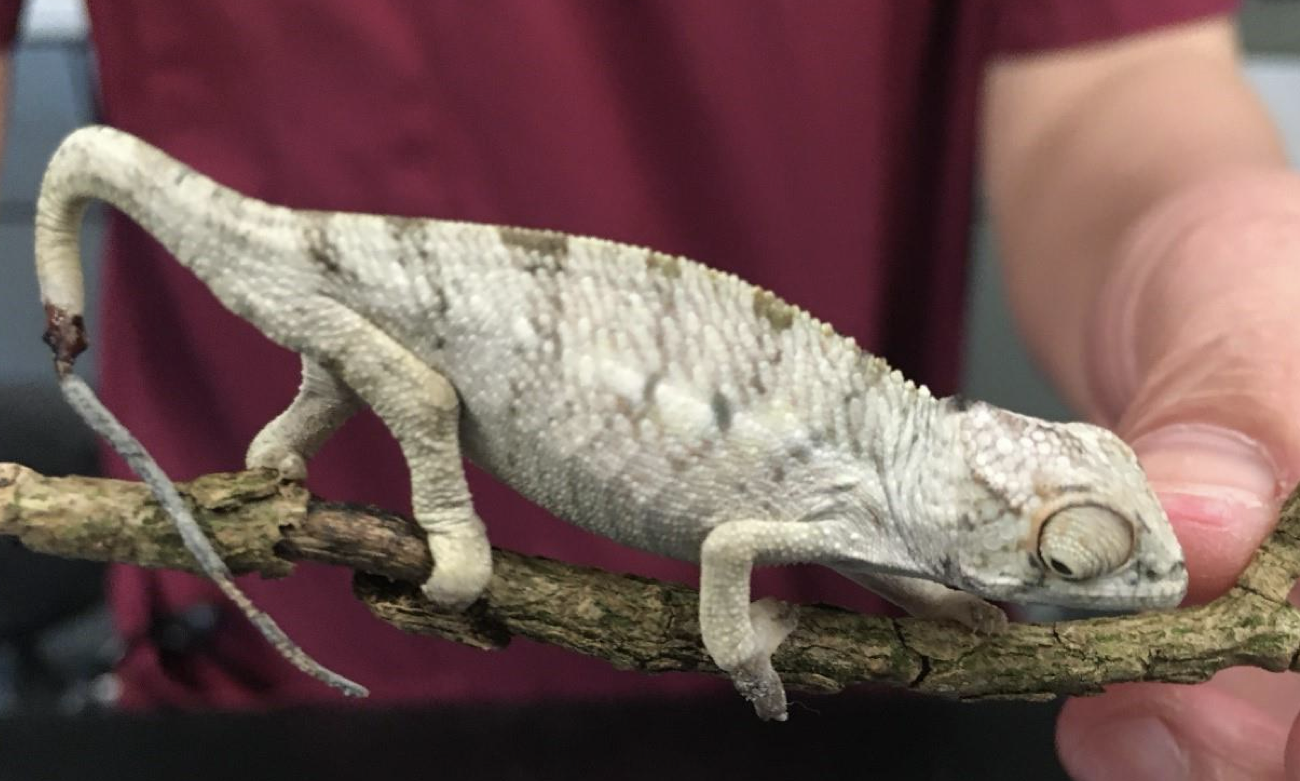
What should you do in this picture?
amputate the tail

What should we do for this turtle?
amputation the leg
What is the causative agent of Snake mites?
Ophionyssus natricis
What is the most common ectoparasite of snakes and lizards?
Ophionyssus natricis
What can snake mites be a vector for?
other pathogens (ex. IBD virus)
Where do snake mites live?
hide in the gular fold, around eyes, in mouth or other discrete areas
eggs laid in environment
How do snake mites develop?
eggs laid in environment
nymphs and adults can feed on reptiles
13-19 day life cycle
large numbers can develop quickly in warm and humid environments
What are the clinical signs of snake mites?
Dysecdysis, increased bathing, self trauma, anemia
How do you diagnose snake mites?
microscopic examination of parasite
How do you treat snake mites?
Ivermectin - DO NOT USE IN CHELONIA (fatal paralysis)
Fipronil - spray environment and wipe snake weekly for 6 weeks
What are the clinical signs of Dysecdysis?
retained shed found over body, often around digits of lizard and spectacles in snakes and some lizards (leopard geckos)
What is the etiology of Dysecdysis?
Inappropriate husbandry, no inappropriate water sources, humidity too low, no enclosure furniture to rub against and remove shed, hypovitaminosis
primar skin disease (eg. wounds, parasites)
systemic disease
How do you diagnose Dysecdysis?
PE, history, can test for Vit A levels with liver biopsy etc, but often response to treatment confirms diagnosis
How do you treat Dysecdysis?
improve husbandry, appropriate water sources, Aid shed removal, extreme care doing this - GA sometimes required, Vitamin A supplementation, systemic treatment for underlying disease
What are the clinical signs of skin trauma?
Erythema, inflammation, bleeding, discharge, dermis, muscle or even bone exposure
What is the etiology of skin trauma?
inappropriate husbandry (heat lamp with no protective cage)
cohabitants or live prey eating predator
often can have secondary infections
How do you diagnose skin trauma?
imaging pending depth, bacterial and fungal culture
How do you treat skin trauma?
analgesia, GA and debride wound with closure if appropriate or manage as open wound
topical antiseptic and protecting wound
systemic antimicrobials based on culture
How would you premedicate a reptile for surgery?
NSAIDs, local, morphine?
How would you induce a reptile for surgery?
propofol or alfaxalone - intubate, uncuffed, appropriate length
How would you maintain anesthesia for a reptile for surgery?
actively warm, ventilate (IPPV 6 breathes/minute), monitor (doppler 30-40 bpm, capnography, pulse ox, reflexes), reverse - room air not oxygen
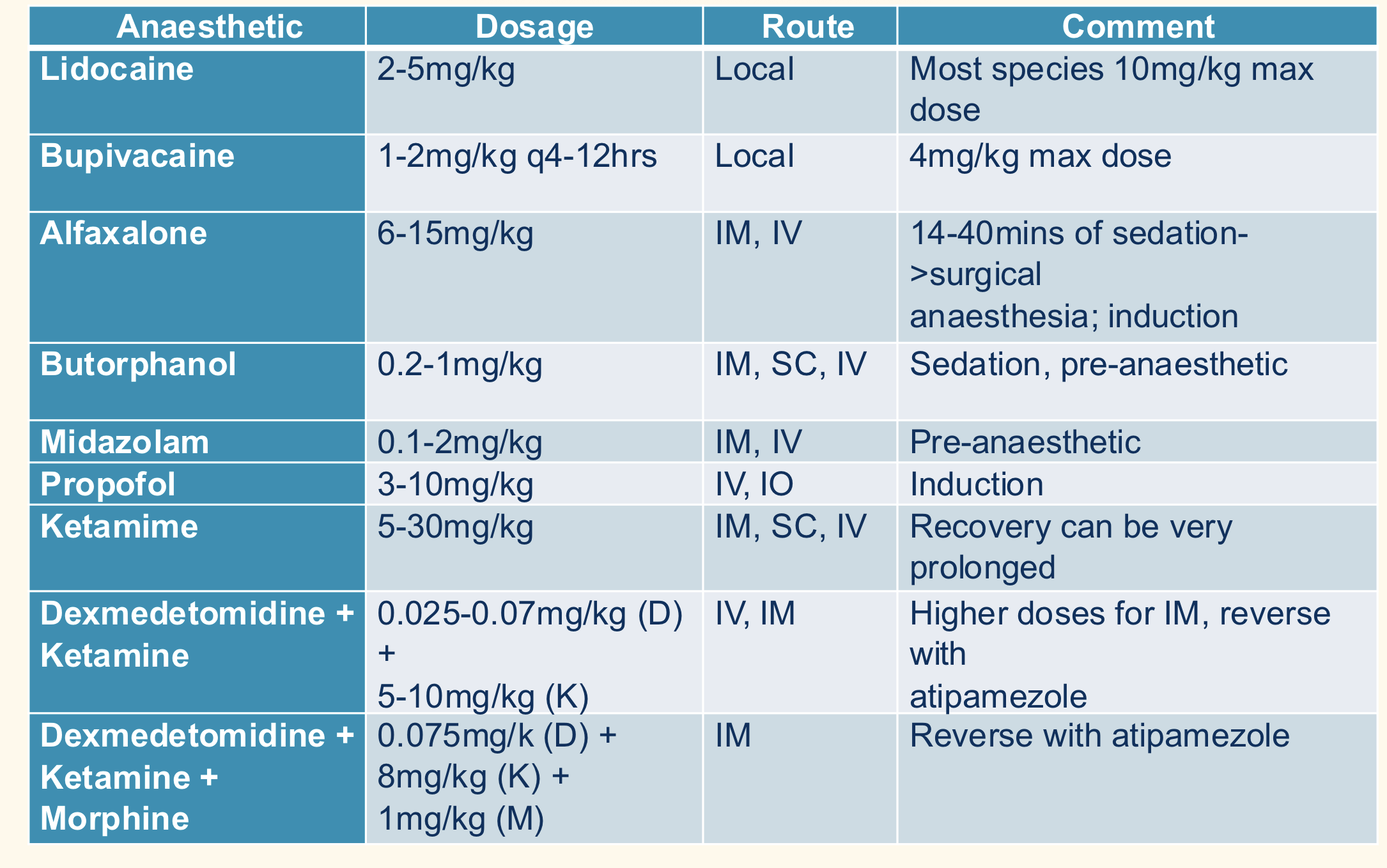
Look at these anesthetics
im sleepy now
How do you intubate reptiles?
small, short ET tubes, push up central neck to elevate glottis
How do you ventilate a reptile?
T piece for mechanical ventilation
6 bpm
higher rate during induction
What is the etiology of skin masses?
infection (viral, bacterial or neoplasia)
How do you diagnose skin masses?
ALWAYS biopsy or FNA
provide hemostasis - some masses are filled with cysts or aneurysms
C and S - special stain such as ZN
What are pyogranulomatous masses in tortoises?
mycobacteria
How do you remove a mass and provide wound care?
When closing the skin you often need to use an everting pattern (horizontal mattress)
some will need medical managed to allow granulation
What must you remember about reptile skin when doing a mass removal?
very little subcutis
decreased skin elasticity
Who is typically affected by aural abscesses?
tortoises and aquatic turtles
What is the cause of aural abscesses?
poor husbandry and diet
hypovitaminosis A leads to squamous metaplasia → ascending infection via Eustachian tube (usually aerobic gram negatives)
Where do aural masses form?
solid in tympanic cavity
What is septicemic cutaneous ulcerative disease (SCUD)?
skin bacterial or fungal infection
historically referred to as shell rot
What are the clinical signs of septicemic cutaneous ulcerative disease (SCUD)?
erythema, ulceration, sloughing of skin
What is the etiology of septicemic cutaneous ulcerative disease (SCUD)?
poor husbandry
commonly seen in more aquatic species
How do you diagnose septicemic cutaneous ulcerative disease (SCUD)??
bacterial and fungal culture
systemic assessment for underlying disease
husbandry review
How do you treat septicemic cutaneous ulcerative disease (SCUD)?
surgical debridement if indicted
topical antiseptic cleaning and treatment
systemic treatment
What is Nannizziopsis spp.?
fungal infection common in bearded dragons and green iguanas, previously known as yellow fungal disease
How do you diagnose Nannizziopsis spp.?
histology and PCR
How do you treat Nannizziopsis spp.?
no definitive treatment found
antifungals based on culture is needed often for extended periods of time
What is the causative agent of Snake fungal disease?
Ophidiomyces ophiodiicola
Where do you typically find snake fungal disease?
N. America, some in Europe
What are the clinical signs of Snake fungal disease?
skin lesions - mild dermatitis with hyperkeratosis, scabs and crusts, SC nodules, premature ecdysis, extensive lesions - death
How do you diagnose Snake fungal disease?
skin biopsies or swabs - PCR, histology or fungal culture
How do you treat Snake fungal disease?
antifungal medications (terbinafine), supportive care