PSYC 1020 - CH. 10
 Call Kai
 Learn
 Practice Test
 Spaced Repetition
 Match
 Flashcards
 Knowt Play
1/18

There's no tags or description
Looks like no tags are added yet.
19 Terms
balance theory
people want harmony in their relationships and opinions about other people to be consistent and balanced
a group of three people (relationship triangle) is balanced when all relationships are positive, all are negative, or two are negative and one is positive
ex. You like your friend and both of you dislike the same person. Your relationships are balanced because you share a positive relationship with each other and negative feelings toward that person.
cannon bard theory
the theory that an emotional experience and the body’s physical reaction happen at the SAME time when something emotional happens
ex. fight or flight / You see a snake, and you feel afraid while your heart starts beating faster.

cognitive dissonance
the uncomfortable feeling of knowing 2 of your beliefs conflict each other, or when your actions dont match your beliefs
ex. You believe that lying is wrong, but you lie to avoid getting in trouble. You feel uncomfortable because your action conflicts with your belief

display rules
socially learned rules about which emotions are appropriate to show in different situations
ex. You receive a disappointing gift but smile and say thank you because you have learned that showing disappointment might be considered rude.
ideal affect
basically what people emotionally want to feel or emotions that cultures normalize and especially value
ex. one person wants to feel excited and energetic at a party, while another prefers to feel calm and peaceful
PRIMARY emotions
basic emotions that are inborn/innate, help with survival, and are experienced across cultures
ex. fear helps you react to danger, while disgust can help you avoid harmful things
SECONDARY emotions
more complex emotions shaped by experience, thinking, and social understanding
ex. jealousy can involve a combination of fear, anger, and sadness
drive
a psychological state in which creating arousal motivates you to satisfy a need
INTERNAL state that motivates you
passion
ex. feeling hungry motivates you to find food
incentives
EXTERNAL objects or goals that motivate behaviours
ex. the promise of a prize motivates a student to enter a competition
EXTRINSIC vs. INTRINSIC motivation
EXTRINSIC
doing something to get an external reward or achieve an outside goal
INTRINSIC
doing something because you enjoy it or find it personally satisfying and not for an external rewards
ex. creating an extravagant painting to get a good grade vs. painting because you enjoy creating art, even when nobody is grading you
homeostatis
body’s tendency to keep its internal conditions balanced and stable
ex. when your body gets too hot, you swear to cool yourself down
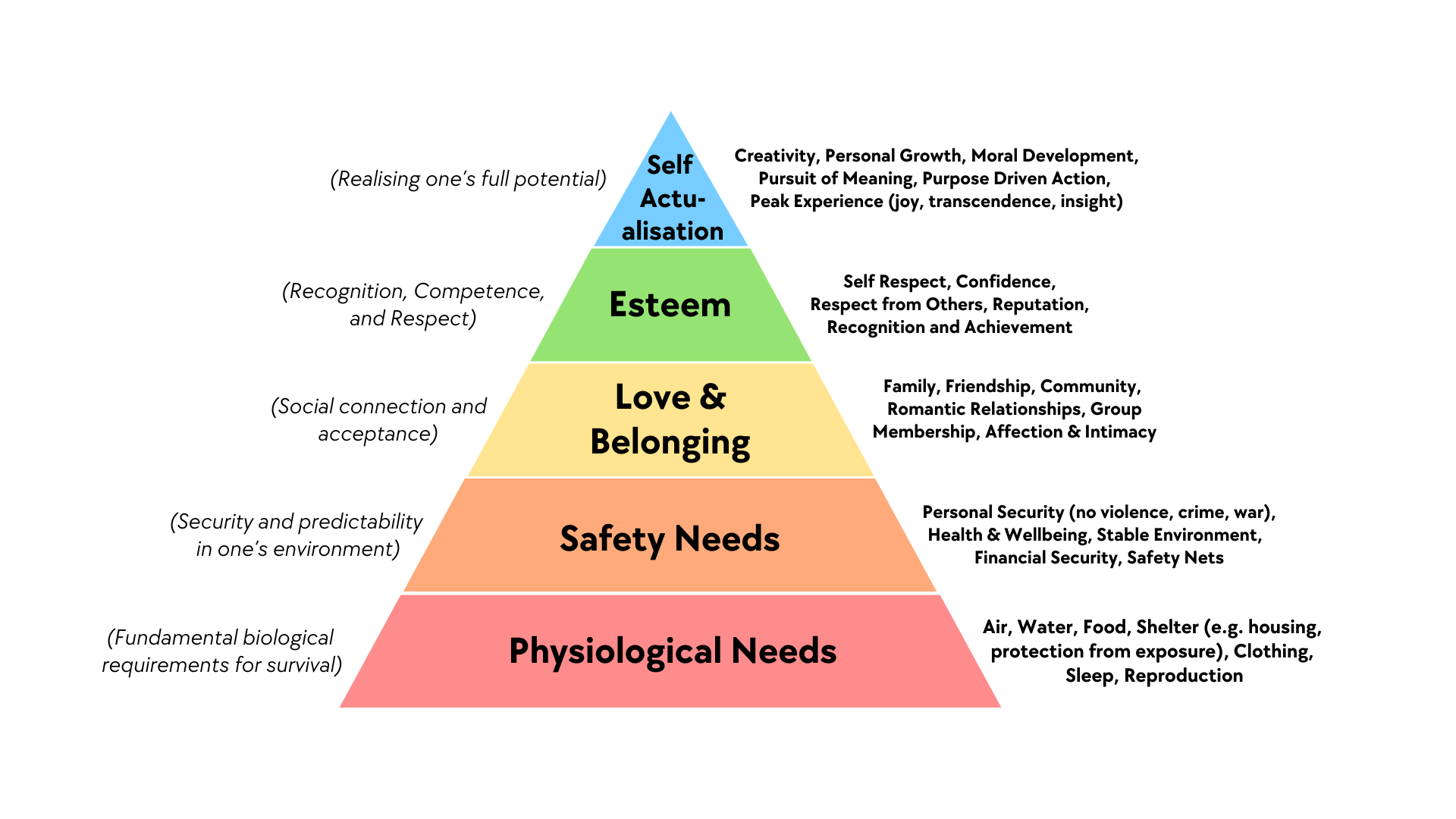
need hierarchy
maslow’s theory that basic needs like food and safety, must be met before people can focus on higher needs like belonging, esteem, and personal growth
ex. To experience personal growth, people must fulfill their biological needs, feel safe and secure, feel loved, and have a good opinion of themselves first before reaching personal growth
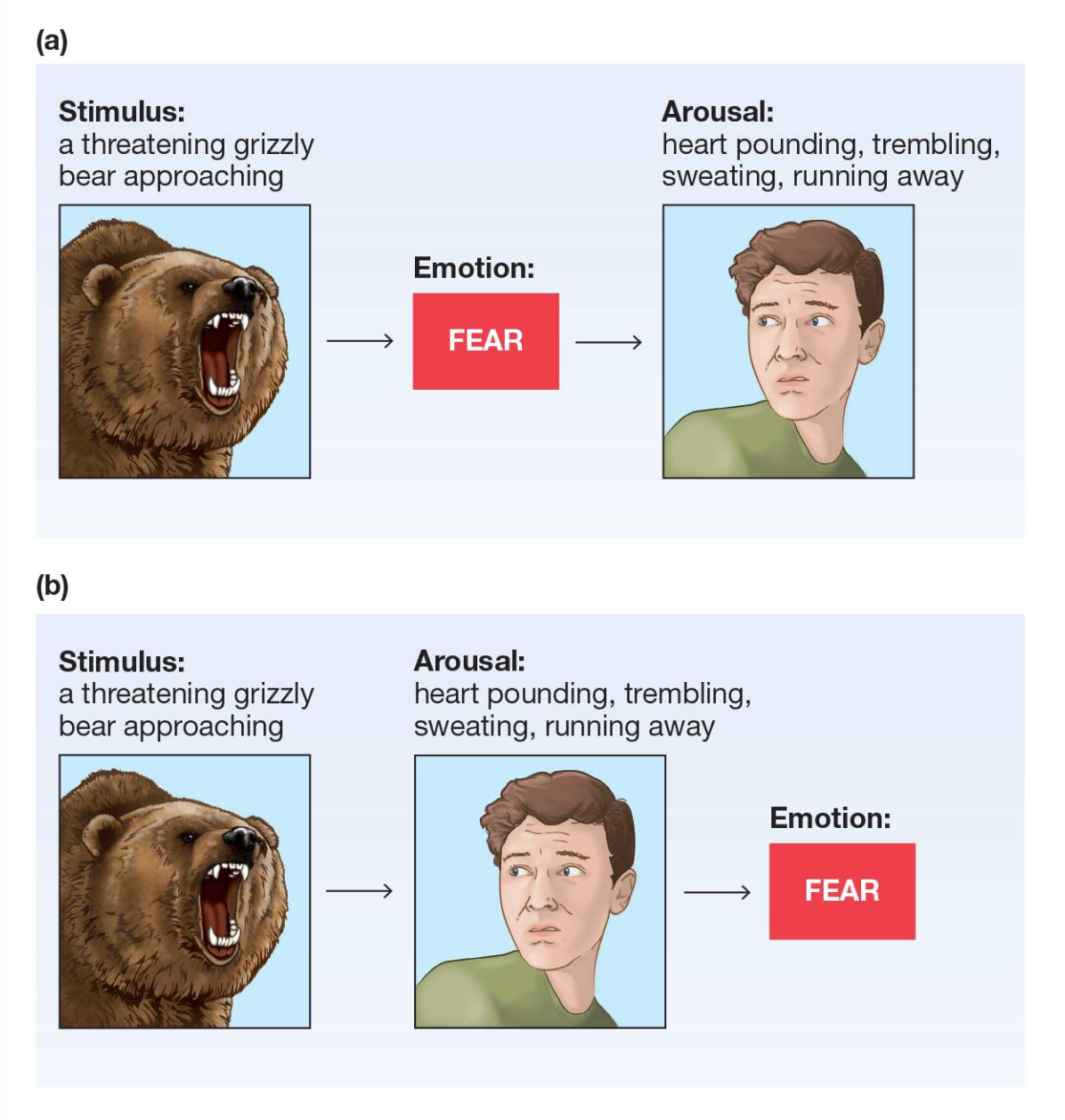
james lange theory
experiencing an emotion after noticing and interpreting your body’s physical reaction to something
our bodies responding to emotions
ex. (a) According to the intuitive view of emotion, an experience—such as seeing a grizzly bear—produces an emotion and then a bodily response.
(b) According to the James-Lange theory, bodily perception comes before the feeling of emotion. For example, when a grizzly bear threatens you, you begin to sweat, experience a pounding heart, and run (if you can). You put together the sight of the bear with these responses to realize that you are feeling fear.
two factor theory
A theory of emotion stating that the label applied to physiological arousal results in the experience of an emotion
emotions comes from physical arousal combined with your interpretation or label of that arousal
ex. When seeing the bear in the shed, you experience arousal. Your knowledge that bears are dangerous leads you to attribute the arousal to the bear and label the arousal “fear.”

yerkes-dodson law
performance on a challenging task improves as arousal increases to a moderate level, but too much arousal makes performance worse
performance on challenging tasks increases with arousal only up to a moderate point. After that,
performance is impaired by any additional arousal
ex. As the Yerkes-Dodson law predicts, students perform best on exams when feeling moderate anxiety. Too little anxiety can make them inattentive or unmotivated, while too much anxiety can interfere with their thinking ability. Likewise, athletes have to pump themselves up for their events, but they can fall apart under too much stress.
self actualization
reaching your potential by fulfilling your personal goals and aspirations
achieving your best self
ex. someone who dreams of becoming an artist develops their skills and pursues a career in art
self efficacy
the expectation that your efforts will lead to success, and how much you believe you can do it successfully
Goals that are challenging but not unrealistic or overwhelming
believing what you can do is not necessarily what you’re actually capable of doing
HIGH EFFICACY
believing you can succeed at a task
LOW EFFICACY
doubting your ability to succeed at a task
self regulation
controlling and directing your behaviour to reach your goals
ex. students who want to be accepted to graduate school often must stay home and study while their friends are out having fun
SMART goals
goals that are Specific, Measurable, Achievable, Realistic, and Time bound
S - specific, what do you want to do
M - measurable, how can you track your progress
A - achievable, is the goal realistic
R - relevant, make sure the goal matters to you
T - time bound, set a deadline or time frame