lipid lowering agents
 Call Kai
 Learn
 Practice Test
 Spaced Repetition
 Match
 Flashcards
 Knowt Play
1/73

There's no tags or description
Looks like no tags are added yet.
74 Terms
what are the major lipids in circulation
cholesterol
Triacylglycerols a.k.a triglycerides a.k.a TG
Cannot flow freely in blood at high levels
require “carriers
the four main types of lipoproteins
Chylomicron
Very Low Density Lipoprotein (VLDL)
Low Density Lipoprotein (LDL
High density Lipoproteins (HDL)
what are Chylomicron
• Carrier of dietary lipids from intestine to liver
• TG-rich, some Chol
function of Very Low Density Lipoprotein (VLDL)
• Carrier of lipids from liver to periphery
• TG-rich, some Chol
function of Low Density Lipoprotein (LDL)
• Carrier of lipids from liver to periphery
• Chol-rich, some TG
bad cholesterol
function of High density Lipoproteins (HDL)
Scavenge cholesterol from artery wall
good chol
What are lipoproteins?
Cholesterol and triglycerides are fats (lipids) that do not dissolve well in blood.
Therefore, the body packages them into particles called lipoproteins, which allow lipids to travel through the bloodstream.
The density order of lipoproteins
Chylomicrons < VLDL < LDL < HDL
fats and cholesterol travel through the body using two different pathways: name them
Exogenous pathway: Transports fats that come from food.
Endogenous pathway: Transports fats and cholesterol produced or packaged by the liver.
explain how the exogenous pathway works
Step 1: Dietary fats enter the small intestine
Step 2: Chylomicrons are formed - carry absorbed fat to adipose tissue (and ~muscle)
Lipoprotein lipases on endothelial cell surfaces liberates free fatty acid + glycerol
Chylomicron remnant taken up by the liver for processing
explain how the endogenous path way works
Cholesterol is synthesized in the liver
Liver packages TG and cholesterol into VLDL
VLDL carries these lipids to tissues, especially
adiposeLipoprotein lipases on endothelial cell surfaces
liberates free fatty acid + glycerolVLDL->IDL->LDL as FA are removed
LDL carries cholesterol to other peripheral
tissues; excess is taken up again by liverHDL carries excess cholesterol
scavenged from vessels and tissues back to
the liver
what two main types lipid disorders
Pancreatitis
Atherosclerosis
how does Pancreatitis occur and what happens in it
• Caused by elevated plasma Triglycerides
• Primarily elevated chylomicrons, VLDL as well
what happens in Atherosclerosis and what is it caused by

What is thrombosis?
Thrombosis means a blood clot forms within a blood vessel.
For example, an atherosclerotic plaque in a coronary artery may rupture.
This exposes material that activates platelets and the clotting system.
A thrombus forms and may partially or completely block blood flow.
what is Coronary artery thrombosis
A blood clot forms in a coronary artery.
This can interrupt oxygen delivery to the heart muscle and cause a myocardial infarction (heart attack).
what is Carotid artery thrombosis
A blood clot forms in the carotid artery, which supplies blood toward the brain.
The clot can reduce blood flow or produce emboli that travel into smaller cerebral arteries.
This can cause an ischemic stroke.
What is an embolism?
An embolism occurs when material travels through the bloodstream and becomes lodged in a smaller blood vessel.
diff categories for treating hypercholesterolemia
Non-pharmacological approach
Cholesterol synthesis inhibition
Cholesterol Absorption Inhibitor
Bile Acid Binding Resins
Inhibition of LDL receptor degradation
ex for Non-pharmacological approach
dietary fibers
ex of Cholesterol synthesis inhibitio
statins
Cholesterol Absorption Inhibitor ex
Ezetimibe
Bile Acid Binding Resins ex
Cholestyramine, Colestipo
Inhibition of LDL receptor degradation ex
Evolocumab
why is dietary fiber important
Dietary fiber is dietary material that is resistant to the action of
digestive enzymes (soluble and insoluble)
what are two types of fibers
• Insoluble fiber is indigestible
• Sources: vegetables, whole grains
• Soluble fiber can be broken down by gut microbiome
• Sources: oatmeal, oat bran, fruit
what does soluble fiber bind to?
Soluble fiber binds cholesterol in gut to reduce absorption
100g/day oat bran diet (cereal and muffins) for 3 weeks
- Total Cholesterol ↓ 19%
- LDL Cholesterol ↓ 23%
examples of statins
Rosuvastatin, atorvastatin, simvastatin, lovastatin etc
what first line drug for pateints at risk of coronary heart disease
Statins - Drug of 1 st choice for most patients with risk for coronary heart disease (atherosclerosis)
what does statins do
• ↓ LDL levels
• Also see modest HDL increase and ↓ triglyceride levels.
• In patients with coronary artery disease – decreased cardiac
morbidity, mortality, reduced incidence of stroke
• Benefits seen with initial high or normal cholesterol
what is the mechanism of actions of statins. how do they inhibit cholesterol synthesis

Adverse Effects of Statins
Common: Upper GI, headache, rash, sleep problems
Myopathy and rhabdomyelysis increased with combination therepay
What is CYP3A4?
CYP3A4 is an enzyme belonging to the cytochrome P450 (CYP450) family.
It is found primarily in the:
Liver
Small intestine
Its job is to metabolize many medications, including certain statins. - Cytochrome P450 3A4 (CYP3A4) metabolizes some statins by first pass metabolism
what can grape juice do
CYP3A4 inhibitors can increase stain bioavailability
(Eg. in grapefruit juice)
What does a flat dose-response mean?
most of a statin's LDL-lowering effect occurs at the starting dose.
When you increase the dose, LDL cholesterol decreases further, but the additional reduction is relatively small.
what does pleiotropic mean?
Pleiotropic means that a medication has additional effects beyond its primary intended effect.
Pleiotropic Effects of Statins
May increase bone formation - possible osteogenic effect - May reduce fracture risk in elderly patients
Hypertension -may lower blood pressure
Dementia – may decrease risk of developing dementia
Investigations ongoing wrt benefits for renal function, asthma, cancer
May be related to availability of protein prenylation substrates*
out of atovastatin, rosuvastatin and simvastatin which is more potent
rosuvastatin produces the greatest LDL reduction at the same 10 mg dose. - More potent per milligram than simvastatin

what is Ezetimibe
Ezetimibe is a cholesterol-lowering medication that works in the small intestine, rather than directly inhibiting cholesterol synthesis in the liver.
Its main purpose is to decrease LDL cholesterol.
effects of ezetimibe
• ↓ LDL levels ~15-20% when used alone
• No effect on triglycerides or fat-soluble vitamins
• Compensatory ↑ in hepatic cholesterol synthesis
Mechanism of action of ezetimibe a cholesterol absorption inhib
• Inhibits a cholesterol transport protein: NPC1L1 (Neimann-pick C1-like1) located at the intestinal brush border
• ~50% ↓ in dietary and biliary cholesterol absorption
• Less cholesterol delivered to liver via chylomicrons
Why combine Statins + Ezetimibe?
1. Ezetimibe ↓ cholesterol uptake in gut but get compensatory ↑ in cholesterol synthesis in liver
2. HMG-CoA reductase inhibitors block this increased synthesis
Adverse effects of Ezetimibe
• Elevated liver enzymes
• Liver injury (rare)
• Severe cutaneous adverse reactions (rare)
red flag Interactions: with ezetimbibe
Bile acid sequestrants interfere with Ezetimibe’s actions
what are Bile acid binding resins
They are positively charged, non-digestible substances that bind negatively charged bile acids in the intestine.
An important feature is that they are not absorbed into the bloodstream. They work locally in the gastrointestinal tract.
ex Cholestyramine, Colestipol
when are they effective
• Effective alone for mild to moderate elevated LDL-C
• Effective with statins for highly elevated LDL-C
mechanims for Bile acid binding resins
• Binds bile acids in intestinal lumen
• Prevents reabsorption (norm 95%)
• Bile acids excreted rather than recycled
what must the liver do to produce new bile salts
• Increases LDL receptors to take up more cholesterol - Reduces circulating LDL
Increases de novo cholesterol synthesis - Can be prevented by combining with statins
Why combine:Statin + Bile acid
binding resins
1. BABRs ↓ cholesterol uptake in gut but get compensatory ↑ in cholesterol synthesis in liver
2. HMG-CoA reductase inhibitors block this increased synthesis
Adverse effects: Bile acid binding resins
• Common: constipation, nausea, bloating (fiber may help)
• Rare: hyperchloremic acidosis (a form of metabolic acidosis), reduced renal function
• May increase VLDL levels by unknown mechanism
Contraindications for Bile acid binding resins
Concern | Why? |
|---|---|
High triglycerides | ↑ VLDL/TG → pancreatitis risk |
Complete biliary obstruction | No normal bile delivery to intestine |
Drug interactions | ↓ Absorption of other medications |
Fat-soluble vitamin deficiency | ↓ Vitamins A, D, E, K absorption |
Severe constipation | Can worsen GI symptoms |
what are Inhibitors of LDL receptor degradation
• Injectable antibody to PCSK9 (Proprotein convertase subtilisin kexin type 9)
• Newest therapy for patients that can’t meet target LDL-C with Statins
• High cost (~$600/month; compare Atorvastatin @ ~$15/month
ex Evolocumab, Alirocumab (Health Canada approved 2015
Mechanism of action for Inhibitors of LDL receptor degradation
• Antibody travels to liver, binds PSCK9, inhibits its interaction
with LDL receptor
• This interaction normally targets LDL-receptor for degradation
• Result is more LDL-receptor and therefore less circulating LDL
Adverse effects: of Inhibitors of LDL receptor degradation
• Pain/swelling/bruising at injection site
• Muscle pain/soreness
• Flu-like symptoms
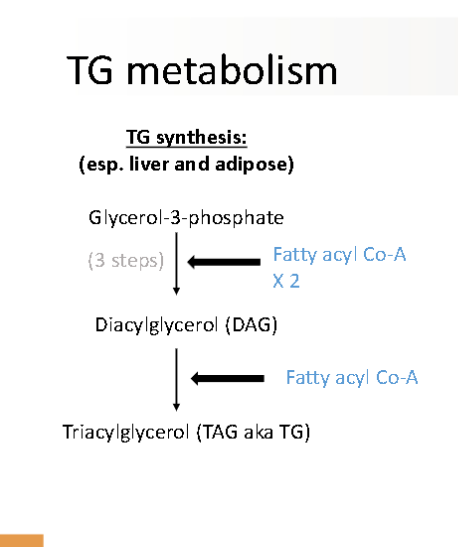
TG synthesis
TG lipolysis
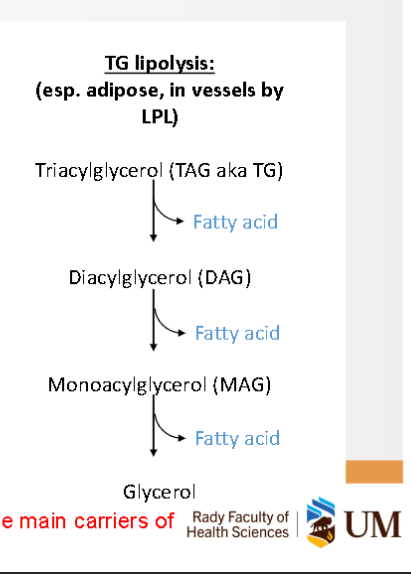
what are the main carriers of TGs in circulation
Chylomicrons and VLDL are the main carriers of
TGs in circulation
Where can we decrease triglycerides?
Decrease dietary triglyceride intake
Decrease VLDL production by the liver
Increase lipoprotein lipase (LPL) activity
Drugs for Hypertriglyceridemia
1. Non-pharmacological approach – Dietary fiber, fish oil
2. Increase lipoprotein lipase – Fibrates
3. Reduce VLDL secretion – Niacin
Clinical goal: Reduce plasma TG
which type of Dietary Fiber can be broken down
Both types of fiber appear effective
• Insoluble fiber is indigestible
• Soluble fiber can be broken down by gut microbiome
Problems and adverse effects of dietary fibers
• Need large amounts
• Gaseous distention
• Long term effect and safety unknown
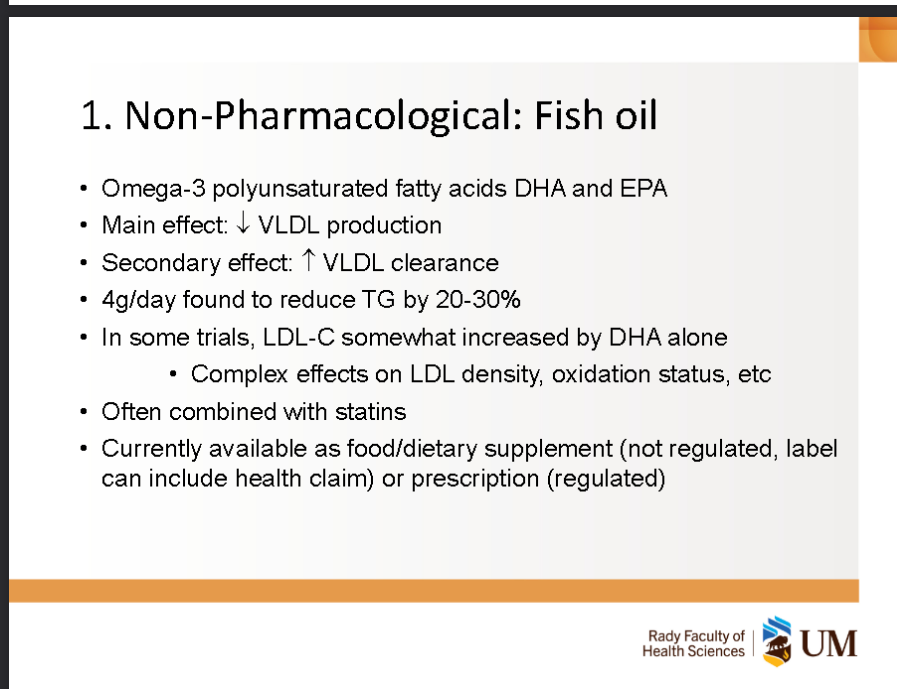
main affects of Fish oil (Omega-3 polyunsaturated fatty acids DHA and EPA)
• Main effect: ↓ VLDL production
• Secondary effect: ↑ VLDL clearance
• 4g/day found to reduce TG by 20-30%
Problems and adverse effects: of fish oils
Gastrointestinal complaints, nausea
Mechanisms of action proposed for Fish oil

what is Fibrates and what are its primary affects
Lipoprotein Lipase
• Fibric acid derivatives
• Activator of the nuclear receptor PPARα (peroxisome proliferator activated receptor-α)
• Primary effect: ↓ triglycerides
• Secondary effects: may ↑ HDL, ↓ LDL
examples of fibrates
Fenofibrate, Gemfibrozil
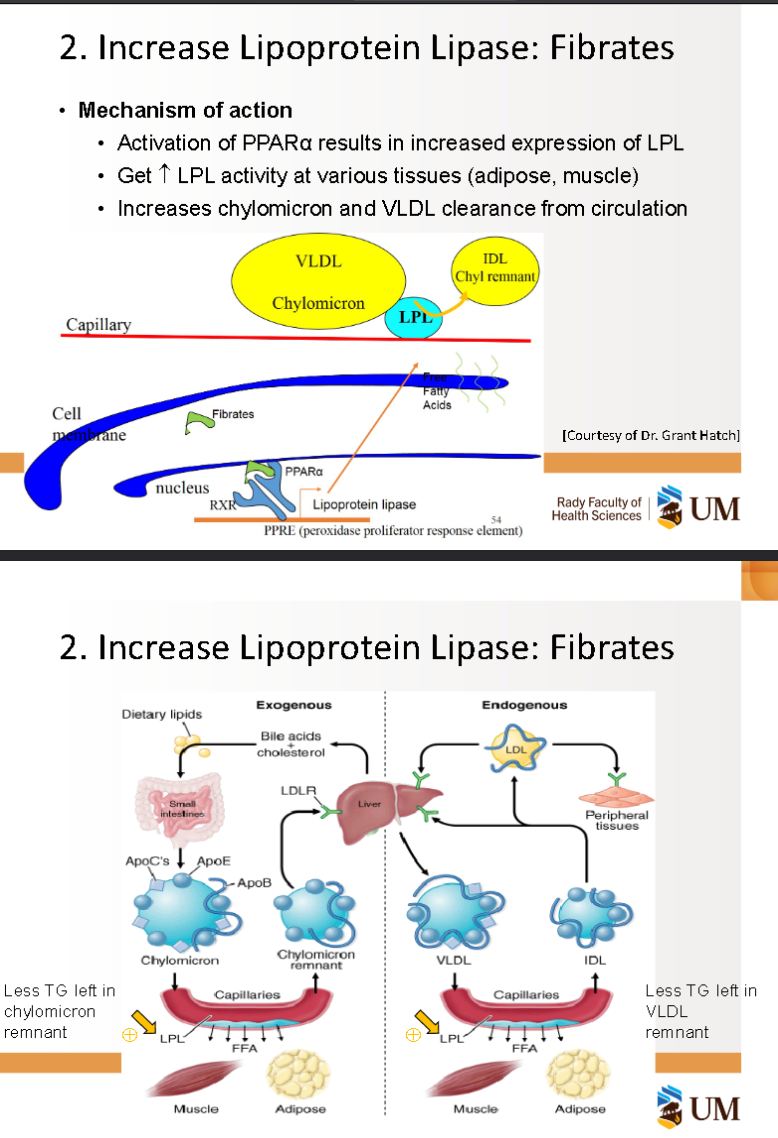
Mechanism of action for fibrates
• Activation of PPARα results in increased expression of LPL
• Get ↑ LPL activity at various tissues (adipose, muscle)
• Increases chylomicron and VLDL clearance from circulation
Adverse effects of fibrates
• Common: GI upset, rash and abdominal pain
• Less common: headache, itching, low libido, dizzy, drowsy, joint pain, glucose dysregulation, gallstones
• Rare: toxicity to kidneys, liver, pancreas, muscle, reproductive organs
Contraindications of fibrates
• Severe liver, gallbladder or kidney dysfunction
• Smoking? (see ↑ cardiac events)
what is Niacin
Niacin, also called nicotinic acid, is a water-soluble form of vitamin B3.
Your slide emphasizes that nicotinic acid is NOT the same as nicotinamide (niacinamide).
Both are forms of vitamin B3, but nicotinamide does not have the same lipid-lowering effects as pharmacological doses of nicotinic acid.
How does niacin affect lipid levels?
• Low dose: ↑ HDL and ↓ TG
• Higher dose: also ↓ LD
Reduce Hepatic VLDL Secretion
Mechanisms of action ofr niacin

Adverse effects of niacin

Contraindications for niacin
• Chronic liver disease
• Severe peptic ulcer (may exacerbate)
• Severe gout
• Overt diabetes