Thursday 12/3 Quiz 38: Schizophrenia (p684-690)
 Call Kai
 Learn
 Practice Test
 Spaced Repetition
 Match
 Flashcards
 Knowt Play
1/15

There's no tags or description
Looks like no tags are added yet.
16 Terms
Schizophrenia
THIS is one of the most severe and debilitating psychological disorders.
It can be experienced as an acute condition, meaning it appears suddenly and is severe. It could instead also be chronic, meaning it is long-developing.
The fundamental symptom of schizophrenia is disordered, distorted thinking, often demonstrated through delusions and/or hallucinations. These symptoms are the cause of psychosis.
Listed in DSM 5 under "schizophrenic spectrum disorders"
Hallucination
False perceptions: Vivid perceptions in the absence of any sensory stimulation.
Symptom of schizophrenic spectrum disorder
Hearing voices is the most common THIS for schizophrenia, but THESE may appear in any of the five senses.
Delusion
A belief that has no basis in reality
Symptom of schizophrenic spectrum disorder
Examples of these in common in schizophrenia are delusions of persecution and delusions of grandeur
Delusions of persecution
A paranoid belief that people are out to get you. You fear being harmed by another individual or group.
Very common in schizophrenia, which leads schizophrenics to not trust anyone that tries to help.

Delusions of grandeur
A belief that you enjoy greater power - exceptional abilities, wealth, or fame -and influence than you actually do
Common in schizophrenic spectrum disorder

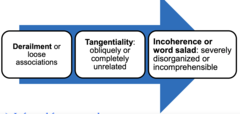
Disorganized thinking or speech
A symptom of schizophrenic spectrum disorder - Like speaking in a "word salad" where the person shifts topics, makes up words, answers questions with unrelated things, or speaks in rhymes
Is considered a POSITIVE symptom because the behavior has been ADDED on when it should not be there
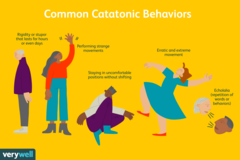
Catatonia
disordered movement found in schizophrenic spectrum disorder
THIS may be experienced as excitement, which would then be a positive symptom.
OR THIS may be experienced as a stupor, which would then be a negative symptom manifestation.
Positive Symptoms of Schizophrenia
Symptoms that are present for someone with schizophrenia, but not present for someone normal
Positive means ADDED
1 Delusions
2. Hallucinations
3 Disorganized thinking (speech)
4 Catatonia - if manifested as excited behavior

Negative Symptoms of Schizophrenia
Lack of a typical behavior- Symptoms that are not present for someone with schizophrenia, but present for someone normal
SUBTRACTED symptoms
1 Flat Affect - diminished emotional expression
2 Catatonia - if manifested as a stupor

flat affect
The display of little or no emotion—a common negative symptom of schizophrenia

Causes of schizophrenia
genetic or biological link, such as prenatal virus exposure, or a high level of dopamine
Diathesis Stress Model
This is the idea that schizophrenia is brought out by a combination of nature and nurture: Some people are born with biological predispositions (nature). However, only environmental stress can provide the circumstances under which the biological predisposition for illness can express itself (nurture).
In simple terms, it's like having a seed (genetic marker) that only grows into a plant (schizophrenia) when it's watered by stress
Often applied to schizophrenia, but can be more widely applied to many psychological and physical disorders.
Helps explain why identical twins, which have the exact same genetic makeup, only have 50% chance of developing schizophrenia if one twin already has it. In this case only one twin would have had enough stress to bring it out.

Dopamine Hypothesis
High levels of dopamine are associated with the positive symptoms of schizophrenia.
Tardive Dyskinesia
Schizophrenia is caused by too much dopamine, so anti-psychotic medication takes away dopamine, but then it feels like Parkinson's: Muscle tremors and stiffness caused by taking the anti-psychotics
Leads some schizophrenics to refuse medication
De-institutionalization
The release of those with mental disorders from mental hospitals for the purpose of treating them in their home communities - leads to decentralized treatment
Thanks to new drug therapies and policies to move patients out, the populations of state mental hospitals have declined dramatically since the 1950s
Also leads to more homeless schizophrenics that won't take the medication

decentralized treatment
A model of mental health care where services are distributed across various community-based locations rather than being centralized in large institutions like hospitals or psychiatric asylums.
This approach aims to provide care in more accessible, local settings, making it easier for individuals to receive treatment within their own communities.