Igneous
 Call Kai
 Learn
 Practice Test
 Spaced Repetition
 Match
 Flashcards
 Knowt Play
1/65

There's no tags or description
Looks like no tags are added yet.
66 Terms
igneous rocks
involves melting of rock - melted rock cools to form igneous rock
lava vs magma
when magma reaches the surface it is called lava - lava is only found on Earth’s surface
extrusive igneous rocks
formed on earth’s surface
bubbles of gas in rocks
volcanic
basalt + obsidian
fine grained —> cools quickly
explosive extrusive rocks - pumice
frothy, light coloured, interconnected ice bubbles
explosive extrusive rocks - pyroclastic
formed from fragments of chilled magma
intrusive igneous rocks
formed anywhere under ground - eg magma storage chamber, overlying feeder system
plutonic
coarse crystalline —> cools slowly
3 intrusive igneous rock types
granite
diorite
gabbro
intrusive - granite
coarse grained
plagioclase and k feldspar
quartz
intrusive - gabbro
dark, black
why do melts form
650-1200C temps of molten rock near Earth’s surface
if 2 grains hit each other with enough energy, they join together - generates kinetic + heat energy
can get big enough to form asteroids
3 sources of earth’s internal energy
kinetic energy of impacts
latent heat of fusion
radioactive elements
geotherm define
temperature profile of how temp changes with depth
how to melt the mantle by disrupting the geothem
add heat
reduce pressure
change chemical composition
how does decompression (adiabatic melting) occur
sudden decrease in pressure so molecules have freedom to move around
relatively high temp in relation to amount of room
melting occurs
tectonic movement at mid ocean ridges
decompression melting forms mid ocean ridge material
ocean crust pulls apart
tectonic movement at continental rifts
continental crust pulls apart and becomes an ocean
volatile assisted melting
changes composition of systems
change in pressure + temp of ice
the more pure the material, the more energy required to melt
eg. H2O, CO2
subsolidus (volatile induced) melting
colligative (physical) property of solution depends on solute concentration that includes:
freezing point depression
boiling point elevation
vapour pressure lowering
osmotic pressure
→ freezing point of pure water remains 0C, but melting point can change by adding solvents (eg. salt)
pressure + temp relationship graphs along tectonic belt - normal graph, mid ocean ridge, hotspot, subduction zone
melting is not restricted to the mantle
increased pressure + heat in crust can cause partial melting

3 ways to describe texture of rocks and relationship between grain size and cooling
glassy
finely crystalline (aphanitic)
coarsely crystalline (phaneritic)
—> lower rate of cooling —> bigger grain size
the longer it takes to grow, the bigger the crystal
cooling rates + graph for crystals and cooling rate
controlled by thermal gradient
affects crystal size

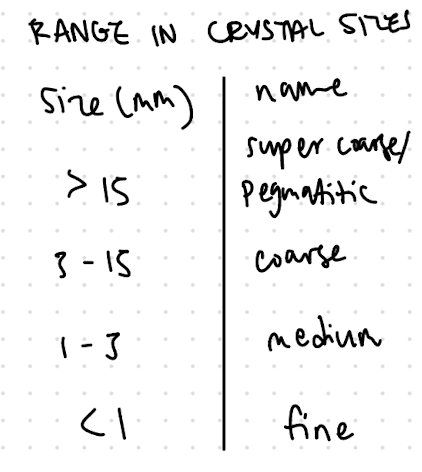
range in crystal sizes and names draw out table
magmatic intrusion define
when magma forces its way through the crust from
existing planes of weakness
stopping of country rock
2 (or 3) types of magmatic intrusion

plutonic complex define
solidified ‘blob’ shaped large magma chamber in crust
batholiths define
collection of plutons forming a big mass of intrusive rock
9 main elements composition of igneous rocks
Si
O
Mg
Al
Fe
Ca
K
Na
H
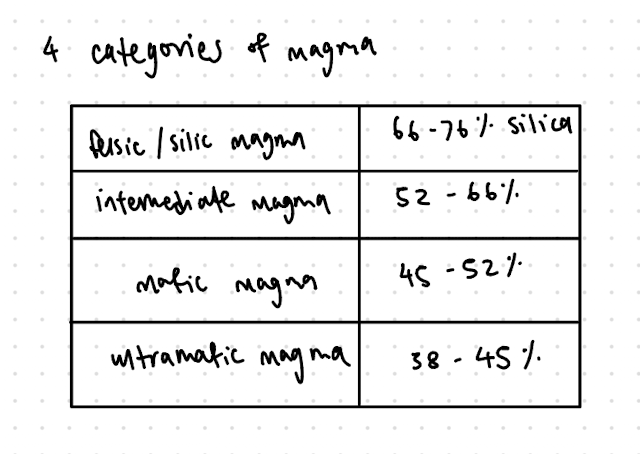
4 categories of magma and %silica in them
8 key minerals to know, what composition group they are in, what colour, what silicate structure
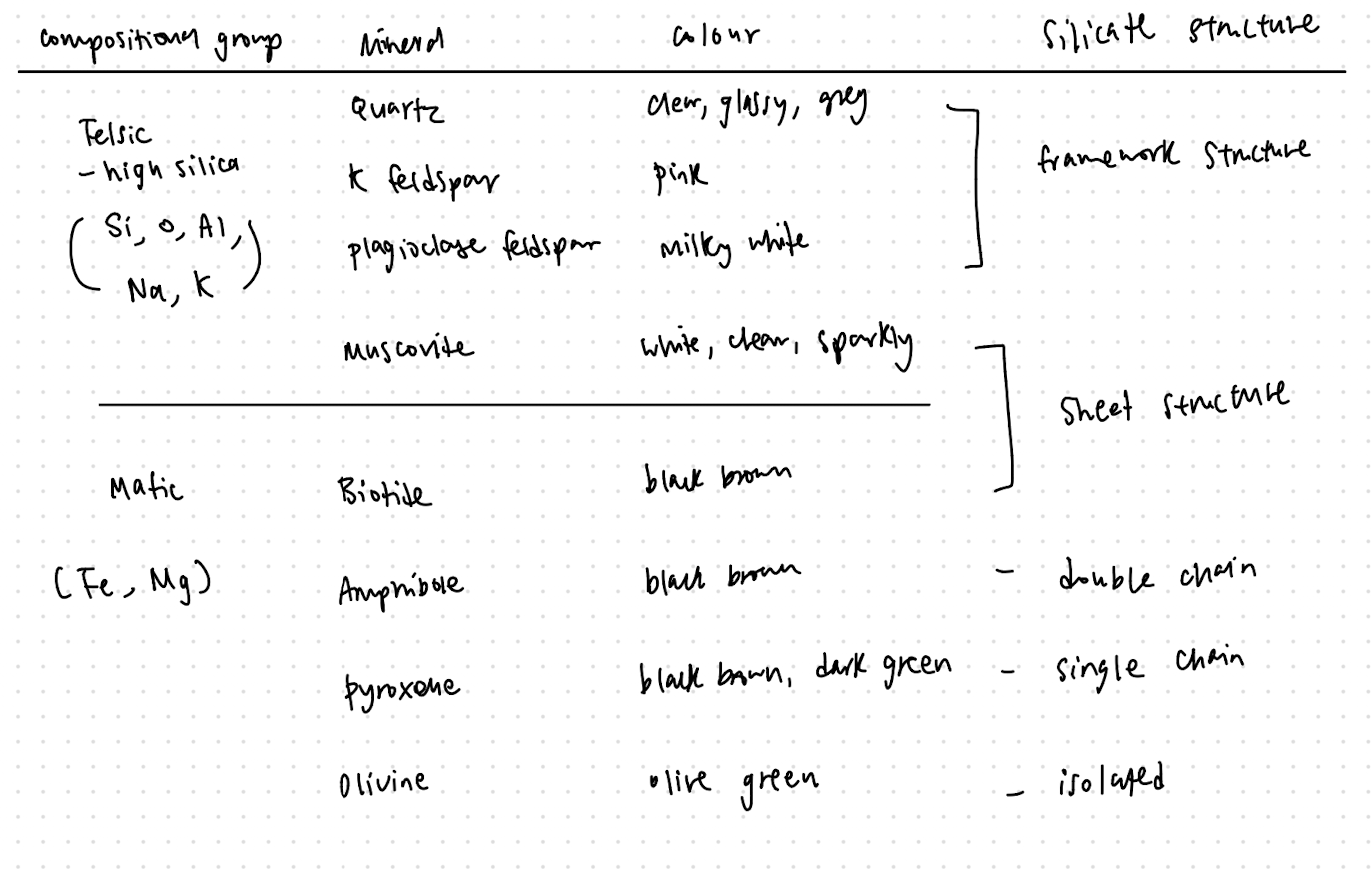
felsic vs mafic vs intermediate
felsic - quartz, feldspars, muscovite
mafic - olivine, pyroxene, amphiboles
intermediate - mix mafic and felsic
granite
felsic
quartz, K fedlspar
coarsely crystalline
rhyollite
feldspars, quartz
finely crystalline
same chemical composition as granite
obsidian
glassy
black
conchoidal features - looks like shell pressed in it
same chemical composition as granite
gabbro
mafic
pyroxene
calcium rich plagioclase
olivine
basalt
mafic
black
calcium rich plagioclase
olivine
finely crystalline
diorite
intermediate
calcium rich plagioclase
hornblende
biotite
quartz
NO K FELDSPAR
andesite
intermediate
hornblende
minor quartz
same composition as diorite
peridotite (iherzolite)
ultramafic
olivine
ortho+clinopyroxene
NO QUARTZ
komatiite
ultramafic
lots of olivine
some pyroxene
Hekla volcano Iceland
range of igneous rocks
lava flows, pumice, scoria, ash
fractional crystallisation
fractional crystallisation
removing certain elements of the system changes relative abundances of all elements in the system
eg. if mafic minerals crystallise/sink, liquid becomes RELATIVELY more felsic
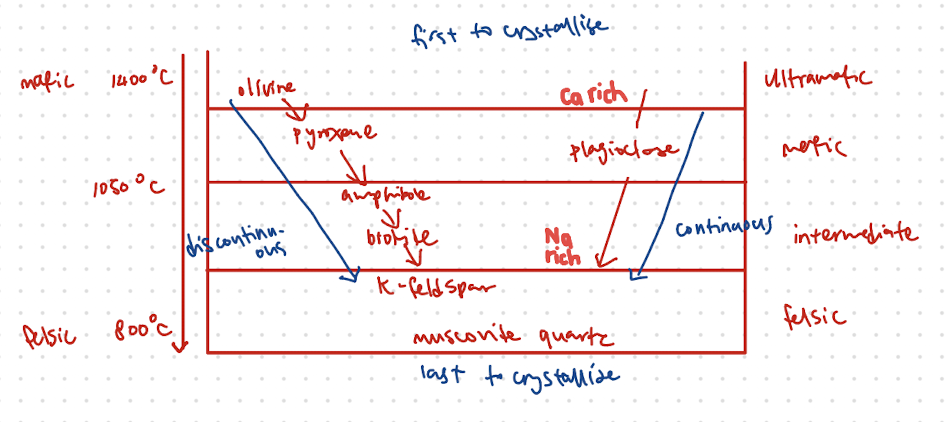
draw Bowens reaction series
maps sequence of silicate minerals crystallising
continuous - single mineral family (plagioclase) that shifts composition - goes from calcium to sodium rich
discontinuous - distinct mineral families
partial melt
when only a portion of the minerals melt so the rest of the rock is left as solid state - more silica/felsic rich composition than parent rock
viscous/sticky volcanic eruptions
gas particle dispersion flows out of vent
felsic
runny volcanic eruptions
less complex striation, more Fe, Mg - bonds can be broken
mafic
what does volcanic eruption type depend on
composition (SiO2 content)
temp
gas content
crystal content
basaltic lava flow
mafic
flows rapidly and for long distances
andesitic lava flow
high SiO2
mounts around vents - flows slowly and does not travel far
solidified lava can block vent and build up pressure - creates ‘blocky lava’ (rubble)
effusive lava flow
rhyolitic magma
lava is so viscous it forms domes
lava hardly flows
3 types of pyroclastic eruptions describe
pyroclastic fall
ash + tephra deposit
pyroclastic flow
flowing ash, burning hot gas and bombs, looks like spun glass
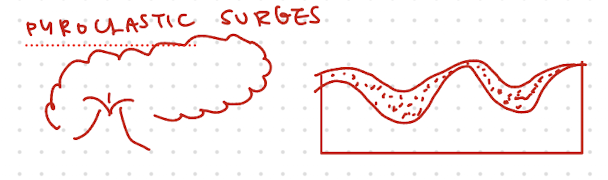
pyroclastic surge
fast moving, turbulent
denser + wetter pyroclastic flow
tectonic movement - mid ocean ridge ocean rifting
plates move away, magma upwells to fill gap
melting occurs from decompression - mafic melt
continuous movement of oceanic rocks
limited fractional crystallisation - short residence time because melt gets replaced after every eruption, melts are mafic so it crystallises quickly

tectonic movement - continental rifting
continental plates rift apart from each other
decompression melting - mantle rock moves upwards so pressure decreases but temp stays the same
mafic melt, but remelting of crust makes felsic lava (bimodal volcanism)

tectonic movement - subduction zones
destructive margins
denser oceanic plate subjects under less dense continental plate
flex melting - melting point decreases with addition of volatiles
felsic + intermediate melts
explosive eruptions

tectonic movement - continent - continent collision
melt comes from crust, often too viscous/deep in crust so melt does not escape
forms granite plutons/batholiths
forms fold mountains

tectonic movement - hotspots
mantle plumes
melting caused by increased heat flow + decompression
mostly basaltic
forms shield volcanoes at oceanic mantle plumes
tectonic movement - flood basalts
vast eruptions of basaltic lava
associated with initial pressure/collision of mantle plume
can lead to breakup of continents - causes rifting
fissure eruption of basalt
eg. Columbia river flood basalt
eg. Skye - mantle plume under Western Scotland - caused opening of N Atlantic - Greenland and Scotland rifting apart
volcano define
:erupting vent through which molten rock surfaces
:mountain built from magmatic eruptions
—> result of tectonic activity
volcanic materials
lava flows - molten rock that moves over ground
pyroclastic debris - fragments blown out of volcano
volcanic gas - expelled vapour and aerosols
physical properties of magma
rheology: physics of how a substance flows/deforms
viscosity: resistance of fluid to gradual deformation under stress - how sticky the flow is
what controls the way magma/lava deforms/flows
composition of melt - higher SiO2 content, more strong the structure
crystal content - presence of crystals increases viscosity of melt
gas content - if gases are dissolved, viscosity decreases, if gases exsolve (separate out of melt), bubbles act against flow, viscosity increases
temperature - increased temperature = decreased viscosity
magma composition
1-9% magma is gas
H2O, CO2, SO2+H2S (rotten egg smell)
magma composition controls gas content
felsic has more gas, mafic has less gas
volcanic deposits - pyroclastic debris
explosive eruptions
material accumulates from clouds of debris
pyroclastic fall
ash/tephra deposits
fallout from eruptive cloud
falls like snow
copies existing topography

pyroclastic flow
avalanches of hot ash that race downslope
collapsing eruption clouds
fills topography - poorly sorted
eg Mt Vesuvius, Mt St Helens, Mt Pelee

pyroclastic surges
like pyroclastic flow but denser and wetter
covers topography - immediately sorted
other volcaniclastic deposits
fragmented igneous material
lahars - water rich debris flow