**Quiz 1 Integumentary: Epidermis and Dermis Honors know dermis & epidermis layers & characteristics
 Call Kai
 Learn
Learn Practice Test
 Spaced Repetition
 Match
Match Flashcards
 Knowt Play
1/33

There's no tags or description
Looks like no tags are added yet.
Name | Mastery | Learn | Test | Matching | Spaced | Call with Kai | Chat |
|---|
No analytics yet
Send a link to your students to track their progress
34 Terms
Skin
Single largest organ in the body

2 layers of skin
Epidermis, dermis

Hypodermis
Lies under the skin, not considered part of skin. Consisting of loose connective tissue/fat and binds skin loosely to subadjacent tissue

Skin functions
Protect the body from injury & infection; regulates body temp/sweats & vessels dilate/constrict; absorbs UV radiation (synthesis of Vitamin D crucial for bone development); contains receptors for touch, temperature, and pain stimuli from the external environment

Epidermis
Superficial, avascular layer of the skin. Composed predominantly of keratinocytes. Regenerates approx every 30 days

Fingerprints
Unique to each person. Dermis makes layers for the epidermis to produce fingerprints

Melanin
Is a pigment that protects against tissue damage caused by UV radiation

Carotene
the orangish pigment of the skin from liver damage or newborn infants
Hemoglobin
gives reddish pink color and carries oxygen

Layers of the epidermis (from deep to superficial)
Startum basale, stratum spinosum, stratum granulosum, stratum lucidum, stratum corneum

Stratum basale
the deepest layer of the epidermis consisting of stem cells capable of undergoing cell division to form new cells quickly. It receives nutrients and contains keratinocytes, melanocytes, and Merkel cells.

Stratum spinosum
A layer of the epidermis that provides strength and flexibility to the skin. The spiny layer just above the stratum germinativum layer.

Stratum granulosum
a layer of the epidermis that marks the transition between the deeper, metabolically active strata and the dead cells of the more superficial strata

Stratum lucidum
Clear, homogenous layer, contains dead keratinocytes; found ONLY in PALMAR and PLANTAR skin

stratum corneum
The superficial layer of the epidermis. Cornified layer, thin over body surface Dead keratinocytes, 5->20 layers that slough off continously

2 layers of the dermis
Dermal papillary layer, dermal reticular layer

reticular layer
Deeper layer of the dermis that supplies the skin with blood vessels, glands, lymphatics and nerve cells.

Dermal papillary layer
Membranes of ridges and grooves that attach to the epidermis creates fingerprints. The upper/superficial part of the dermis.

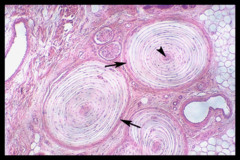
Paccinian corpuscles (honors)
Sensory receptors that respond to heavy pressure.
Bare nerve (honors)
Senses temperature-cold and heat

Ruffini (honors)
stretch receptors

Meissner's corpuscles (honors)
type of nerve ending in the skin that is responsible for sensitivity to light touch.

Apocrine glands (honors)
produce true sweat plus fatty substances and proteins; found in the axillary (armpit) and anogenital areas of the body

Sebaceous gland
small oil-producing gland present in the skin of mammals. Usually attached to hair follicles and release a fatty substance, sebum located throughout the body except the soles of the feet and the palms of the hands.

Arrector pili muscle
smooth musle attaching at an oblique angle to the dermal sheath surrounding a hair follicle; contraction of the smooth muscle elevates the hair--> formation of goose bumps = depression of the skin where the muslce attaches to the papillary layer of the dermis

Jaundice
Yellow coloring due to liver damage and newborns

Pallor
white coloring due lack of blood flow

Cyanosisi
blue color due to lack of oxygen

Erythema
red color due increased blood flow, allergies, inflammation and fever

Bronzing
bronze color caused by Addison disease.

Hematoma
blue/purple color from bruises can be caused by hemophilia

sudoriferous glands/sweat glands functions include...
cooling, cleaning the ear, preventing overheating, indicating sexual readiness, evaporating which is cooling, and prving nourishment to infants.

sebaceous glands (which are throughout the body except the soles of the feet & palms of hands) problems include...
whiteheads(blocked sebum), blackheads (oxidized whiteheads), acne (Inflammation), and seborrhea (flaky scales)

mammary glands
Specialized organs in mammals that produce milk to nourish the young/Exocrine gland
