AH 3175E M3: Water Quality
 Call Kai
 Learn
 Practice Test
 Spaced Repetition
 Match
 Flashcards
 Knowt Play
1/152

There's no tags or description
Looks like no tags are added yet.
153 Terms
WASH Services
Water, Sanitation, and Hygiene
Safety of water quality for drinking, cooking, personal hygiene, and domestic use
John Snow
John Snow = physician during 1800s London
Miasma Theory = diseases spread through “bad air” = popular
Mapped cholera cases → cases around public water pump
Pump handle removed → ↓Cholera case incidence

#4 greatest engineering feats of 20th century?
Water Supply & Distribution
Associated w/ ↓Typhoid cases
Cuyahoga River in Cleveland, Ohio
Cuyahoga River = repeatedly caught on fire
1969 River Fire → Nationwide environmental action

DDT
DDT = poly-chlorinated biphenyl (PCB) = insecticide for mosquito control (post WWII)
Focus of Silent Spring (1962)
Hudson River = Superfund hazardous waste site

Clean Water Act
Clean Water Act = restore + maintain chemical, physical, and biological integrity of Nation’s waters
What does Clean Water Act require of industrial wastewater?
Must meet Secondary Treatment Standards
Biochemical oxygen demand (BOD)
Total suspended solids (TSS) removal
pH
Point source
Point source = single identifiable source of pollution from which pollutants are discharged
Pipe
Ditch
Ship
Factory Smokestack
Clean Water Act applies to Point Sources of Pollution
Safety Drinking Water Act
Safety Drinking Water Act = set national health-based standards to protect natural + anthropogenic contaminants in nation’s public drinking water supply
Safe Drinking Water Act regulates private wells: (True/False)
False
Primary Standards of Safe Drinking Water Act
Primary Standards = protect public health by limiting contaminant levels in drinking water of public water systems
6 Categories of Drinking Water Contaminants
MDD, ROI
Microorganisms
Disinfectants
Disinfection byproducts
Radionucleotides
Organic chemicals
Inorganic chemicals
4 Microorganisms under regulation by primary standards of Safe Drinking Water Act
Cryptosporidium
Giardia lamblia
Legionella
Viruses (enteric)
4 Disinfection Byproducts under regulation by primary standards of Safe Drinking Water Act
Black Cat HaT
Bromate
Chlorite
Halo acetic acids (HAAS)
Total Trihalomethanes (TTHMs)
3 Disinfectants under regulation by primary standards of Safe Drinking Water Act
Chlorine disinfect systems = utilized in U.S. municipal water treatment systems
Chloramines (Cl2)
Chlorine (CL2)
Chlorine dioxide (ClO2)
How many inorganic chemicals are under regulation by primary standards of Safe Drinking Water Act?
4 examples
16
Arsenic
Chromium
Fluoride
Lead Nitrate
How many organic chemicals are under regulation by primary standards of Safe Drinking Water Act?
7 examples
53
Benzo(a)pyrene (PAHs)
Chlorobenzene
2,4-D
Dichloromethane
Dioxin
Polychlorinated biphenyls (PCBs)
Vinyl chloride
4 radionucleotides under regulation by primary standards of Safe Drinking Water Act
Alpha particles
Beta particles
Radium 226, 228
Uranium
Radionucleotides
Radionucleotides = radioactive forms of elements
Secondary standards of Safe Drinking Water Act regulate ___ and ____
Cosmetics (skin, tooth color)
Aesthetics of water (taste, color, smell)
Secondary Standards of Safe Drinking Water Act are federally enforceable: (True/False)
FALSE = because they only impact cosmetics of individual and aesthetics of water
Clean Water Act: Year, Summary, Model
1972
Regulates discharges into waterbodies to:
Protect human health
Support economic + recreational activities
Provide health habitat for fish, plants, wildlife
Primary Prevention = Environmental Stewardship Model = intervention occurs b/w individual & environment → prevents problem BEFORE exposure
Safe Drinking Water Act: Year, Summary, Model
1974, 1996
Established “Maximum Contaminant Levels” = no known/anticipated adverse effects on human health occurs
Margin of Safety
Secondary Prevention = Public Health Model = intervention of disease, health condition, or injury to during early symptomatic stage
Why are Cryptosporidium and Giardia occasionally responsible for outbreaks in municipal drinking water systems?
Cryptosporidium + Giardia = resilient to disinfection
Guinea Worm Disease
Soaking blister in water source → worm bursts → releases larvae into water → water fleas
Person drinks water containing water fleas → larvae released into stomach
Worms grow in body (lower limbs)
Worms form blister → bursts → worm = exposed
Cycle continues

5 objectives of drinking water treatment
Potable water = safe to drink, protective of human health, not necessarily esthetically pleasing
Palatable water = esthetically pleasing, chemicals do not threaten health
Meets regulatory criteria/standards
Without interruption
@ reasonable cost
What are 4 components of Water Quality?
Physical appearance = color, taste and odor, temperature, turbidity
Chemical agents = Metals (lead), Inorganic compounds (fluoride), Organic compounds
Microbial agents = viruses, bacteria, protozoa, helminths (worm-like parasites)
Radionuclides (physical agents) = radium, uranium, plutonium
Which water source typically has constant composition? Groundwater or Surface Water?
Groundwater = stays fairly constant
Surface Water = varies
Which water source typically has a variable composition?
Surface water = changes w/ rainfall, runoff, season, and temperature
What is the typical mineral content of groundwater?
High → Groundwater = high in minerals (long contact w/ soil + rock)
What is the typical mineral content of surface water?
Low → Surface water = less contact w/ soil + rock
Which source typically has low turbidity (more clear) and low color?
Groundwater = naturally filtered through movement in soil
Which source typically has high turbidity (more cloudy) and is colored?
Surface water = suspended particles + organic matter → high turbidity + color
What is the dissolved oxygen (DO) level in groundwater?
Low or none = Groundwater = cutoff from atmosphere → DO level = low/absent
What is true of dissolved oxygen in surface water?
Present = Surface water = exposed to the atmosphere → DO level = present
Which gases may be present in groundwater?
CO2 + H2S
Low-oxygen groundwater can contain dissolved CO2 + H2S
What is the typical hardness of groundwater?
High
Groundwater picks up Ca and Mg from rock and soil → high hardness.
What is the typical hardness of surface water?
Low
Surface water has low mineral content → low hardness
Which metals are typically high in groundwater?
Fe and Mn
Low-oxygen groundwater dissolves iron and manganese from the aquifer (underground layer of permeable rock, sand, or gravel that holds + transmits groundwater)
Which water source is more likely to have taste and odor problems?
Surface water
Biological activity and organic matter in surface water → taste and odor issues.
Clay, silt, and natural organic matter are characteristic of which water source?
Surface Water
Runoff carries clay, silt, and natural organic matter into surface water
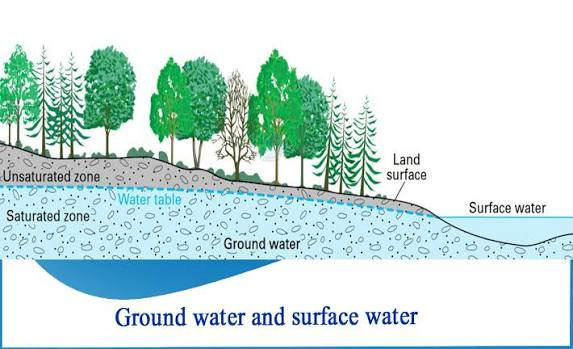
What is the major difference between surface water and groundwater?
Surface water = freshwater/saltwater collects & flows above ground in open bodies (rivers, lakes, streams, ponds, wetlands)
Groundwater = water that seeps from rainfall + snowmelt that is stored underground (tiny gaps, cracks, pores within rocks and soil) in aquifers
What are 2 major risks of surface water?
Exposure to microbes
Chemical exposure (organic chemicals)
What is the 1 major risk of groundwater?
Chemical exposure (both organic + inorganic chemicals)
5 steps to improve water quality
“Clowns Feel Silly For Donuts”
Coagulation
Flocculation
Sedimentation
Filtration
Disinfection
Coagulation
Coagulation (Chemical Feed) = addition of chemicals (aluminum sulfate) + polymers to to make particles “sticky”

Flocculation
Flocculation = promote collisions among sticky particles → ↑size → settle out
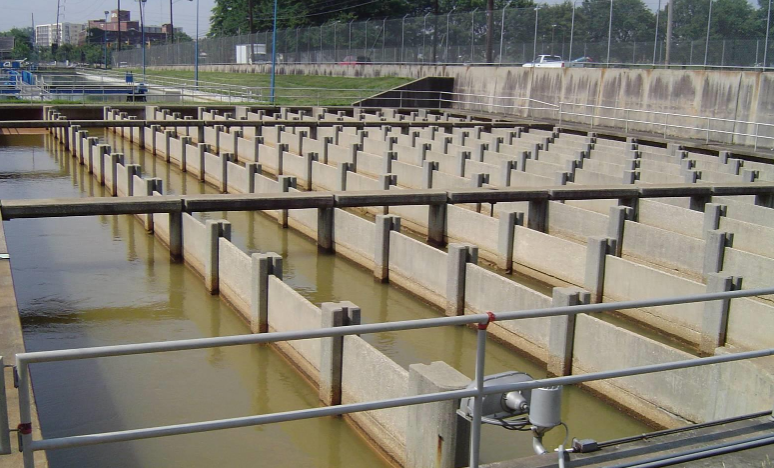
Sedimentation
Sedimentation = gravity causes suspended heavy particles to stink to bottom of tank

Filtration
Filtration (Granular Media Filtration) = polishing water by removing suspended particles by passing through layered bed of granular materials

Disinfection + Residual Disinfectant
Disinfection = inactivation of pathogenic microorganisms by adding disinfectant (+residual disinfectants in U.S.) in Clear Well
Residual disinfectant = small amount of chlorine left in treated water → prevent microbial growth in water distribution system
Which disinfectant is the most common in the US?
Free chlorine (Cl2, HOCl, OCl-) = most common disinfectant in the U.S.
What 3 chemical species make up "free chlorine"?
Cl2, HOCl, OCl-
Which pathogen is free chlorine NOT effective against?
Cryptosporidium
Free chlorine works against most pathogens but NOT Cryptosporidium
What are the main pros and cons of free chlorine regarding residual and byproducts?
Pro = Provides residual in distribution system
Con = Forms chlorinated DBPs
How is combined chlorine (NH2Cl, NHCl2) formed?
Cl replaces H in ammonia molecules
How does combined chlorine compare with free chlorine? (1 con + 2 pros)
Less effective than free chlorine, but provides residual and forms fewer DBPs
Which disinfectant is commonly used in Europe?
Ozone (O3) = Commonly used in Europe
What is a key advantage of ozone?
Very effective = converts non-degradable organisms → degradable forms
What are the 2 main disadvantages of ozone?
No residual (self-destructive)
Generates bromate = byproduct
What type of disinfectant is UV light?
Physical disinfectant (Direct energy transfer to material)
UV light is especially effective against what pathogen?
Cysts (e.g. Cryptosporidium)
Often missed by free chlorine
What are the 2 main disadvantages of UV light?
No residual
Cannot be mixed → solution
Which two disinfectants leave NO residual?
Ozone + UV light
3 disinfects you must know pros & cons for?
Free chlorine, ozone, and UV light
Which of the 3 free chlorine are disinfectants, and which is not?
Which of the 2 is a better disinfectant?
HOCl + OCl- = disinfectants; Cl- = NOT a disinfectant
HOCl = better disinfectant than OCl-
Neutral = more easily penetrate charged pathogen membrane

UV Irradiation
Disinfection of pathogenic microorganisms + photo-oxidation of contaminants by UV light
What 2 health risks have been linked to exposure to high levels of aluminum?
Alzheimer’s
Dementia
Where does aluminum accumulate in the body, raising concern about Alzheimer's?
Brain
What has the field debated about aluminum in drinking water?
Whether aluminum in drinking water affects neurodegenerative disorders
How has aluminum in drinking water been assessed, despite the debate?
Safe → Despite the debate, aluminum in drinking water has been assessed to be safe.
How are disinfection byproducts formed?
Disinfectants (chlorine, ozone) react w/ bromide and/or natural organic matter (decaying vegetation) in source of water
Different disinfectants produce different types or amounts of disinfection byproducts: (True/False)
TRUE
What are 2 key components of disinfection process?
Balancing microorganism inactivation
Minimizing disinfection by-product formation
How dominant are Trihalomethanes (THMs) compared to Halo acetic Acids (HAAs)
Trihalomethanes (THMs) = Predominant Class of DBP
Halo acetic Acids (HAAs) = Second Most Dominant Class
What are 3 main ways general population is exposed to disinfection byproducts (DBPs) in the body?
Ingesting of chlorinated water
Inhalation of chlorinated water vapor
Dermal absorption (bathing, swimming)
After exposure, how are DBPs absorbed, distributed, and metabolized in the body?
Rapidly absorbed
Widely distributed
Metabolized by the liver (hepatic) to reactive chemicals that can be toxic in large amounts
How are DBPs eliminated from the body, and how fast?
Metabolized to CO2 and exhaled within hours
Only a little excreted unchanged in urine
Half-lives under 4 hours
What are 2 health effects of exposure to DBPs?
CNS Depression + Hepatoxicity
Epidemiological studies demonstrate an association between consuming chlorinated tap water w/ DBPs and what 3 health outcomes?
Bladder cancer
Children born small for gestational age
Miscarriages
What 2 components must regulators balance the risk of in disinfection?
Pathogenic microbial agents
Disinfection Byproducts (DBP)

How does the addition of fluoride change remineralization of teeth, and what is the result?
Remineralization forms fluorapatite, a stronger tooth mineral that is resilient to further demineralization
The Grands Rapids Study (Michigan) of 1948-1963
Tracked impacts of fluoridated drinking water
Discovered 60% reduction of cavities among children exposed to fluoridated water since infancy
2 important achievements of 10 Great Public Health Achievements of 20th Century
Control of infectious diseases
Fluoridation of drinking water
3 main benefits of fluoridation of drinking water
Prevent tooth decay (safely + inexpensively)
Benefit universal benefit to all
Reduction of tooth decay in children + tooth loss in adults
What may make fluoridated water poisonous?
Dosage → cohort study being conducted to determine dosage safety
Water vending kiosks
Water vending kiosks = economical compromise from centralized distribution system
Small fee to take water home from kiosk for cooking + cleaning
Unique employment opportunities

Point-of-use (POU) Drinking Water Treatment
POU Drinking Water Treatment = water filtration or purification systems @ single, specific location
Point-of-use (POU) Drinking Water Treatment is effective as municipal water treatment and can remove harmful/toxic chemicals: (True/False)
FALSE
Municipal Water Treatment treats millions of gallons of water for an entire community at a large, centralized scale using a multi-step process
POU Drinking Water Treatment only treats water locally at a single tap or fixture for immediate function

What are 2 things that inactivate organisms synergistically?
UV radiation
Heat

Wastewater
Wastewater = water that has been used in homes, industries, and businesses that is not for reuse unless it is treated
Human waste
Microorganisms
Food scraps & oils
Soaps & personal care products
Chemicals (Medications, illicit drugs, metabolites)
Wastewater-Based Epidemiology (WBE)
Wastewater-Based Epidemiology (WBE) = analyzes wastewater to determine consumption of/exposure to chemicals or pathogens in a population
Used to monitor public health threats
Ex. COVID-19, Poliovirus, Cocaine
What 3 diseases (NOT WATERBORNE) can be monitored in human population through wastewater analysis?
Influenza A
Influenza B
RSV

What 5 components of concern can wastewater contain?
PBNST
Pathogens
Biological Oxygen Demand
Nutrients (N&P)
Suspended Solids
Toxic Chemicals
What is the purpose of wastewater treatment + 2 things it must do?
Improve quality of wastewater so that it can be discharged into a waterway without:
Seriously disrupting the aquatic environment
Causing human health issues (waterborne disease)
What are 3 common waterborne virus pathogens?
Rotavirus
Adenovirus
Norovirus
What are 7 common waterborne bacteria pathogens?
Shigella
Vibrio cholerae
Salmonella
Campylobacter
Enterotoxigenic E. coli
Enteropathogenic E. coli
C. difficile
Aeromonas

What are 2 common waterborne protozoa pathogens?
Cryptosporidium
Amoebiasis

What is the 4 chemical threat contained within wastewater before treatment?
Organic matter
Excess nutrients
Nitrate
Pharmaceuticals & Personal Care Products
What is organic matter?
What are the 2 demands that it is measured by?
Organic matter = broken down by microbes & chemistry through O2 consumption → ↓O2 content in water for wildlife → anoxic zones (water areas w/o oxygen)
Measured by:
Biological Oxygen Demand
Chemical Oxygen Demand
What is Biological Oxygen Demand?
Biological Oxygen Demand (BOD) = measure of amount of oxygen used by microorganisms to decompose nutrient waste