2.6 - asset classes: CISs
 Call Kai
 Learn
 Practice Test
 Spaced Repetition
 Match
 Flashcards
 Knowt Play
1/26

There's no tags or description
Looks like no tags are added yet.
27 Terms
what is a CIS
collective investment scheme
two type of CIS (in terms of regulation)
CIS - regulated CIS, marketable
UCIS - unregulated CIS, unmarketable
UCISs are…
…unauthorised
…not recognised by the local regulator
5 typical risks in a UCIS
liquidity
gearing
geo-political
currency
cost
liquidity risks
initial lock in periods eg. between 1 and 3 months
gearing (aka leverage) risks
using borrowing + derivatives to create gearing
geo-political risks
may expose investor to less politically stable parts of the world
currency risks
may have base currency other than the investors home
cost risks
performance related fees
what is a unit trust
a fund set up as a trust rather than as an ordinary compnay
show the structure of a unit trust
.

what is a trust deed
an agreement made between the fund manager and the trustee - like a rulebook for the fund
what is the manager’s role
market units
manage assets
maintain record of units
what is the trustee’s role
protect unit holder’s interests
take title of underlying assets
create/cancel units
so what happens to your money when you invest in a unit trust
you give the fund money, you receive units in return
the manager invests the pooled money
the trustee safeguards the assets + protects your interests
the value of the investments hopefully rise, meaning that the value of your units should also hopefully rise
what is NAV
net asset value
how is NAV calculated
assets minus liabilities
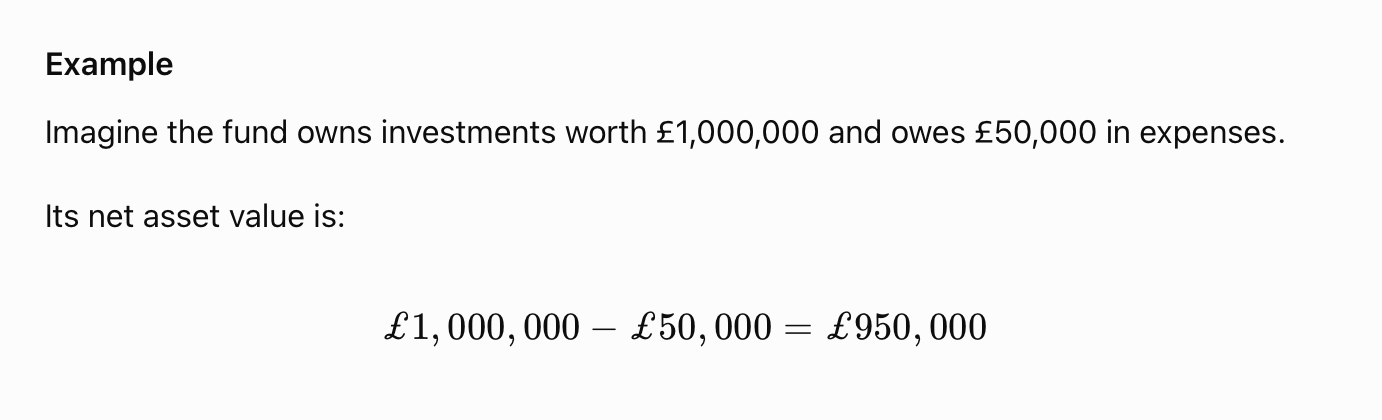
how is NAV per unit calculated
NAV of portfolio over number of units in issue
what is a valuation point
the specified time at which the fund values its investments to calculate the unit price
eg. at noon each business day
3 types of charges in a CIS
initial charge —> fee for when you first invest
exit charge (aka dilution levy) —> fee for selling or redeeming your investment
management charge —> ongoing fee for fund management
open vs closed ended funds
open ended:
variable size - can create and cancel units/shares based on demand
units priced directly at NAV per share
sell back to fund to exit
liquid underlying assets
closed ended:
fixed shares through one IPO
units priced through supply + demand on stock exchange
must sell on secondary market to exit
illiquid underlying assets - uses gearing to amplify returns
what is an OEIC
open ended investment company
like a unit trust but set up as a company, not a trust, so you buy shares, not units
3 main parts of an OEIC
they work in a similar way to how they all did on the unit trust setup

what is an ITC
investment trust company
a type of closed ended fund whose shares are traded on the stock exchange and which invests in a portfolio of assets
when the price on the stock market is different to the NAV what do we refer to that as
a discount if the market price is below NAV per share
a premium if the market price is above NAV per share
what is an ETF
exchange traded fund
tracks an index (eg. FTSE100 or something more sector specific)
many ETFs are…
…open ended
BUT you can trade them on exchanges usually