ANP130: Exam 3
 Call Kai
 Learn
 Practice Test
 Spaced Repetition
 Match
 Flashcards
 Knowt Play
1/124

There's no tags or description
Looks like no tags are added yet.
125 Terms
Functions of the Skeletal System
helps maintain homeostasis
support
protection
movement
electrolyte balance
blood formation (bone marrow)
Axial
skull
hyoid
vertebrae
ribs
sternum
Appendicular
scapula
lower limbs
upper limbs
clavicle
hip bones
Process
bony prominence
Condyle
rounded knob at joint
foramen
hole
spine
sharp, narrow process
fossae
depression/indentation
facet
flat surface at joint
head
rounded end of bone
crest
narrow ridge
tubercle
small rounded process
tuberosity
rough, elevated surface
cranium
“helmet”, part enclosing the brain
fontanels
“fibrous joints,” present during fetal development (soft spots)
What is special about Fontanels
found in fetus/infants
allows skull to fit through birth canal
allows for rapid growth
Nasal Conchae
creates turbulent airflow that ensures air contacts mucous membrane
cleans, warms, and humidifies air
Paranasal sinuses
connected to nasal cavity
air-filled spaces
lined by mucous membranes
lightens skull weight
adds resonance to voice
Hyoid bone
doesn’t articulate with any other bone
point of attachment for mandible, tongue, and larynx
Vertebral Column
2 ft long
starts with 33 (child) ends with 26 (adult)
What is the function of the vertebral column?
supports skull and trunk
movement
protects spinal cord
absorbs stress
How many parts are there in the vertebral column?
7 cervical vertebres
12 thoracic vertebres
5 lumbar vertebres
Sacrum and Coccyx
starts with 5 which fuse at around 16-26 years old
ends with 4 which fuse at around 20-30 years old
How many pairs of ribs are there?
12
How many ribs are considered true ribs?
7 (1-7)
connects to STERNUM
How many ribs are considered false ribs?
5 (8-12)
connects to CARTILAGE
How many ribs are considered floating ribs?
2 (11 & 12)
What does the PECTORAL GIRDLE consist of?
scapula and clavicle
What does the pectoral girdle attach to?
bone arm
What does the PELVIC GIRDLE consist of?
hip bone and sacrum
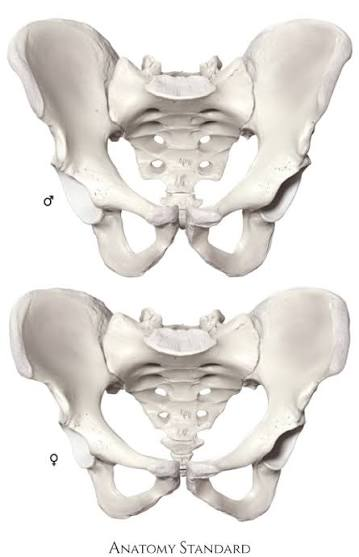
Features of a FEMALE pelvic girdle
Appearance: less massive/smoother
Greater Pelvis: shallower, more flared hips
Pelvic Inlet: round/oval shaped
Pelvic Outlet: larger
Subpubic Angle: > 100 dgerees
Greater Sciatic Notch: wider
Sacrum: wider
Coccyx: more moveable
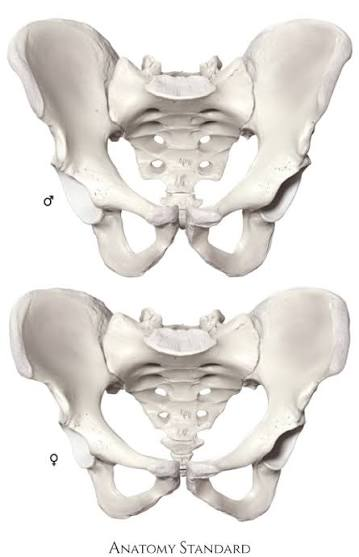
Features of a MALE pelvic girdle
Appearance: more massive/rougher
Greater Pelvis: deeper, less flared hips
Pelvic Inlet: heart shaped
Pelvic Outlet: smaller
Subpubic Angle: < 90 dgerees
Greater Sciatic Notch: narrower
Sacrum: narrower
Coccyx: less moveable
Articular Cartilage
at the joint surface
Periosteum
outer fibrous membrane
compact bone
dense bone (lines outer surface)
Spongy bone
located INSIDE the end of the long bone and the middle of the flat bone
Diaphysis
shaft
Epiphysis
end
Bone Tissue
consists of cells and matrix
1/3 organic
collagen and glycoproteins
FLEXIBILITY
2/3 inorganic
85% hydroxyapatite (calcium phosphate)
10% calcium carbonate (CaCO3) and other minerals
SUPPORT
What is the percentage of Calcium that is stored in bones?
99%, the other 1% floats in the blood
Vascular and Nervous Supply
highly vascularized
high healing time and more predictable
Red and Yellow Marrow
The soft tissue found in:
marrow cavities of the long bones
spongey bone
larger central canal
Red Marrow
produces blood cells which converts to YELLOW MARROW as an adult
found in flat bones (hip bone, sternum, ribs, skull)
Yellow Marrow
fat
How many bone cells are there?
4
What are the 4 bone cells?
osteogenic cell
osteoBLAST
osteoCYTE
osteoCLAST

Osteogenic Cell
bone stem cell
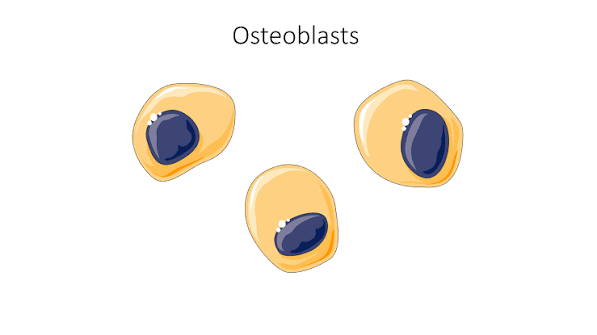
OsteoBLAST
bone FORMING cell
“bone building”
synthesizes the soft, organic bone matrix (AKA osteoid)
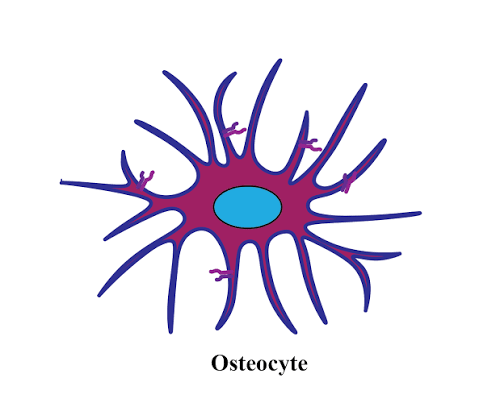
OsteoCYTE
former osteoblast that is trapped in the matrix AFTER it (matrix) calcifies
lives in the LACUNAE
processes reach into canaliculi (nutrient/waste transfer)
important for bone tissue maintenance and bone remodeling

OsteoCLAST
different cell origin
initiates a process called BONE RESORPTION
Bone Resportion
a process where the osteoCLAST breaks down and absorbs bone tissue
Bone growth
Elongation: long bones increase in length
Appositional growth: widening (growth at surface, bone diameter)
Where does Elongation happen?
Epiphyseal plate (AKA: growth plate)
What must be present for a bone to grow in LENGTH?
cartilage
Metaphysis
part of epiphyseal plate that faces the marrow cavity
Zones of the Metaphysis
Hyaline cart
Chondrocytes (AKA cart cells)
divide and arrange in rows
Chondrocytes enlarge
Minerals deposit (calcification)
Chondrocytes die
blood vessels invade, osteoblasts build bones, osteoclasts remove cart
Bone elongation
lutersticial growth, results in cartilage growth
Bone remodeling
bone shape is determined by stresses on the bone
How is bone remodeling regulated?
Osteocytes
senses stress
send signals to regulate bone remodeling
Deposition
osteoblasts present at MORE stressed areas
Resorption
osteoblasts remove bones at LESS stressed areas
Bone Healing
Hematoma formation
Soft callus formation
Hard callus formation
Bone remodeling
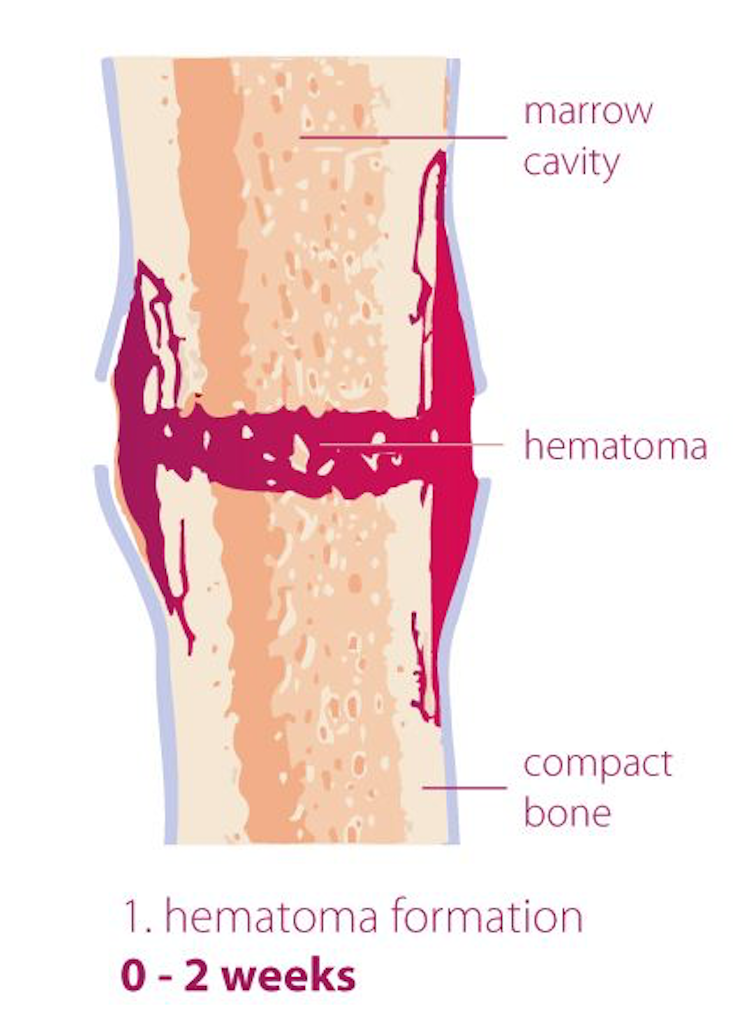
Hematoma Formation
hematoma is converted to granulation tissue by invasion of cells and blood capillaries
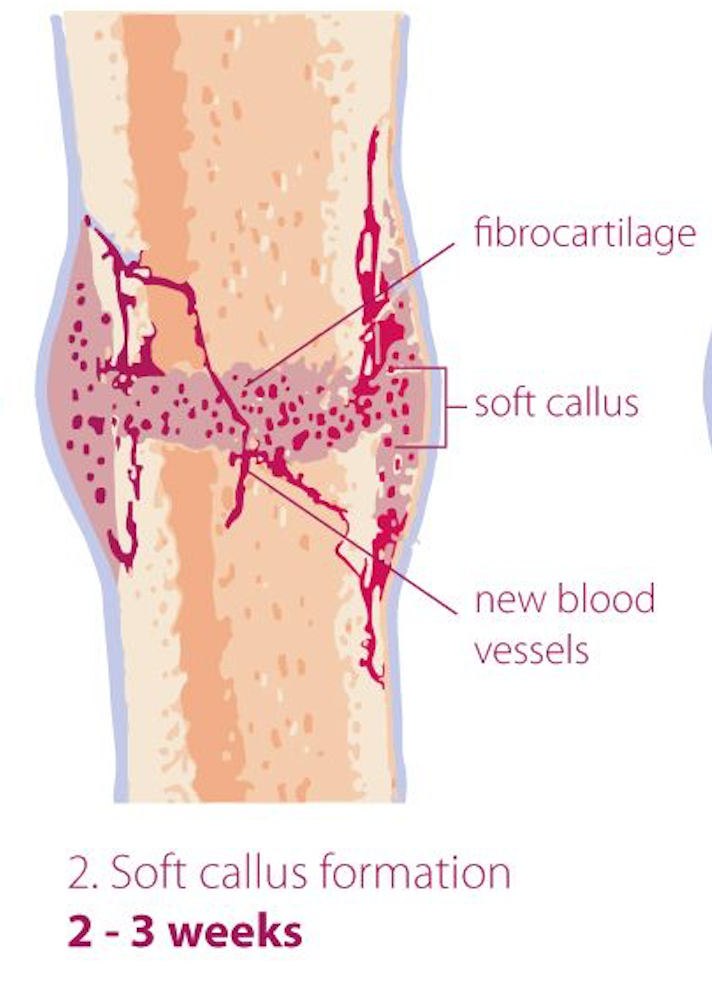
Soft callus formation
deposition of collagen and fibrocart converts granulation tissue to a soft callus
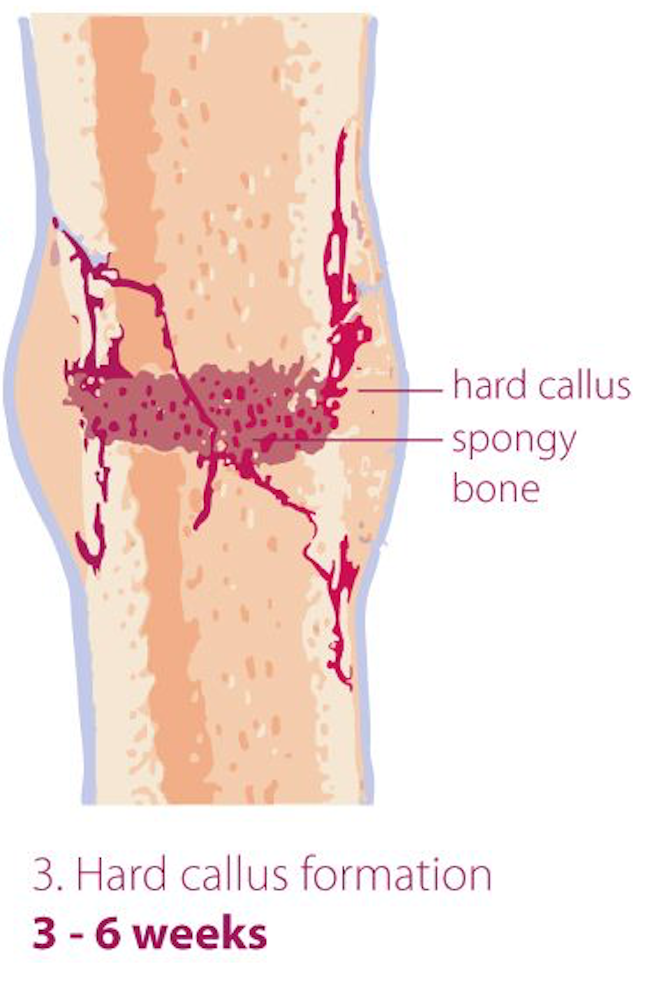
Hard callus formation
osteoblasts deposit a temporary bony collar around the fracture to unite the broken pieces while ossification occurs

Bone remodeling
small bone fragments are removed by osteoclasts, while osteoblasts deposit spongy bone and then convert it to compact bone
Osteoporosis
most common bone disease that causes brittle bones
What are the risk factors of OSTEOPOROSIS
low estrogen levels (at menopause)
low calcium
low vitamin D
sedentary (when you don’t exercise)
How can you prevent osteoporosis?
do weight bearing exercise/activities
consume calcium and vitamin D
increase protein intake
Articulation
where two bones meet
What are the features of a joint
link skeletal system
permits movements
protects organs
Bony joints
formed by the ossification of fibrous or cartilogenous joints
Syntosis
AKA bony joints
imoveable/hard
Example: mandible, hipbone, epiphyseal line
Fibrous joints
bound by collagen fibers, holds things together, little to no movement
suture, gomphosis, syndesmosis
Sutures
Found in the skull
no movement
fibers are really short
Gomphosis
attachment of tooth to socket
Syndesmosis
IOM (large collagen fibers) BONDS two bones together
radius to ulna
tibia to fibula
The fontanels of a fetal skull is made from a type of syndesmosis
Cartilaginous joints
bound by cartilage, little to no movement
synchondrosis, symphysis
Synchondrosis
bound by hyaline cartilage
What connects Rib #1 to Sternum, etc.
Epiphyseal plates
Symphysis
bound by fibrocartilage
What connects the intervertebral discs together
Pubic Symphysis
Synovial joints
diarthrosis
6 subtypes
Diarthrosis
mobility
Synovial fluid
viscous/slippery
it’s like lube
Articular cartilage
hyaline cartilage
Synovial membrane
secrets synovial fluid
Name the 6 subtypes of Synovial Joints
ball-and-socket joint
condylar joint
saddle joint
plane joint
hinge joint
pivot joint

Ball-and-socket
multi-axial
glenohumeral joint
coxal (hip) joint

Condylar joint
Biaxal
AKA ellipsoid joint
metacarpalphalangeal
temporomandibular joint
atlanto-occipital joint

Saddle joint
Biaxal
trapeziometacarpal joint (base of thumb)
sternoclavicular joint

Plane joint
Biaxal
most common
intercarpal
intertarsal
vertebral processes
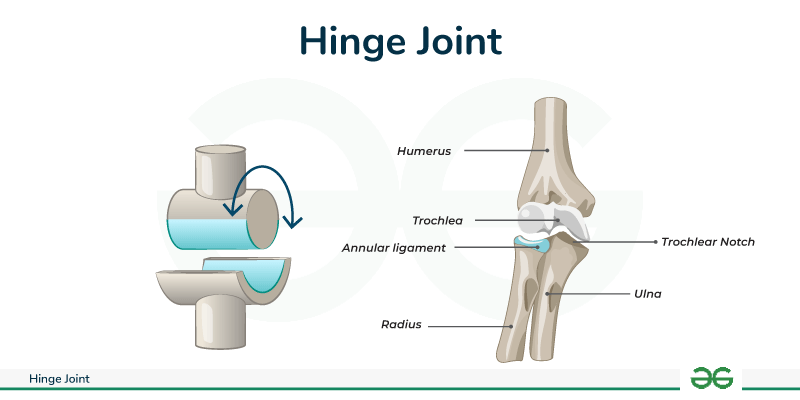
Hinge joint
Monoaxial
elbow (humeroulnar joint)
knee
interphalanges

Pivot joint
Monoaxial
atlanto-occipital joint
radioulnar joint
Name the movements of the Synovial Joints
flexion
extention/hyperextention
abduction/adduction
elevation/depression
protraction/retraction
rotation
medial/lateral rotation
supination/pronation
Name the SPECIAL MOVEMENTS of the Synovial Joints
ulnar/radial flexion
dorsi/plantar-flexion
opposition of thumb
inversion/eversion
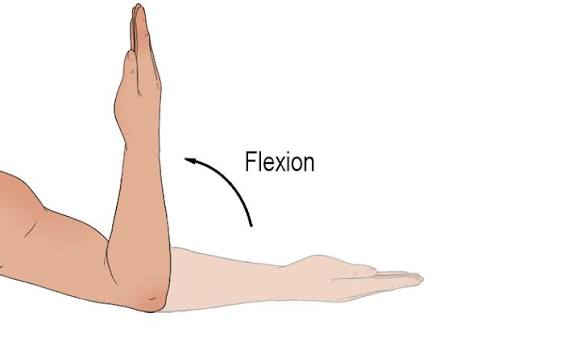
Flexion
decrease angle of joint (< 180 degrees)

Extension
increase angle of joint (straighten the joint)
RETURN to anatomical position

Hyperextention
increase angle of joint BEYOND 180 degrees

Abduction
AWAY from mid-line
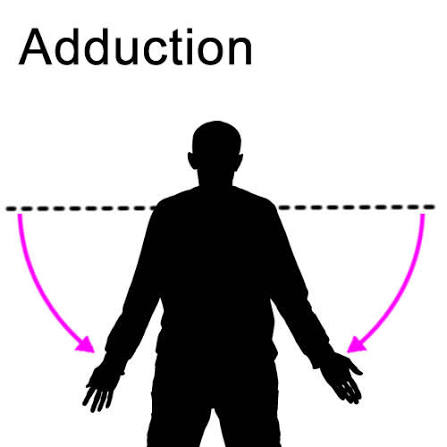
Adduction
TOWARD mid-line

Elevation/Depression
Elevation: raise VERTICALLY in frontal plane
Depression: LOWER in frontal plane