Reproductive system
 Call Kai
 Learn
 Practice Test
 Spaced Repetition
 Match
 Flashcards
 Knowt Play
1/139

There's no tags or description
Looks like no tags are added yet.
140 Terms
Poduction of gametes
sperm cells in the testes of males and oocytes (eggs) in the ovaries of females
Fertilization
Formation of zygote (sperm cells + oocytes)
Male duct system
This nourishes sperm until they mature and are deposited into the female reproductive tract by the penis
Female reproductive system
This receives sperm and trasports them to the site of fertilization
It supports the development of the embryo and fetus in the uterus until birth
Layer of visceral peritoneum
Covers the surface of the ovary
Cortex
the outer part of the ovary is composed of dense connective tissue and contains ovarian follicles
Ovarian follicles
contain developing oocyte, granulosa cells, theca cells (later stages)
Produce female gametes, estrogen, progesterone
Support follicular development
Form the corpus luteum after ovulation
Function of the ovary:
Medulla
Inner part made up of loose connective tissue where blood vessels, lymphatic vessels, and nerves are located
Prophase II
Identify the phase:
2 chromatids
A new spindle forms around the chromosomes

Metapahse II
Identify the phase:
Alignment at center
Chromosomes line up at the equator
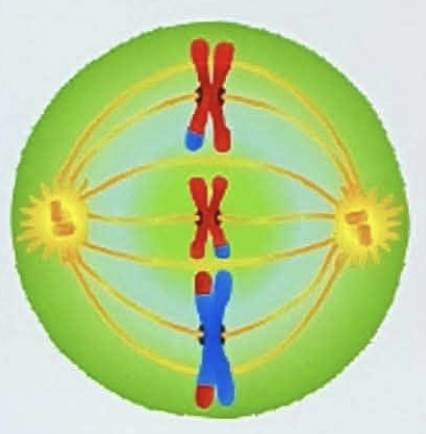
Anaphase II
Identify the phase:
Sister chromatid separate
Centromeres divide. Chromatids move to the opposite poles of the cells

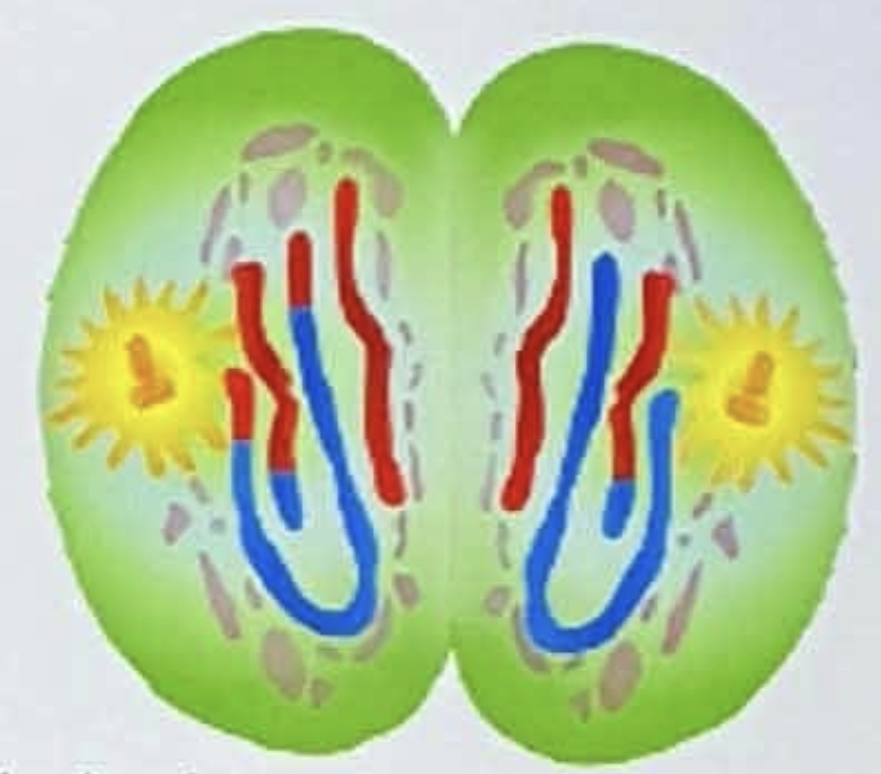
Telophase II & Cytokinesis
Identify the rhe phase:
Cells divide again
Each chromatid individual chromosome
Amnuclear envelope forms around each set of chromosomes
The cytoplasm divides
Primordial follicle
Surrounds the primary oocyte before birth, a single layer of flat cells, called granulosa, degenerate before puberty
Primary follicles
Once punerty begins, the oocyte enlarges and the single layer of granulosa cells becomes enlarged and cuboidal
the zona pelllucida
Several layers of granulosa cells form, and a lyer of cleae material called — is deposited around the primary oocyte
28 days
Follicle development occurs approximately every — and is under hormonal control
Synapsis
The chromosomes align as pairs in a process
Crossing over
Part of a chromatid breaks off and is exchanged with part of another chromatid from the other chromosome which allows the exchange of genetic material between chromosomes
Meiosis
Identify:

Meiosis I
Meiosis II
Two stages of Meiosis:
Meiosis I
Segregation
Homologous pairs are separated reducing chromosme number by half
Meiosis II
Sister chromatids are separated producing four haploid gametes
Metaphase I
Identify the phase:
Alignment at center
Pairs of homologous chromosomes move to the equator of the cell

Anaphase I
Sister chromatids remained attached
Homologous chromosomes move to the opposite poles of the cell

Telophase I & Cytokinesis
2 daughter cells, 23 chromosomes, 2 chromatids
Chromosomes gather at the poles of the cells
The cytoplasm divides

Oogenesis
Begins before birth, oocyte formation in the ovaries begins
Oogonia
Present during fetal development, mitosis, By the fourth month of development, the ovaries contain 5 million these cells from which oocytes develop from
Primary oocyte
a cell that found at birth 2 Million, right after Meiosis I Prophase
300,000 - 4000,000 , 400
At puberty only — remain and only about — will complete development and be released from the ovaries
Secondary oocyte
After the remaining primary oocyte completes Meiosis it becomes this cell before being released, it then begins the second meiotic division but stops in metaphase I|
Polar Body
degenerates or divides to form two polar bodies
Prophase I
Crossing over synapsis
The chromosomes condense, and the nuclear envelope breaks down
Crossing-over occurs

Uterine tubes
Also called a fallopian tube or oviduct
Two extend from the area of the ovaries to the uterus
They open difectly into the peritoneal cavity near each ovary and receive the secondary oocyte
fimbriae
The opening of the uterine tubes are surrounded by long, thin fingerlike processes called?
10-12 days
If pregnancy does not occur, corpus luteum survives about how many days?
Ovulation
Mature follicle ruptures
Releases secondary oocyte, produce polar body
Usually only one follicle ovulates during each cycle
Fertilization
Begins when sperm penetrates the secondary oocyte
Seocndary oocyte completes Meiosis II
produce mature oocyte and second polae body
Chromosome number returns to 46 (23 pairs)
A zygote is formed and divides repeatedly by mitosis
The developing mass of cells may implant in the uterus and develop into a new individual
Uterus
is as big as a medium-sized pear and is oriented in the pelvic cavity with the larger, rounded part directed superiorly, ANTEVERTED
Fundus
The rounded superior portion located above the entrance of the uterine tubes
the body
The main part of the uterus is called?
inferiorly
The narrower part, the cervix (neck), is directed?
True
True or False: Internally, the uterine cavity in the fundus and uterine body continues through the cervix as the cervical canal, which opens into the vagina.
mucous glands
The cervical canal is lined by?
fimbriae
The opening of each uterine tube is surrounded by long, thin processes that nearly surround the surface of the ovary and sweeps the oodyte that was released
Infundibulu,
funnel shaped
Cilia
On the fimvriae surface sweep the oocyte into the uterine tubes
the ampulla
Fertilization occurs in the part of the uterine tubes near the ovary called?
Isthmus
narrowest part
Intramural
uterine part
implantation
The fertilized oocyte then travels to the uterus, where it embeds in the uterine wall in a process called?
Clinical perineum
the region between the vagina and the anus ans also the area between the thigh
the skin and muscle of this refion can tear during childbirth
Episiotomy
To prevent tearing an incision called an — is sometimes made in the clinical perineum
Traditionally, this clean, straight incision has been thought to result in less injury, less trouble in healing, and less pain
However, many studies report less injury and pain when this is not performed
Reproductive openings
Provide lubrication
Contain erectile tissue
Provide sensory stimulation during sexual activity
Functions of clinical perineum:
Mammary glands/Breasts
are the organs of milk production, deliver milk and nourish the infant and are located in the breasts and are modified sweat glands.
Nipple
an elevated riased area, very sensitive to tactile stimulation and contain smooth muscle which contracts, richly supplied with sensory receptors
Contains smooth muscle, becomes erect in response to touch, cold, sexual arousal
Areola
Surrounds the nipple, circular, and pigmented
True or False: In prepubescent children, the general structure of the male and female breasts is similar, and both males and females possess a rudimentary duct system.
estrogen and progesterone
The femalw breasts begin to enlarge during puberty, under the influence of?
Gynecomastia
Enlargement of the breast for male
Menstrual cycle
refers to the series of changes that occur in sexually mature, nonpregnant females and that result in menses.
FSH, LH
These uterine changes occur in response to cyclical changes in ovary which are conteolled by — and — from the anterior pituitary gland
Menses
A period of mild hemorrhage, during which part of the endometrium is sloughed and expelled from the uterus
28 days long
Typically, the menstrual cycle is about?
18 days
Menstrual cycle can be as short as?
40 days
Menstrual cycle can be as long as?
11 and 13
In girls, puberty typically begins between ages of?
16
In girls, puberty is largely completed by age?
Menarche
First episode of mentrual bleeding, marks the beginning of puberty
estrogen, progesterone
The changes associated with puberty primarily result from the incrasing rate of — and — secretion by the ovaries
GRH secretion from the hypothalamus is very low.
LH and FSH secretion from the anterior pituitary are very low.
Estrogen and progesterone exert a strong negative-feedback effect on the hypothalamus and pituitary.
Hormonal changes before puberty:
Increased secretion of GRH by the hypothalamus.
Increased secretion of LH and FSH by the anterior pituitary.
Estrogen and progesterone have less negative-feedback effect.
Sustained increases in estrogen produce a positive-feedback effect.
Normal cyclical secretion of reproductive hormones becomes established
Hormonal changes after the onset of puberty:
Enlargement of reproductive organs
Breast development
Changes in body shape
Hair growth
Reproductive function
Development of sexual drive
Physical changes in puberty:
Enlargement of reproductive organs
Vagina, uterus, uterine tubes, external genitalia
Breast development
Adipose tissue is deposited in breasts and they enlarge and assume the adult female form
Changes in body shape
Adipose tissue accumulates around the hips and they enlarge and develop the adult female shape
Hair growth
Growth of pubic hair and axillary hair
Reproductive function
Menarche occurs,, menstrual cycle become established, ovulation eventually occurs regularly
Development of sexual drive
Sexual drive develops during puberty
Day 1
the day when the endometrium sloughs off
4 or 5 days
Menses typically lasts — or — days and can be accompanied by string uterine contractions
menstrual cramps
Menses can be accompanied by strong uterine contractions called — which are the result of forceful myometrial contractions that occur before and during menses
Low levels of estrogen and progesterone, corpus luteum degenerates
happens in the ovary during menstrual cycle
sloughing of the endometrium it becomes inflamed, menstrual bleeding, repair of endometrium and progtaglandins are produced as part of the inflammation, due to declining progesterone
happens in the uterus during menstrual cycle
15-20
Adult female breasts contains mammary glands consisting of usually how many glandular loves covered by adipose tissue superficially?
single lactiferous duct
Each lobe possesses a — that opens independently to the surface of the nipple
alveoli
In the milk-producing, or lactating, mammary glands consisting of, the ends of these small ducts expand to form secretory sacs called?
Myoepithelial cells
surround the alveoli and contract to expel milk from the alveoli
Suspensory ligament/Cooper’s ligament
Connective tissue from dermis of skin to fascia over the pectoralis major
Proliferative Phase
Between the end of menses and ovulation is the which refers to proliferation of the endometrium
Around day 4-5 up to day 14
hormones
Sexual drive in females, like sexual drive in males, is dependent on?
Testosterone-like hormones
Affect brain cells (especially in the area of the hypothalamis) and influence sexual behavior
Are produced primarily in the adrenal cortex-androstenedione
Seonsory and motor neural pathways
Pathways involves in controlling female sexual responses are similar to those found in the male
Gonadotropin-Releasing Hormone (GnRH)
Hypothalamus Functions - Stimulates the anterior pituitary gland. - Causes secretion of FSH and LH
Before puberty, secretion is very low, During puberty, secretion increases, Estrogen and progesterone usually inhibit its secretion (negative feedback), Sustained high estrogen levels just before ovulation stimulate GnRH secretion (positive feedback)
Follicle-Stimulating Hormone (FSH)
Anterior pituitary gland
Functions: Stimulates development of ovarian follicles, Stimulates follicles to secrete estrogen, during ovulation, acts on immature follicles and causes several of them to begin enlarging
Released in response to GRH, Inhibited by estrogen and progesterone after ovulation (negative feedback), Increases near ovulation because of estrogen positive feedback, Begins to increase at the start of menses as progesterone declines
Blastocyst
If fertilization occurs, fertilized oocyte develops into a?
7-8 days
Blastocyst reaches uterus how many days after ovulation?
prepared endometrium
Implantation occurs in the?
Placenta
Produces human chorionic gonadotropin
hCG
Maintains the corpus luteum