Multivariable Calc Unit 2 Formulas
 Call Kai
 Learn
 Practice Test
 Spaced Repetition
 Match
 Flashcards
 Knowt Play
1/17

There's no tags or description
Looks like no tags are added yet.
18 Terms
Equation of a tangent plane
z-z0 = fx(x0, y0)(x-x0) + fy(x0, y0)(y-y0)
Linearization of f at (x0, y0)
L(x,y) = f(x0, y0) + fx(x0, y0)(x-x0) + fy(x0, y0)(y-y0)
Jacobian Matrix
(all partial derivatives)
[f1/x1 … f1/xn]
: :
[fm/x1 … fm/xn]
Directional derivative of f at point x in the direction of unit vector u
Gradient f dot u
x²/a² + y²/b² + z²/c² = 1
Ellipsoid

x²/a² + y²/b² = z²/c
Elliptic Paraboloid

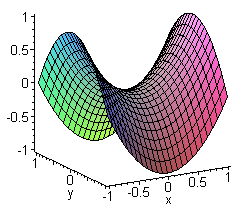
x²/a² - y²/b² = z/c
Hyperbolic Paraboloid
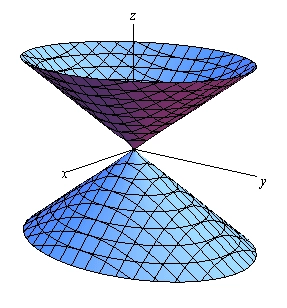
x²/a² + y²/b² = z²/c²
Cone
x²/a² + y²/b² - z²/c² = 1
Hyperboloid of One Sheet

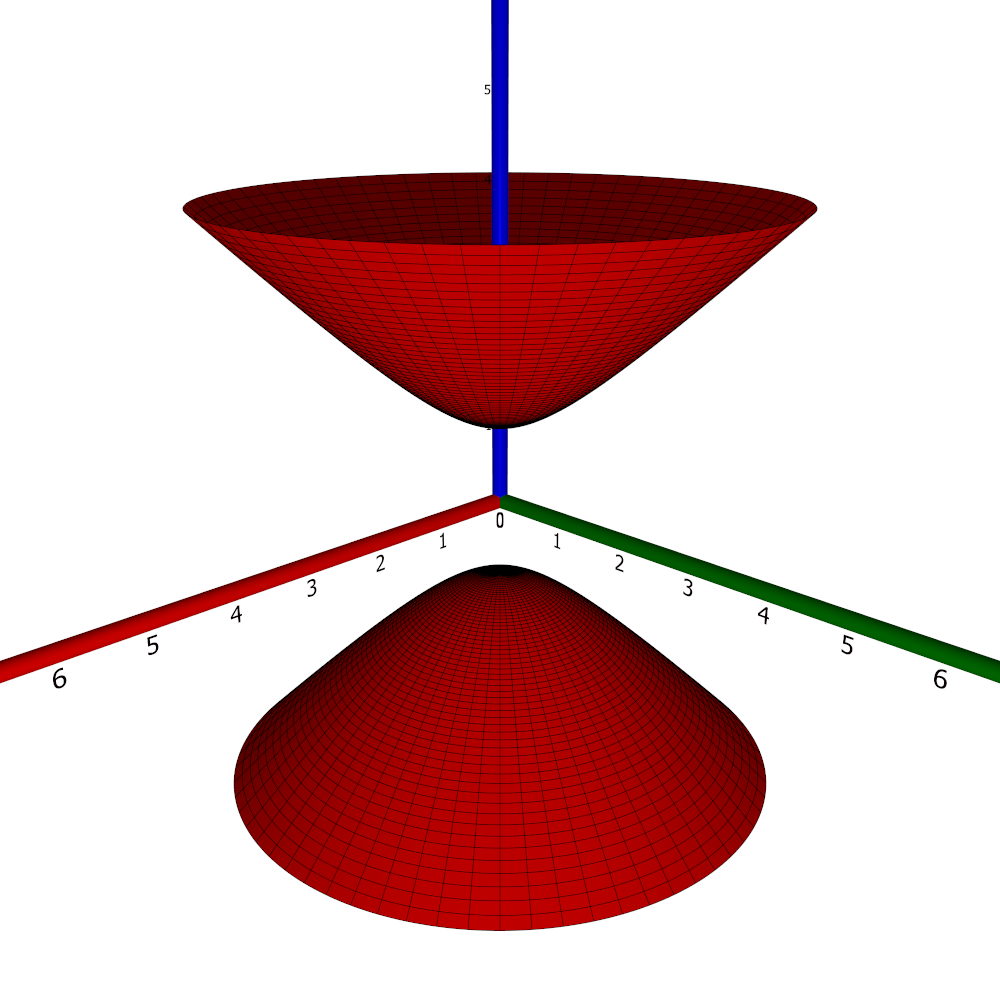
-x²/a² - y²/b² + z²/c² = 1
Hyperboloid of Two Sheets
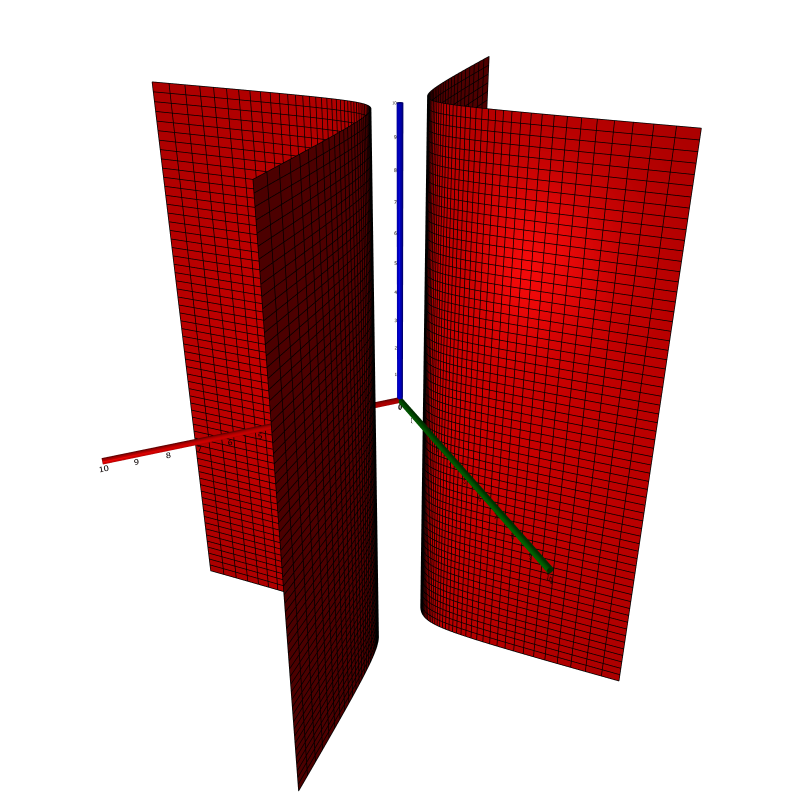
x²/a² - y²/b²= 1
Hyperbolic Cylinder
Limit Definition
fx(a, b) = lim h→0 f(a+h, b) - f(a,b) / h (find fy too, if both are the same limit exists & is defined)
Two surfaces are tangent if
they meet at a point and have the same tangent plane there
Linear approximation of f(x,y) near (a,b)
L(x,y) = f(a,b) + fx(a,b)(x-a) + fy(a,b)(y-b)
Tangent Line Formula
L(t) = r(t0) + sr’(t0)
Angle Formula, cos0 =
u•v/||u|| ||v||
Unit tangent vector
r’(t) / ||r’(t)||
Arc Length Formula for a Space Curve
L = int (a to b) ||r’(t)||dt