Prokaryotic cell ultrastructure
 Call Kai
 Learn
 Practice Test
 Spaced Repetition
 Match
 Flashcards
 Knowt Play
1/18

There's no tags or description
Looks like no tags are added yet.
19 Terms
Diagram of prokaryote
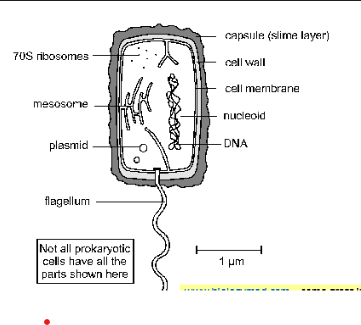
Prokaryote cell diagram ultrastrcture

cell wall(structure)
made of peptidoglycan (murein)-glycoprotein, rigid, strengthening
cytoplasm(structure)
made of peptidoglycan (murein)-glycoprotein, few organelles
ribosomes
small 70s, slightly smaller than 80S eukaryote ribosomes
cell membrane
site of respitory enzyme
structure of : basillis, rod, colli
nucleoid
no nucleus ; single circular DNA molecule that is free in the cytoplasm and is N.A.K.E.D(not associated with proteins), cytoplasm often forms a clear area around it
plasmid
plasmid ( smaller loop of DNA compared to genomic)
plasmid can pass on and swap genes
can pass on genes for resistance
several may present
Some features are present
plasmids
flagellum: motility, smaller and simple structure than eukaryotes(no microtubules)
capsule: starcg , gelatin, protein or glycolypid- disguise from the immune system/resistance to desiccation
pili(aka fimbriae): attachment to hsot cells; sexual reproduction; entry point for bacteriophages
prokaryotes and euakryotes size
pro: ave diameter - 0.5- 10um
euk: ave diameter - 10-100um
pro and euk genetic material
pro: circular DNA , free in cytoplasm ;naked
linear DNA: contained in nucleus ; chromosomes
pro and euk organelles
pro: limited ; not surrounded by envelope
euk: many ; some enveloped/ some single membrane
pro and euk cell wall
pro: rigid, amino acids, polysacharides , peptidoglycan
euk
pro and euk flagella
simple ; (no microtubules) ; 20 nm diameter
complex ; (9 + 2 arrangement) microtubules; 200 nm diameter
pro and euk protein synthesis
pro: 70 s ribosomes ; no endoplasmic reticulum
euk: 80S ribosomes ; may be attached to endoplasmic reticulum
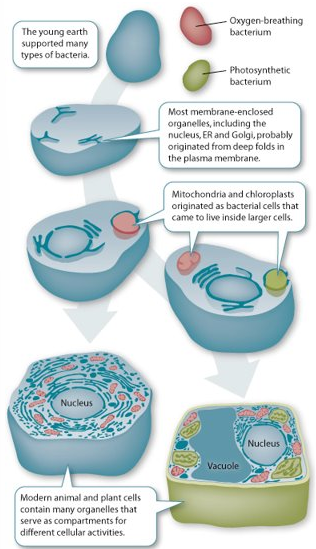
How do chloroplasts and mitochondria provide evidence for the endosymbiotic theory?
Endosymbiotic thoery states that:
- eukarotes evolved from porkaryote
-mitochondria and chloroplasta were once independent prokaryotic cells that were taken in by larger heterophic cells by endocytosis

What organelles have similar features to prokaryotic cells
mitochondria
chloroplasts
What features are similar to rpoakryoti cells
naked DNA
70S ribosomes
double membranes
cristaw/thylakoids similar to mesosmes
carry out fission
(theory can’t be falsififed as it predicts smth that occured in the past)
(doesnt explain the origins of cilia/flagella/linear chormsome sor meiosis)

What is the evidence supporting the endosymbiotic theory for mitochondria and chloroplasts
have their own DNA ( which is naked and circualr)
have ribossomes that are similar to prokaryotes (70S)
have double membrane and the inner membrane has proteins similar to prokaryotes
roughly the same size as bacteria and are susceptible to the antibiotic chloramphenicol
transive theur DNA and use the mRNA to synthesize some of their own proteins
can only be produced by division of pre-existing mitochondria and chloroplasts