CEE Midterm Exam 2026
 Call Kai
 Learn
Learn Practice Test
 Spaced Repetition
 Match
Match Flashcards
 Knowt Play
1/92

There's no tags or description
Looks like no tags are added yet.
Name | Mastery | Learn | Test | Matching | Spaced | Call with Kai | Chat |
|---|
No analytics yet
Send a link to your students to track their progress
93 Terms
Why was there a switch from stone to iron for bridges
Iron can withstand more stress, and it is lighter to work with than stone. The great flood of 1795 washed away stone bridges.
H=(qL2)/8d
Horizontal load on a bridge (scientific)
H(lbs), q(lbs/ft), L(ft), d(ft)
q=load, L=span, d=rise
Thomas Telford innovation
efficient, economical, and elegant bridges, brought together his artistic side and his work as a public entrepreneur
V=qL/2
Vertical force (lbs)
A = H/f
Cable stress - A=cross sectional area(in²), H(horizontal load), f=breaking stress(lbs/in)
Safety Factors
allowable stress/breaking stress
Thomas Telford Social impact
changing the menai straits bridge for the navy (politics over economy)
economy vs safety when it came to cable suspension
Telfords big innovation and time
1814 (Craigellachie arch Bridge) and 1826, Menai Suspension Bridge,

1795 – Bilwas -Telford’s

1805 - Pontcysyllte Aqueduct, Thomas Telford,

1814 - Craigellachie Bridge, Thomas Telford,

Iron Bridge 1779 Abraham Darby III

1826, Menai Suspension Bridge, Telford,

1820 - Caledonian Canal, Telford

Catenary chain to catenary arch, free-standing arch shows tension and compression as opposites. Arch=compression forces, and cables are created with tension forces. Difference between cable suspension and arch birdges. Telford 1814-126
Watts innovation and aproximate date
separate condenser for Newcomen engine (more efficient) 1765 and the rotary style (power comes from both up and down stroke) 1781

Sun and Planet Gear (1780) (Watt)

Watt engine first sketch, i(1760)

Newcomen atmospheric engine, 1712,
1 lb of coal vaporizes…
10 lbs of water
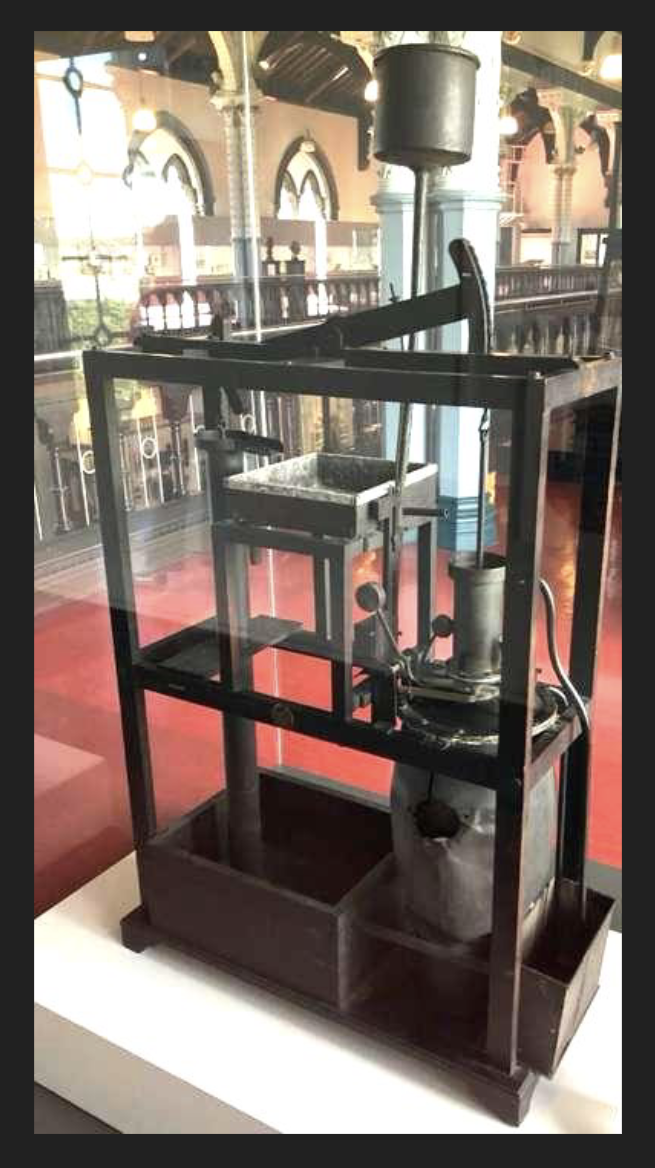
newcomen steam engine 1712

1780 - Watt straight line linkage
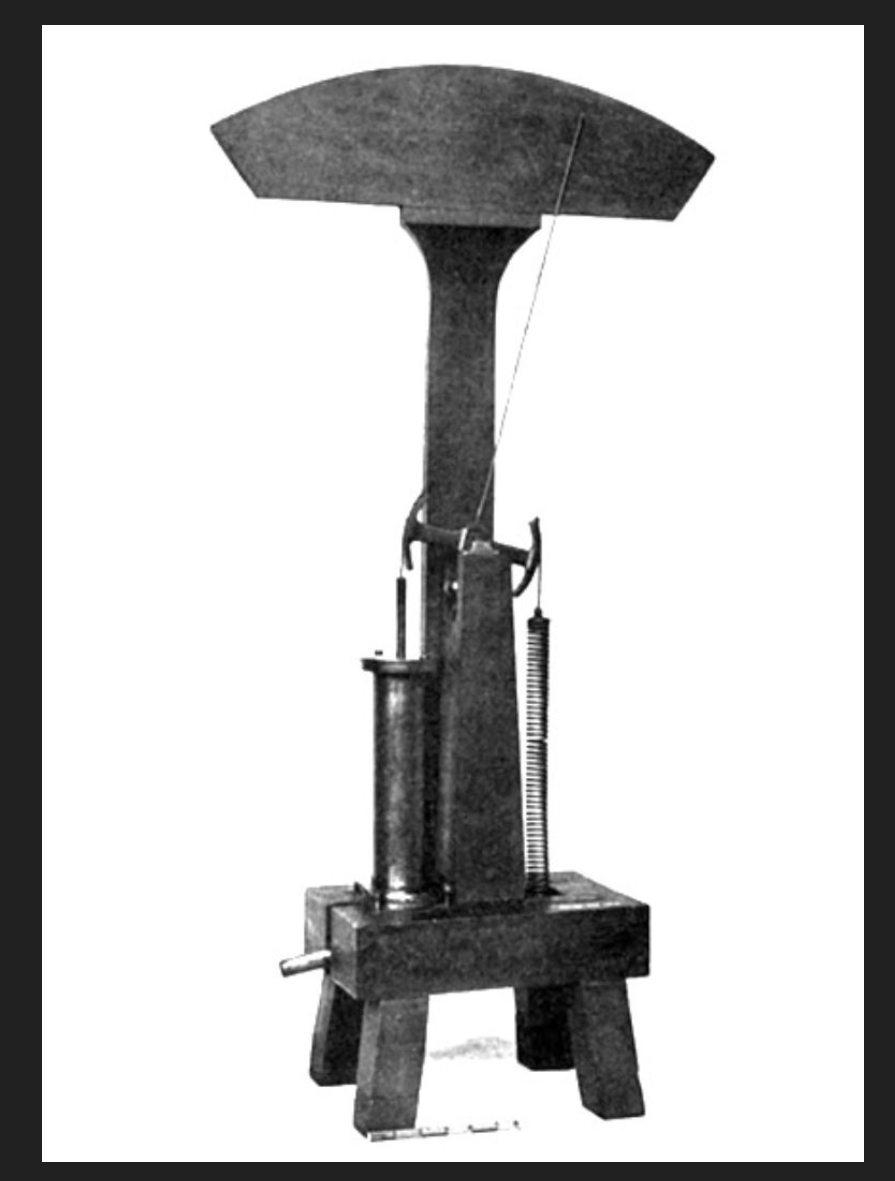
Pressure gauge (1790) (Watt)
1 Horse power =
33,000 ft-lbs/min
Watt symbolic
iconic formula, reciprocating to rotary motion
Hp = PLAN/33,000
Horsepower from an engine
P = Pressure(psi)
L=piston stroke(ft)
A=piston head area (in2)
N = strokes per minute
Watt social
partnership to patent, animal to machine for work
Matthew Boulton
entrepreneur for Watt who pushed for him to get the patent on the steam engine - created a private enterprise

experiment to show how condensation of steam in a vessel creates a partial vacuum --> basis for steam engine - using heat to move water

George Henry Corliss Corliss engine: 1880

double acting rotary engine (1790) (Watt)
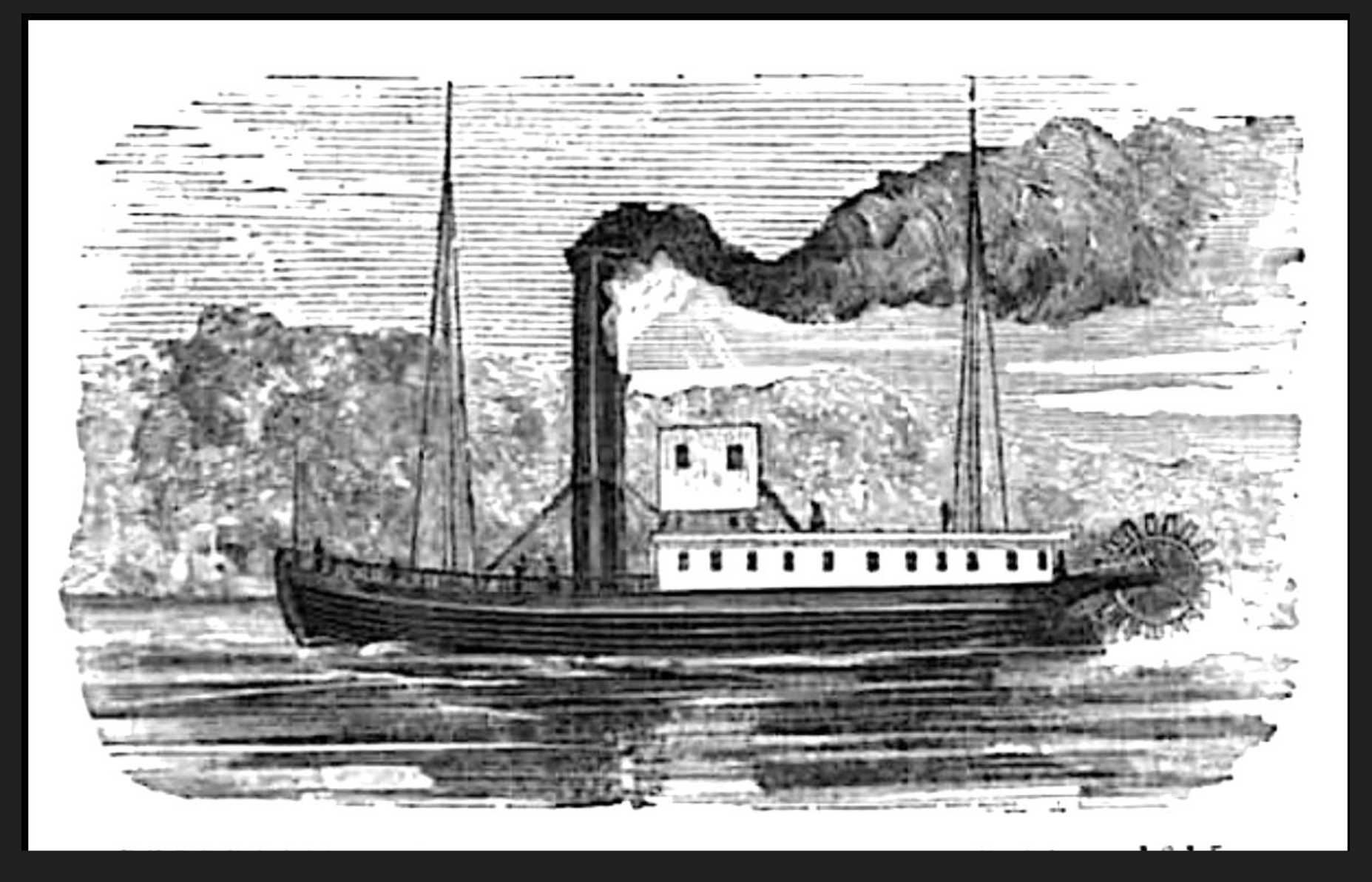
The Enterprise(1814) Henry Shreve
Fultons biggest invention
Steamboat(clermont) 1807,equations behind a faster steamboat, using Watt’s engine
f=Pr/2h
Axial Stress on the cylinder Wall
P=pressure
r=radius
H=height (divide by 2 to get the circumferential stress)
**circumferential stress/longitudinal cracks are more critical in boilers
Henry Shreve
Had a monopoly on the Mississippi River - his competition made his sacrifice saftey for speed and profit - competing with Fulton
steamboat social
monopolies and competiion
goverment intervention in private companies
steamboat symbolic
Mark Twain : danger and beauty of steamboat travel
Robert Livingston
Fultons partner whom helped purchase the lousianna territory then needed to show that it was useful so he invested in the steamboat industry
Thrust equation for a steamboat
T=p(A)(Cd)
where A=
C= drag coeffient (lbs)
p = pressure (lbs/ft2) —- p=0.97V2
A = wetted Area (ft2)
Paddle Power for a steam boat
TVp/33,00 where
Vpaddle = Vboat+Vthrust

The Clermont (1807), Fulton
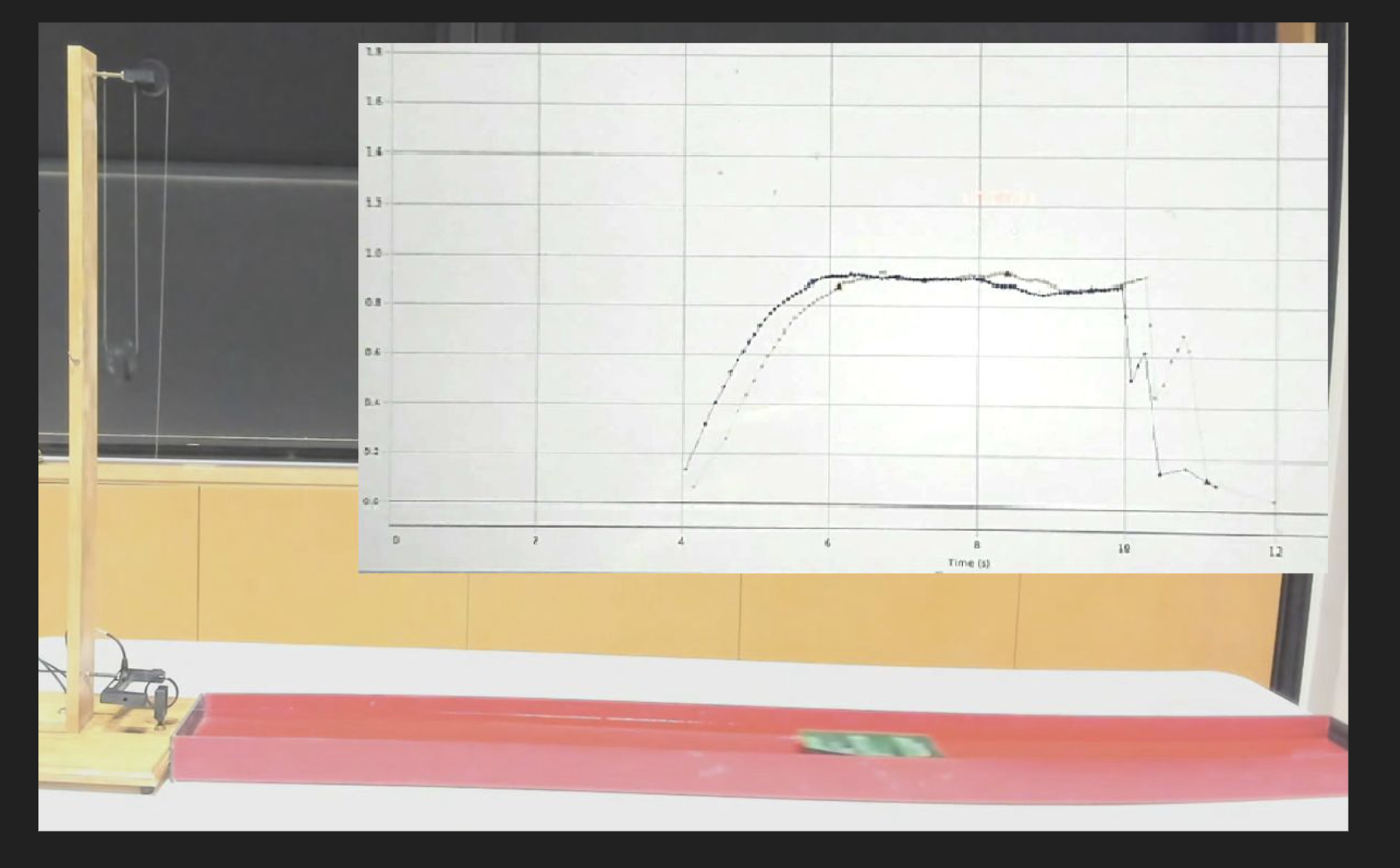
Drop Tower for estimating forces needed for boat. Initially the boat will accelerate but then it will reach a constant speed. So Tension = Drag
Shows how to calcuate the thurst needed to move a boat through the water
transformation and relatioship b/w force-speed-form

John Fitch -1790- paddle steamboat

Prony brake- Francis- 1850

1850 - Francis Turbine, james franics
Power from water flow
Hp = QyH/33,000
Q=volumetric flow (ft3/min)
y=density of water (62.4 lb/ft3)
H=amount of drop / potential energy

Merrimack Mill's power looms (1840) (Lowell and Moody)
Lowell Symbolic
Wealth given to eduction (both Lowell and francis)

Demonstration of Prony Brake (francis)(rotating drum slips at interface with stationary band)
Franics used the friction on the wheel to measure the output of mechanical power.
Hp=TV where T is the force needed to keep the wheel spinning at a certain velocity, power is the heat let off
Used to compare input of the water to the output of his engine
Weir Formula
Q=3.33(L-0.1nH)H3/2
n= number of vertical sides
H=height of the water above the weir crest
L = length of weir (canal width)
Lowell Main invention
Takes loom design from the UK - uses that to mechanize the cotton production process -1813 (boston associates)

Boston Manufacturing Company 1813 - Francis Lowell
Canal system around Lowell
Created by Francis, they were used for transportation, power, and locks were used for protecting agaisnt flood. Water replaced coal as power which led to competion over resources.
Prony Brake
The tension in the brake was changed in order to measure the power output by the franics engine
Franics Main invention
-Measuring water flow using a weir
1848 The francis turbine - efficient water motor from his measurements using the weir
Lowell City
Planned city where there were many textile mills - shows social planning - located near Pawtucket falls for the power supply

Edmund Cartwright's Water Wheel Power Loom (1790)
Lowell Social
Planned Factory town, improved conditions of the mill girls, social planning
Efficiency of Franics Turbine calculations
Power in = QwH H=height and w=density
P Out = TV (thrust time veloicty)

Sounding Telegraph (1831), Joseph Henry
smbyolic telegraph
an artist(morse) as an innovator

May 24 1844 first telegraph message is sent by morse from
Resistance of a wire
R=pL/A
Where L is the length and A is the cross sectional area

Electromagnet in circuit (1820), Joseph Henry
Telegraph social
goverment funding of a private invnetion, private company for a public serivce

Telegraph patent of the binary code in 1840 (Morse)

Morse's Printing Telegraph (1840)
Western Union
Private company formed for telegraphy, create a transcontinetnal line and the line from DC to baltimore
Morse main invention
The creation of a telegraph language and a telegraph to send messages long distances (1832)
Joseph Henry biggest contribution
1830 - electromagntism - a small battery can create a large magnatic force - changing the current induces a voltage
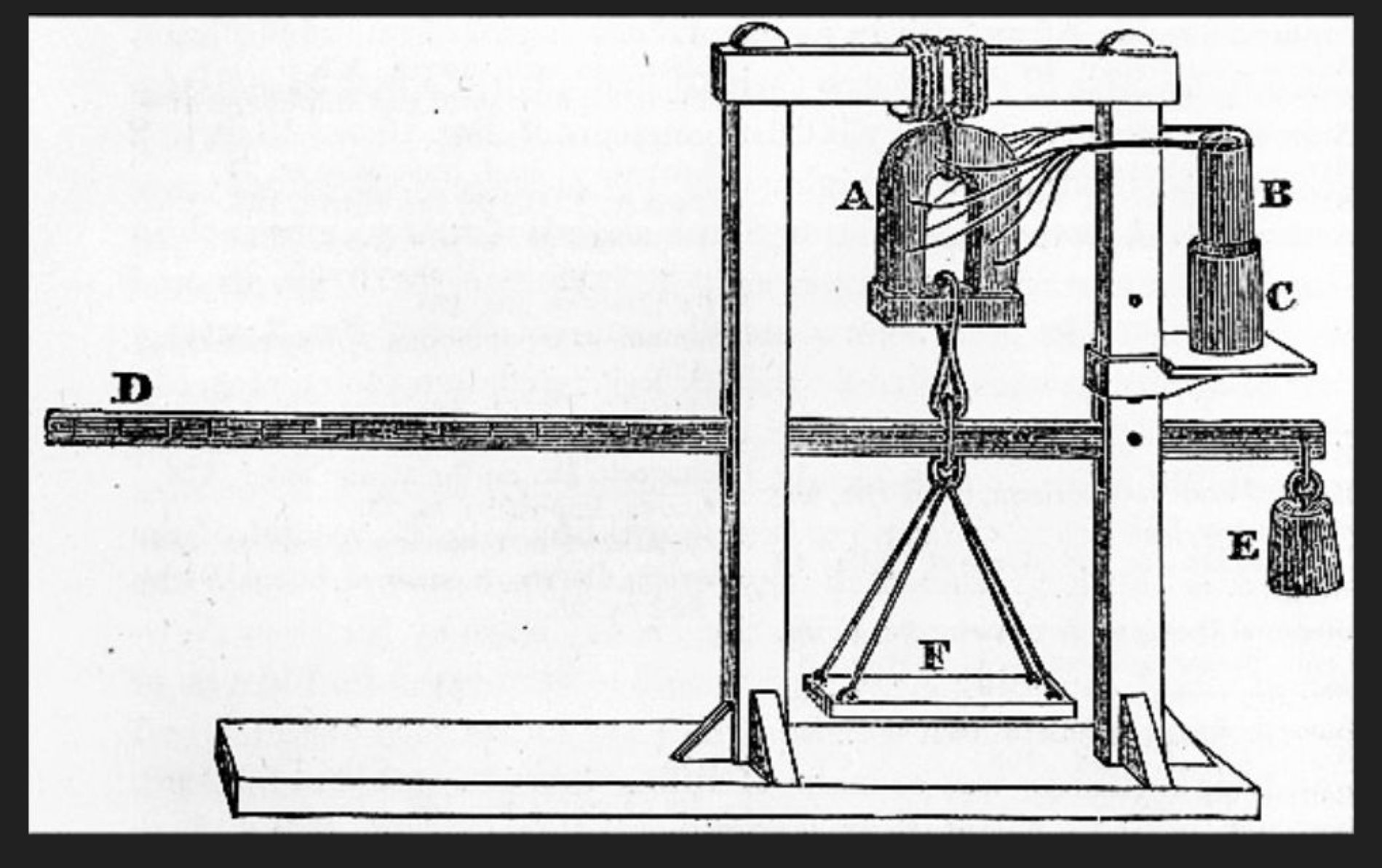
Strong Electromagnet (1830),Joseph Henry

Joseph Sterns Duplex Telegraph (1870)
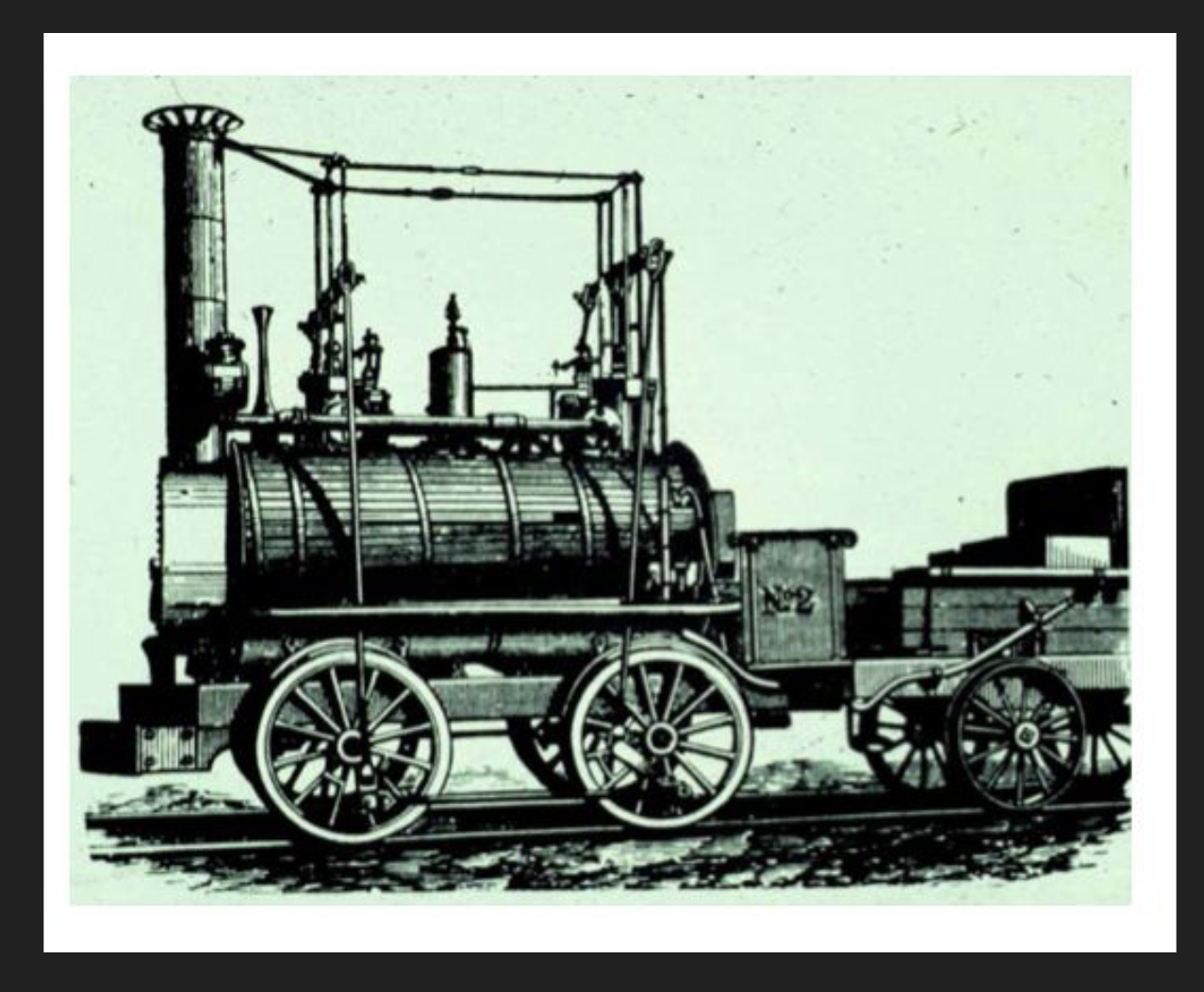
Stephenson's Killingworth Locomotive "The Blutcher", 1815
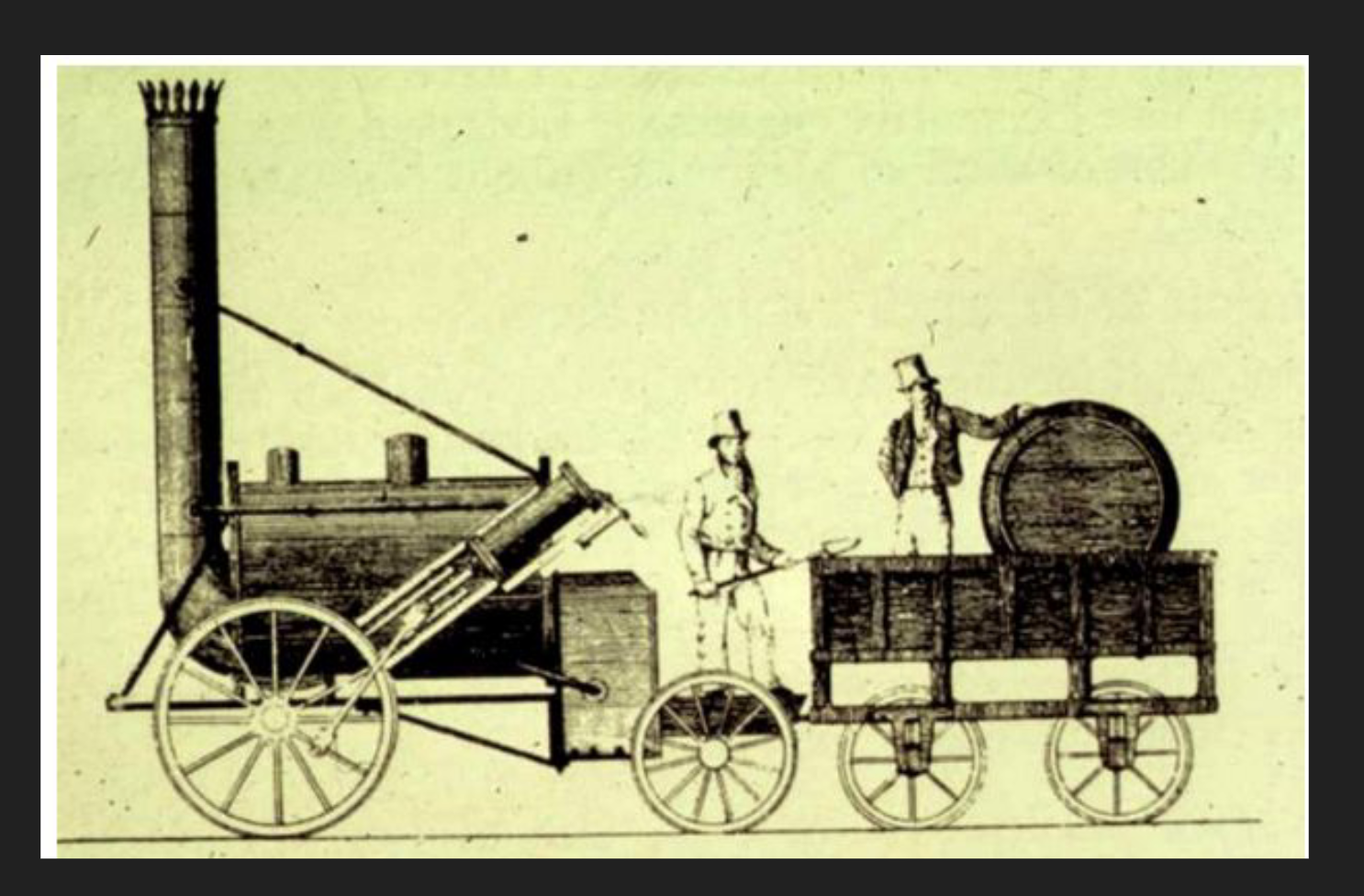
Robert stephenson 1830 "The Rocket"

Matthias Baldwin's The Consolidation (1860)

locomotive/thrust 2Tmax = 0.2*weight of the locomotive conclusions: Gentle grades ( < 2%)• Heavy Locomotives• Powerful Locomotives locomotives used to connect port to industry; think 1830; George Stephenson

Matthias Baldwin's The Lancaster (1830),
George Stephenson and son Robert Stephenson
created the early British railroad systems 1825
RainHill Trials
Competition between locomotives to determine who has the quickest one- the stephensons won
Gauge Wars
Stephenson vs Brunel and a narrow vs wide gauge for all of the British railways. Parliament decided on narrow for economic purposes.
Traction power
Hp= Traction*velocity
Tmax = 0.3 * Weight locomotive
T= grade *Weight
J. Edgar Thompson
Created the PRR company (1846) which was the largest transportation company. He also put much of his profit back into the company.
Social Railroads
-goverment land grants to speed up progress
-big buisness and monopolies
-river to rail transportation
Chicago vs. St loius
rail road vs steamboat
Chicago won due to the civil war
Eads Bridge (non uniform loads)

1870 - Golden Spike - Leedland Stanford

Blast furnace, Abraham Darby III (1703)

Bessemer Converter, Henry Bessemer 1860
Andrew Carnegie contributions
created a monopoly where he gained immense wealth
worked as a superindennt for the PRR - saw that iron was not working for railroads
vertical intergration
1870-1900
Henry Besser Contributions
removal of iron and impurities from iron to create steel
1856
allowed steel to be produced at a large and economic scale
Symbolic Carnegic
Gospel of Wealth - your duty to put your money back into society later in your life
Carnegie Social
public resourse used for private wealth
strong railroads
Pig iron equation
Fe₂O₃ + 3CO → 2Fe + 3CO₂
Alexander Holley
1865 - opened the first bessemer steel plants and created the Holley Bottom (swap the base of the converter without waiting for the machine to cool)
exmaple for future steel works