Art History Exam 1
 Call Kai
 Learn
Learn Practice Test
 Spaced Repetition
 Match
Match Flashcards
 Knowt Play
1/90

Earn XP
Description and Tags
Images
Name | Mastery | Learn | Test | Matching | Spaced | Call with Kai | Chat |
|---|
No analytics yet
Send a link to your students to track their progress
91 Terms

Image
Title: Page from the Codex Boturini; Leaving Aztlan (going to Culhuacan – “Bent Hill”, Culture: Mexica, Date: 1530-
1541, Medium: ink on amate paper Context: From Codex Boturini

Image
Title: Page from Codex Boturini; Migration Begins, Culture: Mexica, Date: 1530-1541, Medium: amate, Context: 8 ‘houses,’ and 4 leaders, 1 carrying Huitzilopochtli, From Codex Boturini

Image
Title: Chicomoztoc (Seven Caves), Culture: Nahua or Mexican or Mexica, Date: mid 16th century, Medium: ink on European paper, Context: from the Historia Tolteca-Chichimeca, ink on European paper, Site: Puebla

Image
Title: Page from the Codex Telleriano-Remensis depicting ‘Chichimec’ hunters, Culture: Mexica/Aztec, Date: 16th
century, Medium: ink on European paper, Context: Chichimec; nomadic people, also used as barbaric or backwards people

Image
Title: Atlantean columns (Toltec Warriors) on top of Pyramid B, ACulture: Toltec, Date: 10th century, Medium: Stone? Context: Tula, Hidalgo

Image
Title: Eight High Lords (Elites) from Codex Mendoza, Culture: Mexica/Aztec, Date: 1542, Medium: ink on European paper

Image
Title: Tribute Page from Codex Mendoza, Culture: Mexica/Aztec, Date: 1542, Medium: ink on european paper, Context: Importance of raw materials and
man-made products

Image
Title: Page from the Codex Mendoza, Ceremonial Center of Tenochtitlan, Culture: Mexica/Aztec, Date: 1542, Medium: ink on European paper

Image
Title: Coatlicue, ‘She of the Serpent Skirt’, Culture: Aztec, Date: 15th century, Medium: stone, Site: Templo Mayor

Image
Title: Fiberglass cast of the image of Tlaltecuhtli, the Earth Lord, carved on the underside of the Coatlicue

Image
Title: Urn with Tlaloc Face, Medium: painted ceramic, Culture: Aztec, Date:15th century, Site: Tenochtitlan

Image
Title: Labret with articulated tongue (Lip Plug), Date: 15th century, Medium: gold, Culture: Mexica/Aztec

Image
Title: Cuauhxicalli (Eagle gourd/vessel) Medium: Greenstone, Date: 15th century/1481-1519, Culture: Mexica/Aztec, Context: visibility and invisibility

Image
Title: Sculpture of a Woman, Date: 15th century, Medium: basalt, Culture: Mexica

Image
Title: Warrior Figures, Date: 15th century, Medium: stone, shell and paint, Culture: Mexica

Image
Title: Templo Mayor (Main Temple) -“Twin Pyramids” shrines at top 1) Tlaloc and 2) Huitzilopochtli, Culture: Mexica/Aztec, Site: Tenochtitlan Medium on different slide, Date ?

Image
Title: Xiuhtecuthli (fire god), Medium: stone with pigment, Date: 15th century, Culture: Mexica

Image
Title: Urns with the figure of Tezcatlipoca and Quetzalcoatl, Date: 15th century, Medium: ceramic, Culture: Mexica

Image
Title: Tlatecuhtli colors and Date: of 1478, 12 Rabbit, Culture: Mexica/Aztec Medium: Stone?

Image
Title: Sun Stone or Calendar Stone or Stone of the Fifth Sun, Culture: Aztec, Date: 15th century, Medium: Stone

Image
Title: Eagle Cuauhxicalli, Date: 1481-1521, Medium: stone, Culture: Mexica
Image
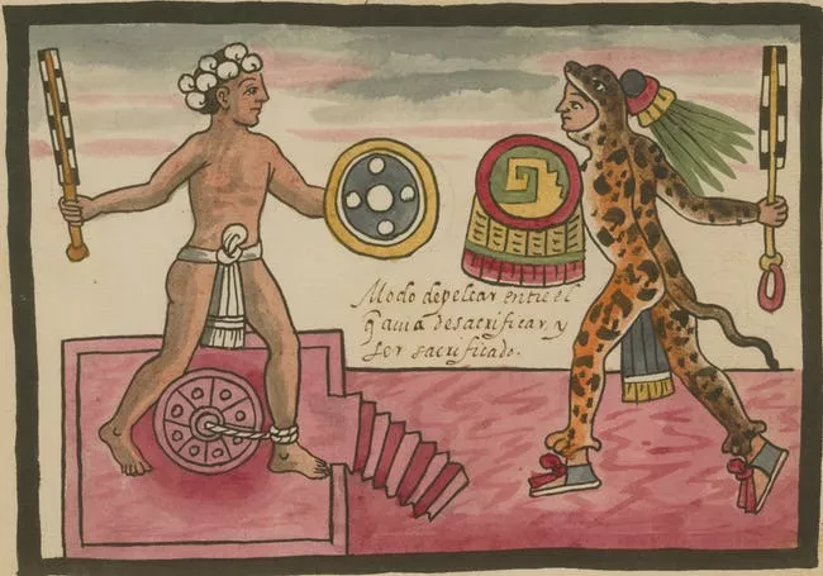
Title: Gladiatorial fight between captive and an Aztec Eagle warrior) from the Tovar manuscript, Date: 16th century, Medium: Ink on European paper, Culture: Mexica

Image
Title: Coyolxauhqui, Medium: green stone and Title: Coyolxauhqui, Medium: basalt, Date: both c. 1500, Culture: Mexica

Image
Undercarving on Coyolxauhqui

Image
Title: Stone of Tizoc, Medium: basalt, Date: ~1481-1486, Culture: Aztec, Context: Tizoc (ruled 1481-1486) in the guise of Huitzilopochtli “he who does sacrifice”

Image
Title: Hackmack Box, Medium: granite, tepetlacalli – stone box, Date: 1503, Culture: Mexica, invisibility and visibility, 4 directions, Tlatlechutli? or Moon Coyo..?

Image
Title: Coiled Xiuhcoatl, Date: 1507, Medium: quartz diorite, Culture: Mexica, Context: 2 Reed = 1507 New Fire

Image
Title: Chacmool, Medium: basalt, Date: 1480-1519, Culture: Mexica
Image
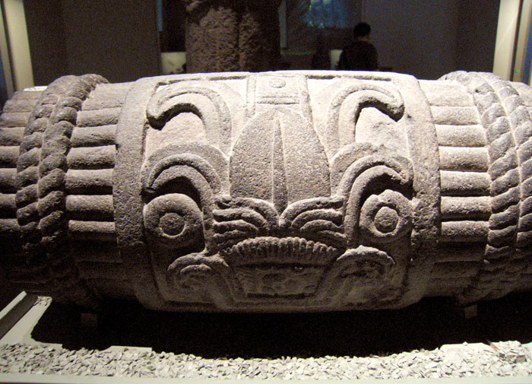
Title: Xiuhmolpilli, (52-year bundle) Medium: stone, Date: c. 1507, century, 2 Reed date - 1507, Culture: Mexica

Image
Title: Huitzilopochtli’s tlaquimilolli, Florentine Codex, Book 8, folio 46r, Date: 1575-1577, Medium: ink on European paper, Culture: Mexica
Aztlan
Old home of the Mexica/Tenochcas people
Tenochtitlan
new home of the Aztec people
Mexcia/Tenochcas are part of what people and speak what language
Nahua people, Nahautl language
When was the Aztec empire created and how
1428, triple alliance between Tlacopan, Texcoco and Tenochtitlan
Atlepetl
city state, also means water mountain or place of civilization
Tlatonani
Ruler
Teuctli
lord
Macehaulli
(manpower) commoners
What are the two different Mexica migration accounts
1) Migration from Aztlan to Tenochtitlan, 2) People come from caves (Chicomoztoc- seven caves)
Differences in Migration accounts
There are different variants to the accounts. In some the sign for Tenochtitlan is an eagle (associated with sun and Huitzilopochtli) on top of a cactus plant. In others, The cactus plant grows out of a stone that was previously a heart belonging to Copil – Huitzilopochtli’s nephew. Copil is the daughter of Malinalxochitl (Grass Flower).
Important stops on the migration route: Chapultepec
(Hill of the Grasshopper) which was an advantageous posistion for the Mexica
Important stops on the migration account: Coatepec
(Hill or place of the Serpent) where Huitzilopochtli was born
Pictorial and textual manuscripts for the sources on migration and origin accounts
Codex Boturini/La Tira de Peregrinacion, Codex Duran, Historia Tolteca-Chichimeca, Codex Telleriano-Remensis
Pictogram
information is conveyed representationally
Ideogram
single image conveys larger or unportrayable ideas, concepts, or things
Phonetic referents
pictoral elements that function soley as phonetic referents
Homonyms
Same glyph but different meaning
Toponyms
place glyphs
Tlacuilo
both male and female artist/scribe
Codex Mendoza, Commissioner
Don Antonio de Mendoza, viceroy of Mexico
Codex Mendoza, purpose
wanted to show evidence of an Aztec tribute and political system
Codex Mendoza creation
invited trained artists and scribes (Aztec nobles) who were being schooled at the Franciscan college in Tlateloco to gather and document evidence for him
Codex Mendoza makeup
consists of 72 folios on European paper (vs. native amatl or animal skin)
Codex Mendoza sections
1) pre-hispanic history of the Aztec capital of Tenochtitlan (Conquest and Founding of City) 2) Tribute accounts 3) Pictorial Account of Daily Life
Codex Mendoza recto
right or front side
Codex Mendoza verso
left or back side
Xuihpohualli
365 day solar calendar, also ritual
tonalamatl
260 ritual calendar
Long count
linage calendar used by groups such as Olmec and Maya
How does Paztory define Aztec art?
1) Primary function of Aztec art was the communication of ideas about their place in the cosmos and i human society 2) Material may be as important as its function 3) emphasis on symbolic representation 4) reflect prinicples of heirarchy, topography, and substitution
Pastory iconographic conventions
Designs - never just ornamental, glyphs, emblems - these are really ideograms, supernatural world (including deities), actions (narration and sequence), compositional patterns - relationship and different elements
Toltecaye
artist
Viewing or seeing in mesoamerica
restricted, occluded, outright concealment, images are absconded from view, time audience and access all shape the expirence of a work of art, different works of art become difficult to see at different moments in their life cycles, memory and vision, privlege sighting and potent vision (elites, supernaturals, shamans, priests), seeing as embodied, durational and always political activity
Tenochtitlan population estimates
200,000+
Tenochtitlan ritual precinct included
Temple Mayor, Temple of Ehectl, Ballcourt, Tzompantli, Living Quarters for Elite and Priests (as well as other specialty neighborhoods/barrios like those for goldsmiths, lapidarians, feather workers, teachers, warriors, tax administrators, prisoners, and more)
Tenochtitlan building materials
volcanic stone, plaster (from timber), paint and more
Temple Mayor began by ruler…
Itzcoatl
Temple Mayor expanded by _
Moctezuhma 1 (after the great famine of 1452-1354)
Templo Mayor shrines
1) dedicated to Tlaloc 2) dedicated to Huitzilopochtli (often reffered to as “Twin Pyramids”
Templo Mayor Tlaloc
associated with water and wet season
Templo Mayor Huitzilopochtli
associated with the sun and dry season
Templo Mayor Huitz+Tlaloc
Together they read as the glyph/text for ‘fire-water’ or war
Temple Mayor expansions
expanded 7 times (superimposition - location never changed; therefore location is fundamental center and sacred)
Templo Mayor place
symbolically connected to place of Huizilopochtli’s birth (Coateptl - Serpent Mountain) and the creation of the cosmos
Templo Mayor monument
has huge coyolxauhqui circular monument
Offerings at Templo Mayor
sacrificial victums (war captives and other types of ‘offerings’ such as animals and more), tribute items from other locations, looted materials from ‘pilgramages to Teotihuacan and other sacred sites, deity images, sculptures of animals, gods, shells, and more, ceramics
Excavations and Finds: Coatlicue and the Sun Stone
1790
Excavations and Finds: Stone of Tizoc
1791
Excavations and Finds: early excavations the Templo Mayor (Manuel Gamio)
1913-1914
Excavations and Finds: metro excavations
1967, including the finds of Coyolxhauqui monuments (circular and greenstone)
Excavations and Finds: excavations under Cathedral Metropolitana
1975
Excavations and Finds: Museum of Tenochtitlan Project (now Museum of Templo Mayor)
1977
Excavations and Finds: Tlatecuhtli Monument
2008
Excavations and Finds: new excavations at the Templo Mayor and Tenochtitlan
2009
Excavations and Finds: extension to the museum
2012
Architecture verified by archaeological finds
Temple de Ehecatle Quetxalcoatl (Wind God Quetzalcoatl), I shaped ballcourt, El Cuahxicalco “in the place of the eagle container” - circular building with serpent heads, found near the Templo Mayor, close to the Huitzilopochtli’s side (therefor associated with agricultural rituals and tlatoani rituals), Circular tzompantli
Sun Stone (Stone of the Fifth Sun)
Carved from basalt, measures over 11 ft in diameter, Weighs more than 24 tons
Quimilli
Bundle, term is also a classifier or quantifier e.g. ‘a bundle of cloths or blankets’, ‘to wrap someone or something in a blanket, to enshroud’
Xiuhmolpilli
(52 year bundle) and New Fire Ceremony
Tlaquimilolli
sacred bundle
Other concepts associated with bundles
Healing and curing, ancestor, deities, Teotl (sacred energy)