RENAL DRUGS
 Call Kai
 Learn
 Practice Test
 Spaced Repetition
 Match
 Flashcards
 Knowt Play
1/75

There's no tags or description
Looks like no tags are added yet.
76 Terms
Thiazide and Thiazide-like Diuretics
works on the early distal convoluted tubule (DCT)
Loop Diuretics
works on the thick ascending limb of the loop of Henle; have the ↑ diuretic intensity
Carbonic Anhydrase Inhibitors
· works on the proximal convoluted tubule (PCT)
Potassium-sparing Diuretics:
· works on the late distal tubule and cortical collecting duct
Osmotic Diuretics
: works primarily on PCT and thin descending limb of the loop of Henle
Thiazide and Thiazide-like ACTION
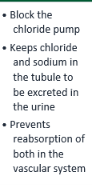
Thiazide and Thiazide-like INDICATION

Thiazide and Thiazide-like CONTRAINDICATION

Thiazide and Thiazide-like PHARMACOKINETICS
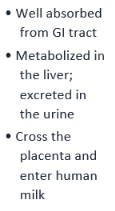
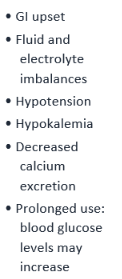
Thiazide and Thiazide-like ADVERSE EFFECTS
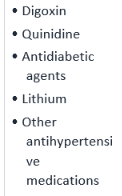
Thiazide and Thiazide-like DRUG TO DRUG INTERCATION
Thiazide and Thiazide-like NURSING CONSIDERATIONS

Thiazide
• Chlorothiazide (Diuril)
• Hydrochlorothiazide (generic
Thiazide-like
• Chlorthalidone (generic)
• Indapamide (generic)
• Metolazone (Zaroxolyn)
Loop Diuretics Drugs
- mide-
Loop Diuretics Drugs ACTION

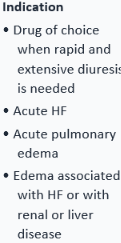
Loop Diuretics Drugs INDICATION
Loop Diuretics Drugs CONTRAINDICATION

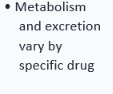
Loop Diuretics Drugs PHARMACOKINETICS
Loop Diuretics Drugs ADVERSE EFFECTS

Loop Diuretics Drugs DRUG TO DRUG INTERCATIONS

Loop Diuretics Drugs NURSING CONSIDERATIONS

Carbonic Anhydrase Inhibitors Drugs
Acetazolamide (generic)
• Dichlorphenamide (Keveyis)
• Methazolamide (generic)
Carbonic Anhydrase Inhibitors Drugs ACTIONS

Carbonic Anhydrase Inhibitors Drugs INDICATION

Carbonic Anhydrase Inhibitors Drugs CONTRAINDICATION

Carbonic Anhydrase Inhibitors Drugs PHARMACOKINETICS

Carbonic Anhydrase Inhibitors Drugs ADVERSE EFFECTS

Carbonic Anhydrase Inhibitors Drugs DRUG TO SRUG INTERACTIONS

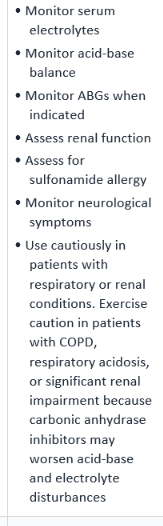
Carbonic Anhydrase Inhibitors Drugs NURSING CONSIDERATION
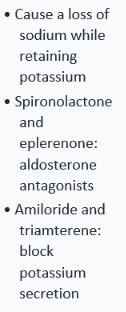
Potassium-sparing Diuretics ACTION
Potassium-sparing Diuretics INDICATION

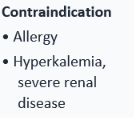
Potassium-sparing Diuretics CONTRAINDICATION
Potassium-sparing Diuretics PHARMACOKINETICS

Potassium-sparing Diuretics ADVERSE EFFECTS

Potassium-sparing Diuretics DRUG TO DRUG INTERACTIONS

Potassium-sparing Diuretics NURSING CONSIDERATIONS

Osmotic Diuretics Drugs
• Mannitol (Osmitrol)
Osmotic Diuretics Drugs ACTIONS

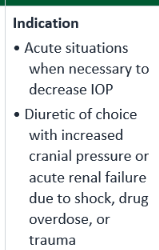
Osmotic Diuretics Drugs INDICATION
Osmotic Diuretics Drugs CONTRAINDICATION

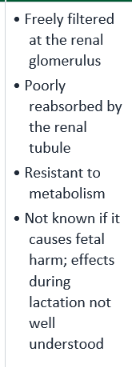
Osmotic Diuretics Drugs PHRAMACOKINETICS
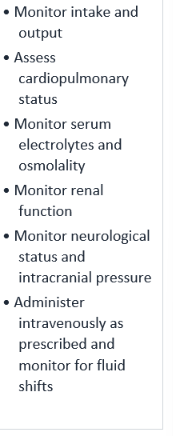
Osmotic Diuretics Drugs ADVERSE EFFECTS

Osmotic Diuretics Drugs DRUG TO DRUG INTERACTIONS

Osmotic Diuretics Drugs DRUG TO DRUG INTERCATIONS
Urinary Tract Spasmodics
- Most block parasympathetic activity, thus suppressing overactivity
• Leads to relaxation of detrusor and other urinary tract muscles
• Other specific agents work differently
Anticholinergics
• Flavoxate (generic)
• Oxybutynin (Ditropan XL and others)
• Tolterodine (Detrol)
• Fesoterodine (Toviaz)
• Darifenacin (Enablex)
• Solifenacin (VESIcare)
• Trospium (generic)
Beta-agonists
• Mirabegron (Myrbetriq)
• Vibegron (Gemtesa)
Urinary Tract Spasmodics INDICATIONS

Urinary Tract Spasmodics CONTRAINDICATIONS
• Allergy
• Pyloric or duodenal obstruction
• Obstructive urinary tract problems
• Glaucoma, myasthenia gravis, or acute hemorrhage
• Pregnancy and lactation
• Mirabegron: hypertension
Cautions
• Renal or hepatic dysfunction
Urinary Tract Spasmodics PHARMACOKINETICS
Rapidly absorbed, slow onset of action
• Metabolized in the liver; excreted in the urine
• Cross the placenta and found in human milk
Urinary Tract Spasmodics ADVERSE EFFECTS
• Related to blocking of the parasympathetic system
Urinary Tract Spasmodics DRUG TO SRUG INTERACTIONS
Phenothiazines, haloperidol
• Other interactions vary by specific agent
Urinary Tract Spasmodics NURSING CONSIDERATIONS
• Monitor urinary elimination. Assess urinary frequency, urgency, incontinence, and urine output. Watch for urinary retention, especially in patients with existing urinary obstruction or BPH
• Monitor anticholinergic effects. Assess for dry mouth, blurred vision, tachycardia, constipation, and decreased sweating, particularly with oxybutynin and tolterodine
• Assess for contraindications. Use caution in patients with glaucoma, myasthenia gravis, GI obstruction, or urinary tract obstruction because anticholinergic effects may worsen these conditions
• Monitor neurological status. Assess for dizziness, drowsiness, confusion, and blurred vision. Implement fall precautions when necessary
Urinary Tract Analgesics
• Phenazopyridine (Azo-Standard, Baridium)
Urinary Tract Analgesics ACTION
Exerts direct, topical analgesic effect on the urinary tract mucosa
Urinary Tract Analgesics INDICATION
• Relieves symptoms related to urinary tract irritation from infection, trauma, or surgery
Urinary Tract Analgesics CONTRAINDICATION
Contraindication
• Allergy
• Severe renal or liver dysfunction
Cautions
• Pregnancy and lactation
Urinary Tract Analgesics PHRAMACOKINETICS
Rapid onset of action
• Widely distributed
• Metabolized in the liver; excreted in the urine
• Crosses placenta and enters human milk
Urinary Tract Analgesics ADVERSE EFFECTS
• GI upset, headache, rash
• Reddish-orange coloring of the urine, staining of contact lenses
• Renal and hepatic toxicity
• Use of drug for longer than 2 days not recommended
Urinary Tract Analgesics DRUG TO DRUG INTERACTIONS
None known
• May interfere with urinalysis using spectrometry or color reactions
Urinary Tract Analgesics NURSING CONSIDERATIONS
• Assess urinary symptoms. Evaluate burning, dysuria, urgency, frequency, and suprapubic discomfort to determine therapeutic effectiveness
• Assess renal function. Monitor BUN, creatinine, and urinary output. Avoid administration in patients with significant renal impairment because the drug is primarily excreted through the kidneys
• Limit duration of use. When used alongside antibiotics for UTI, phenazopyridine should not be taken for longer than 2 days due to the risk of toxicity
• Educate about urine discoloration. Inform patients that urine may turn reddish-orange or reddish-brown and may stain clothing, fabrics, and contact lenses
• Monitor hepatic function. Assess for hepatic toxicity. Report findings promptly
Bladder Protectants
• Pentosan polysulfate sodium (Elmiron)
Bladder Protectants ACTION
• Heparinlike compound that has anticoagulant and fibrinolytic effects
• Adheres to the bladder wall mucosal membrane and acts as a buffer to control cell permeability
• Prevents irritating solutes in the urine from reaching the bladder wall cells
Bladder Protectants INDICATION
• Decrease pain and discomfort of interstitial cystitis
Bladder Protectants CONTRAINDICATION
• Any condition that involves increased risk of bleeding
• History of heparin-induced thrombocytopenia
Cautions
• Hepatic or splenic dysfunction
• Pregnancy and lactation
Bladder Protectants PHRACOKINETICS
• Little of the drug is absorbed
• Distributed to GI tract, liver, spleen, skin, bone marrow, periosteum
• Metabolized in the liver and spleen; excreted in the urine and feces
Bladder Protectants ADVERSE EFFECTS
• Bleeding that may progress to hemorrhage
• Headache, alopecia, GI disturbances
Bladder Protectants DRUG TO DRUG INTERACTIONS
• Anticoagulants, aspirin, or NSAIDs
Bladder Protectants NURSING CONSIDERATIONS
• Monitor for bleeding because pentosan has heparin-like anticoagulant effects
• Monitor coagulation parameters
• Assess hepatic function
• Monitor urinary symptoms. Assess bladder pain, discomfort, urinary frequency, urgency, and difficulty voiding to evaluate therapeutic effectiveness
• Administer on an empty stomach. Give 1 hour before or 2 hours after meals to improve absorption and minimize gastrointestinal discomfort
• Monitor for drug interactions and provide patient education. Use caution when combined with anticoagulants, aspirin, or NSAIDs due to increased bleeding risk. Advise patients to report unusual bruising, bleeding, or blood in the urine
Alpha-adrenergic Blockers
• Doxazosin (Cardura)
• Tamsulosin (Flomax)
• Alfuzosin (Uroxatral)
• Silodosin (Rapaflo)
• Terazosin (generic)
5-alpha Reductase Inhibitors (5ARIs) Drugs
• Finasteride (Proscar)
• Dutasteride (Avodart)
Alpha-adrenergic Blockers AND 5-alpha Reductase Inhibitors (5ARIs) Drugs INDICATION
Treatment of benign prostatic hypertrophy
Alpha-adrenergic Blockers AND 5-alpha Reductase Inhibitors (5ARIs) Drugs
CONTRAINDICATION
Contraindication
• Allergy
Cautions
• Hepatic or renal dysfunction
• Adrenergic blockers: heart failure, known coronary disease
Alpha-adrenergic Blockers AND 5-alpha Reductase Inhibitors (5ARIs) Drugs DRUG TO DRUG INTERACTION
Alpha-adrenergic blockers: other antihypertensives, nitrates, erectile dysfunction drugs
• Testosterone blockers: saw palmetto
Alpha-adrenergic Blockers AND 5-alpha Reductase Inhibitors (5ARIs) Drugs NURSING CONSIDERATION
• Monitor urinary elimination. Assess urinary stream, hesitancy, frequency, nocturia, and difficulty initiating urination to evaluate improvement in BPH symptoms
• Monitor blood pressure and cardiovascular status. Review concurrent medications. Use caution when alpha-blockers are combined with other antihypertensives, nitrates, or erectile dysfunction medications (e.g., sildenafil) because of the increased risk of hypotension
• Provide patient education and safety precautions. Explain that alpha-blockers provide relatively faster symptom relief, while 5ARIs require prolonged treatment to shrink the prostate
• Pregnant women should not handle crushed or broken finasteride or dutasteride tablets because of the risk of fetal harm
• Advise patients taking 5ARIs to avoid saw palmetto