2.2 - asset classes: debt
 Call Kai
 Learn
 Practice Test
 Spaced Repetition
 Match
 Flashcards
 Knowt Play
1/138

There's no tags or description
Looks like no tags are added yet.
139 Terms

explain the top arrow part of this bond
nominal/par/maturity/redemption value

explain the second arrow part of this bond
redemption/maturity date
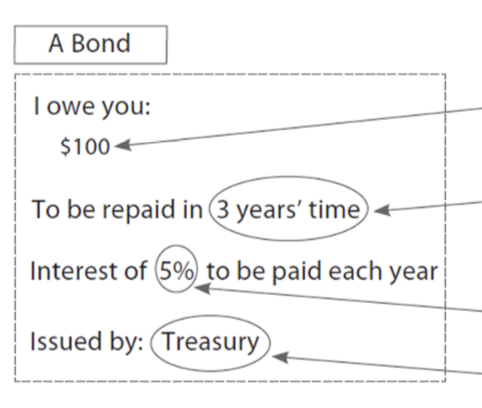
explain the third arrow part of this bond
coupon

explain the bottom arrow part of this bond
the issuer
what is to default
if they can’t pay back the nominal value by the redemption date
what is the relationship between price and interest rates
inverse
what is a gilt
uk government bond
has the UK ever defaulted on their bonds
no
has the US ever defaulted on their bonds
yes
who is considered a market maker in gilt trading
GEMM - gilt edged market maker
is GS considered a GEMM
yes
what do GEMMs have to do
provide two way prices during the MQP, like any other market maker
what is an MQP
mandatory quoting period
why are gilts issued
to fill the PSNCR
what is the PSNCR
public sector net cash requirement:
the gap between tax revenue and gov spending
who tracks the PSNCR and therefore issues these gilts
the DMO - the debt management office
how are gilts issued
the DMO ‘auctions’ them
how often is the coupon paid on a gilt
semi annually

so on this example, what would the coupon be and when
$2.50 every 6 months
how many cashflows are in a 3 year gilt
7 - two per year then the one at the end repaying the face value
when are gilts settled
T+1
how long is the ex-coupon period with a gilt
7 business days
3 classifications of gilts
short dated
medium dated
long dated
short dated means…
…7 years or less remaining life
medium dated means…
…more than 7 to 15 years remaining life
long dated means…..
….more than 15 years remaining life
in an exam if they don’t tell you then assume the nominal value is…
…£100
what is the formula for a flat yield
basically benefit over cost of the bond

2 things that flat yield doesn’t take into account
capital gains (^price of bond)
income tax to be paid on cashflows
since it doesn’t take into account these things, who are flat yields mainly used by
income seeking (no cap. gain) non taxpayers
flat yield other terms
ciric:
current yield
income yield
running yield
interest yield
coupon yield
what is the yield to maturity formula
.

how do you calculate the yearly gain/loss due to capital gains/losses
diff between nominal value and bond prices, divided by maturity time (so u can put it for each year)
what does this not consider
time value of money - but that’s fine its just an estimate then
so since it doesn’t consider that, the gains/losses appear…
…bigger than they are
yield to maturity (YTM) other terms
IRR - internal rate of return
GRY - gross redemption yield
what does yield to maturity not take into account
tax
what version of GRY takes tax into account
NRY - net redemption yield
NRY will always be __________ than GRY
smaller
so who uses GRY more
non tax paying long term investors
and who uses NRY more
taxpaying long term investors
what is reinvestment risk
the risk that you will have to reinvest your coupons at a rate lower than the original investment (so like if interest rates have fallen in the economy)
what is a callable bond
gives the issuer the right to repay the bond before its maturity date
when might an issuer use a callable bond
if market rates fall, they might call the bond early and issue new bonds at this cheaper rate of borrowing
how does this relate to investment risk
if your bond is called early then you have to find somewhere else to put your money but since market rates have fallen you will be reinvesting at a worse rate
what is a cuttable bond
the bondholder can make the issuer repay the bond early
when might you use a puttable bond
if market rates rise, so you want to get rid of this bond and reinvest your money somewhere else at a higher rate
how do we calculate the present value of a bond’s cashflow
by discounting like this

how do we calculate the price of a bond
doing the present value thing for all cashflows and the principal payment at the end then adding them all up
what are the two parts of bond risk
coupons
redemption
smaller coupon =
higher risk, bc your money will take longer to come back to you
longer redemption time =
more risk, because your money will take longer to come back to you
what can you use to remember this
crocodile analogy

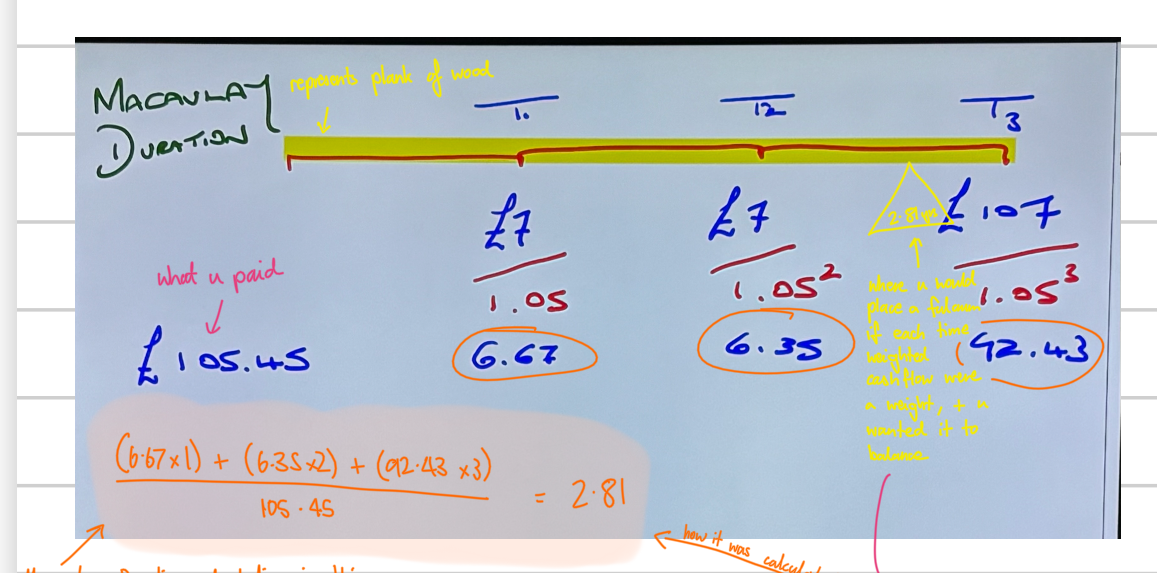
what is the Macaulay duration
the average timing of the bonds payments (example pictured)

how is the Macaulay duration calculated
sum of: (discounted cashflow x the year its meant to be for) ALL OVER the bond price
the orange bit in the picture

what can the Macaulay duration be used for
immunisation
what is immunisation
matching asset and liability durations to reduce the risk from interest rate changes
give an example of immunisation
if you had a payment to make in 2.81 years you’d use that bond we just were working with to fund it, rather than finding a bond with maturity 2.81 years
what is modified duration
estimates how sensitive a bond’s price is to interest rate changes
aka the volatility (risk) of the bond
how do we calculate modified duration
Macaulay duration divided by 1+r
r being the original interest rate
so what is the modified duration in this example (assume interest rates were 5%)
2.81/1.05 = 2.68
so if your modified duration is 2.68, what does that mean
interest rate rises by 1 percentage point, bond price falls by 2.68 percentage points
and vice versa

annotate and explain this graph
.

what day count convention is used for accrued interest
actual/actual
what is considered to be the accrual period
FROM: the day after the last coupon payment
TILL: settlement (T+1)
(basically how long the line on the graph goes up)
if they don’t give you a settlement date in an exam just use the…
…trade day

solve this question on accrued interest
.

what is a spread
the difference between the yield available on different instruments or markets
how are spreads expressed
in basis points
what can spreads often be measured against
a benchmark
3 common types of benchmark
gov bonds
swap rates
published reference rates
3 published reference rates to be aware of
LIBOR
SONIA
SOFR
what does a normal yield curve look like
measures GRY against term to maturity

what are the two reasons why the yield curve looks how it does
liquidity preference theory
expectation theory
3 parts of the yield curve
money markets (short term)
belly of the curve (mid term)
long term
explain the liquidity preference theory
you pay a premium for more liquidity, so yields are lower in the money markets which are more liquid and vice versa
explain the expectation theory
determines the curvature of the curve:
money markets = moved by expectations on monetary policy
belly = moved by supply + demand
long term = moved by expectations of growth + inflation
what else determines long term interest rates
what people expect short term interest rates to be in the future
so when would there be an upwards sloping curve like we have seen
when people expect interest rates in the future to rise
(bc then there would be an opportunity cost of doing one long term investment at current lower rates, so the reward is made higher to make up for that)
so when is there a flat yield curve
when ppl expect rates to stay roughly the same
and then when is there a downwards sloping yield curve
when people expect future rates to fall
what else can you call a downwards sloping yield curve
an inverted yield curve

what is market segmentation
splitting the market into the 3 sectors we have established (short, mid and long term)
what does inflation do to the value of your investments
erodes the value
so what do people therefore do
use index linked bonds
what is an index linked bond
coupon payments + principal are adjusted in line with RPI
what is RPI
a measure of inflation that is UK specific
what are the other two measures of inflation
CPI - EU wide measure
PPI - ‘factory gate’ measure
what is the lag in applying RPI for pre 2005 issues
8 months
what is the lag in applying RPI for post 2005 issues
3 months
what does STRIPS stand for
separate trading of registered interest + principal of securities
so what can you do to a gilt according to this
strip it - separate the cashflows of a bond so that they can be bought and sold individually
why strip a gilt
catch matching/dedication:
you can choose exactly when you want to receive your money (turns it into like a zero coupon bond basically)
who does the stripping
GEMMs
who designates certain gilts as strippable
the DMO
how do must gov bonds settle
T+1
what are the exceptions to T+1 settlement
French bonds —> T+2
German bonds —> T+2
US t-bills —> trade date
when are most coupons paid for gov bonds
semi-annually
what are some exceptions to the semi-annual rule
French bonds —> annual
German bonds —> annual
US t-bills —→ no coupon paid
what do Japan call bonds that are 10+ years long
‘super-long’