Acute Care: Assessing pt for Discharge
 Call Kai
 Learn
Learn Practice Test
 Spaced Repetition
 Match
Match Flashcards
 Knowt Play
1/22

There's no tags or description
Looks like no tags are added yet.
Name | Mastery | Learn | Test | Matching | Spaced | Call with Kai | Chat |
|---|
No analytics yet
Send a link to your students to track their progress
23 Terms
Whose Job is it to determine an appropriate d/c location for patient?
all of us! takes dif apporaches…
-PT: mobility
-OT: AoDL
-Social Worker: resources, insurance
-MD/PA/NP: medically stable, can place send have right medical care
-pt/pt’s family
why is it important to choose an appropriate discharge location?
find safest location for pt after discharge
decrease hospital readmittance rate: falls, re-infection, worsening of medical conditions
allow pt to regain most amount of functional mobility in quickest manner possible
what info do we need to determine a safe d/c location for the pt?
•Where did the patient live prior to hospitalization?
•What was their prior level of functional mobility?
•What kind of support will they have back at home after discharge?
•Friends, Family, Community or Health Services?
•What is the patient’s current functional mobility status?
•What does the patient/family want?
remember your options
•Inpatient Rehabilitation
•Skilled Nursing Facility
•Home with home PT/OT
•Home with outpatient PT (or no therapy)
if you discharge them to…
-IP vs Skilled nursing facility
IP
•Patient must be below PLOF
•Patient must be able to tolerate 3 hours of combined therapy
•Must be accepted by IPR location (*social worker)
*can’t go home; more intense
Skilled Nursing Facility (Subacute Rehab)
•Patient must be below PLOF
•Patient must be willing to participate in PT/OT (*bc don’t need tolerance)
•Must be accepted by SNF
if you discharge them to…
-home with home healtth PT vs home with OP PT (or no PT)
*in and out of home safely
Home w/ Home PT
•Patient must be below PLOF
•Patient must be able to safely get into/out of house (one time, with assist as needed)
•Patient must be “home-bound” (i.e. unable to leave house except for physician appointments)
•Must be enough support at home and patient be functional enough to safely complete bed mobility, transfers and gait without significant risk of falling
*temporay; enter/exit home 1 time
Home with OP PT
•Patient must be below PLOF
•Patient must be able to safely enter/exit the house as needed for daily life
•Patient must be safe completing bed mobility, transfers and gait with minimal to no supervision at home
•Patient must be willing to participate in OP PT, and have specific goals to work towards
*enter/exit home multiple times
parts of home to consider
•Type of Home
•Transportation
•Entry/Exit
•Layout of the Home
•Bathroom
•Bedroom
parts of home to consider: type of home
•Ranch (One-Story)
•Two-Story
•Tri-Level
•Apartment/Condo Complex
•Assisted Living: senior apartments w/ check-in once in a while
•Nursing Facility: staff 24/7
*stairs and location; location bed and bath; where park
parts of home to consider: transportation
•Does the patient have it?
•Ability to get into/out of vehicle
•Type of Vehicle
•Distance/Time of travel (5 minute ride home vs 5 hours)
•Parking?
parts of home to consider: entry/exit
•Distance from transportation to home
•Stairs and Railing
•Type of terrain (i.e. nicely paved, walking on grass, lots of cracks?)
•Rugs/other obstacles to enter?
•Time of year? Heat vs Snow/Ice?
parts of home to consider: bathroom
•Size of Bathroom
•Bathtub/Shower Combo vs. Walk-in shower
•Height/size of toilet
•Grab Bars/Assistive equipment and locations
•Sink location/stability
•Rugs
*enough room for assistive devices?
parts of home to consider: bedroom
•Size of Bedroom
•Location of Bed
•Height and Size of Bed
•Location of bathroom in relation to bedroom
•“Clutter” of bedroom
*transfer to strong side
parts of home to consider: kitchen
•Size of Kitchen
•Location of Appliances
•Location of Counters
•Already prepared food vs. patient preparing food themselves
other considerations
•Overall Size of the home (*in relation to how need to get around)
•Location of rooms relative to others (ie stairs to second floor, stairs to basement, what is located on each floor)
•Chairs in the home
•Ability to move rooms/furniture around
•Pets?
•Recreation/Hobbies?
social/home support
*what your community looks like, and can you rely on them
-Who will be present to assist when patient gets back home?
•When will they be present?
•How can they assist?
•Are they physically able to assist?
•Did the patient assist them prior to admission?
•Other Friends? Family? Temporarily?
-What other resources did the patient use prior to admission? What might they be able to use after discharge?
list adaptive modifications to home

grab bars
•Can be temporary or permanent
•External area of support more stable than a device
•Oftentimes need to be installed
•Most common area is shower/bathtub/toilet
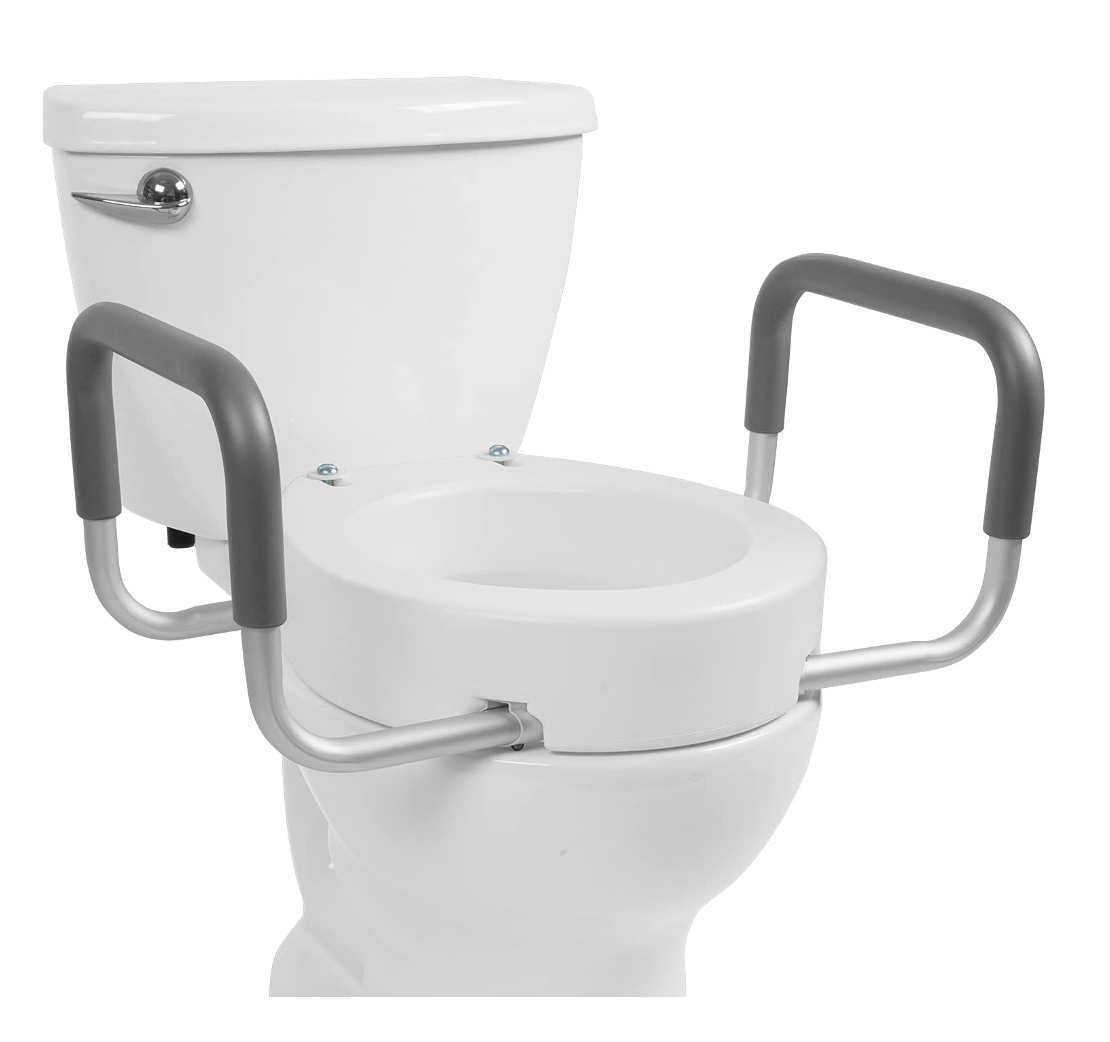
toilet seat riser
•Assists patient in sit <-> stand transfer from toilet
•Provides elevated surface (easier) and bars to push off (leverage)
•Purchased Amazon, Walmart, Walgreens, CVS
shower chiar
•Allows patient a stable surface to transfer and sit when in the bathtub/shower
•Can only be inside the tub or half in the tub, half outside the tub
•Most common in shower/tub combos, less often in walk-in showers
bed rails
•Can be affixed to one (or both) sides of the bed
•Provides support to patient to assist in bed mobility
•A stable dresser, headstand, etc can also assist with bed mobility when appropriate
*if have strong arms; spinal; cognitive deficets (good warning)

removig tripping hazards
•Discuss with patient/family any possible hazards in the home that could be a fall risk
•Rugs, small steps/stoops, messy floors
•Pets?
pt assist levels
•Total Assist- Patient performs less than 25% of the activity
•Max Assist – Patient performs 25-49% of the activity
•Mod Assist – Patient performs 50-74% of the activity
•Min Assist – Patient performs 75%-99% of the activity
•Modified Independent/Independent – Patient either needs equipment, increased time, or no additional assistance needed to complete mobility tasks.
Current Patient Functional Mobility in Hospital
Total/Max/Mod/Min Assist *<25%
•Depending on assist level, may need lift equipment at home (if discharging home)
•Is the support available 24/7? Can they physically assist the patient? Do they know how?
•If patient needs physical assist with all mobility tasks, really need to make sure they have available and willing support at home.
•If not, need to look at other options (SNF, IPR)
Supervision/Modified Independent
•Likely able to discharge home
•Home PT/OT vs. outpatient therapy?
•Safety/consistency with mobility tasks
•Social support at home
•What do they struggle most with? Focus on practicing those tasks to ensure safe and successful d/c home
•GOAL is to d/c patients back to previous location