Gilded Age & Progressive Era
 Call Kai
 Learn
 Practice Test
 Spaced Repetition
 Match
 Flashcards
 Knowt Play
1/54

There's no tags or description
Looks like no tags are added yet.
55 Terms
Progressive Movement
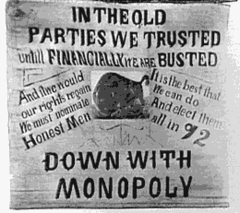
an early 20th century reform movement seeking to return control of the government to the people, to restore economic opportunities, and to correct injustices in American life
16th Amendment
1913 ratified, established a federal graduated income tax.

17th Amendment
1913 ratified, provides for the direct election of US senators by the people rather than by state legislatures.

18th Amendment
1919 ratified, The banning of the manufacture, sale, and possession of alcoholic beverages. "Prohibition"

Muckrakers
journalists who exposed the corrupt side of business and public life in the early 1900s.

Upton Sinclair
wrote "The Jungle", that portrays the dangerous and unhealthy conditions prevalent in the meat packing industry at that time.

Populists
a movement that demanded that people have a greater voice in government and sought to advance the interests of farmers and laborers

National American Women's Suffrage Association (NAWSA)
An organization founded in 1890 to gain voting rights for women.

19th Amendment
1920 ratified, gives women the right to vote

NC 19th
North Carolina's general assembly ratified the 19th amendment in 1971 (51 years after the 19th was added to the US CONSTITUTION ~ Yikes!)

Direct primary
Voters, rather than politicians, would choose candidates for public office

"Trustbuster"
A person working to destroy monopolies and trusts. Teddy Roosevelt was know as a person who broke up many monopolies and trusts.

"Square Deal"
Teddy Roosevelt's progressive plan; involved trust-busting and conservation projects.

"New Freedom"
Wilson's progressive plan; involved creating theFederal Reserve and increased government regulation of business.

Sherman Anti-Trust Act (1890)
A law that was intended to prevent the creation of monopolies by making it illegal to establish trusts that interfered with free trade.

John D. Rockefeller
Was an American industrialist and philanthropist. Revolutionized the petroleum (oil) industry and defined the structure of modern philanthropy. "TYCOON"

Andrew Carnegie
A Scottish-born American industrialist and philanthropist who founded the Carnegie Steel Company in 1892. By 1901, his company dominated the American steel industry. "TYCOON"

Cornelius Vanderbilt
A railroad owner who built a railway connecting Chicago and New York. He popularized the use of steel rails in his railroad, which made railroads safer and more economical.

George Vanderbilt
Built the Biltmore Estate and major benefactor of Asheville (1895)

J.P. Morgan
An influential banker and businessman who bought and reorganized companies. His US Steel company would buy Carnegie steel and become the largest business in the world in 1901

Tycoon
a wealthy, powerful person in business or industry. Sometimes called "Robber Barron" by workers

R.J. Reynolds
Young aggressive NC entrepreneur that transformed small villages to Tobacco centers. Founded R.J. Reynolds Tobacco Company located in Winston-Salem NC.

Washington Duke
Tobacco industrialist and philanthropist; established Trinity College which eventually became Duke University

Immigration Act of 1882
In 1882, this act placed restrictions on the immigration of undesirable persons, such as paupers, criminals, convicts, and mentally incompetent.

Immigration in the 1920s
Congress reacted to the anti-foreigner pressure of the post-war period by passing the Emergency Immigration Act (1921) & National Origins Act of (1924). These laws established a quota system that discriminated and reduced the number of Jewish and Catholic "New Immigrants" allowed in the United States. These laws essentially closed the door to immigration from Southern and Eastern Europe.

Emma Lazarus
Granddaughter of German Jews; wrote "The New Colossus"; wanted immigrants to come to America; glad to accept them and welcome them into the country

Statue of Liberty
a large statue symbolizing hope and freedom on Liberty Island in New York Harbor. Gift from France for US Centennial.

Pure Food and Drug Act & Meat Inspection Act
-Halted the sale of contaminated food and drugs and to ensure truth in labeling.
-established strict cleanliness requirements for meat-packers and created a federal meat-inspection program.

William Howard Taft
Elected President in 1908; supported 16th amendment; disappointed progressives in the areas of tariffs and conservation. Became Supreme Court Judge after being President

Plessy v. Ferguson
The supreme court ruled that separation of the races in public accommodations was legal, thus establishing the "separate but equal" doctrine.

"Jim Crow" Laws
Laws enacted by southern state and local governments to separate white and black people in public and private facilities.

W.E.B. DuBois
Co-founded the NAACP to help secure legal equality for minority citizens.

National Association of the Advancement of Colored People (NAACP)
An organization founded in 1909 to promote full racial equality and to end discrimination mostly by using the court system

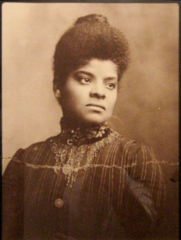
Ida B. Wells
co-founded NAACP, leading voice in social reform for African-Americans, spoke out against lynching
Susan B. Anthony
arrested for voting in 1872, women's rights leader promoting women's right to vote

National Park System
Established by Roosevelt to conserve land and wildlife

Spanish-American War
Under President McKinley, in 1898 a war that began when the United States demanded Cuba's independence from Spain. US gained Puerto Rice, Guam, & Philippians as territories from Spain following their loss of Cuba. "Monroe Doctrine" established.

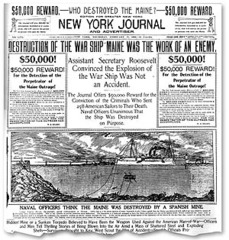
Yellow Journalism
journalism that is based upon sensationalism and crude exaggeration.
Benjamin Harrison
23rd President; Republican, poor leader, introduced the McKinley Tariff and increased federal spending to a billion dollars

William McKinley
25th president responsible for Spanish-American War, Philippine-American War, and the Annexation of Hawaii, imperialism. Is assassinated by an anarchist

Gilded Age
A name for the late 1800s, coined by Mark Twain to describe the tremendous increase in wealth caused by the industrial age and the ostentatious lifestyles it allowed the very rich. The great industrial success of the U.S. and the fabulous lifestyles of the wealthy hid the many social problems of the time, including a high poverty rate, a high crime rate, and corruption in the government.
William McKinley
25th president responsible for Spanish-American War, Philippine-American War, and the Annexation of Hawaii, imperialism. Is assassinated by an anarchist
Alaska Purchase
Secretary of State William Seward bought Alaska from Russia for $7.2 Million ("Seward's Folly")
Theodore Roosevelt
26th president, known for: conservationism, trust-busting, Hepburn Act, safe food regulations, "Square Deal," Panama Canal, Great White Fleet, Nobel Peace Prize for negotiation of peace in Russo-Japanese War
Grover Cleveland
22nd and 24th president, Democrat, Honest and hardworking, fought corruption, vetoed hundreds of wasteful bills, achieved the Interstate Commerce Commission and civil service reform, violent suppression of strikes
Benjamin Harrison
23rd President; Republican, poor leader, introduced the McKinley Tariff and increased federal spending to a billion dollars
Chester A. Arthur
Appointed customs collector for the port of New York - corrupt and implemented a heavy spoils system. He was chosen as Garfield's running mate. Garfield won but was shot, so Arthur became the 21st president.
President Garfield
Won the election of 1881, promised to end the spoils system, 4 months later he was assassinated for not giving one of his supporters a job in government
Biltmore Estate
The largest privately-owned home in the United States; the house of the Vanderbilt's. George Vanderbilt built this North Carolina estate & was the grandson for railroad tycoon Cornelius Vanderbilt.
robber barons
names based on the negative views of men like Carnegie, Rockefeller, and Carnegie gaining wealth with low paid workers
Bessemer Process
A way to manufacture steel quickly and cheaply by blasting hot air through melted iron to quickly remove impurities.

Social Darwinism
"survival of the fittest" that economic success comes to those who are the hardest working and most competent

Push Factors of Immigration
economic troubles
overcrowding
poverty
wars
religious persecution
famine
Pull Factors of Immigration
Economic Opportunity ($)
Jobs/ workers were needed
Land
Peace and stability (No War)
Freedoms ~ Religion, Speech, Politics
Lazziez Faire Economics
Is the belief that economics and business function best when there's no interference by the government.
Significance: Laissez-faire economics brought economic growth to the countries that used it and also showed that capitalism actually could work very well.
